Spelling practice Elementary Phonics Worksheets for Ages 5-6
6 filtered results
-
From - To
Discover engaging Spelling Practice Elementary Phonics Worksheets designed for ages 5-6. These worksheets from Kids Academy are perfect for helping young learners master the basics of spelling while having fun! Each worksheet focuses on essential phonics skills, guiding children through the foundations of reading and writing. Through dynamic activities and colorful illustrations, kids will enhance their alphabet knowledge, improve letter recognition, and develop spelling confidence. Ideal for both classroom and at-home practice, these worksheets are an excellent resource for parents and teachers alike to support early literacy development. Boost your child’s spelling skills today with our Elementary Phonics Worksheets!
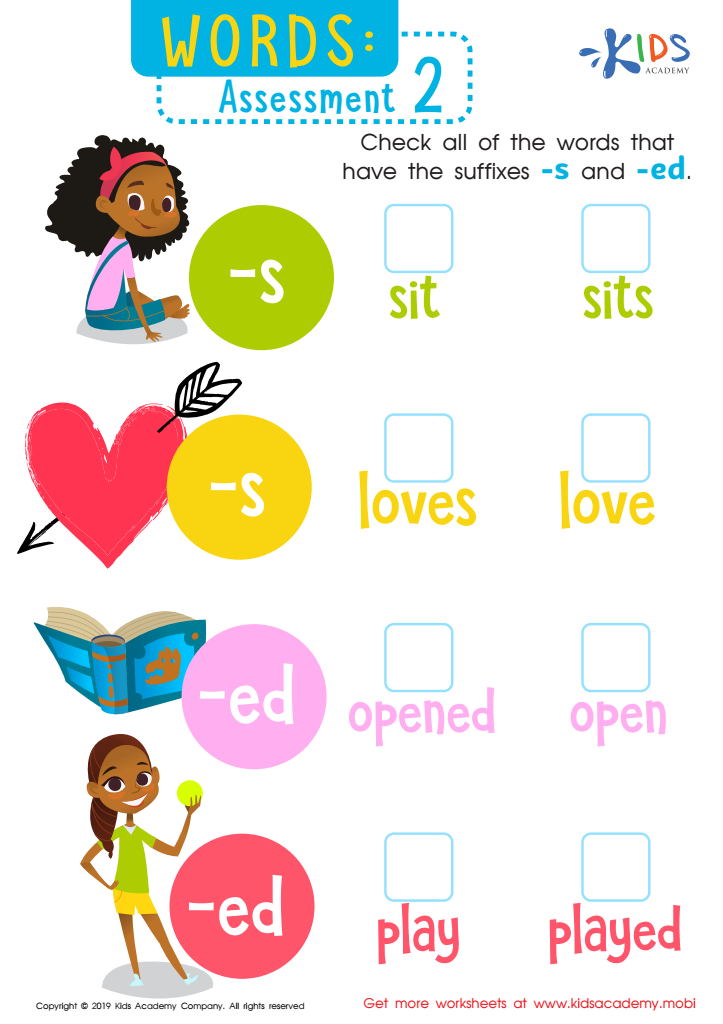
Words: Assessment 2 Worksheet
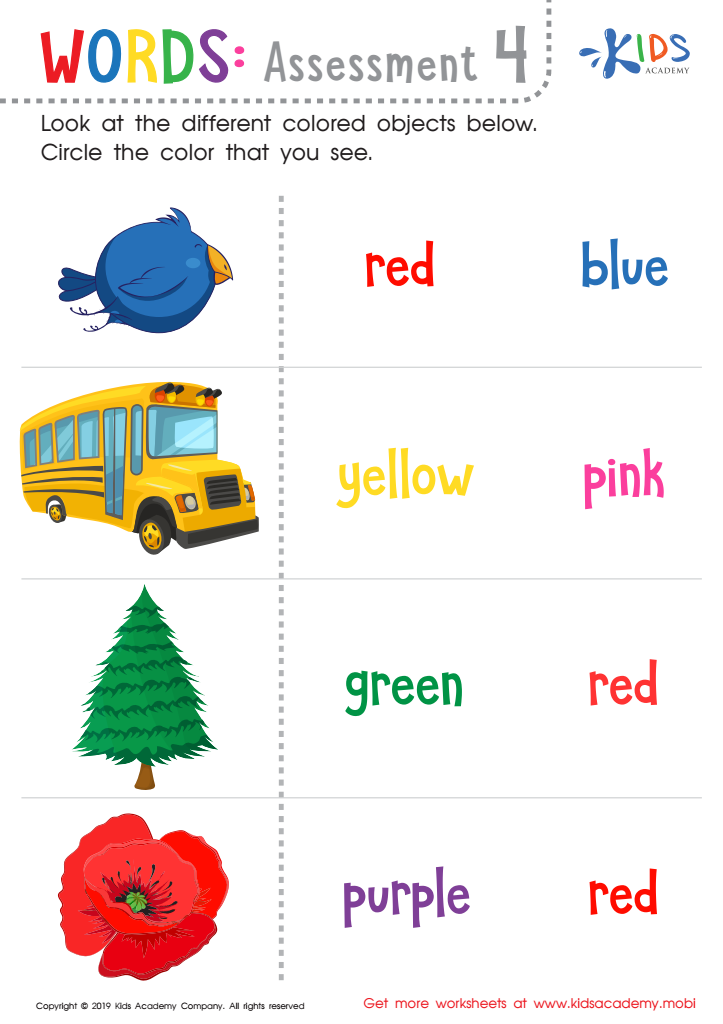
Words: Assessment 4 Worksheet
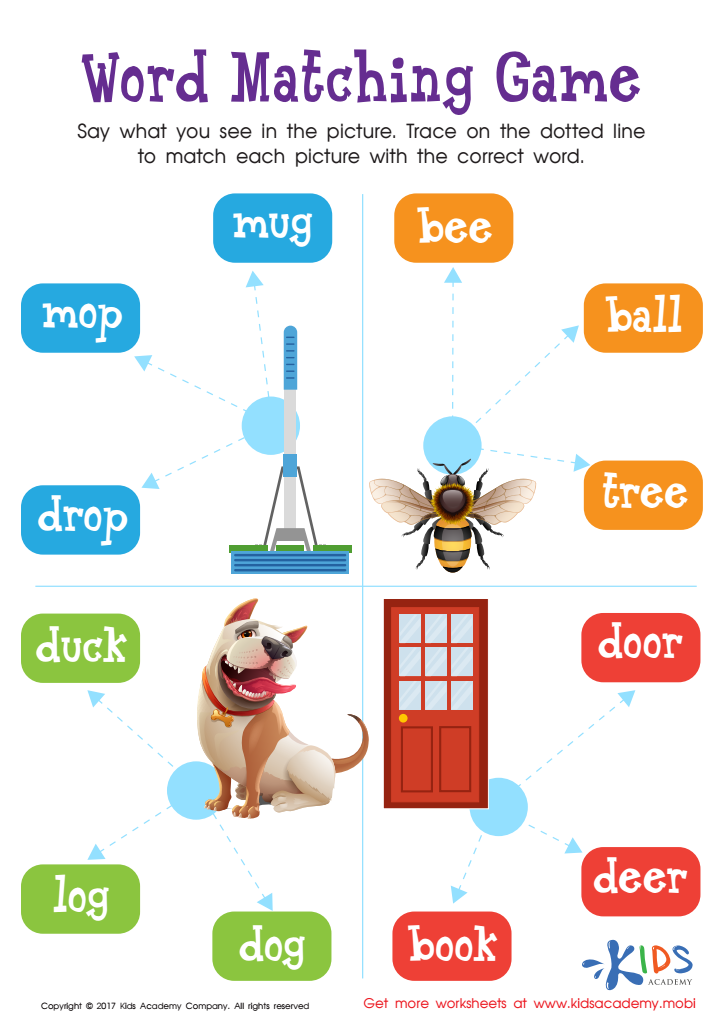
Word Matching Game Worksheet
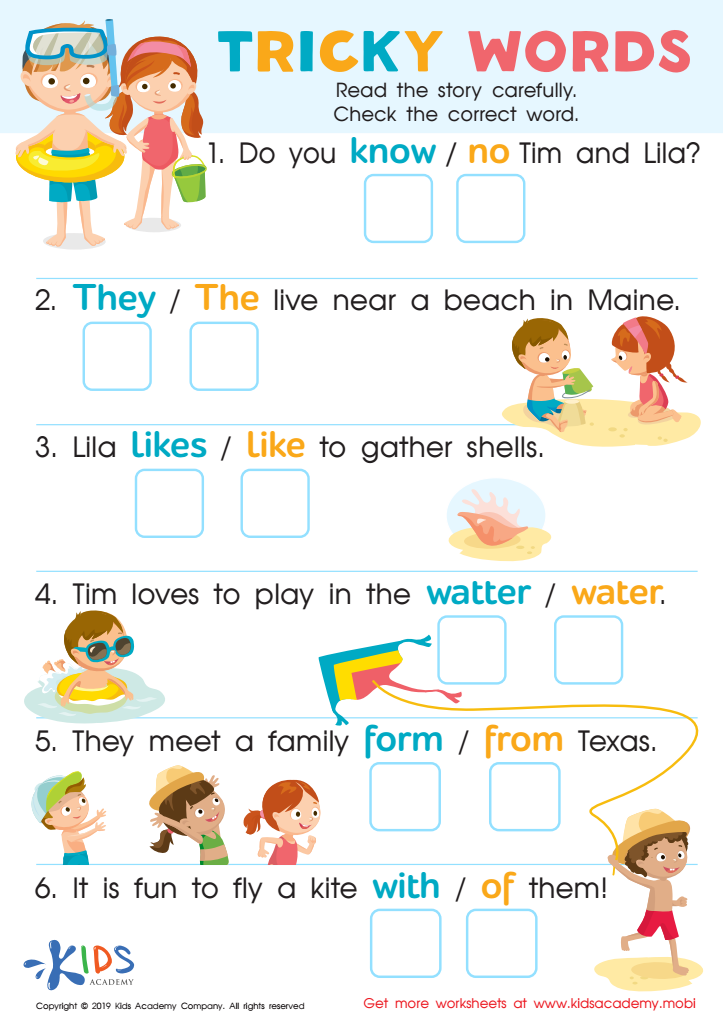
Tricky Words Worksheet
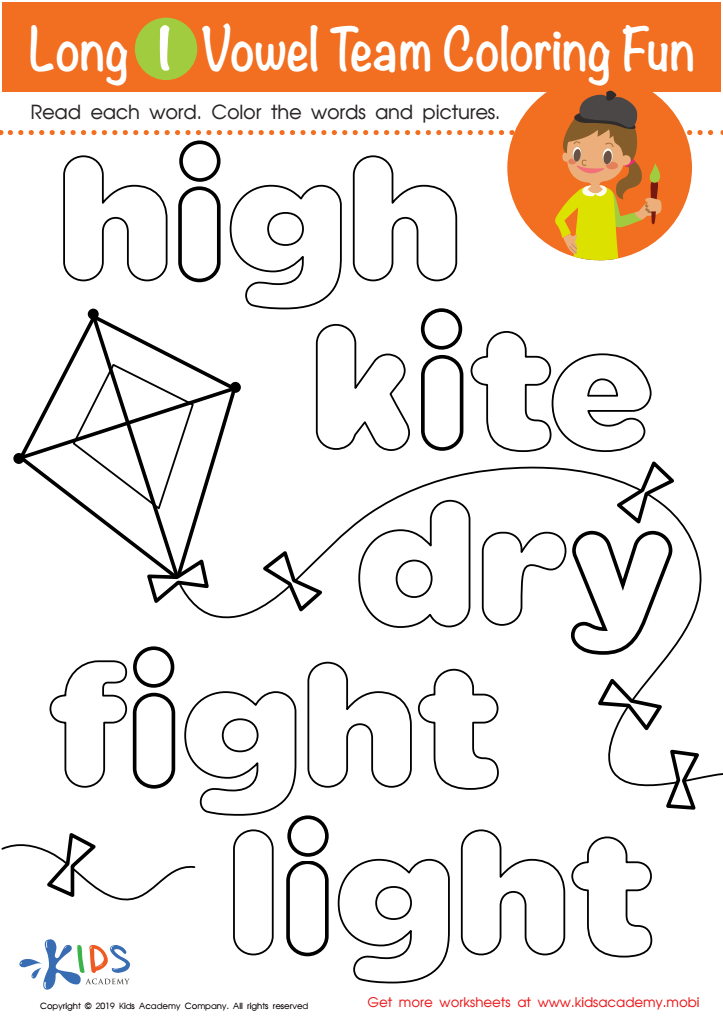
Long I Vowel Team Coloring Worksheet
 Assign to My Students
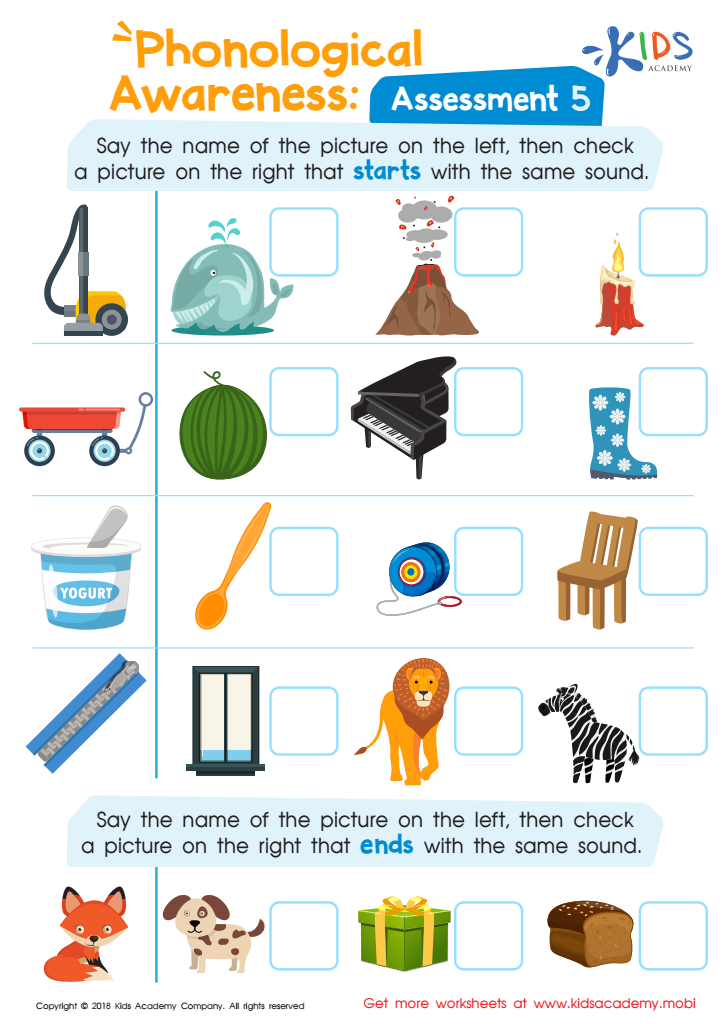
Phonological Awareness: Assessment 5 Worksheet




Parents and teachers should prioritize spelling practice and elementary phonics for children ages 5-6 because these foundational skills are critical building blocks for literacy. At this formative age, young learners are highly impressionable and capable of rapidly acquiring language skills. Phonics, which focuses on the relationship between letters and sounds, equips children with the tools to decode words effectively. This decoding ability is essential for reading fluency and comprehension, helping children gain confidence in their reading abilities.
Spelling practice complements phonics by reinforcing the patterns and rules of the language. It enhances memory retention of common words and exposes children to word families, promoting understanding of word structure and vocabulary expansion. Efficient spellers are often better readers and writers, skills that are integral to academic success across all subjects.
Moreover, early success in reading and spelling sets a positive learning trajectory, fostering a love for reading and learning in general. Parental and teacher involvement in these activities can provide personalized support and encouragement, building a child's self-esteem and motivation. Therefore, investing time in spelling practice and phonics instructions at this young age yields long-term educational benefits and cultivates lifelong literacy skills.







