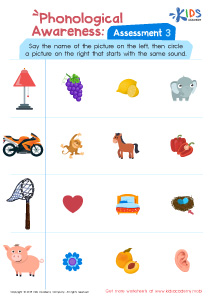
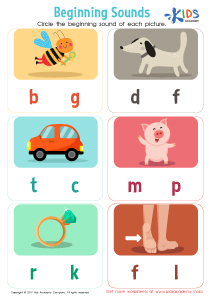
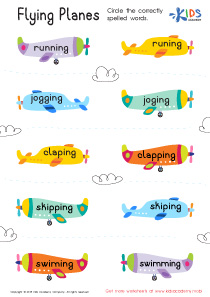
Vocabulary development Elementary Phonics Worksheets for Ages 5-6
3 filtered results
-
From - To
Enhance early literacy skills with our engaging Vocabulary Development Elementary Phonics Worksheets, specially designed for ages 5-6. These printable resources introduce essential phonics concepts through fun and interactive activities that make learning enjoyable. Our worksheets encourage children to expand their vocabulary, improve reading comprehension, and develop critical phonetic skills. Each worksheet is beautifully illustrated and age-appropriate, ensuring that young learners stay engaged while mastering foundational language concepts. Perfect for use at home or in the classroom, our phonics worksheets are an invaluable tool in fostering a love for reading and language development. Start laying the groundwork for your child’s literacy success today!
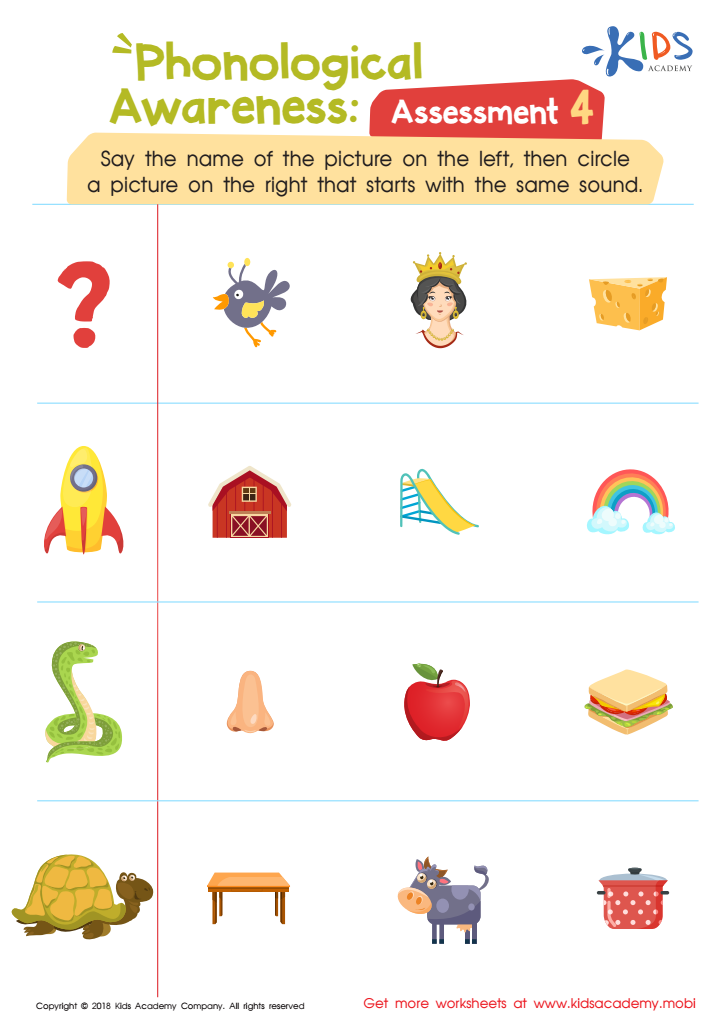
Phonological Awareness: Assessment 4 Worksheet
 Assign to My Students
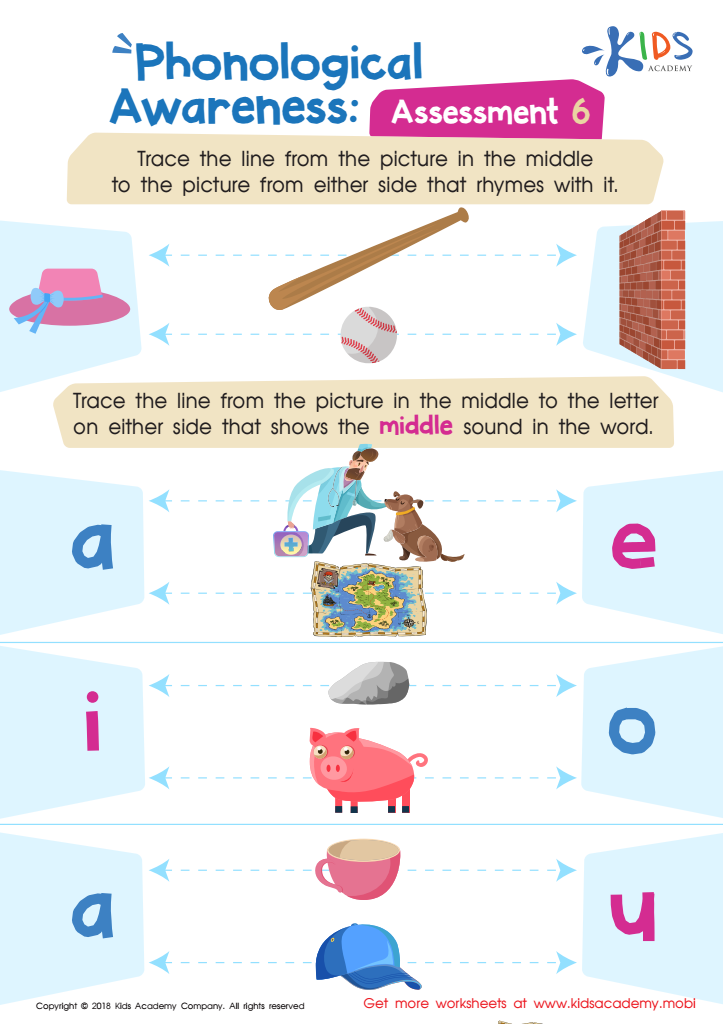
Phonological Awareness: Assessment 6 Worksheet
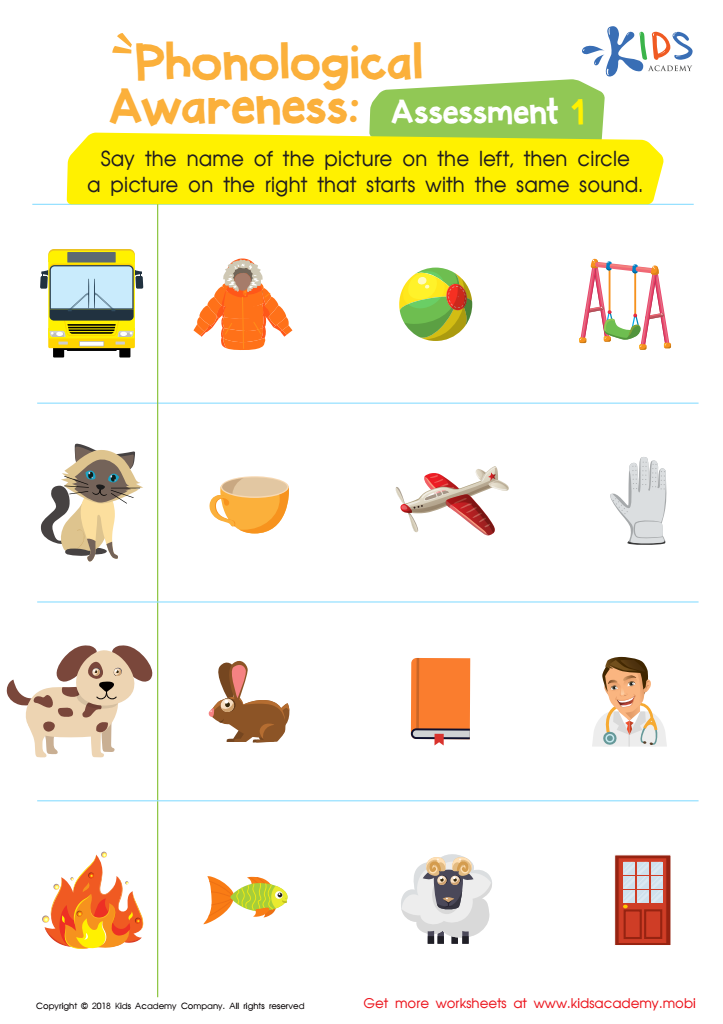
Phonological Awareness: Assessment 1 Worksheet




Vocabulary development is crucial for children aged 5-6, as it lays the foundation for their reading and comprehension skills. At this stage, children are like sponges, absorbing language and its nuances. A rich vocabulary enables them to express themselves clearly and understand others, fostering effective communication. Early phonics instruction specifically helps them connect sounds to letters, which is essential for decoding words. When children learn phonics alongside vocabulary, they can better recognize words in print, improving their reading fluency.
Moreover, a strong vocabulary enhances cognitive skills, encouraging critical thinking and problem-solving abilities. Children with a broad vocabulary can engage more deeply with texts, leading to improved comprehension and a love for reading. This early love of language can inspire a lifelong interest in literature and learning.
For teachers and parents, investing time in vocabulary and phonics development not only supports academic growth but also nurtures emotional and social development. Children who feel confident in their language skills are more likely to participate in discussions and build friendships. Ultimately, supporting vocabulary development in these formative years can have a lasting impact on a child's educational journey and overall self-esteem. Therefore, it’s vital for adults to embrace and promote rich linguistic experiences in everyday life.