Introduce your child to the world of letters with our Alphabet Familiarity Letter Recognition worksheets, designed specifically for ages 5-6! These engaging and educational worksheets help young learners recognize and remember the letters of the alphabet through fun activities, games, and exercises. Each worksheet focuses on different learning skills, including visual discrimination, letter tracing, and matching uppercase and lowercase letters. Perfect for at-home practice or classroom use, our worksheets ensure that children build a strong foundation in reading and writing. Spark their curiosity and inspire a love of learning with our expertly crafted resources.

Check out this FREE Trial Lesson on Letter Recognition for age 5-6!

Identify Uppercase Letters A-C

Favorites
With answer key
Interactive
  • 5-6
  • Alphabet familiarity
  • Letter Recognition
Find Uppercase Letters G, H, and I Worksheet Preview

Find Uppercase Letters G, H, and I Worksheet

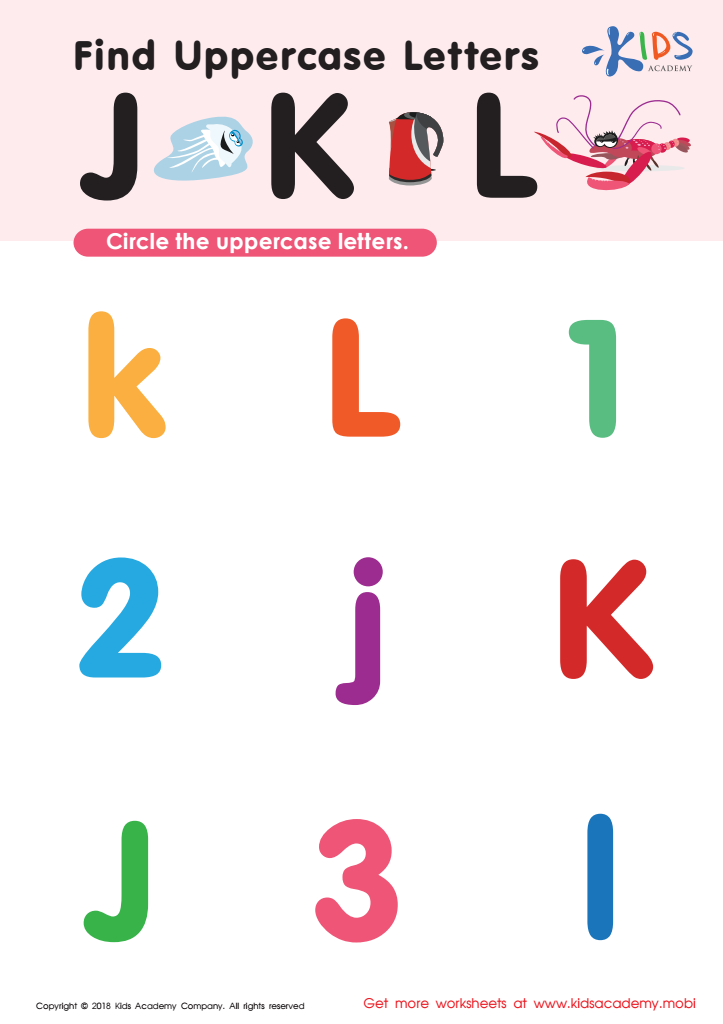
Find G, H, and I in uppercase with this downloadable worksheet! Numbers are included to challenge your kindergartener's letter recognition skills. Plus, practice G, H, and I sounds using the cute graphics. Perfect for learning letter case recognition!
Find Uppercase Letters G, H, and I Worksheet
Worksheet
Find Uppercase Letters Worksheet

Find Uppercase Letters Worksheet

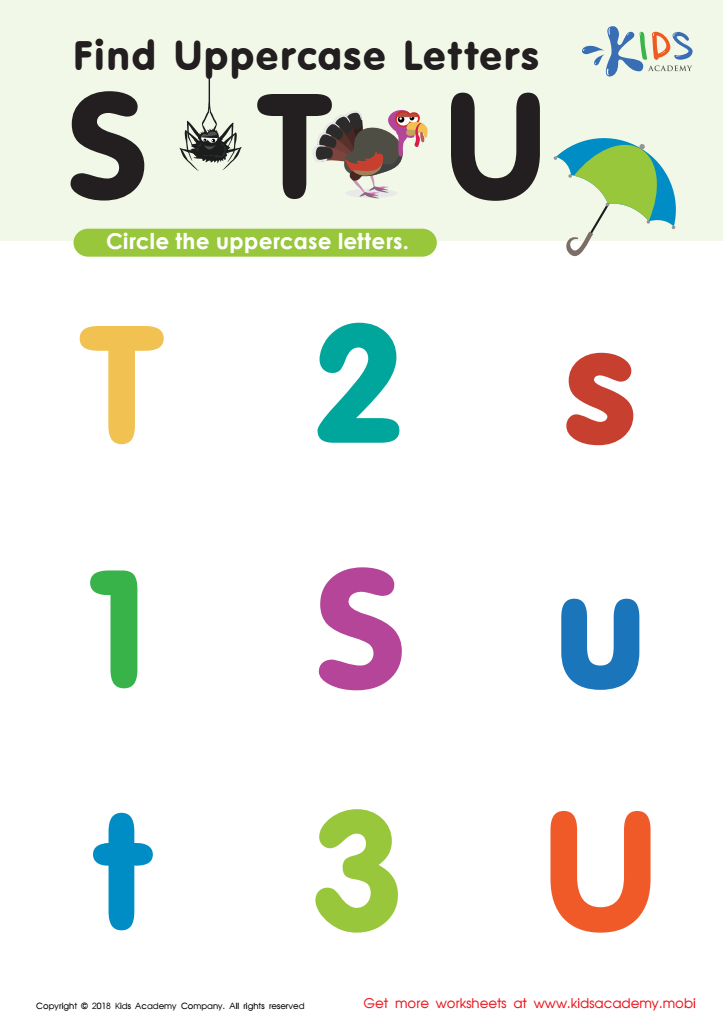
What level is your kid at now? Can they tell the difference between small and uppercase letters? Ask them to name words beginning with S, T and U, then help them find and circle the uppercase letters S, T and U in a mix of small letters, numbers and uppercase letters.
Find Uppercase Letters Worksheet
Worksheet
Find Uppercase Letters J, K, and L Worksheet Preview

Find Uppercase Letters J, K, and L Worksheet

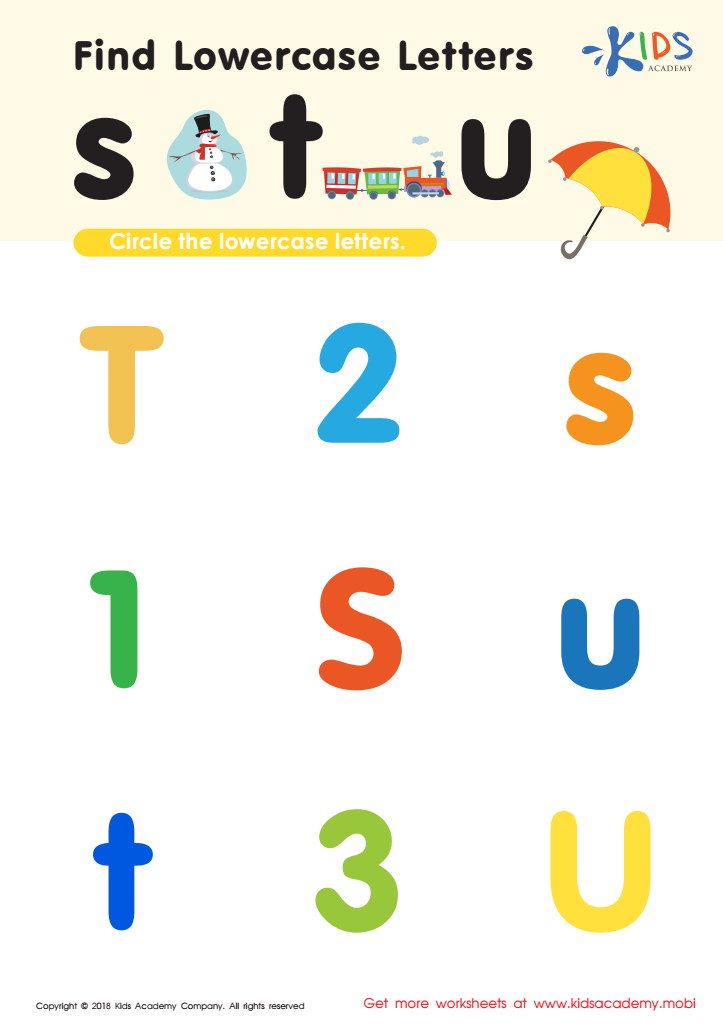
Search for the uppercase letters J, K, and L in this fun worksheet! Help your child identify the starting sound of each picture, then look for the letters. Keep an eye out for numbers that look like letters. Swim with the jellyfish and solve this delightful puzzle!
Find Uppercase Letters J, K, and L Worksheet
Worksheet
Find lowercase Letters s t u Worksheet

Find lowercase Letters s t u Worksheet

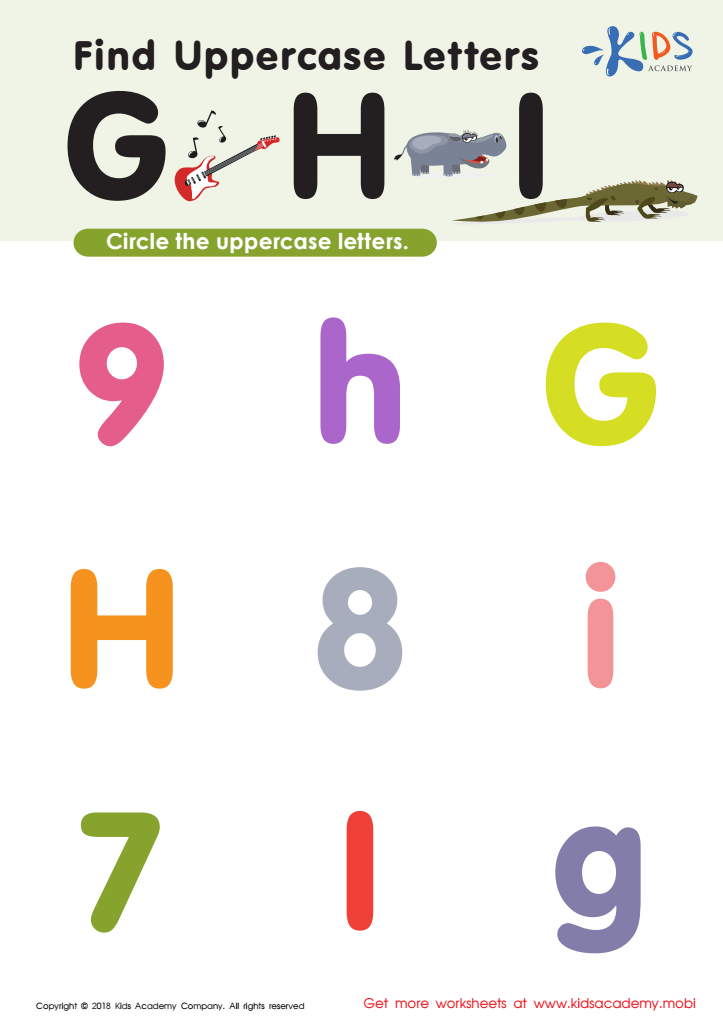
Puzzles are great for boosting your child's thinking skills. Can they identify lowercase letters s, t and u? This free printout contains the letters mixed in with uppercase letters and numbers, all presented in a fun, colorful format - sure to keep them entertained as they learn!
Find lowercase Letters s t u Worksheet
Worksheet
Find Uppercase Letters A, B, and C Worksheet Preview

Find Uppercase Letters A, B, and C Worksheet

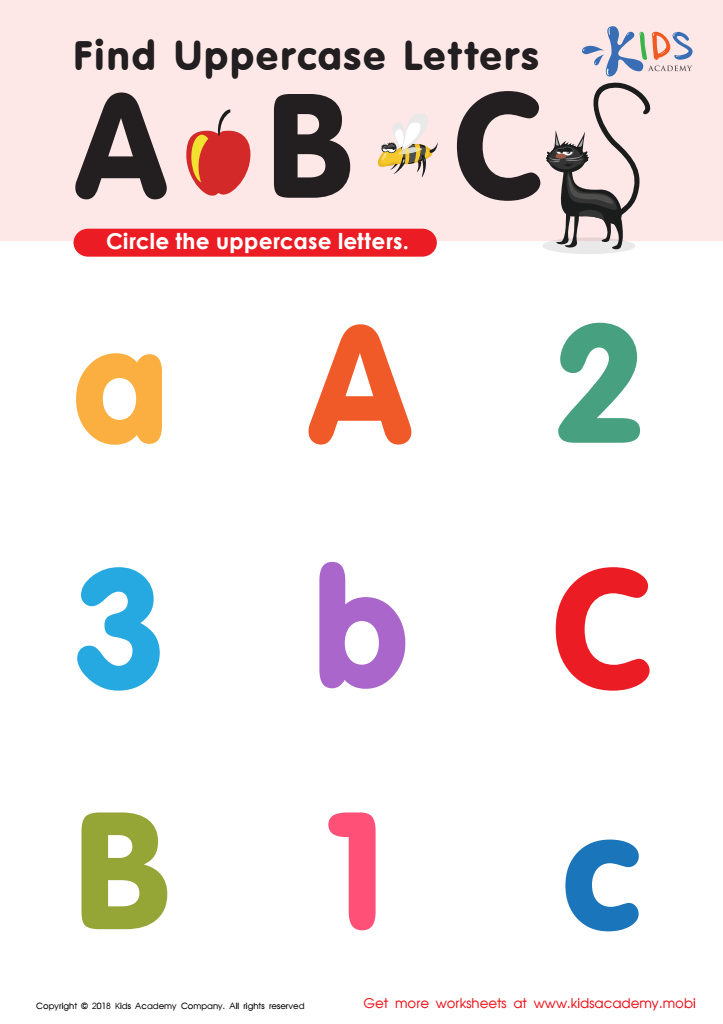
Check out this PDF worksheet and spot all the capital letters! Arranged as a puzzle, this exercise will test little learners to read and recognize uppercase letters and tell the difference between letters and numbers. To help them, use the pictures on top of the page to practice the sounds A, B and C make! 80 words.
Find Uppercase Letters A, B, and C Worksheet
Worksheet
Lowercase Letters Search: Assessment Worksheet

Lowercase Letters Search: Assessment Worksheet

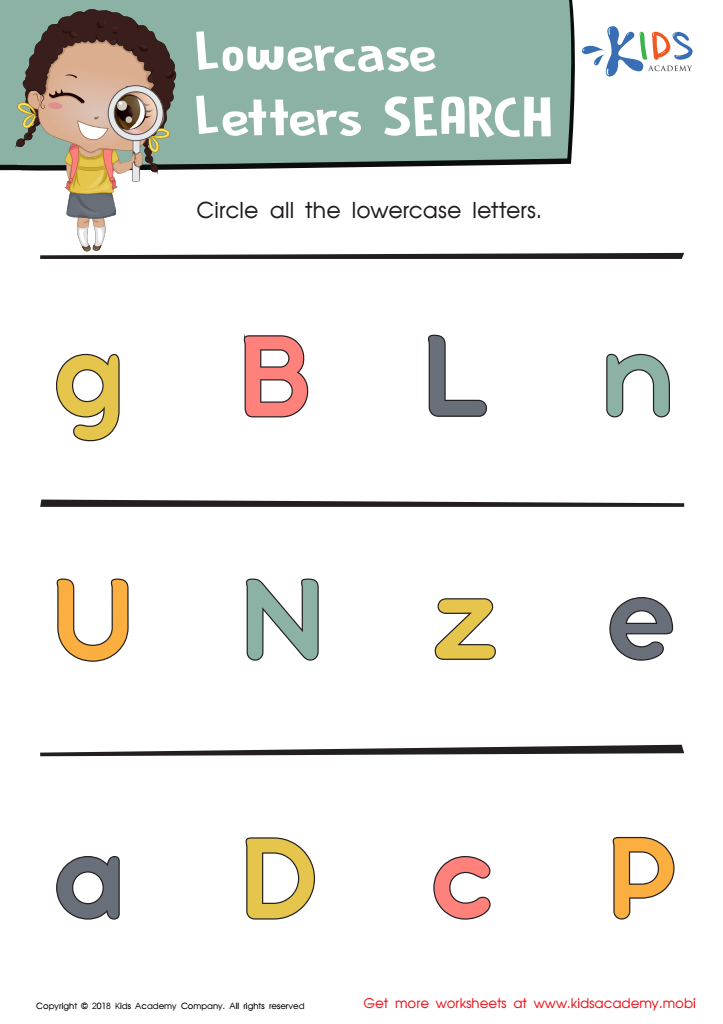
Circle all the lowercase letters in this worksheet. Identify them among a mix of uppercase and lowercase letters. Your child will have fun with this exercise thanks to its bright primary colors. Enjoyment and learning go hand-in-hand!
Lowercase Letters Search: Assessment Worksheet
Worksheet
Find Lowercase Letters v w x Worksheet


Find Lowercase Letters v w x Worksheet

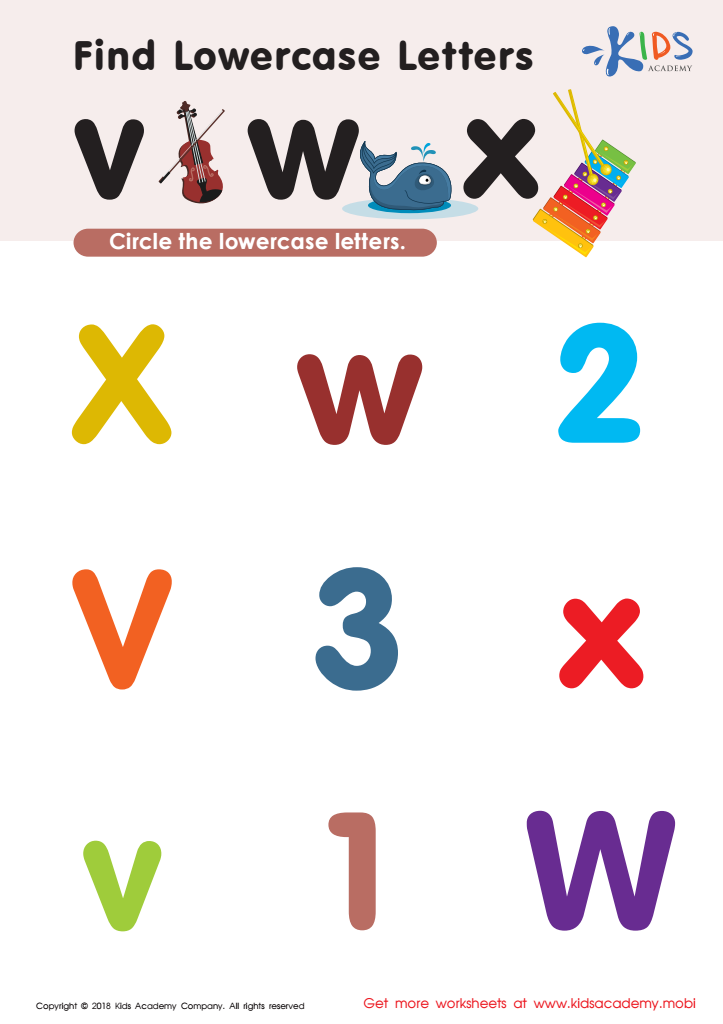
If your child doesn't know the alphabet, get them this helpful worksheet. It's an easy exercise to build their understanding of the alphabet and lowercase letters. Find the letters v, w, and x among other uppercase letters and numbers in the downloadable PDF.
Find Lowercase Letters v w x Worksheet

Worksheet


Parents and teachers should place significant emphasis on alphabet familiarity and letter recognition in children aged 5-6 because these skills are fundamental building blocks for early literacy. Alphabet knowledge is closely linked to a child's ability to learn to read and write, which are essential skills for academic success and everyday life.

At this critical developmental stage, children are highly receptive to learning. Familiarity with letters and their corresponding sounds lays the groundwork for phonemic awareness—a crucial skill that involves recognizing and manipulating sounds in words. Without a solid foundation in recognizing letters, children may struggle to sound out words and grasp reading fluency later on.

Moreover, research has shown that early alphabet recognition predicts later reading achievement and literacy skills. By investing time in teaching children the letters, parents and teachers can help prevent future learning difficulties and set children on a positive educational trajectory.

Engaging activities like singing the alphabet song, playing letter-matching games, and reading alphabet books can make learning enjoyable and effective. Knowing the alphabet also helps boost children's confidence and enthusiasm for learning. Given its importance in later academic success, ensuring children are comfortable and familiar with the alphabet by age 6 is a crucial step in their overall education.