Letter formation Letter Recognition Worksheets for Ages 5-6
5 filtered results
-
From - To
Enhance your child's early literacy skills with our engaging Letter Formation and Letter Recognition Worksheets designed for ages 5-6! These worksheets provide a fun and interactive way for young learners to master the basics of the alphabet. Through various activities, children will practice forming uppercase and lowercase letters while improving their letter recognition abilities. Our thoughtfully crafted worksheets aim to build a strong foundation for handwriting and reading, boosting confidence and encouraging a love for learning. Dive into our resource-filled activities and watch your child flourish as they explore the world of letters with creativity and excitement!
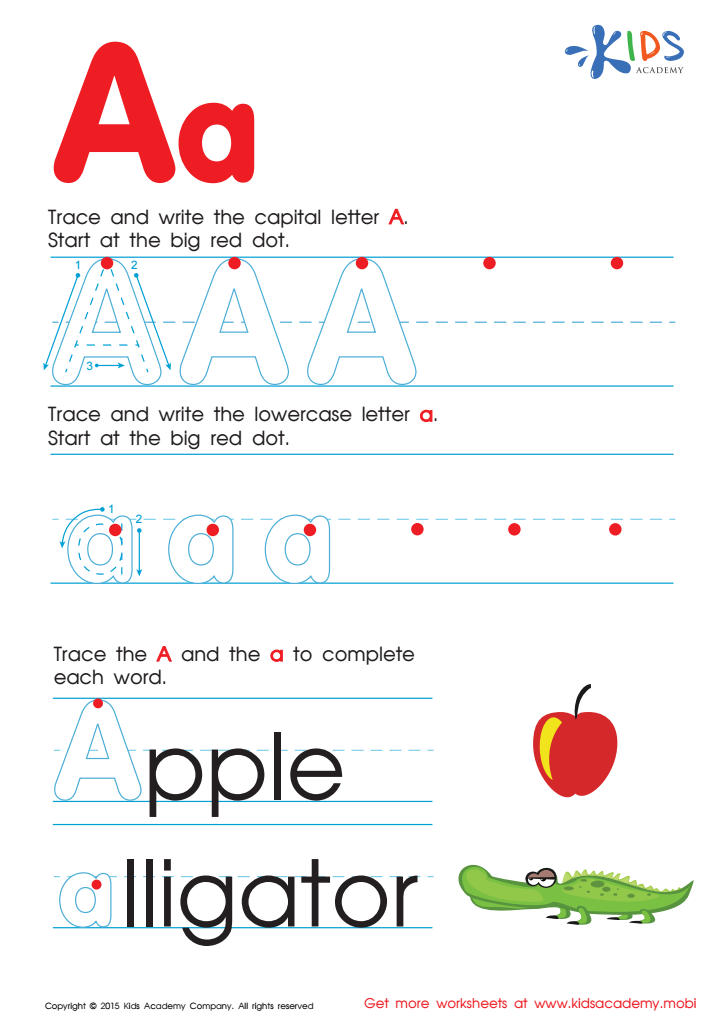
Letter A Tracing Page
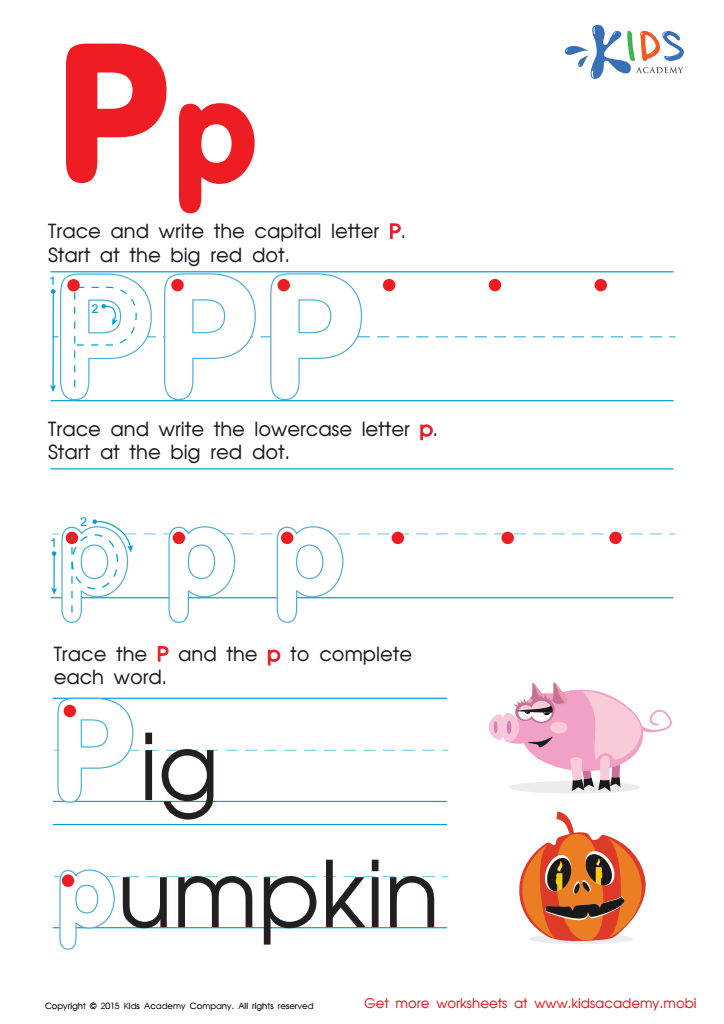
Letter P Tracing Page
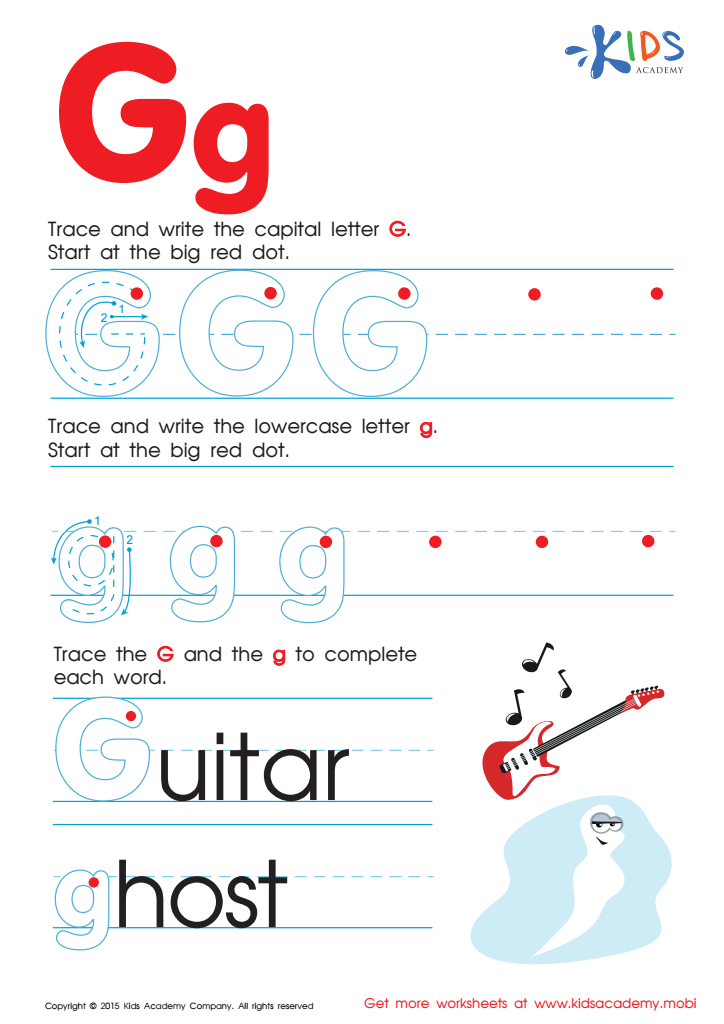
Letter G Tracing Page
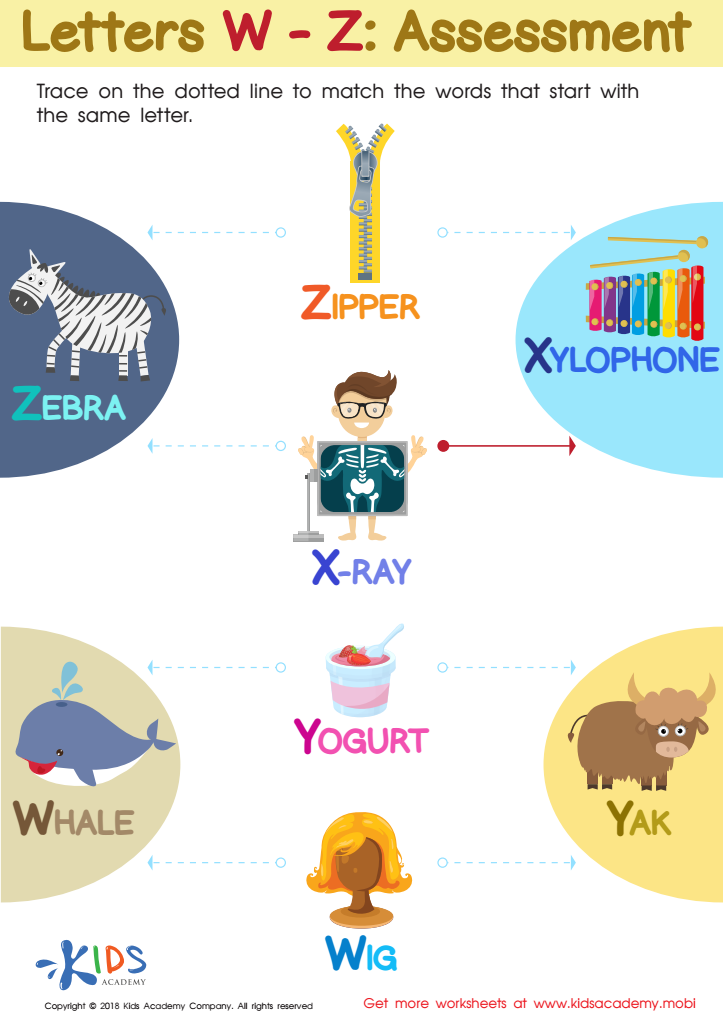
Letters W–Z Tracing Worksheet
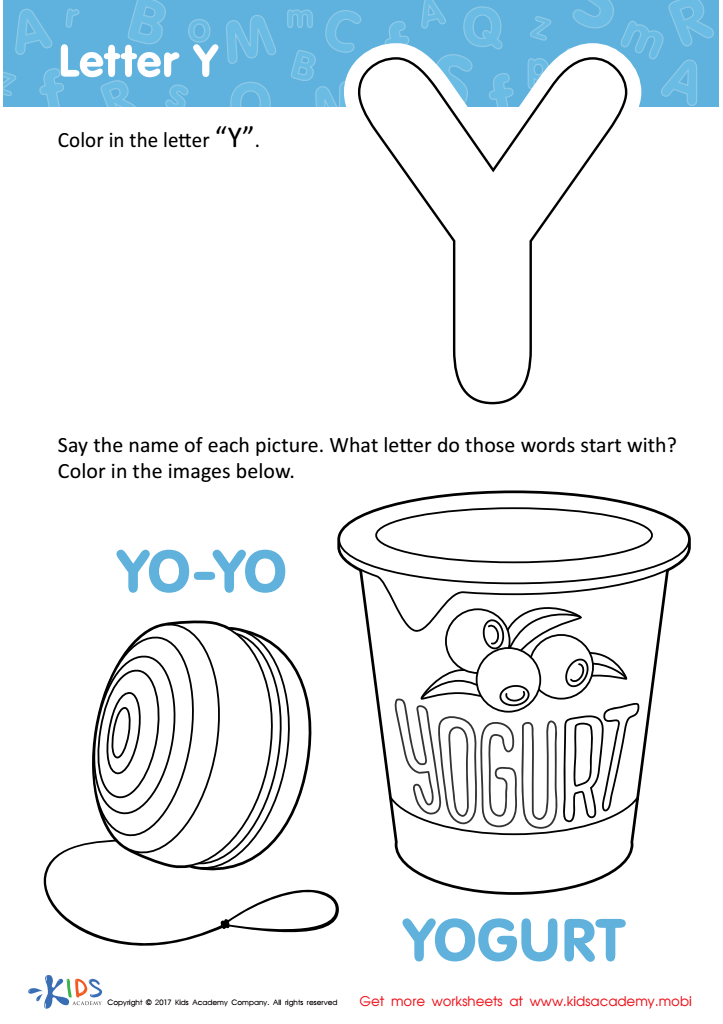
Letter Y Coloring Sheet
 Assign to My Students








Letter formation and letter recognition are crucial aspects of early literacy development for children ages 5-6. Parents and teachers should care about this because these skills form the foundation for reading and writing, essential components of academic success.
Letter recognition allows children to identify and name letters, which is essential for word formation and understanding that letters represent sounds. Early familiarity with letters helps children to decode words, enhancing their reading skills. Without this recognition, children may struggle with reading as they progress through school.
Successful letter formation is equally important; it not only influences handwriting clarity but also helps children develop fine motor skills. Good handwriting facilitates effective written communication, while poor formation can lead to frustration and decreased confidence in writing tasks. By focusing on proper letter formation, teachers and parents enable children to express themselves clearly and creatively.
Moreover, engaging in activities around letter recognition and formation fosters critical thinking and problem-solving skills as children learn to categorize and work with letters. Ultimately, nurturing these skills promotes a love for learning and paves the way for lifelong literacy, laying the groundwork for future academic achievement and cognitive development. Engaging children in these early skills is an investment in their educational journey.







