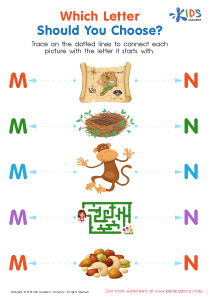
Lowercase identification Lowercase/Small Letters Worksheets for Ages 5-6
5 filtered results
-
From - To
Discover a fun and engaging way for children aged 5-6 to master lowercase letter identification with our colorful worksheets! Designed to enhance early literacy skills, these worksheets invite young learners to trace, match, and recognize small letters through interactive activities. Each page is crafted to promote focus and retention, making learning enjoyable for preschoolers and kindergarteners alike. Whether at home or in the classroom, our resources help strengthen letter recognition, paving the way for reading and writing success. Explore our collection today and unleash your child's potential with engaging, educational content tailored just for them!
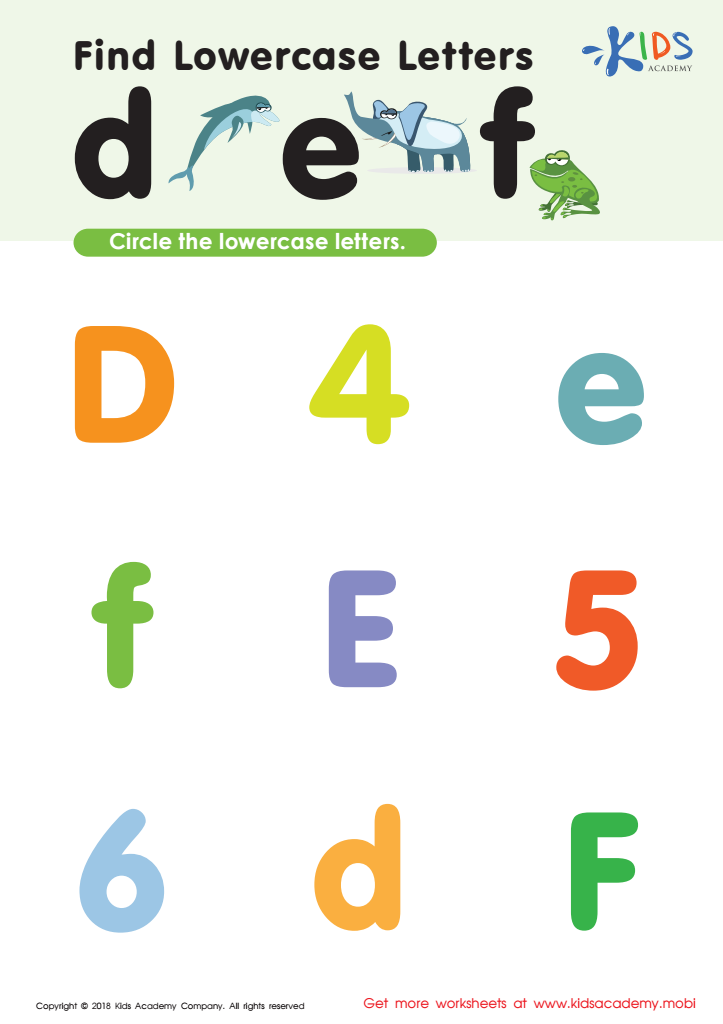
Find Lowercase Letters d e f Worksheet
 Assign to My Students
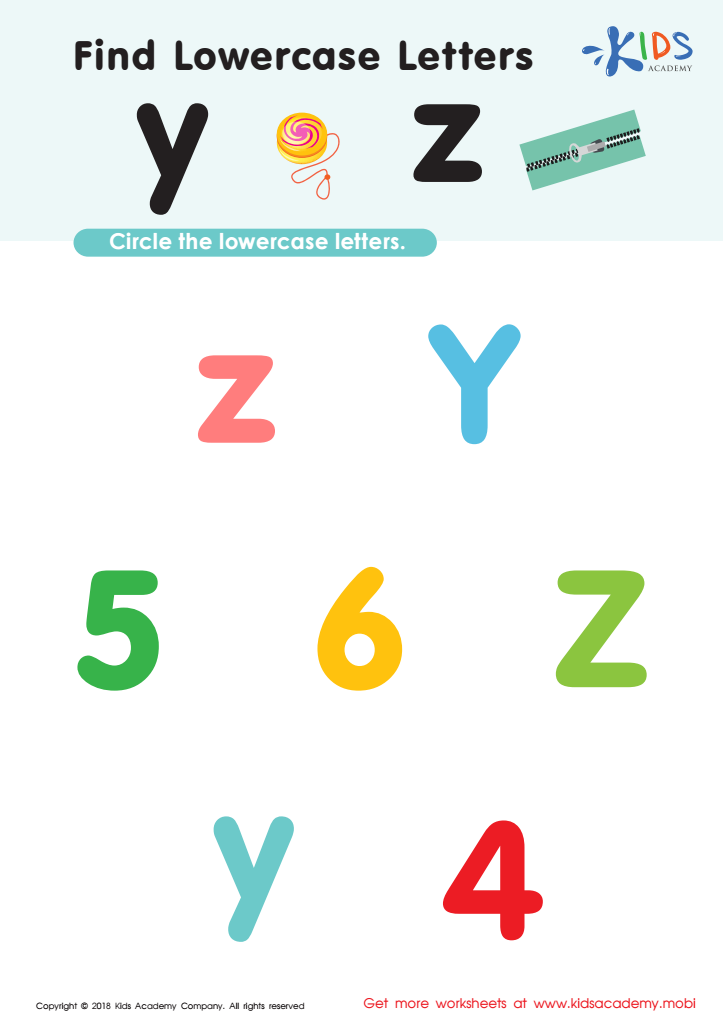
Find Lowercase Letters y z Worksheet
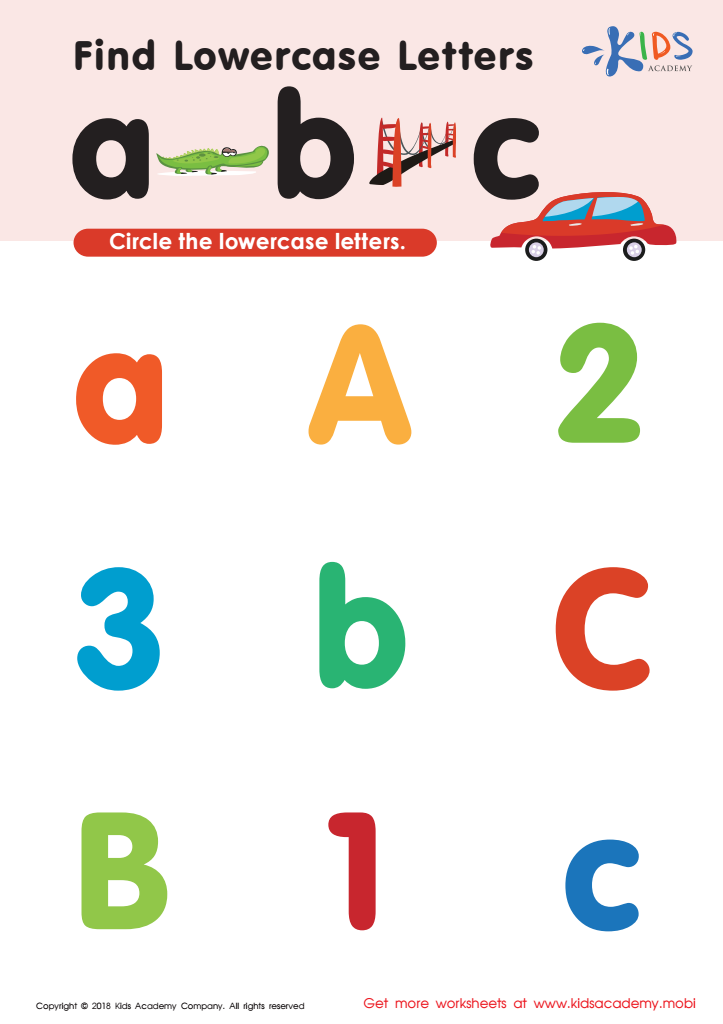
Find lowercase letters a b c Worksheet
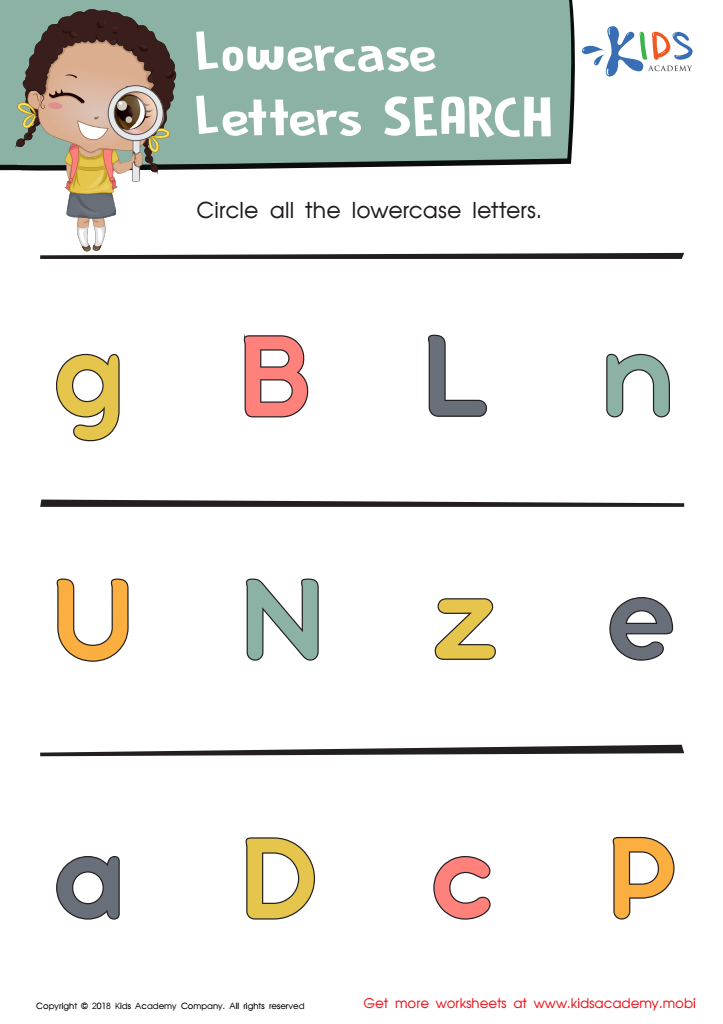
Lowercase Letters Search: Assessment Worksheet
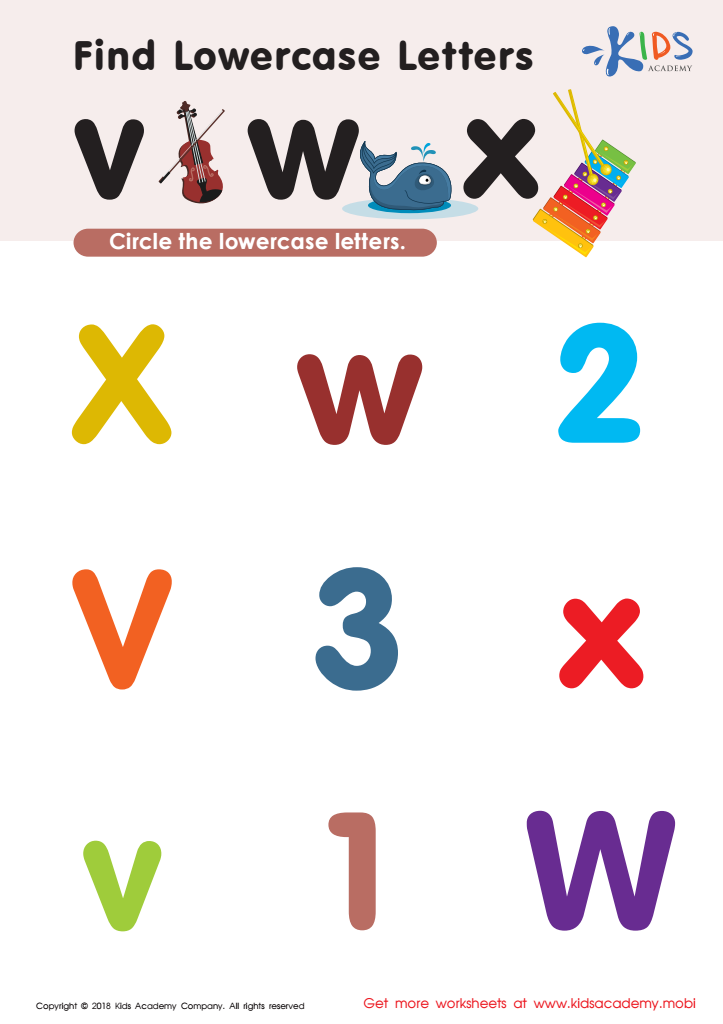
Find Lowercase Letters v w x Worksheet


Lowercase letter identification is crucial for children aged 5-6 as it lays the foundation for their reading and writing skills. During this formative stage, children are introduced to the alphabet, and understanding lowercase letters is vital. These letters frequently appear in texts, and recognizing them helps children develop fluent reading abilities.
Knowledge of lowercase letters enhances phonemic awareness—an essential skill for decoding words during reading. It enables children to connect sounds with letters, facilitating smoother transitions from letter recognition to word formation. When children can identify and use lowercase letters, they gain confidence in writing as well. This fluency is necessary for spelling and crafting sentences.
Additionally, mastery of lowercase letters fosters better communication skills, allowing children to express themselves more effectively. Early identification can also prevent future learning difficulties; vocabulary growth and comprehension skills develop substantially when children engage with texts that utilize both upper and lower cases.
For teachers and parents, emphasizing lowercase letter identification can lead to improved literacy outcomes, ultimately shaping a child’s educational trajectory and fostering a lifelong love of reading and writing. Therefore, it should be prioritized in early childhood education programs and at home.