Hand-eye Coordination Phonics Worksheets for Ages 5-6
5 filtered results
-
From - To
Introduce your child to the world of reading with our Hand-eye Coordination Phonics Worksheets for ages 5-6! These engaging, expertly designed worksheets blend the fundamentals of phonics with activities that boost hand-eye coordination, perfect for strengthening early literacy skills. Through fun, interactive exercises like tracing letters, matching sounds, and word-building, children will develop essential reading foundations while enhancing their fine motor skills. Ideal for young learners, these worksheets promote focused learning and retention, preparing kids for future academic success. Empower your child's learning journey with our multifunctional, educational resources at Kids Academy today!
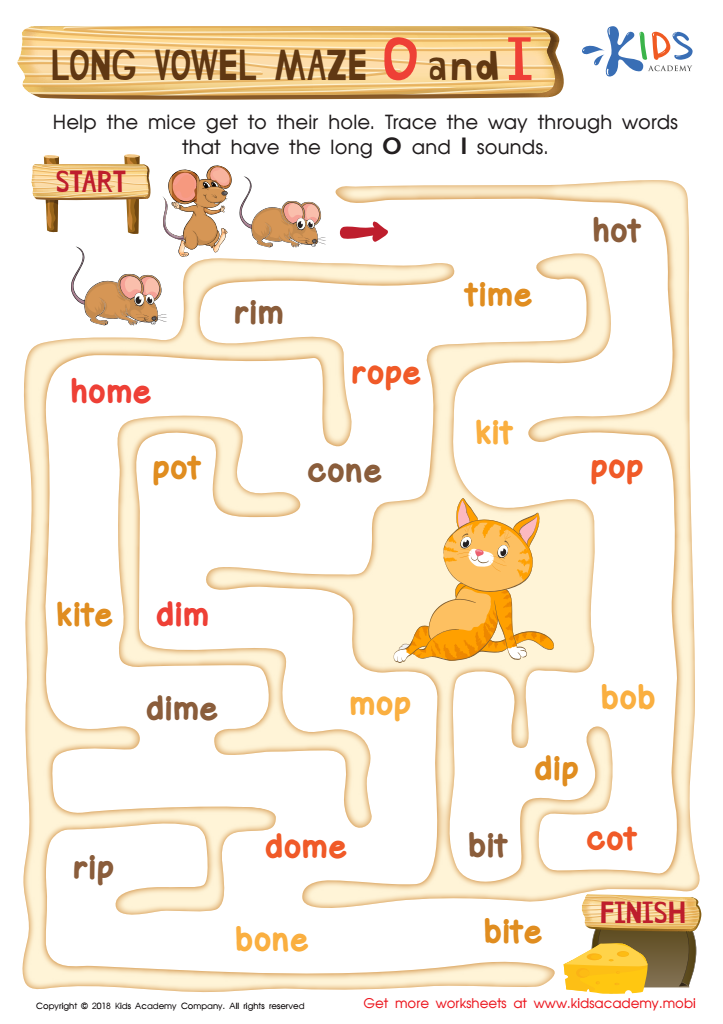
Long Vowel Maze /o/ and /i/ Worksheet
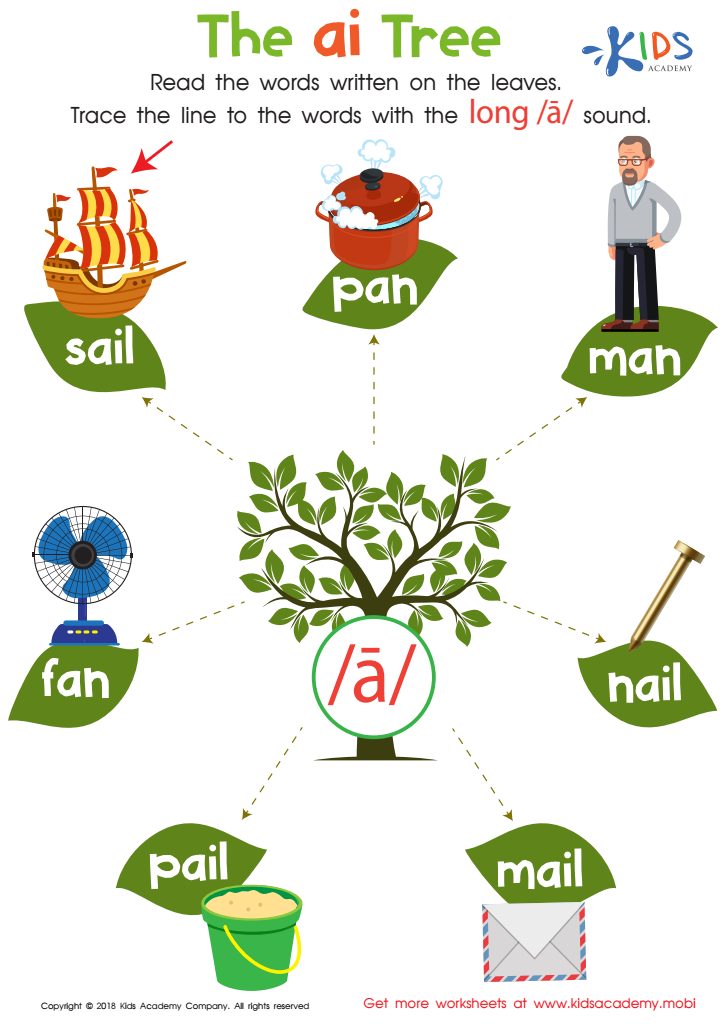
The AI Tree Worksheet

Long and Short U Worksheet
 Assign to My Students
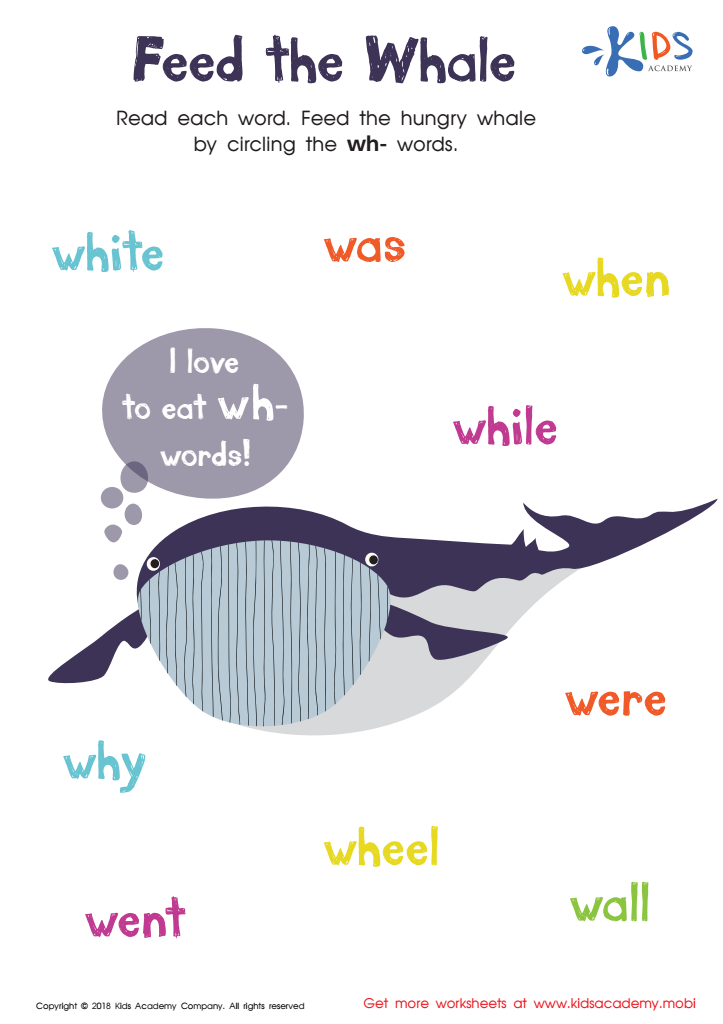
Feed the Whale Worksheet
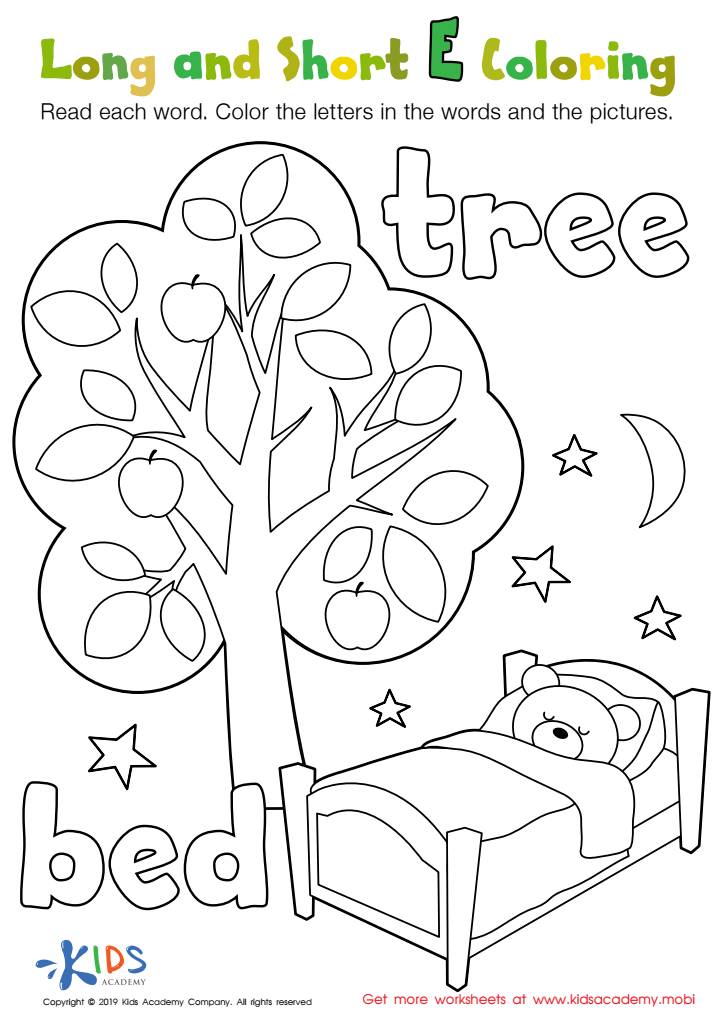
Long and Short E Worksheet
Assign to My Students








Hand-eye coordination refers to the ability of the eyes to guide the hands in movements. For children aged 5-6, it is a critical developmental skill that impacts their ability to perform everyday tasks and academic activities smoothly. Integrating hand-eye coordination exercises into phonics instruction is important for this age group for several reasons.
Firstly, these exercises enhance motor skills, which are essential for writing. By practicing tracing letters or copying words, children develop the muscles and fine motor control necessary for pencil grip and letter formation, fostering early writing competency.
Secondly, activities that combine hand-eye coordination with phonics, such as matching letter tiles to sounds or arranging words, help in reinforcing letter recognition and phonemic awareness. This multi-sensory approach makes learning more engaging and effective, leading to stronger reading skills as children better associate sounds with their visual representations.
Moreover, these exercises build children’s confidence and keep them engaged in learning by making the process interactive and playful. Children are more likely to retain information and enjoy lessons when they are actively involved.
For parents and teachers, focusing on hand-eye coordination in phonics lays a foundation for literacy success. It supports cognitive development, fine motor skills, and an overall positive learning experience, setting children on a path for academic achievement.







