
Handwriting practice Phonics Worksheets for Ages 5-6
5 filtered results
Difficulty Level
Grade
Age
-
From - To
Subject
Activity
Standards
Enhance your child’s literacy skills with our engaging Handwriting Practice Phonics Worksheets for ages 5-6. These beautifully designed worksheets offer young learners a fun and interactive way to develop their handwriting and phonics proficiency. Each worksheet focuses on essential letters and sounds, combining handwriting practice with phonetic learning to reinforce essential skills. Tailored for preschoolers and kindergarten students, our resources promote fine motor development while nurturing a love for reading and writing. Perfect for classroom use or at-home practice, these worksheets pave the way for academic success. Download today and help your child build a strong foundation in literacy!
Favorites
With answer key
Interactive
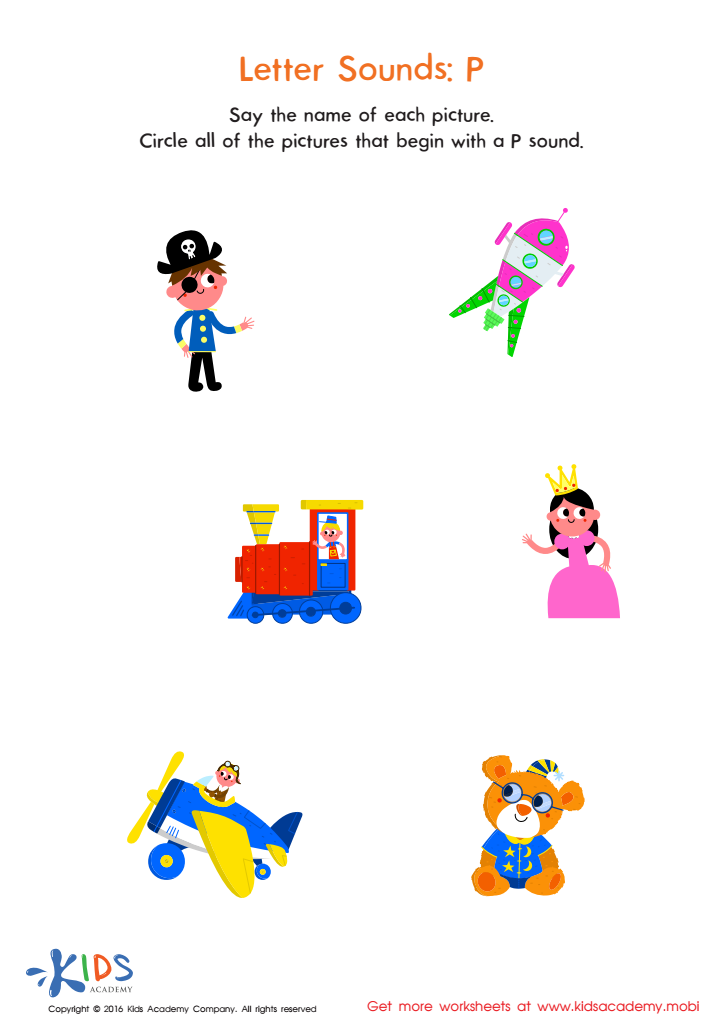
Letter P Sound Worksheet
Think P! Kids practice phonics with this fun letter P worksheet. With delightful illustrations, they'll sound out simple words and get closer to reading.
Letter P Sound Worksheet
Worksheet
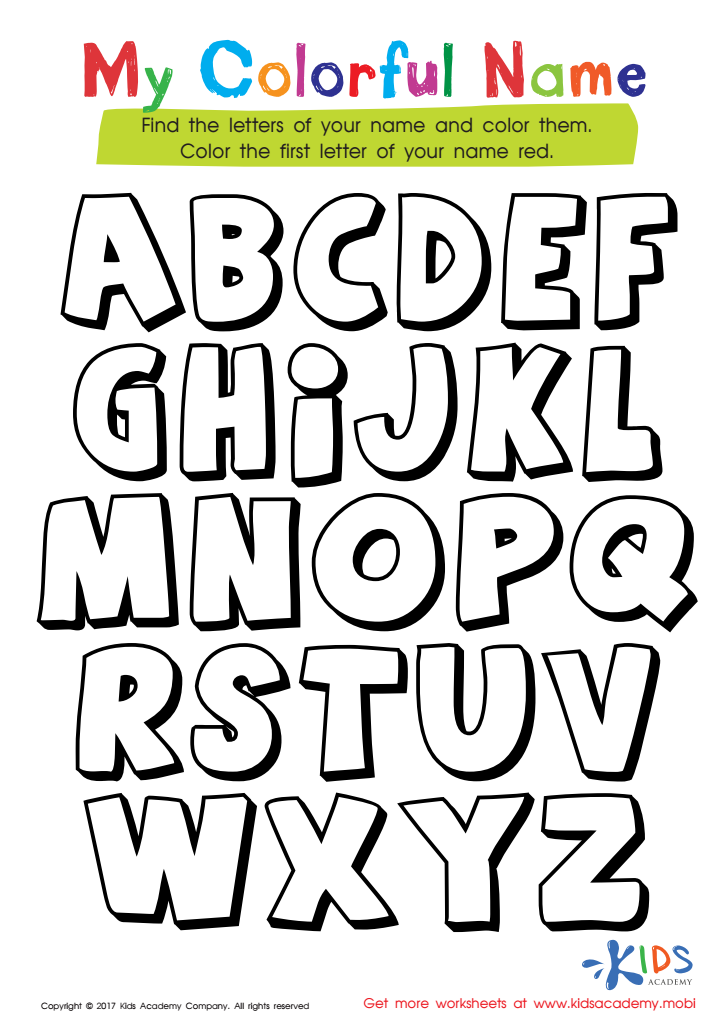
My Colorful Name Worksheet
Writing their names is a milestone for children. With this worksheet, they recall the letters in their name and color the letters one at a time. Spelling and alphabet order are reinforced as they find each letter. Use this fun printable to help kids learn to write their names!
Download (PDF)
 Assign to My Students
Assign to My Students
My Colorful Name Worksheet
Worksheet
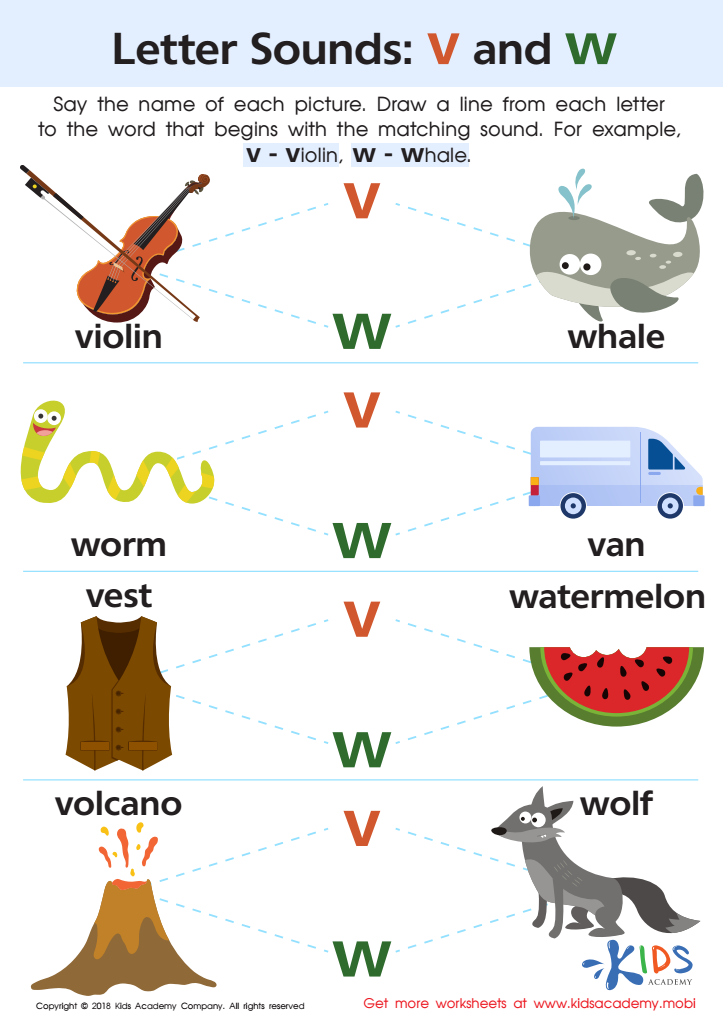
Letter V and W Sounds Worksheet
Help your child master the sounds of W & V while completing this fun phonics worksheet. Have them trace the dotted line from letter to picture while saying words like "worm", "violin" and "van" aloud to notice how each word begins with either W or V. Listen and pay attention to the pronunciation to complete the practice.
Letter V and W Sounds Worksheet
Worksheet
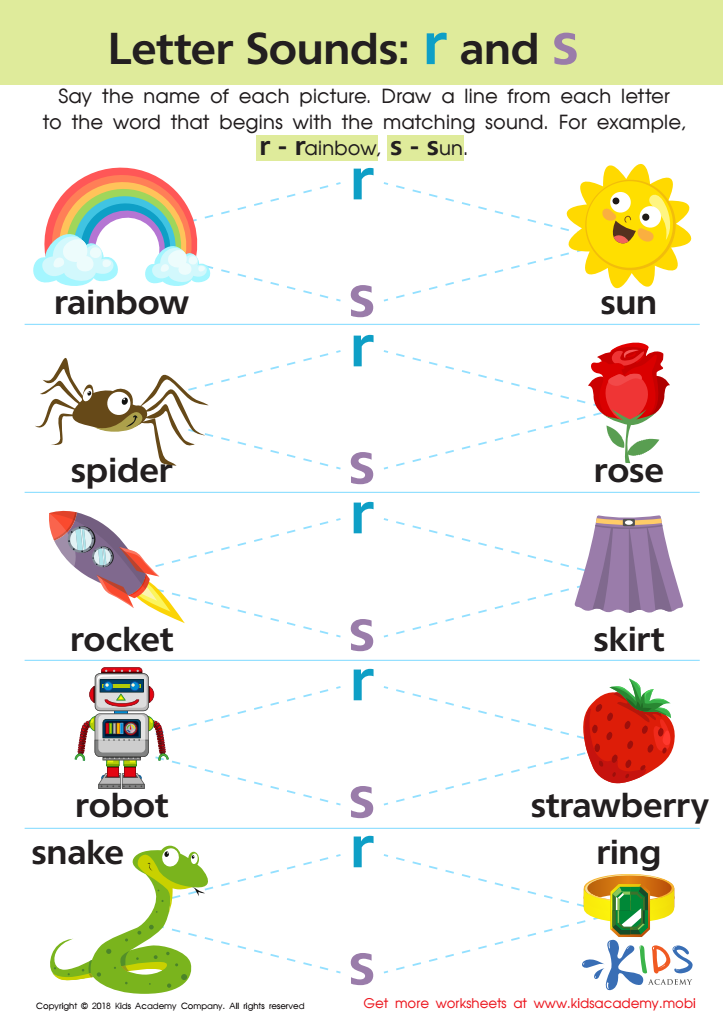
Letter R and S Sounds Worksheet
Kids Academy's phonics worksheet is full of fun and color! Help your child name the pictures and read the words under each one. Does it begin with an R or S? Then, use a pencil to trace the dotted line from the letter to its image. It's a great way to practice phonics skills!
Letter R and S Sounds Worksheet
Worksheet
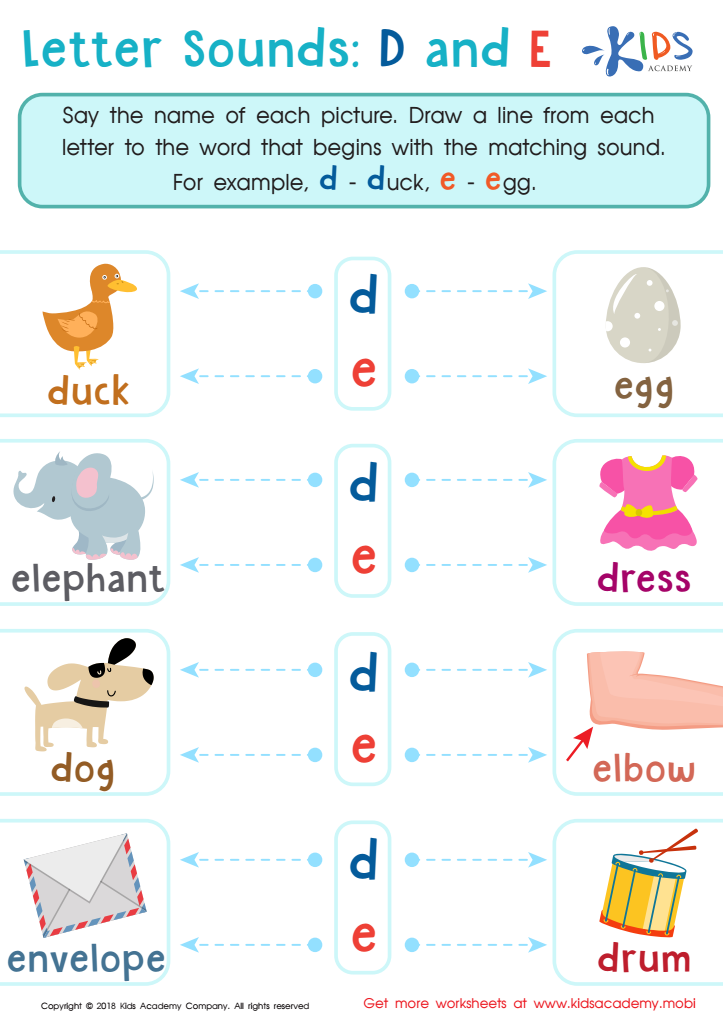
Letter D and E Sounds Worksheet
Kids can use picture clues and visual discrimination to name cheerful pics and isolate the beginning sound. This free PDF worksheet will help them develop phonological awareness, differentiate between "D" and "E", and hone fine-motor skills. It'll also boost their confidence as they become readers.
Letter D and E Sounds Worksheet
Worksheet
Join Kids Academy for Free
Who is primarily going to use this learning content?








Handwriting practice and phonics are crucial components of education for children aged 5-6, and both parents and teachers should prioritize them for several reasons. First, handwriting enhances fine motor skills, which are essential for overall dexterity and movement. Practicing handwriting helps children develop the ability to control their muscles, improving tasks like writing, drawing, and even buttoning clothes.
Second, phonics plays a key role in literacy development. By understanding the relationships between letters and sounds, children can decode words while reading, promoting their overall reading fluency. This early grounding in phonics paves the way for increased vocabulary and comprehension as they progress through school.
Moreover, integrating handwriting practice with phonics creates a multi-sensory learning experience, reinforcing connections between sounds and symbols. It helps solidify the recognition of letters and their corresponding sounds, aiding in both reading and spelling skills.
Finally, proficient handwriting skills help children express ideas clearly and communicate effectively. In a digital age, the importance of handwriting might be underestimated, but it remains essential for academic success and cognitive development. Therefore, both parents and teachers play a vital role in fostering these fundamental skills. Their support cultivates confident, capable learners ready for future challenges.







