Letter identification Phonics Worksheets for Ages 5-6
3 filtered results
-
From - To
Discover our engaging Letter Identification Phonics Worksheets, designed specifically for children ages 5-6. These worksheets help young learners master letter recognition and phonics skills through fun and interactive activities. With colorful illustrations and age-appropriate exercises, children will confidently identify both uppercase and lowercase letters while developing essential literacy skills. Our carefully crafted worksheets support phonemic awareness, making learning effective and enjoyable. Ideal for parents and teachers, these resources can be used in classrooms or at home, fostering a strong foundation for reading and writing. Empower your child’s learning journey today with our comprehensive Letter Identification Phonics Worksheets!
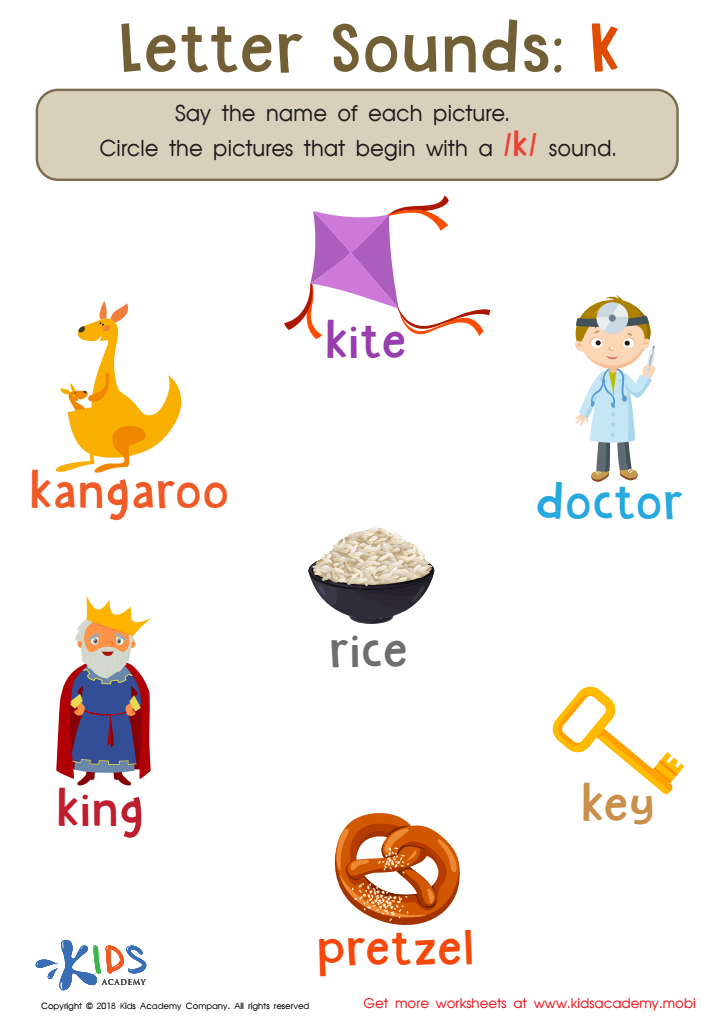
Letter K Sounds Worksheet
 Assign to My Students
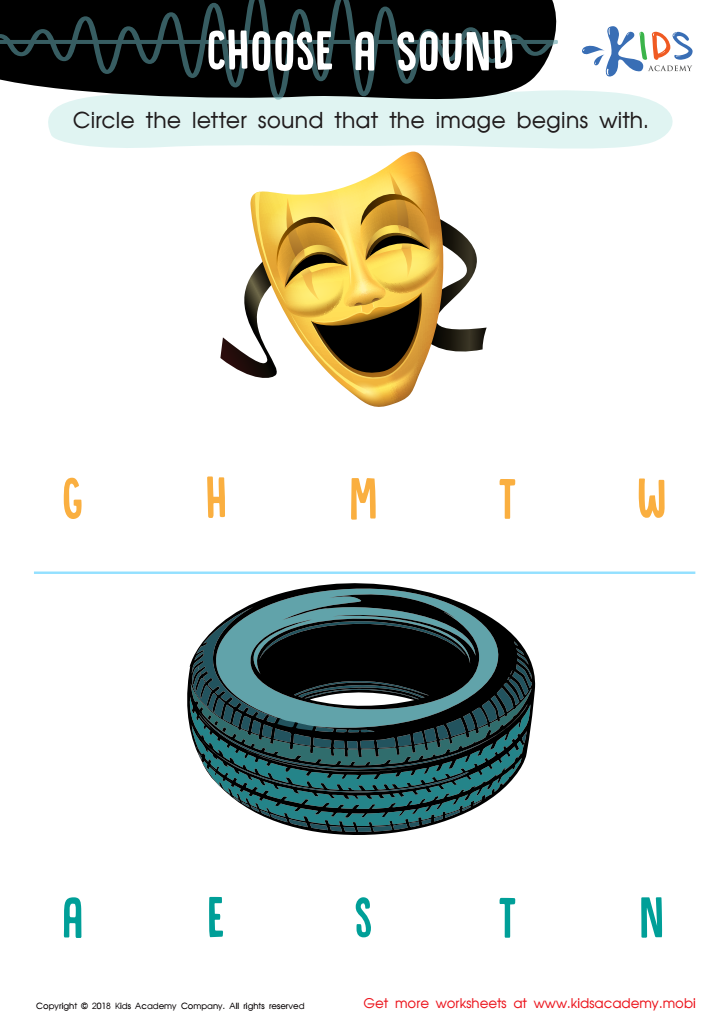
Choose a Sound Worksheet
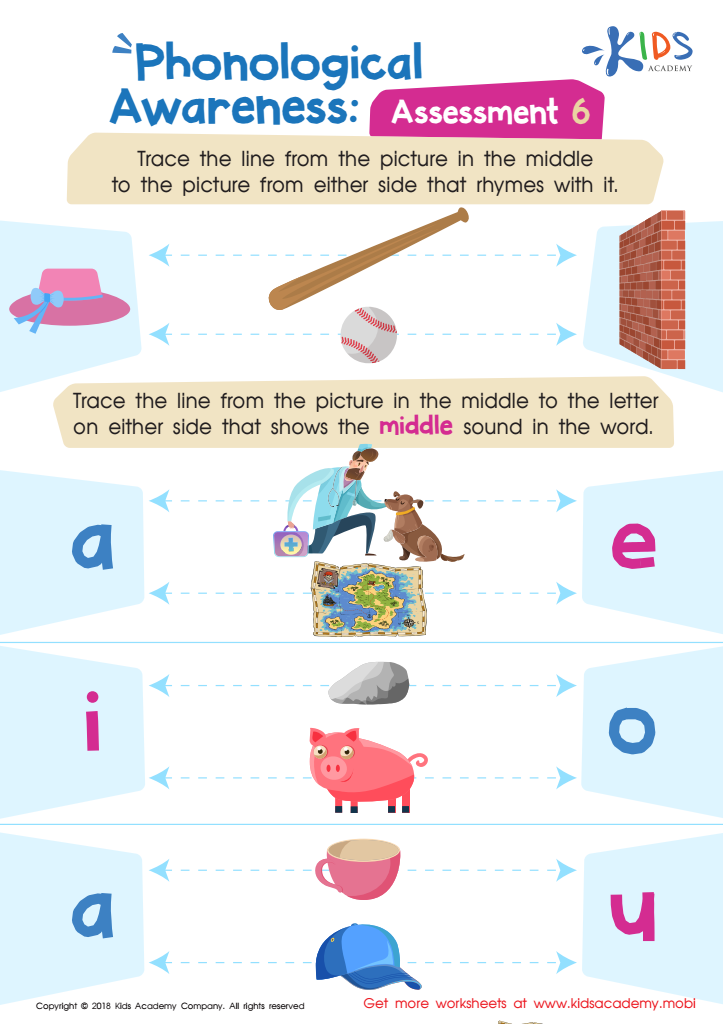
Phonological Awareness: Assessment 6 Worksheet








Letter identification and phonics are critical components of early literacy development for children aged 5-6. At this stage, children are forming the foundational skills necessary for reading and writing, and the ability to recognize letters and associate them with their corresponding sounds is vital.
Understanding letter identification helps children recognize the alphabet, leading to improved reading fluency. Early exposure to phonics allows them to decode words using sound-letter relationships, enabling them to read independently. This skill helps reduce frustration in reading and boosts their confidence as they begin to understand and engage with texts.
For parents and teachers, fostering letter identification and phonics in young learners thoroughly prepares them for future academic success. Effective early literacy instruction cultivates a love for reading and sets the stage for enhanced comprehension as children progress through school.
Moreover, research shows that strong phonics skills in early childhood can lead to higher literacy rates and better performance in subjects requiring reading proficiency. In a world where literacy is fundamental to lifelong learning, encouraging these skills ensures children develop not just as readers but as successful, educated individuals. Ultimately, supporting early literacy can have a profound impact on a child’s educational journey and future opportunities.







