Letter-sound association Phonics Worksheets for Ages 5-6
3 filtered results
-
From - To
Discover our engaging Letter-Sound Association Phonics Worksheets designed specifically for children aged 5-6! These printable resources make learning to read fun and interactive. Our worksheets help young learners connect letters with their corresponding sounds, laying a solid foundation for literacy development. Each worksheet features colorful illustrations and playful activities that captivate children's attention while enhancing their phonemic awareness. Perfect for classroom use or at-home learning, our materials encourage children to practice decoding skills in a supportive environment. Get started today and watch your child build confidence as they unlock the world of reading through effective phonics practice!
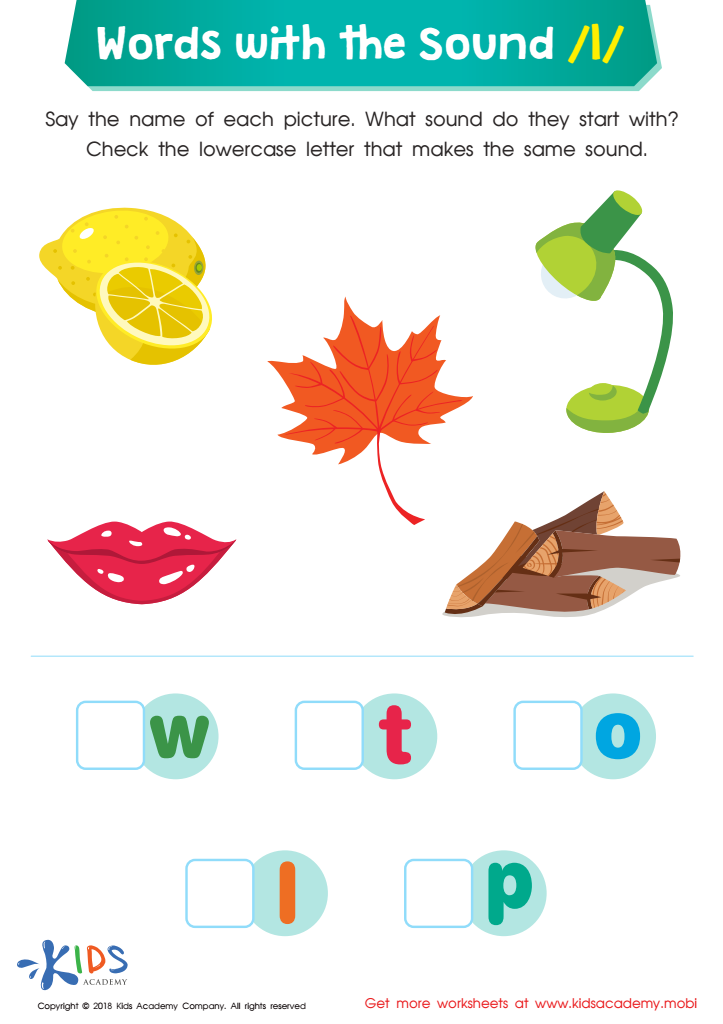
Words with Sound L Reading Worksheet
 Assign to My Students
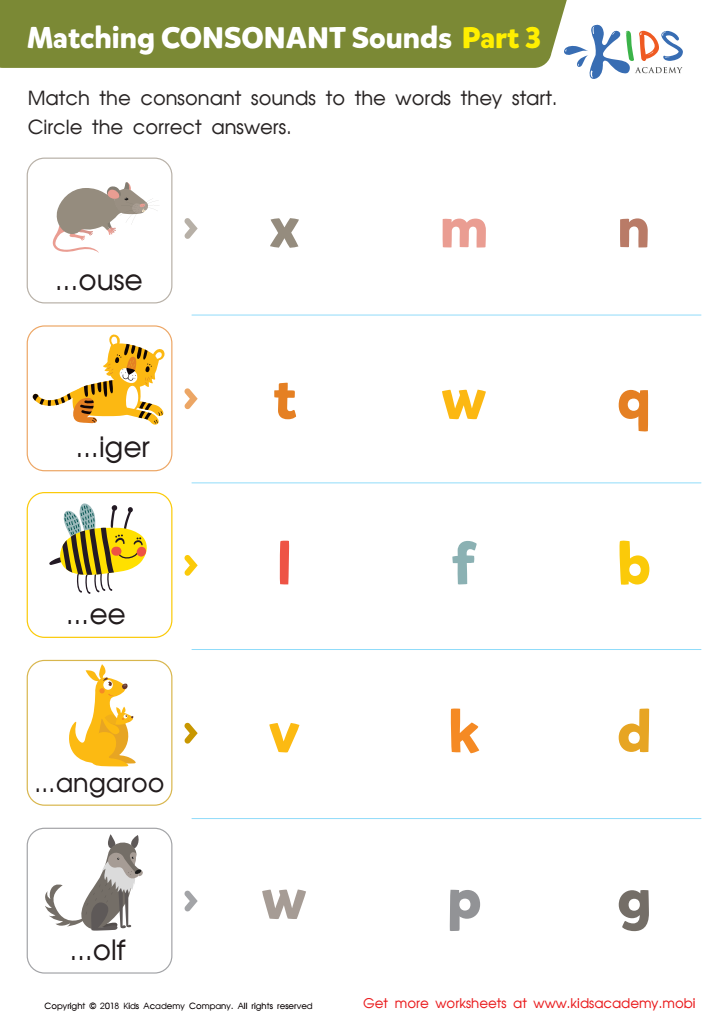
Matching Consonant Sounds: Part 3 Worksheet
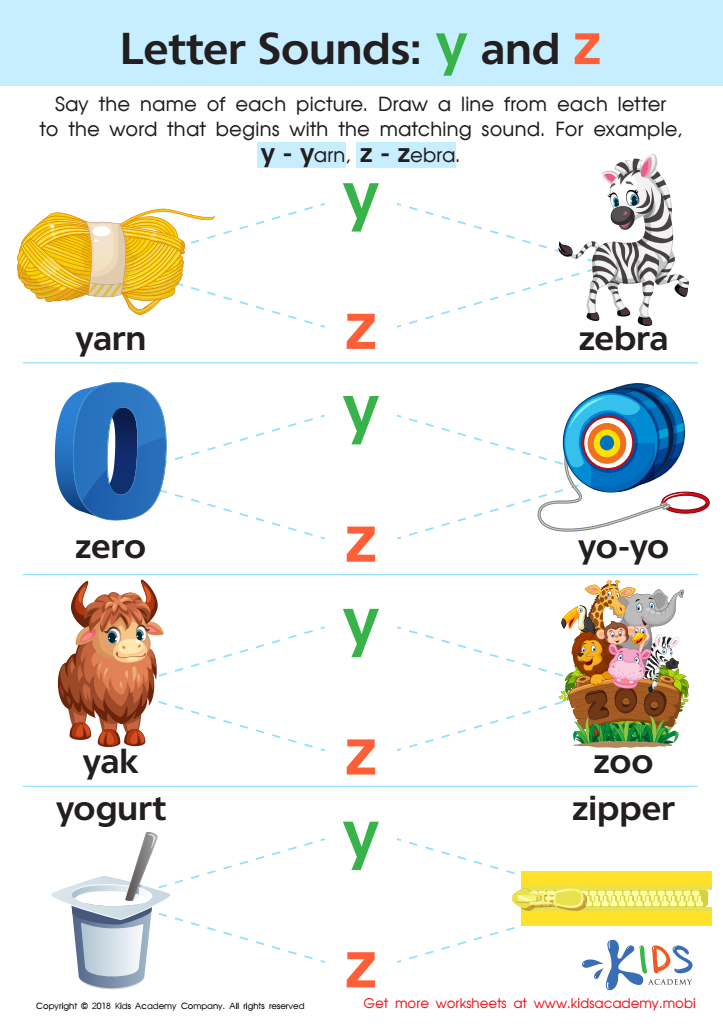
Letter Y and Z Sounds Worksheet








Letter-sound association phonics is a fundamental skill that lays the foundation for reading success in young children, particularly those aged 5-6. At this pivotal age, children are beginning to develop basic literacy skills, and understanding the relationship between letters and their corresponding sounds is crucial. This foundational knowledge enables them to decode words, facilitating independent reading and comprehension.
Parents and teachers should prioritize phonics because it significantly impacts a child’s literacy development and overall academic performance. When children grasp letter-sound associations, they become confident readers, which in turn fosters a love for reading. This passion for literature enhances vocabulary, boosts writing skills, and supports clear communication, which are essential in all areas of learning.
Moreover, early proficiency in phonics can help prevent future reading difficulties. When children struggle with decoding, they become frustrated and may develop a negative attitude toward reading. By reinforcing phonics at this early age, parents and teachers can create a supportive learning environment that encourages exploration and persistence. Additionally, mastering phonics provides lifelong benefits, contributing to enhanced cognitive development and critical thinking skills. Thus, understanding and implementing letter-sound associations in early education is vital for a child’s ongoing success and development.







