Sound Association Phonics Worksheets for Ages 5-6 - Page 2
26 filtered results
-
From - To
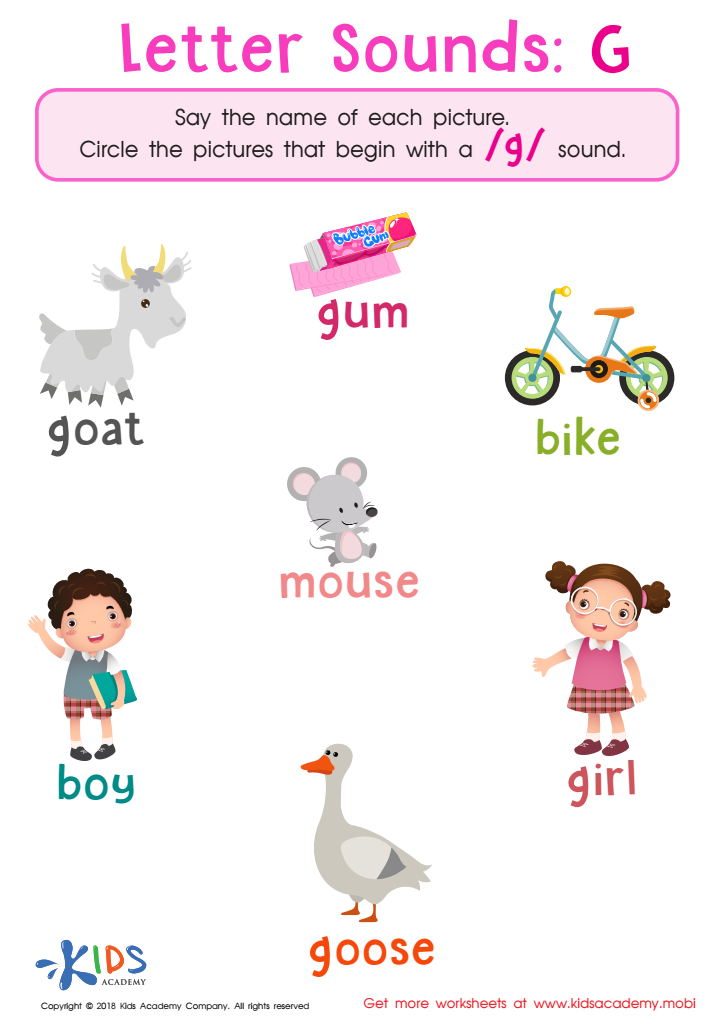
Letter G Sounds Worksheet
 Assign to My Students
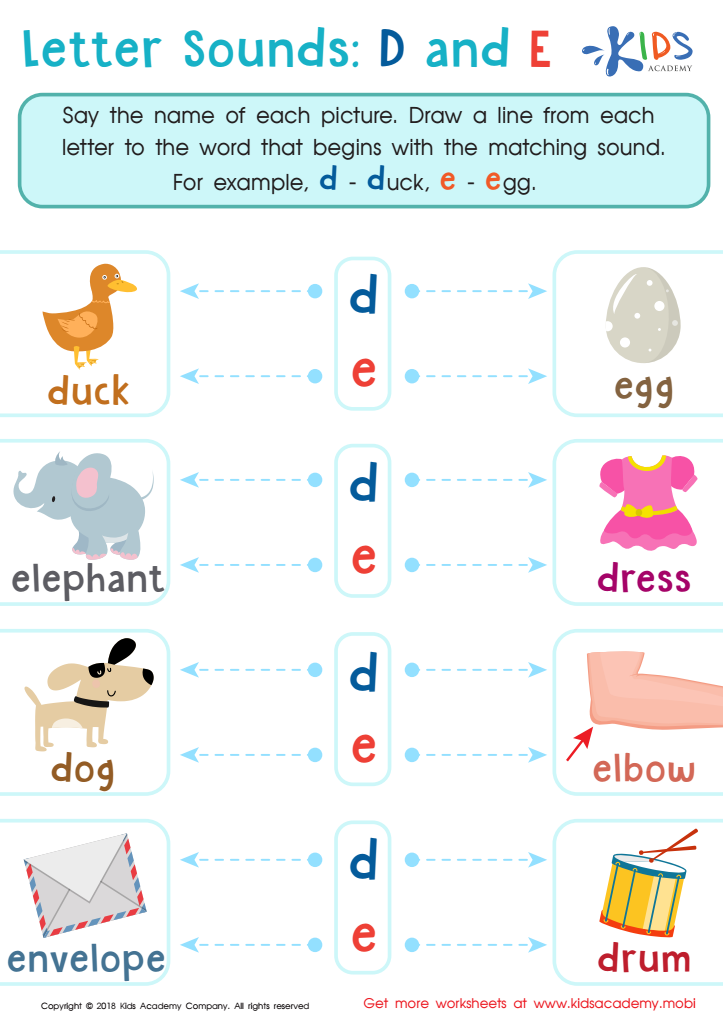
Letter D and E Sounds Worksheet








Understanding the importance of Sound Association Phonics for children ages 5-6 is pivotal for their foundational literacy development. Sound Association Phonics emphasizes the connection between sounds (phonemes) and their corresponding letters or groups of letters (graphemes). Mastery of this relationship is crucial as it equips young learners with the ability to decode new words, fostering independent reading skills early on.
For parents and teachers, integrating phonics into the curriculum or at-home learning routines offers measurable benefits. Children develop better pronunciation and spelling skills as they understand the construction of words rather than rote memorization. This method nurtures cognitive skills by promoting pattern recognition and phonemic awareness, vital for lifelong learning and language acquisition.
Studies show that effective phonics instruction can reduce literacy gaps, catering to diverse learning styles and providing equal opportunities for low socioeconomic communities. Moreover, when phonics lessons are interactive and engaging, children are more likely to find joy in reading, encouraging a habit that serves them well academically and personally.
Investing time in Sound Association Phonics isn't just about reading; it builds a robust foundation for overall educational success, supporting children in all subjects by enhancing comprehension and enabling clear communication. Therefore, prioritizing phonics for young learners primes them for future ease in both learning and life.







