Fine motor skills development Tracing Letters Worksheets for Ages 5-6
3 filtered results
-
From - To
Enhance your child's fine motor skills with our engaging Tracing Letters Worksheets, specifically designed for ages 5-6. These worksheets provide a fun and interactive way for young learners to develop their hand-eye coordination and pencil grip while mastering the alphabet. Each tracing activity encourages children to practice letter formation, fostering both creativity and confidence in their writing abilities. Ideal for homeschooling or classroom settings, these printable resources are both educational and entertaining. Download our Tracing Letters Worksheets today, and watch your child’s fine motor skills flourish as they embark on their journey to literacy!
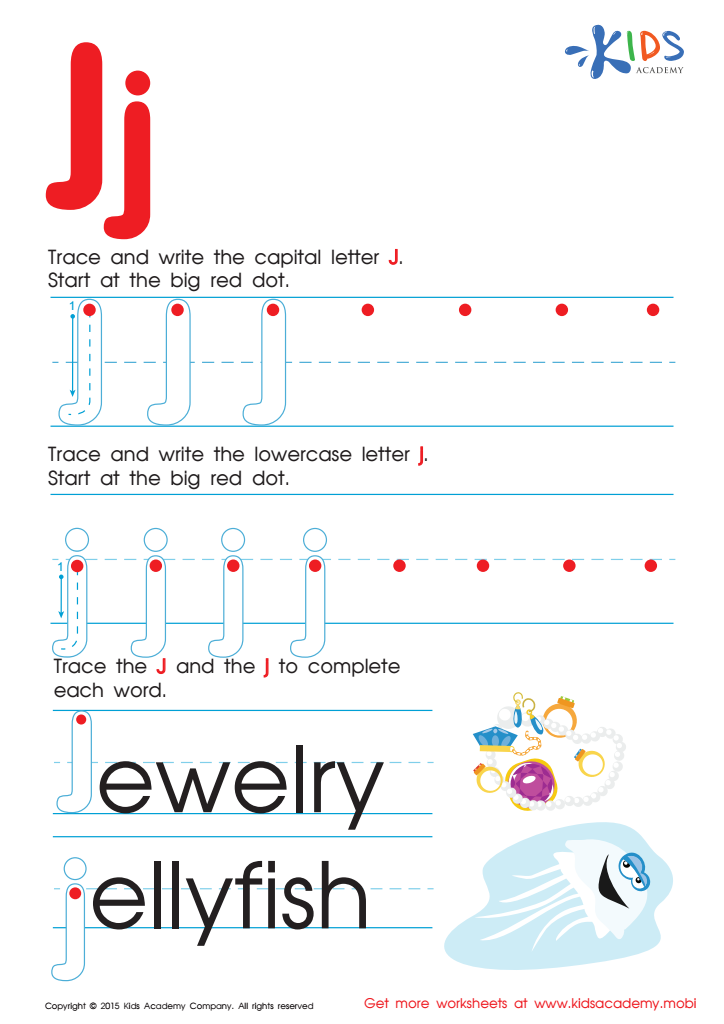
Letter J Tracing Page
 Assign to My Students
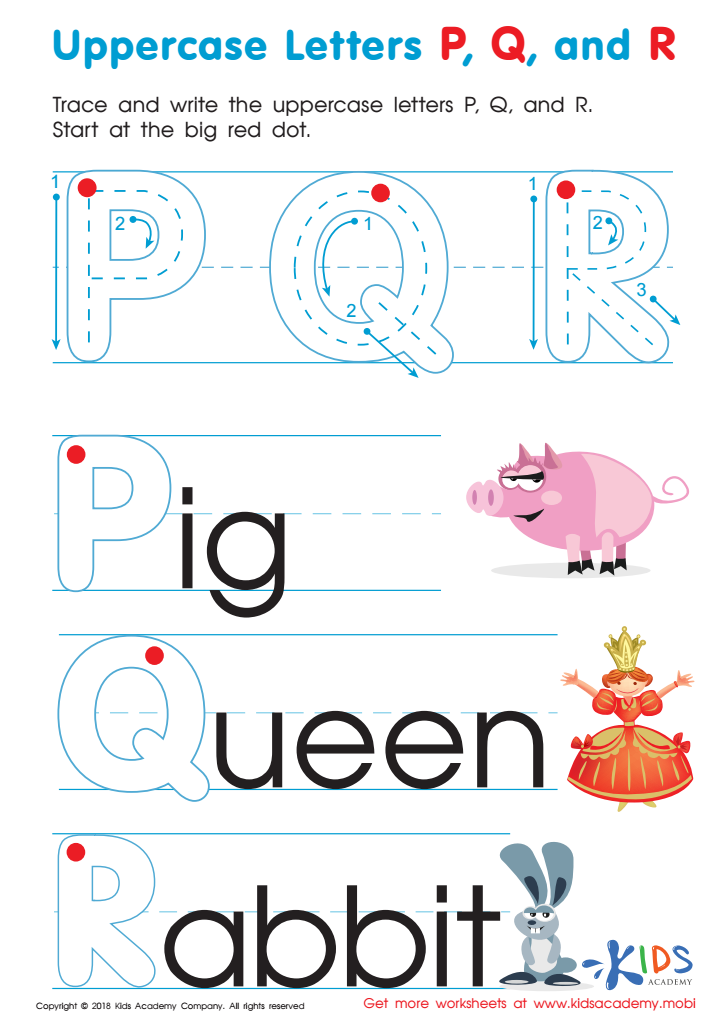
Uppercase Letters P, Q, and R Worksheet
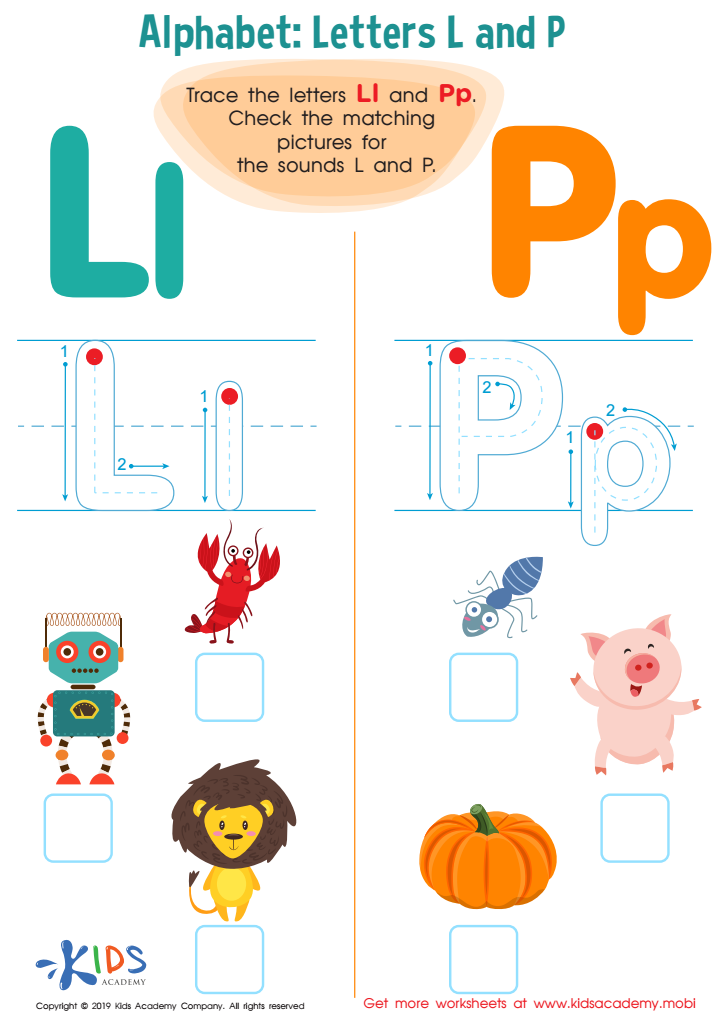
Letter L and P Tracing Worksheet







Fine motor skills development, particularly through activities like tracing letters, is crucial for children aged 5-6 as it lays the foundation for numerous essential abilities. First, these skills play a key role in academic success, especially in literacy. Tracing letters helps children develop the coordination and control necessary for handwriting, making the transition from scribbles to legible writing smoother and more effective.
Moreover, tracing activities bolster cognitive development by reinforcing letter recognition and phonemic awareness, foundational elements in learning to read. Engaging in these activities also fosters concentration and focus, skills important not just in school, but in life.
Parents and teachers should care because cultivating fine motor skills can significantly impact a child's confidence as they navigate their early educational experiences. Positive reinforcement during tracing exercises encourages a growth mindset; children learn the value of persistence and practice.
Ultimately, supporting fine motor skills development in young children aids in both their academic journey and personal growth, enabling them to express themselves more freely and participate fully in classroom activities. Therefore, prioritizing fine motor skill activities like tracing letters is a fundamental investment in children's future success.








