Word identification Vowels Worksheets for Ages 5-6
4 filtered results
-
From - To
Our "Word Identification Vowels Worksheets for Ages 5-6" are perfectly crafted to help young learners master vowel recognition and pronunciation. Designed with engaging activities and colorful visuals, these worksheets stimulate early reading skills by allowing children to identify, pronounce, and articulate short and long vowel sounds. Enhance your child's literacy foundation through fun matching games, word tracing, and vowel-filled exercises. Ideal for both classroom and home use, these worksheets are aligned with educational standards. Give your child a head start in their reading journey with our expertly designed tools for vowel comprehension and word identification.
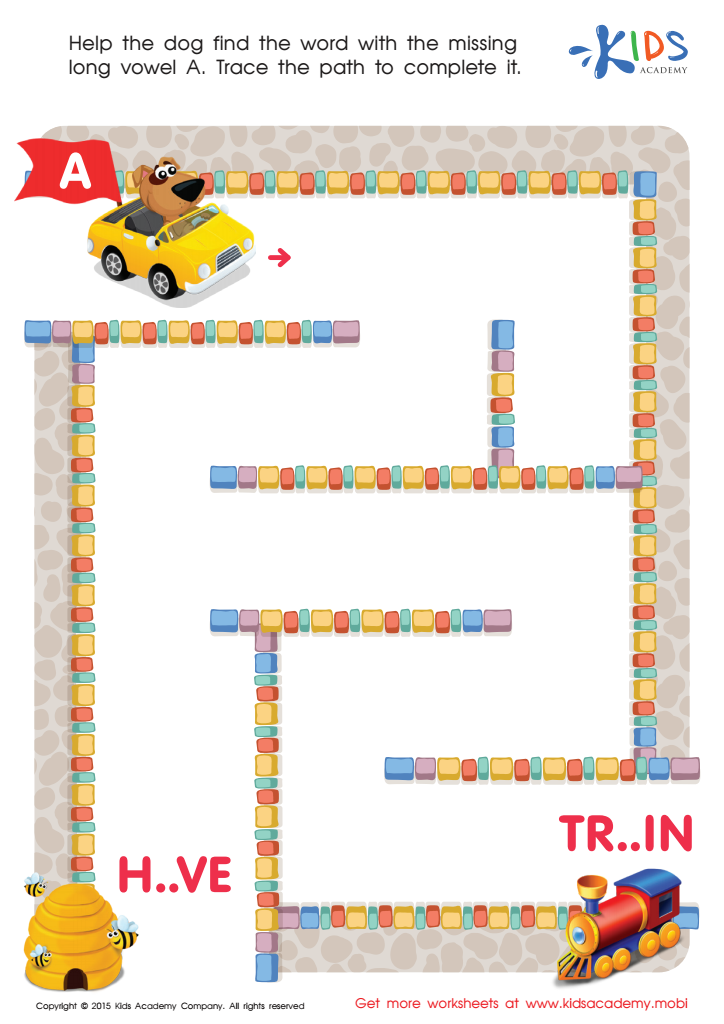
Long Vowel Sound A Worksheet
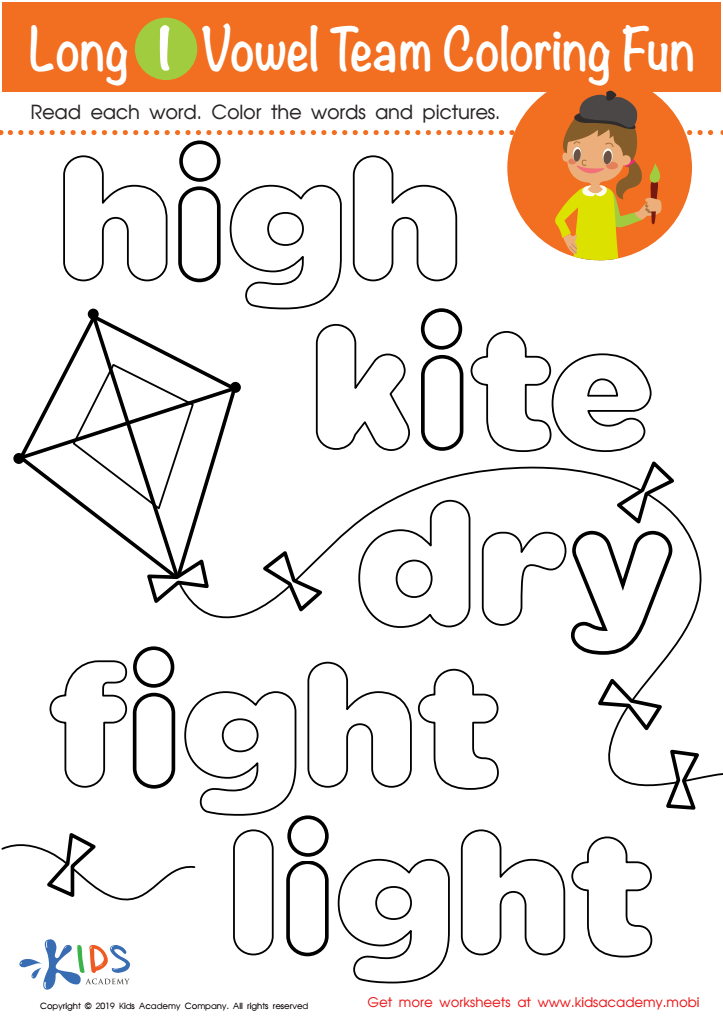
Long I Vowel Team Coloring Worksheet
 Assign to My Students
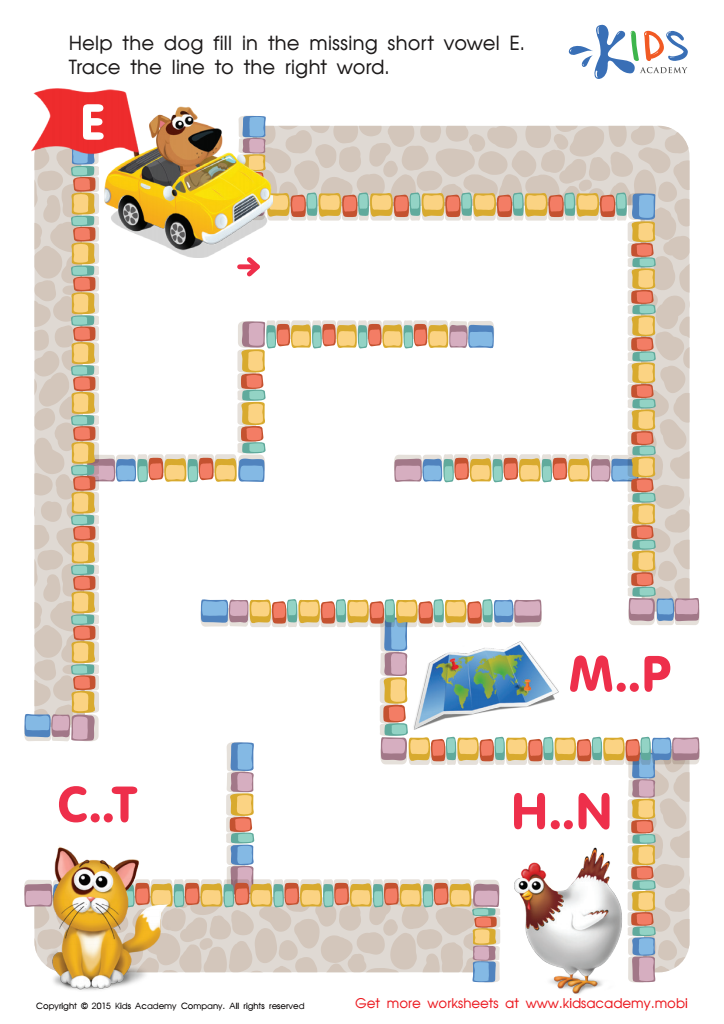
Short Vowel Sound E Worksheet
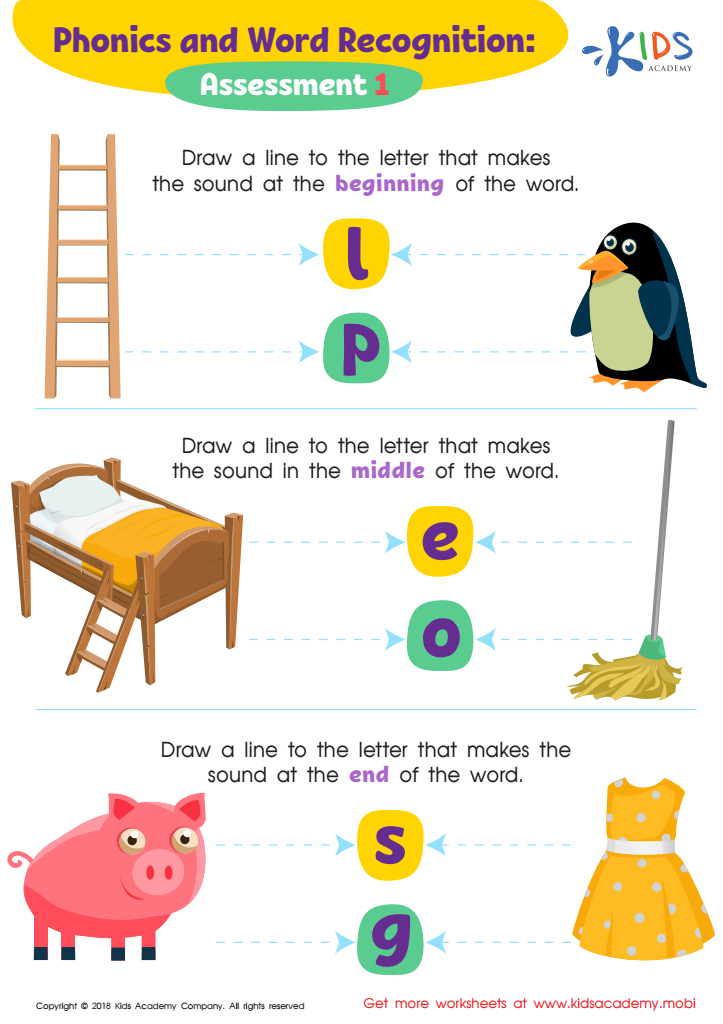
Phonics and Word Recognition: Assessment 1 ELA Worksheet





Understanding and identifying vowels is fundamental to early literacy for children aged 5-6. At this crucial stage, their brain is highly receptive to learning language, and vowels are the core of word formation in English. Mastering vowels helps children decode words, which is essential for reading fluently. Being able to identify and pronounce vowels correctly builds a strong foundation for phonemic awareness, which later supports spelling and writing skills.
When parents and teachers focus on vowel recognition, they're not just teaching letters; they're opening doors to better comprehension and communication. For instance, knowing the difference between short and long vowel sounds aids in distinguishing words like "cat" and "cake," directly enhancing vocabulary and understanding. Early difficulties with vowels can lead to reading struggles, affecting academic progress and self-esteem.
Additionally, vowel awareness plays a significant role in children's phonological processing, aiding in learning more complex linguistic structures later on. Encouraging children through activities, games, and reading exercises can make learning vowels enjoyable and effective. In short, prioritizing vowel identification for children aged 5-6 sets them up for long-term literacy success, making it an important focus for both parents and teachers.







