Chess knowledge Chess Worksheets for Ages 5-6
3 filtered results
-
From - To
Introduce your young learner to the fascinating world of chess with our thoughtfully designed Chess Knowledge Worksheets! Perfect for children aged 5-6, these worksheets nurture critical thinking, concentration, and problem-solving skills. Engaging and educational, our activities demystify chess basics, from identifying pieces and their movements to simple strategies, making chess enjoyable and accessible. Encourage your child's cognitive development and enhance their learning journey by exploring our comprehensive collection of fun chess puzzles and prompts. Embark on an exciting chess adventure today—ideal for beginners striving to master this timeless game. Explore now on Kids Academy!
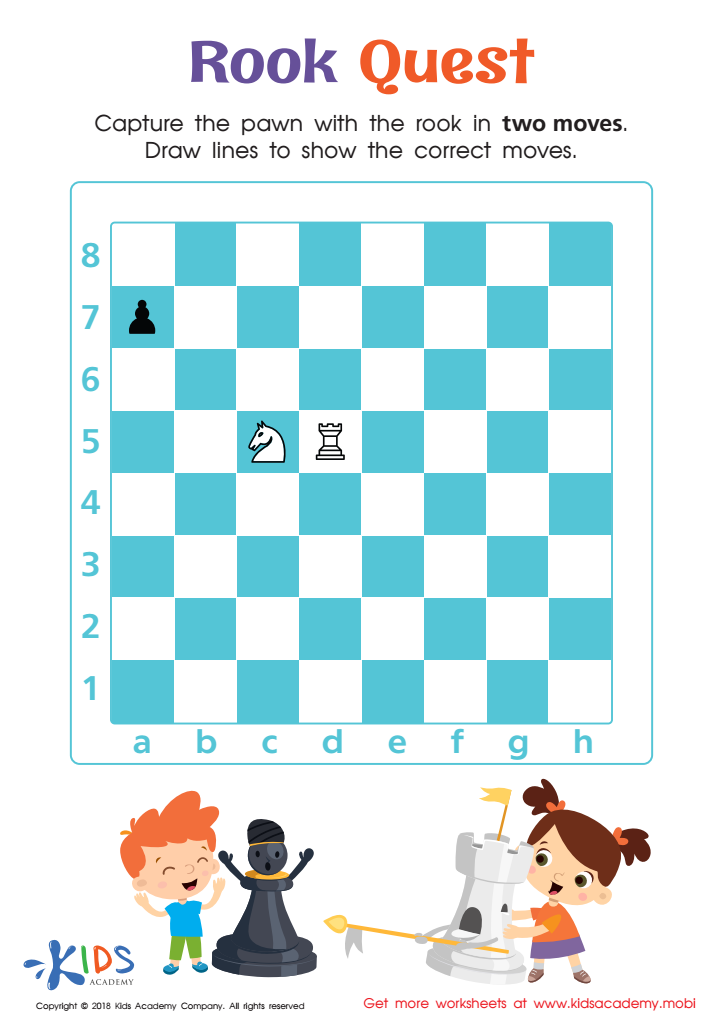
Rook Quest Worksheet
 Assign to My Students
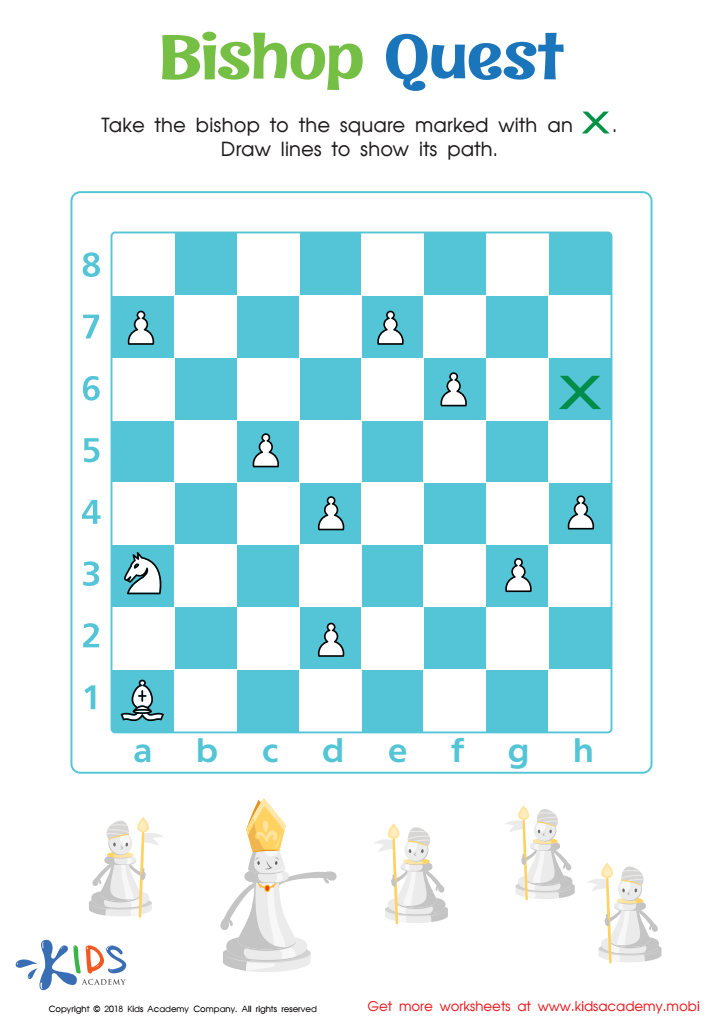
Bishop Quest Worksheet
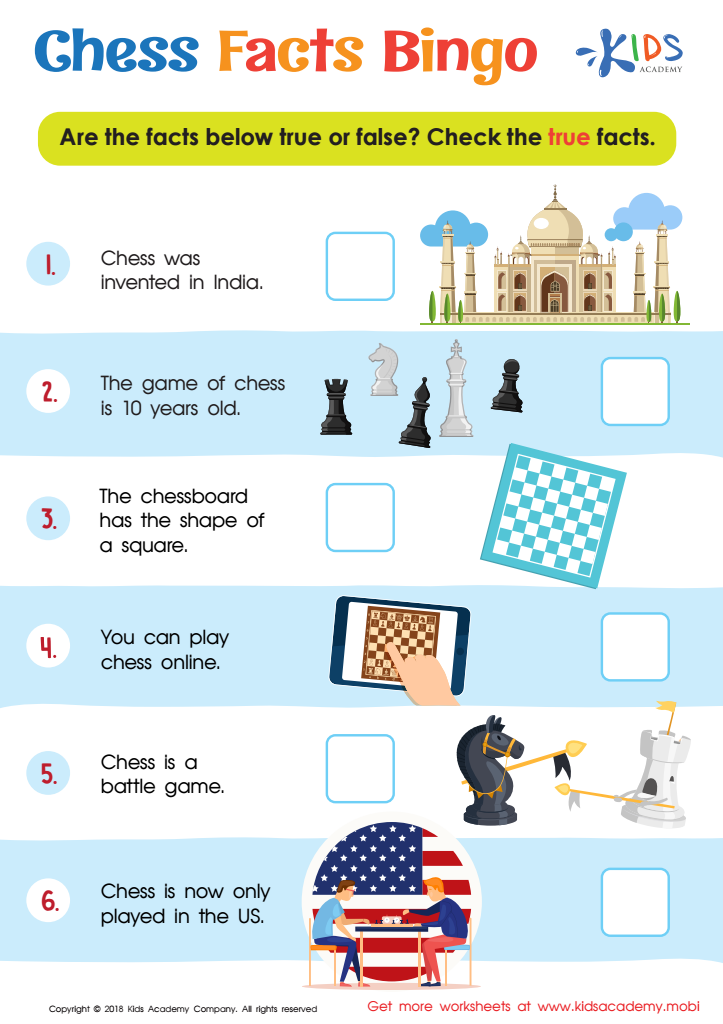
Chess Facts Bingo Worksheet




Parents and teachers should care about introducing chess to children ages 5-6 because it offers numerous cognitive, social, and emotional benefits that support their overall development. At this formative age, kids are highly receptive to new information, and chess provides a playful yet structured environment that promotes critical thinking, problem-solving, and strategic planning.
First, chess is excellent for cognitive development. It helps improve memory, concentration, and spatial reasoning. Learning the rules and strategies of chess requires kids to focus, plan ahead, and analyze the consequences of their moves, which can enhance their ability to concentrate and think critically in other activities or subjects.
Second, playing chess fosters important social and emotional skills. Engaging in chess teaches children the values of patience, respect for others, and good sportsmanship. It also encourages them to deal with winning and losing in a healthy manner, promoting resilience and emotional regulation.
Additionally, chess supports mathematical learning. The game’s grid structure and movement rules reinforce concepts of geometry and number sense, providing a fun and engaging way to experience math in action.
In conclusion, introducing chess to young children can be a powerful tool for holistic growth, making it a beneficial addition to both classroom environments and at-home activities. We are investing not just in a game, but in the foundational skills that children will use throughout their lives.