Unlock the world of chess for young minds with our Chess Strategy Learning Worksheets tailored for ages 5-6! These worksheets, designed by experts, make learning chess fun and engaging. Kids will explore basic strategies, piece movements, and simple tactics through entertaining and educational activities. By playing through scenarios and solving puzzles, young learners can develop critical thinking, problem-solving skills, and concentration. Whether a beginner or a budding chess enthusiast, these worksheets are the perfect tool to ignite a lifelong love for the game. Discover the joy of mastering Chess with our step-by-step, age-appropriate guides today!

Check out this FREE Trial Lesson on Chess for age 5-6!

Special Moves: En Passant

Favorites
With answer key
Interactive
  • 5-6
  • Chess strategy learning
  • Chess
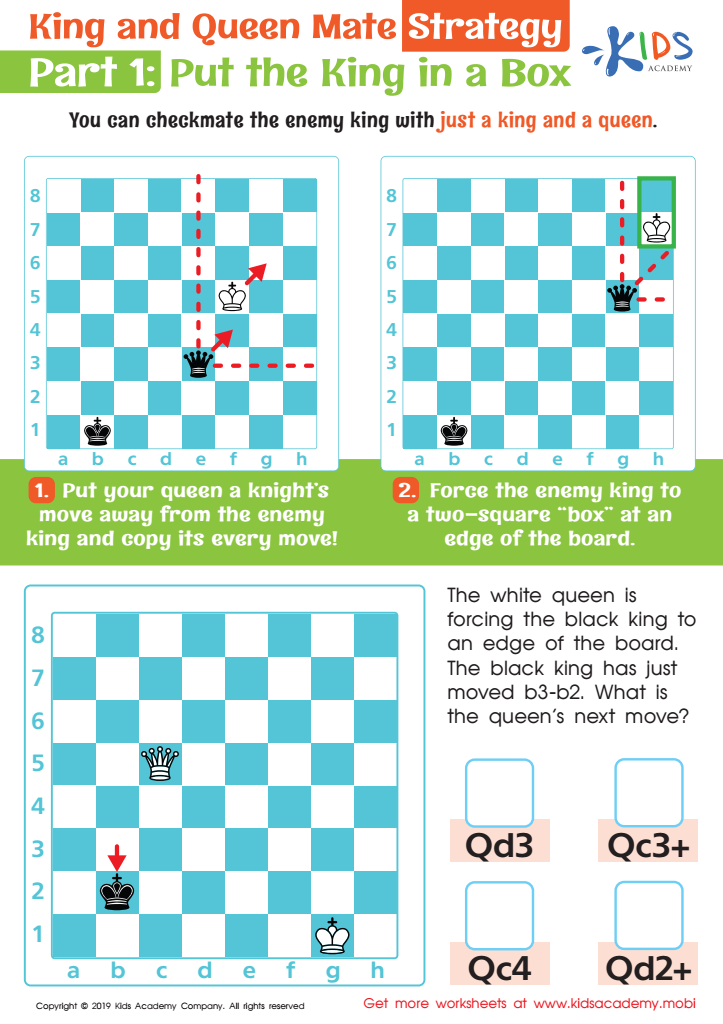
King and Queen Mate Strategy: Part 1 Worksheet

King and Queen Mate Strategy: Part 1 Worksheet

This worksheet will help your young chess player strategize. They’ll learn how to checkmate the opponent’s king using just a king and a queen. Descriptive sample boards will show them the strategy and then a practice board will test their knowledge. Allowing them to plan the queen’s next move to checkmate the opposing king.
King and Queen Mate Strategy: Part 1 Worksheet
Worksheet
En Passant: Tricky Pawn Capture Worksheet

En Passant: Tricky Pawn Capture Worksheet

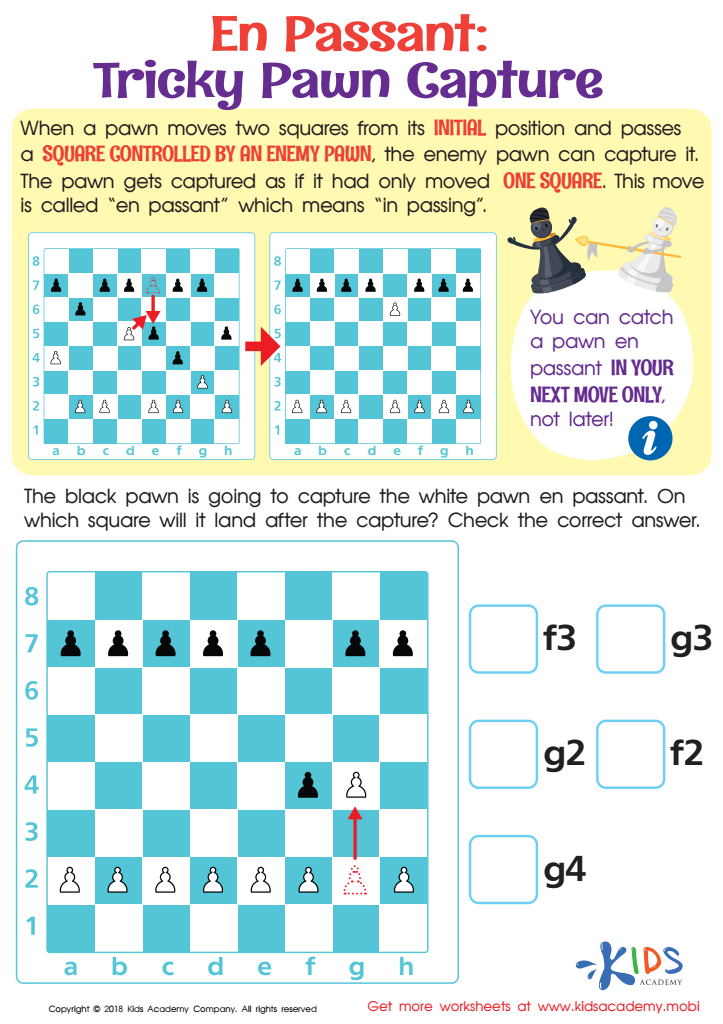
When a pawn moves two squares from its initial position and enters a square controlled by an enemy, the enemy can capture it as if it had moved one square. This move is called "en passant" (in passing). Ask your child which square the black pawn will land on after capturing the white pawn en passant using the provided chessboard.
En Passant: Tricky Pawn Capture Worksheet
Worksheet
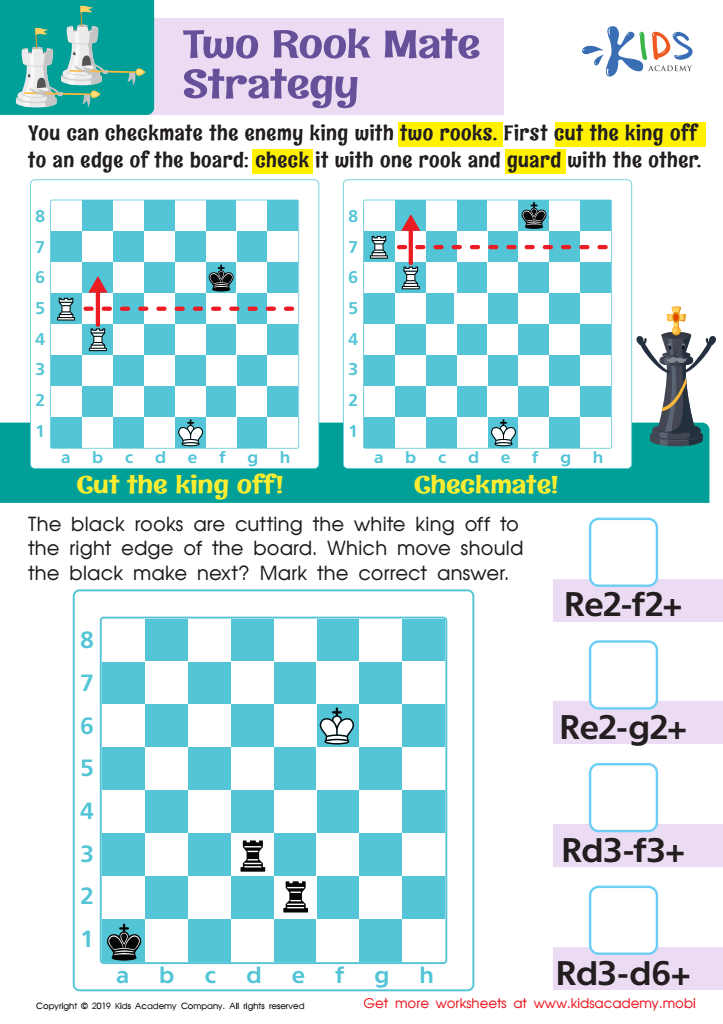
Two Rook Mate Strategy Worksheet

Two Rook Mate Strategy Worksheet

Kids who can play stress gain better reasoning, logic and critical thinking skills. This worksheet can teach kids the Two Rook Mate strategy to checkmate their opposite king. They'll discover how to close in the enemy king and protect with another rook, all the while enjoying a screen-free activity!
Two Rook Mate Strategy Worksheet
Worksheet
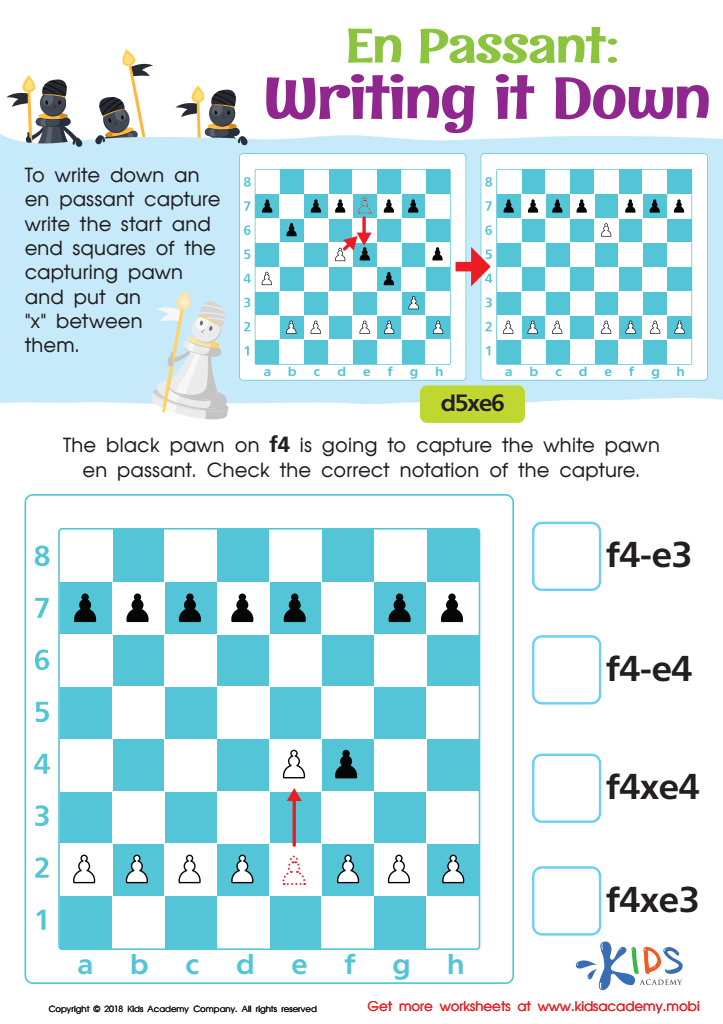
En Passant: Writing it Down Worksheet

En Passant: Writing it Down Worksheet

Properly documenting moves in chess is often overlooked. En passant captures require your child to note the starting and ending squares (e.g. d5xe6) with an "X" in between them. Ask your children to review the worksheet and ensure they've notated the captures correctly. (80 words)
En Passant: Writing it Down Worksheet
Worksheet
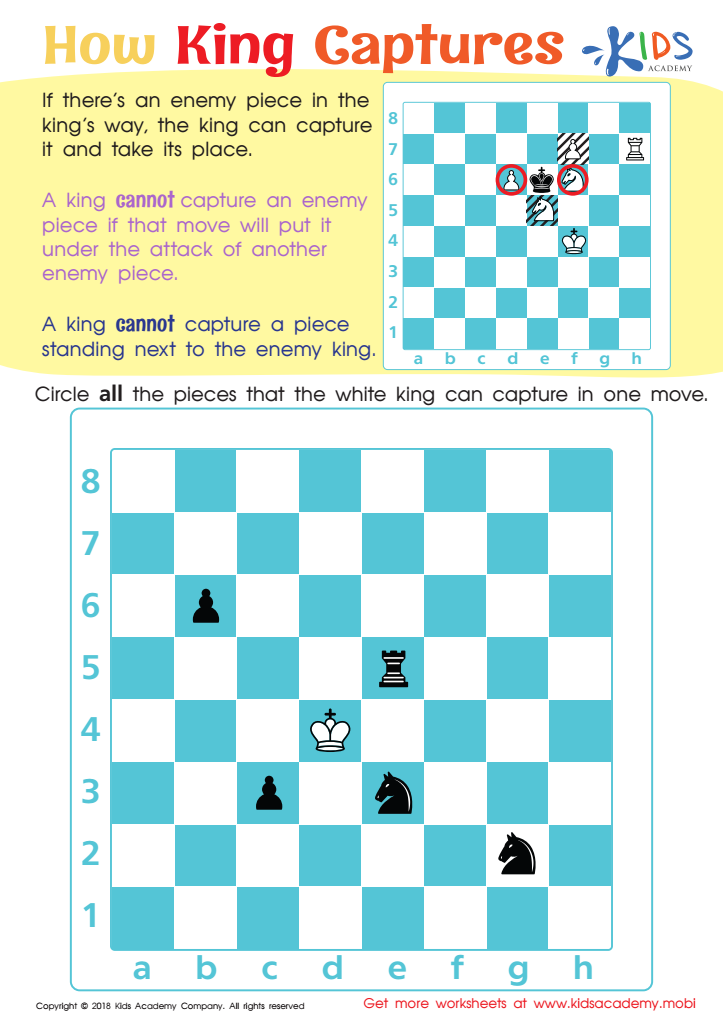
How King Captures Worksheet

How King Captures Worksheet

The king can capture an enemy piece by taking its place. But it cannot move if the action will put it at risk of attack, or if it's next to the enemy king. On this worksheet, circle the places the white king can capture in one move. (80 words)
How King Captures Worksheet
Worksheet
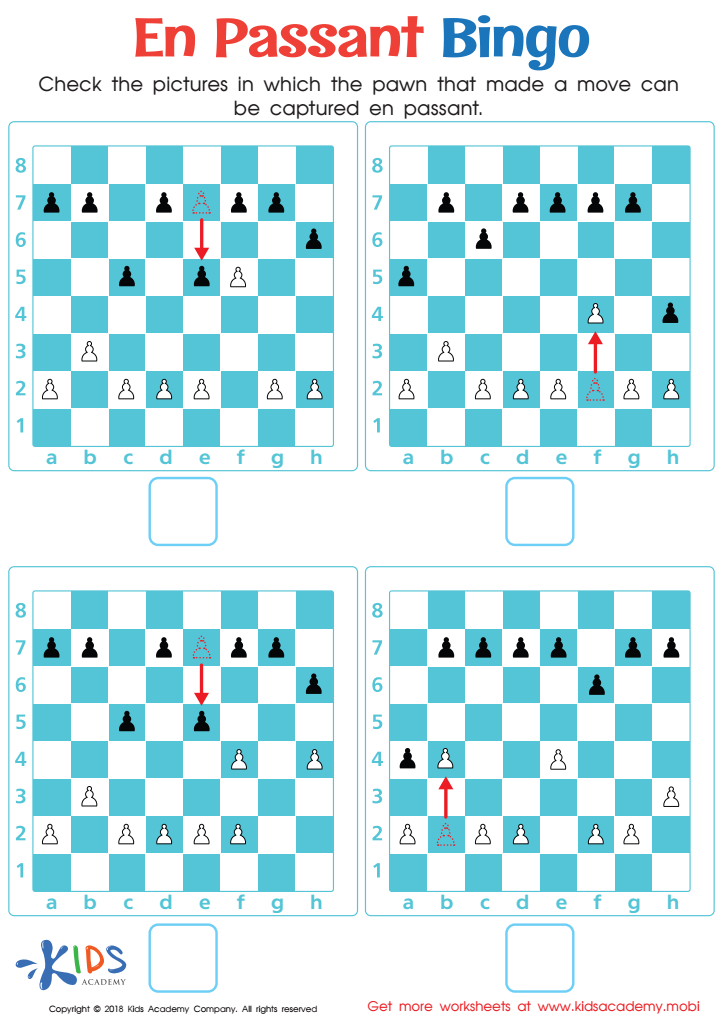
En Passant Bingo Worksheet

En Passant Bingo Worksheet

To teach kids to perfect the en passant move in chess, use this worksheet. It has pictures which depict when a pawn is in danger of being captured. By looking through the pictures, kids can easily understand and perfect the move.
En Passant Bingo Worksheet
Worksheet
What Is a Stalemate? Worksheet

What Is a Stalemate? Worksheet

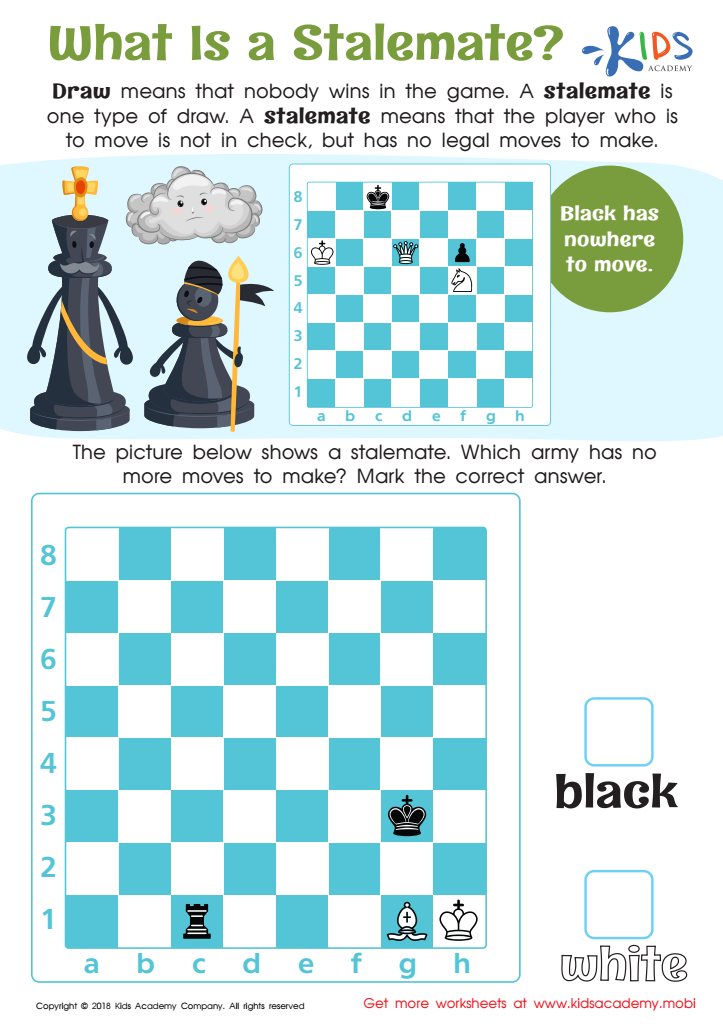
Chess is an ideal way to develop logic, strategizing, problem-solving and more! Even kids can learn it. With this worksheet, children can learn about draws and stalemates. Sample boards will help them decide which team, black or white, is at a stalemate.
What Is a Stalemate? Worksheet
Worksheet
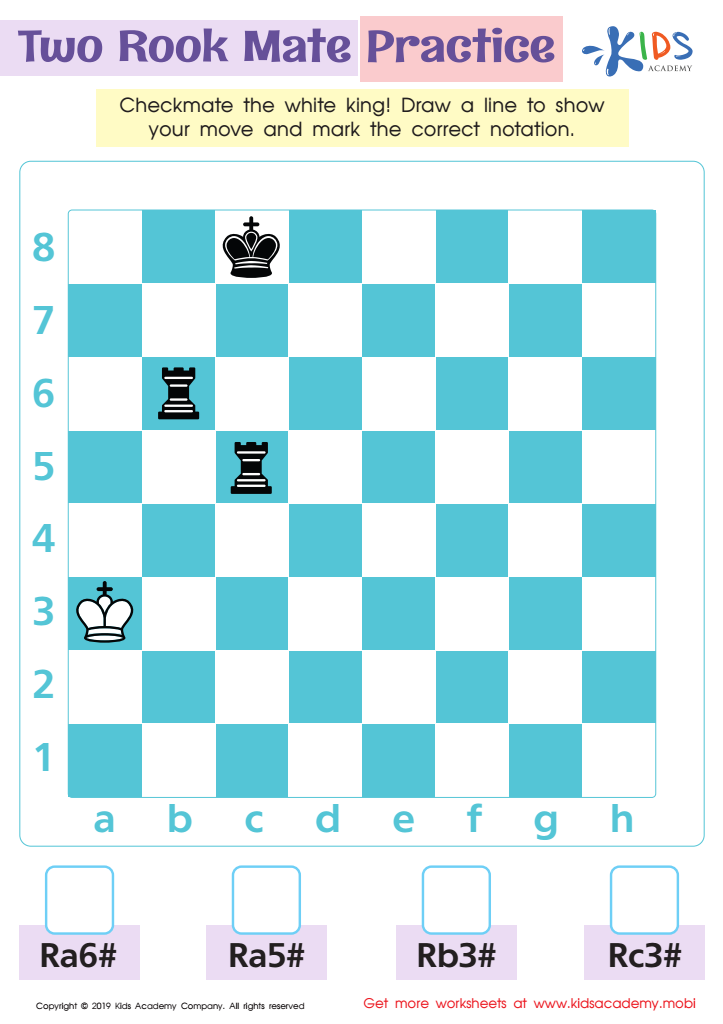
Two Rook Mate Practice Worksheet

Two Rook Mate Practice Worksheet

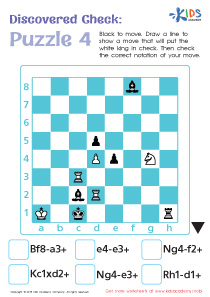
Chess is all about checkmating your opponent. This free Two Rook Mate practice worksheet is a fun way for your mini strategist to do just that. They can draw a line showing their move then pick the correct notation for the mate! A great way for them to practice fine motor skills, too.
Two Rook Mate Practice Worksheet
Worksheet
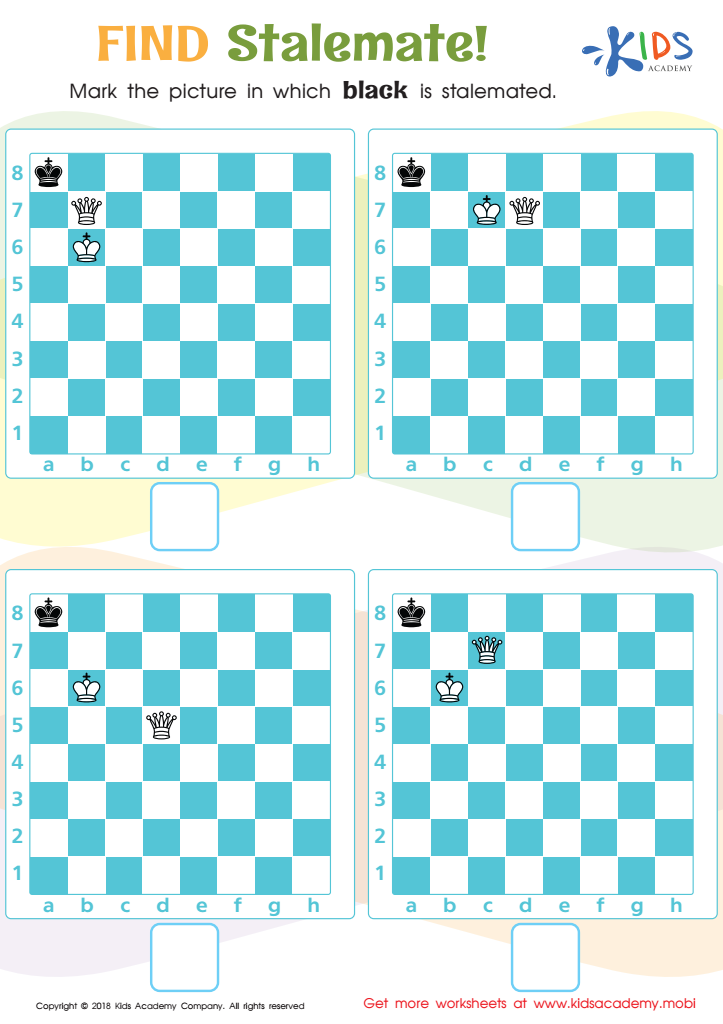
Find Stalemate! Worksheet

Find Stalemate! Worksheet

Teach your kids Chess and give them more than a hobby - equip them with critical thinking, rationale and problem-solving skills! This free worksheet helps them understand stalemates by examining various sample boards. By providing visual discernment and the joy of the game, your child's logical skills will soar!
Find Stalemate! Worksheet
Worksheet
Notation of Checkmate Worksheet


Notation of Checkmate Worksheet

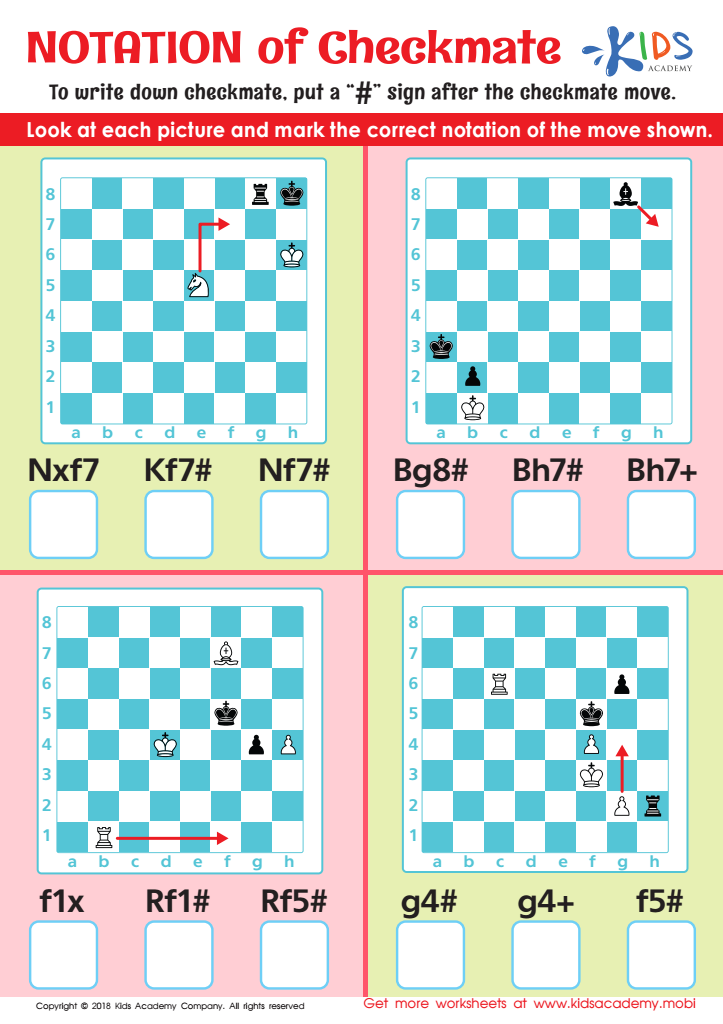
Checkmate is the thrilling, ultimate move in chess! Teach your child to make it and notate it properly with this free worksheet. They'll love being able to capture the king and it's great for brain-building too! Have them look at the sample boards and place a # sign after the checkmate move for notation.
Notation of Checkmate Worksheet
Worksheet


Introducing chess to children aged 5-6 can offer a wealth of benefits that extend well beyond the game itself. At this critical developmental stage, their minds are highly receptive and adaptable, making it an ideal time to instill strategic thinking and cognitive skills.

First and foremost, chess promotes critical thinking and problem-solving abilities. Players must think several steps ahead and weigh their options carefully, fostering patience and strategic foresight. These skills are not only essential for the game but also beneficial in academic settings and daily decision-making.

The game also enhances concentration and focus. Young children often have short attention spans, but the engaging nature of chess can captivate their interest and teach them to maintain attention on a task for extended periods.

Moreover, chess encourages emotional intelligence. Learning to win gracefully and cope with defeat serves as valuable lessons in resilience and sportsmanship. These experiences build essential social-emotional skills that help children interact positively with their peers.

Lastly, chess cultivates planning and organizational skills. Children learn the importance of planning their moves and organizing their thoughts, which can translate to better time management and structured activity planning in other areas of life.

By introducing chess to young learners, parents and teachers can lay a foundational skillset that supports academic performance, emotional development, and lifelong cognitive abilities.