Critical Thinking Chess Worksheets for Ages 5-6
4 filtered results
-
From - To
Discover our engaging "Critical Thinking Chess Worksheets" designed specifically for ages 5-6! These interactive resources help young learners enhance their problem-solving skills and cognitive development through the game of chess. Packed with fun exercises, these worksheets encourage children to think strategically, recognize patterns, and make thoughtful decisions. Each activity is tailored to motivate and inspire, providing a solid foundation for critical thinking while introducing basic chess concepts. Perfect for home or classroom use, our worksheets ensure a playful yet educational experience. Start your child's journey into the world of chess and bolster their critical thinking skills today!
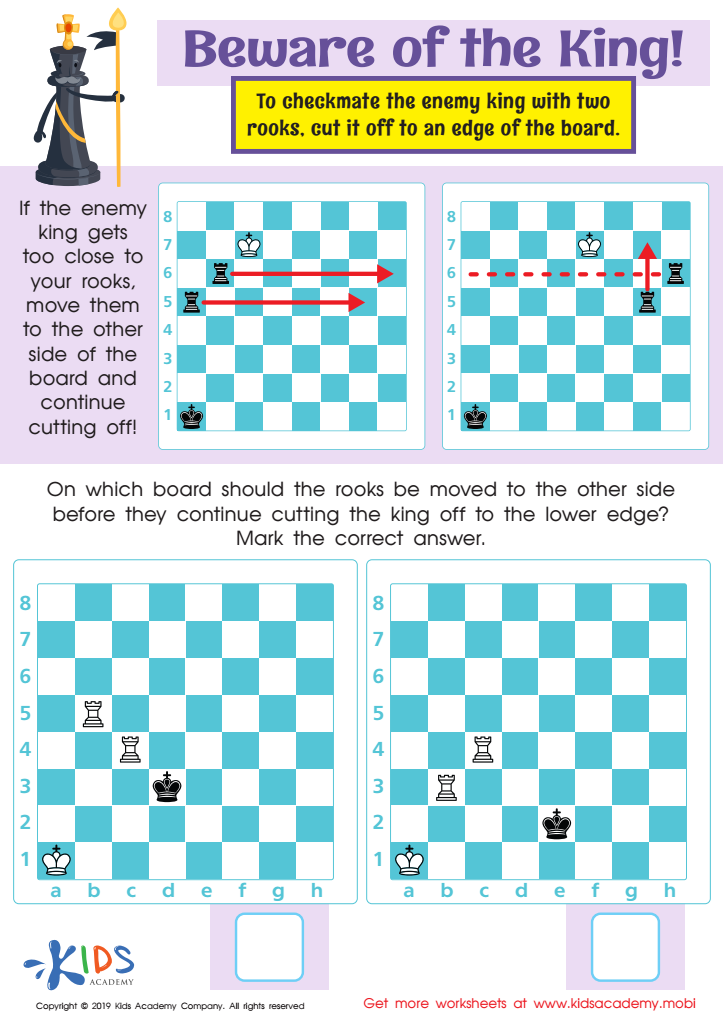
Beware of the King! Worksheet
 Assign to My Students
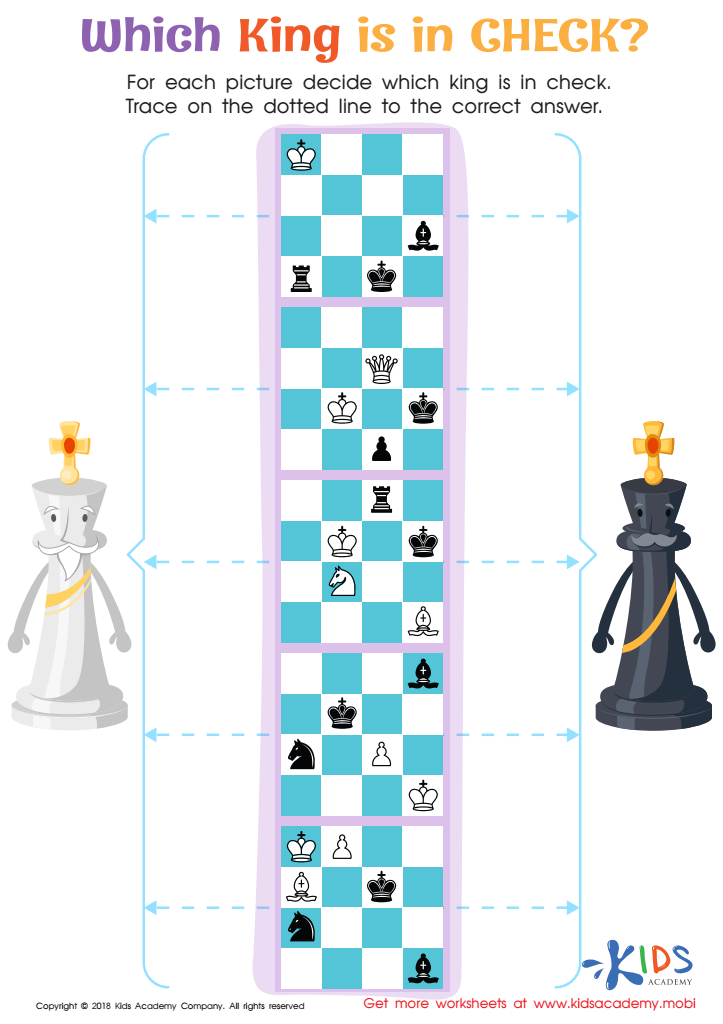
Which King is in Check? Worksheet
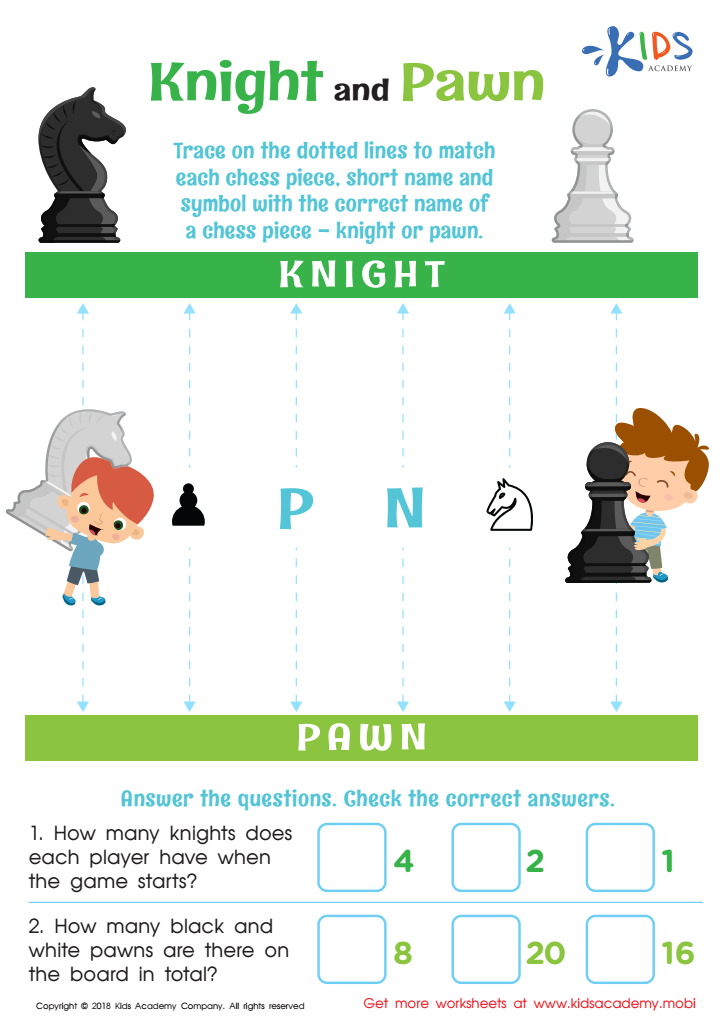
Knight and Pawn Worksheet
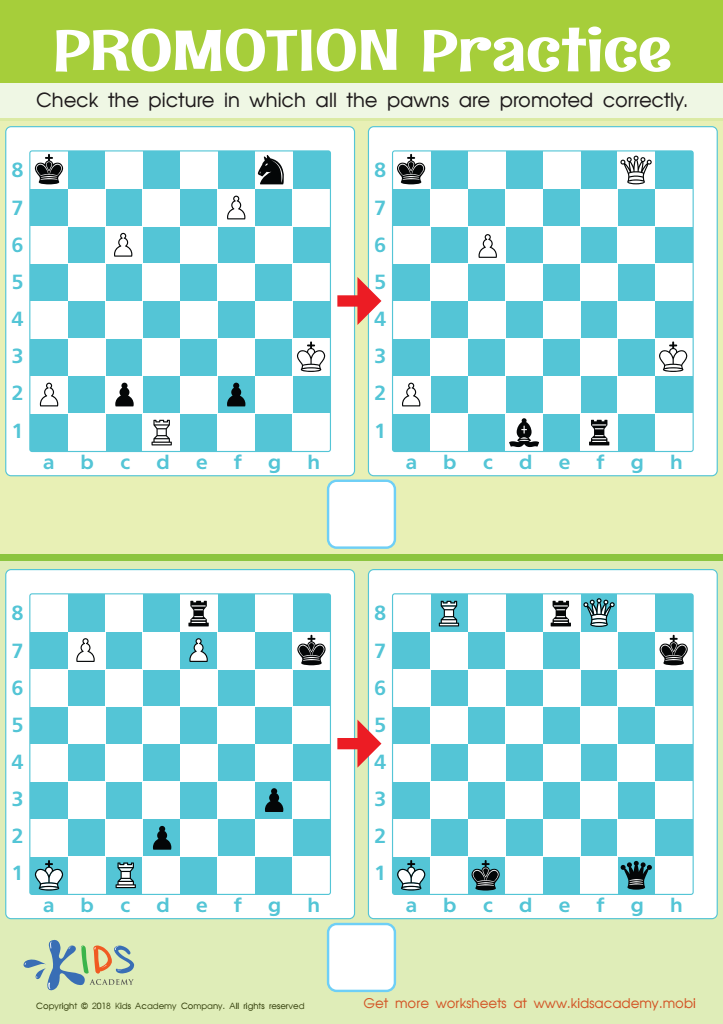
Promotion Practice Worksheet






Critical Thinking Chess for ages 5-6 is crucial for young learners because it cultivates cognitive development in several key ways. First, chess encourages children to engage in complex problem-solving. As they learn to anticipate opponents' moves and develop strategies, they enhance their analytical skills and improve their ability to think several steps ahead. This foundational skill set supports their academic performance in subjects like math and science.
Additionally, chess fosters patience and perseverance. At this age, children are often impulsive; chess teaches them to think before they act, promoting self-control and thoughtful decision-making. By facing the natural consequences of their choices on the chessboard, they learn valuable lessons about cause and effect.
Moreover, playing chess encourages social skills. Whether playing with peers or adults, children practice communication, sportsmanship, and respecting opponents—essential life skills.
Finally, introducing chess early provides a fun and engaging way to stimulate intellectual curiosity, making learning enjoyable. Parents and teachers who embrace Critical Thinking Chess provide their children with a toolbox for intellectual growth, fostering a lifelong love for learning, critical analysis, and strategic thinking that will benefit them in all areas of life.