Logical thinking improvement Chess Worksheets for Ages 5-6
3 filtered results
-
From - To
Enhance your child's logical thinking skills with our engaging Chess Worksheets designed for ages 5-6! These printable resources make learning fun while introducing fundamental chess concepts. Your little ones will develop critical thinking, problem-solving, and strategy skills through a variety of activities and games. Each worksheet is tailored to ignite problem-solving skills and boost concentration, ensuring that early learners enjoy every step of the chess journey. Perfect for classrooms or homes, our worksheets help lay a strong foundation in logic and creativity, making them an invaluable resource for parents and educators alike. Start your child's cognitive adventure with chess today!
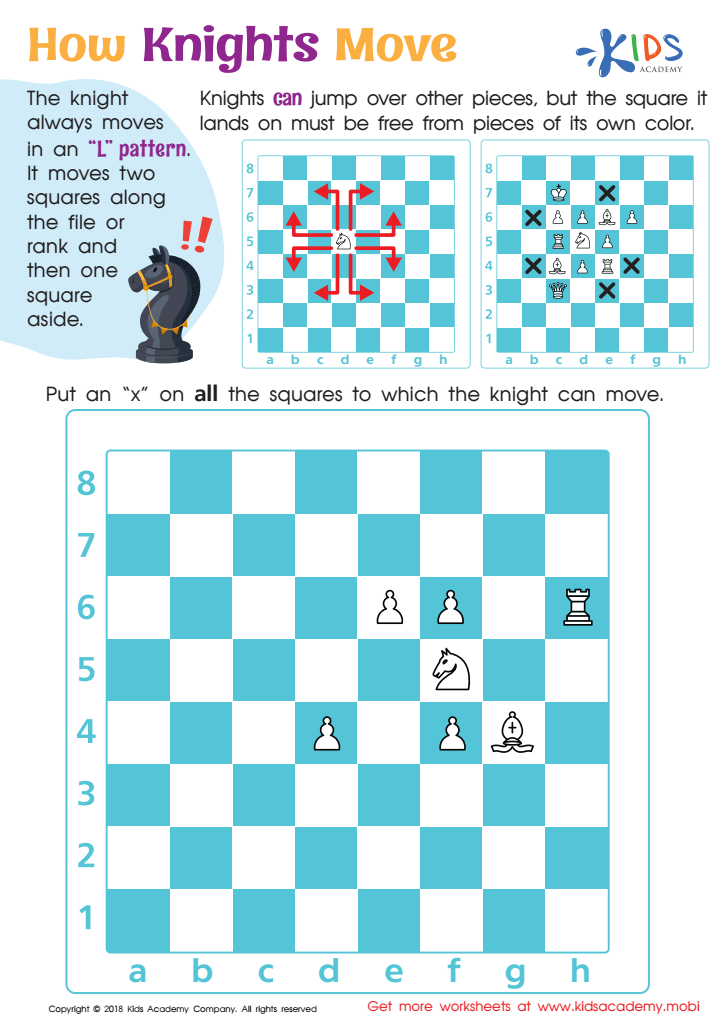
How Knights Move Worksheet
 Assign to My Students
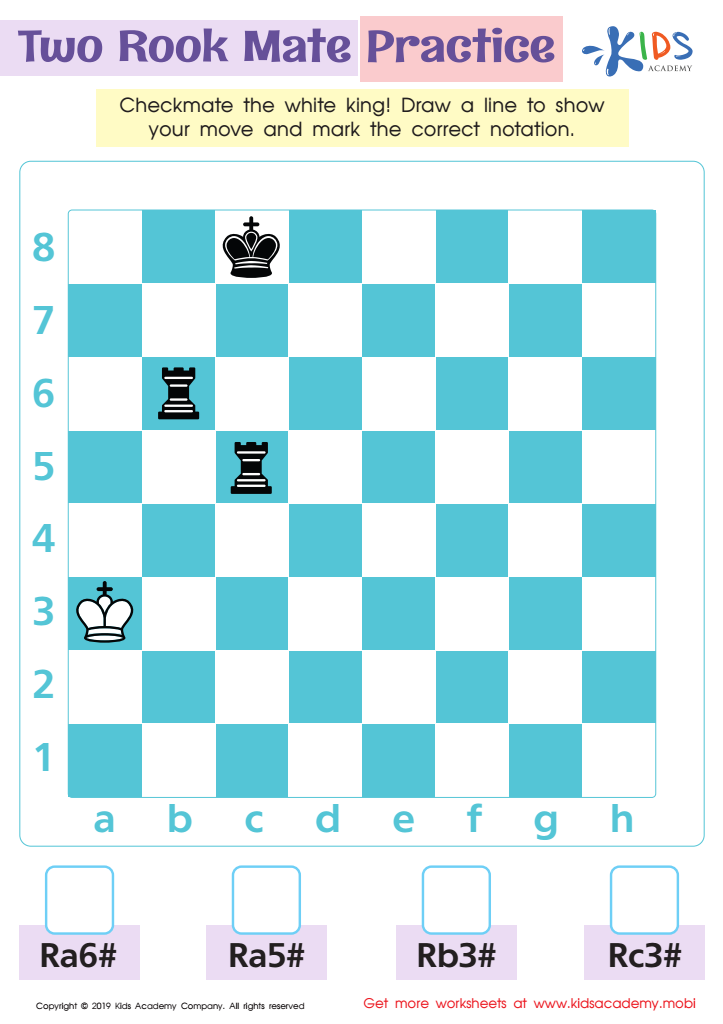
Two Rook Mate Practice Worksheet
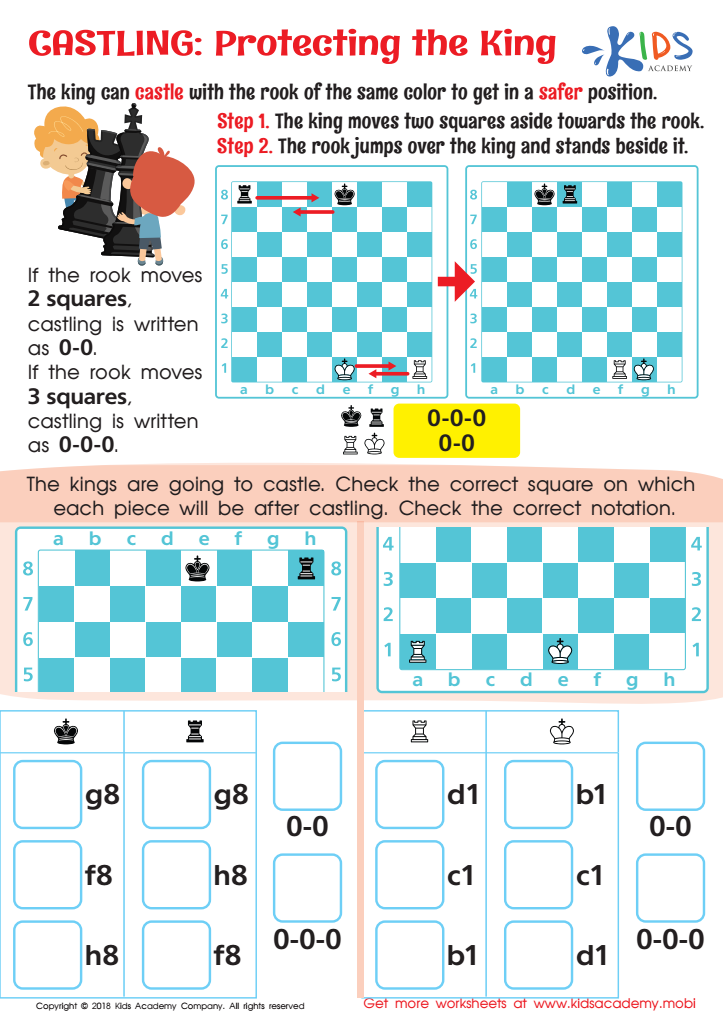
Castling: Protecting the King Worksheet







Parents and teachers should be invested in improving logical thinking through chess for children aged 5-6 for several compelling reasons. Firstly, chess is an engaging activity that fosters critical thinking and problem-solving skills. As young children navigate the game’s complexities, they learn to anticipate consequences and strategize, honing their ability to think four or five steps ahead—skills that are essential in many areas of learning.
Moreover, chess promotes patience and perseverance. Young children often face challenges when playing, teaching them the importance of not only striving for immediate success but also learning from their mistakes. This resilience translates into better academic performance and social interactions as they learn to handle both wins and losses gracefully.
Additionally, playing chess enhances memory and concentration. Young learners must remember different moves, rules, and tactics, which can boost cognitive development overall. Finally, chess provides a rich opportunity for social engagement, allowing children to interact with peers in a constructive manner, fostering communication and collaboration.
In summary, incorporating chess into the lives of young learners nurtures an array of important skills that set the stage for lifelong learning and growth, making it a valuable activity for both parents and educators to support.