
Analytical thinking Worksheets for Ages 5-6
7 filtered results
Difficulty Level
Grade
Age
-
From - To
Subject
Activity
Standards
Discover our engaging Analytical Thinking Worksheets tailored for children aged 5-6! Designed to boost problem-solving skills and logical reasoning, these interactive worksheets provide kids with exciting challenges that promote critical thinking. From puzzles to matching games, each activity fosters creativity and enhances cognitive development. Perfect for both classroom learning and at-home practice, our worksheets encourage young learners to explore patterns, make connections, and develop a strong foundation for future academic success. Elevate your child’s learning experience today with our fun and educational resources, paving the way for confident thinkers ready to tackle the world around them!
Favorites
With answer key
Interactive
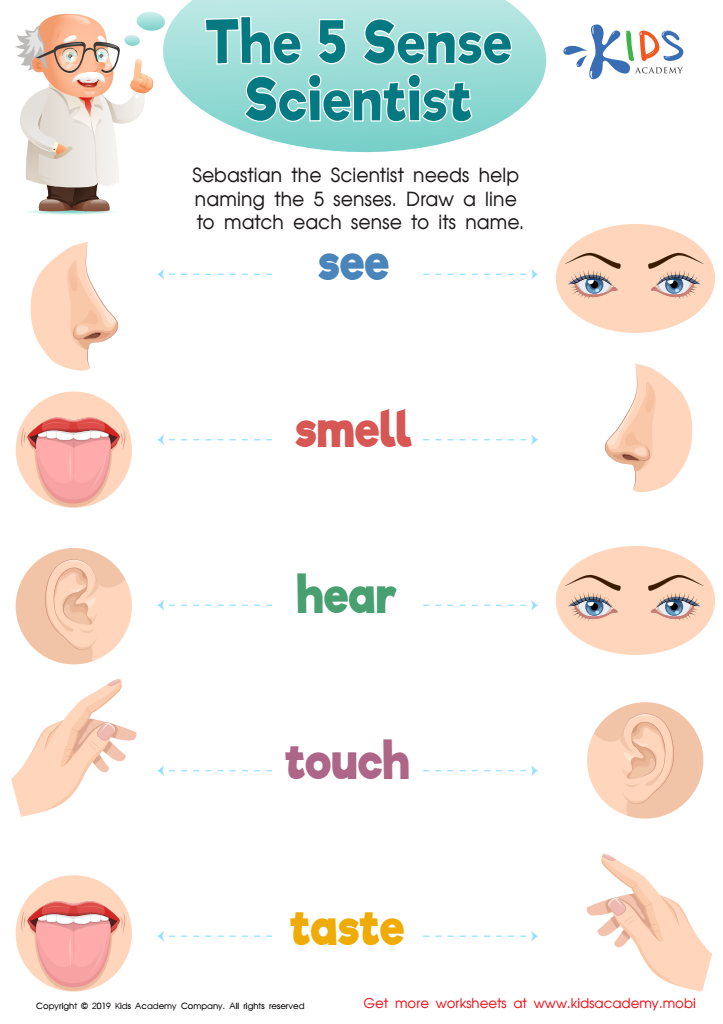
The 5 Sense Scientist Worksheet
Our young children will have fun learning about their five senses with this free Sense Scientist worksheet. Helping Sebastian the Scientist, they'll name the five senses and use traceable lines to connect each picture with its correct sense. Colorful words and pictures will create a memorable picture representation.
 Assign to My Students
The 5 Sense Scientist Worksheet
Worksheet
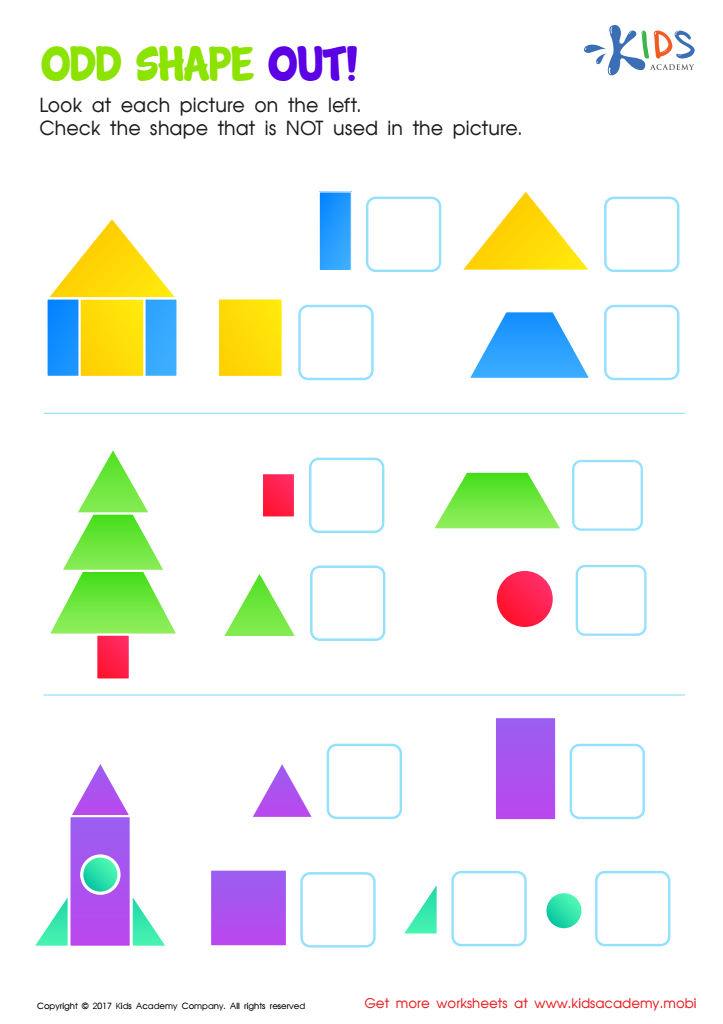
Odd Shape Out Worksheet for Grade 1
This worksheet can help your kids test their knowledge of shapes. They should have already been introduced to the most common shapes and be able to identify and draw them. Look at the picture and help your child identify each shape. Then, check which one isn't used to make the object.
Odd Shape Out Worksheet for Grade 1
Worksheet
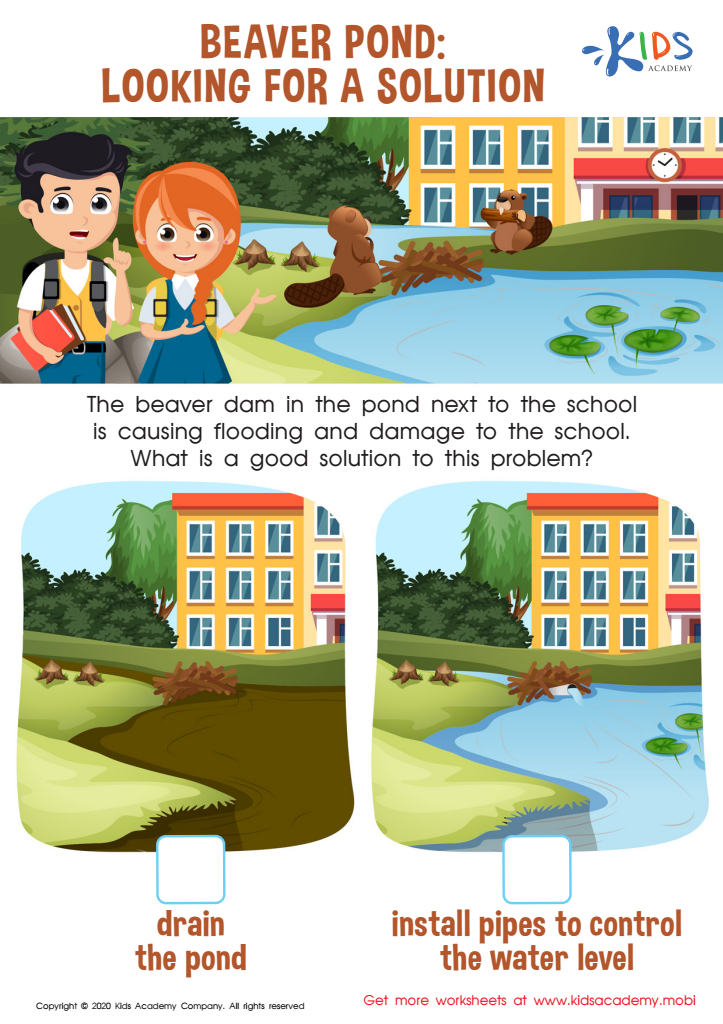
Beaver Pond: Looking for a Solution Worksheet
Beavers are building dams and flooding the local pond! Help your child practice problem-solving skills by reading through and selecting from possible solutions, with this fun PDF worksheet. See how your child's skills are improved!
Beaver Pond: Looking for a Solution Worksheet
Worksheet
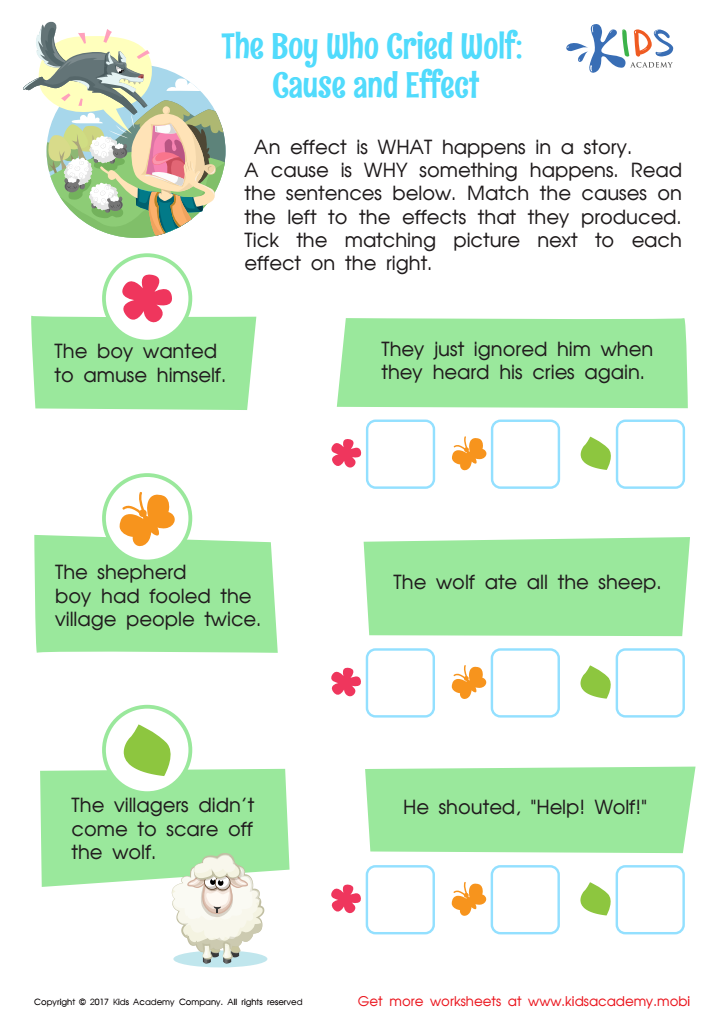
The Boy Who Cried Wolf: Cause and Effect Worksheet
With classic stories and fables, learning reading comprehension is easy - and fun!
The Boy Who Cried Wolf: Cause and Effect Worksheet
Worksheet
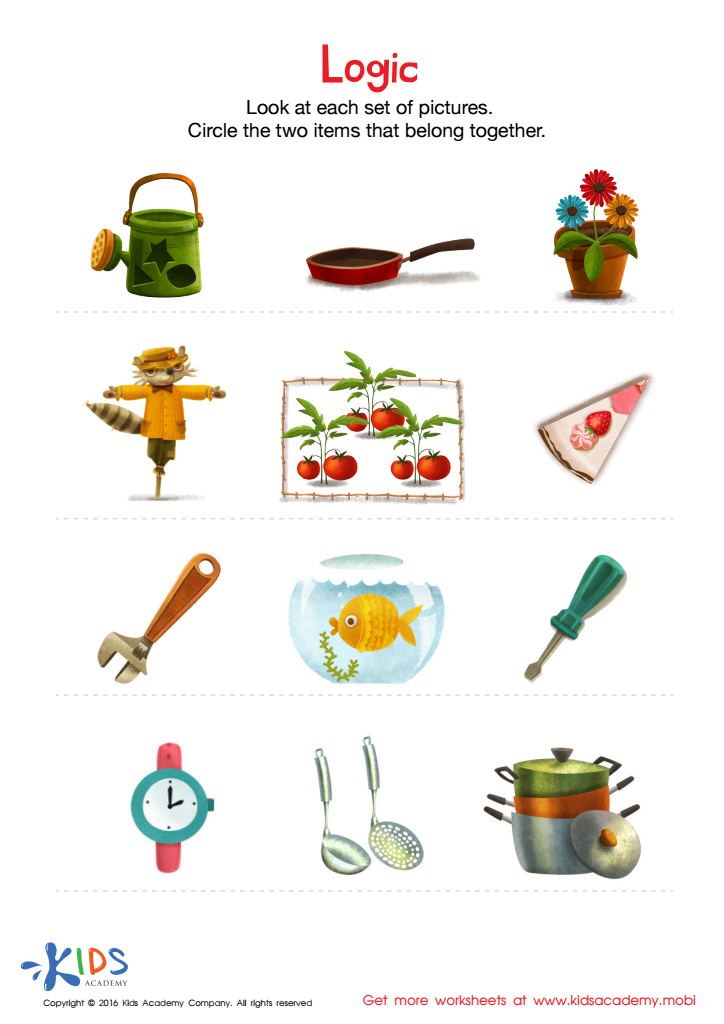
Logic Game Sorting Worksheet
Start your child's logic and reasoning development early with this fun matching worksheet! Through cute images and simple conversations, your little one can learn problem-solving, categorization, and matching skills. Plus, it's a great way for children to explore how items are used in real life. Try it and watch them boost skills with ease and fun!
Logic Game Sorting Worksheet
Worksheet
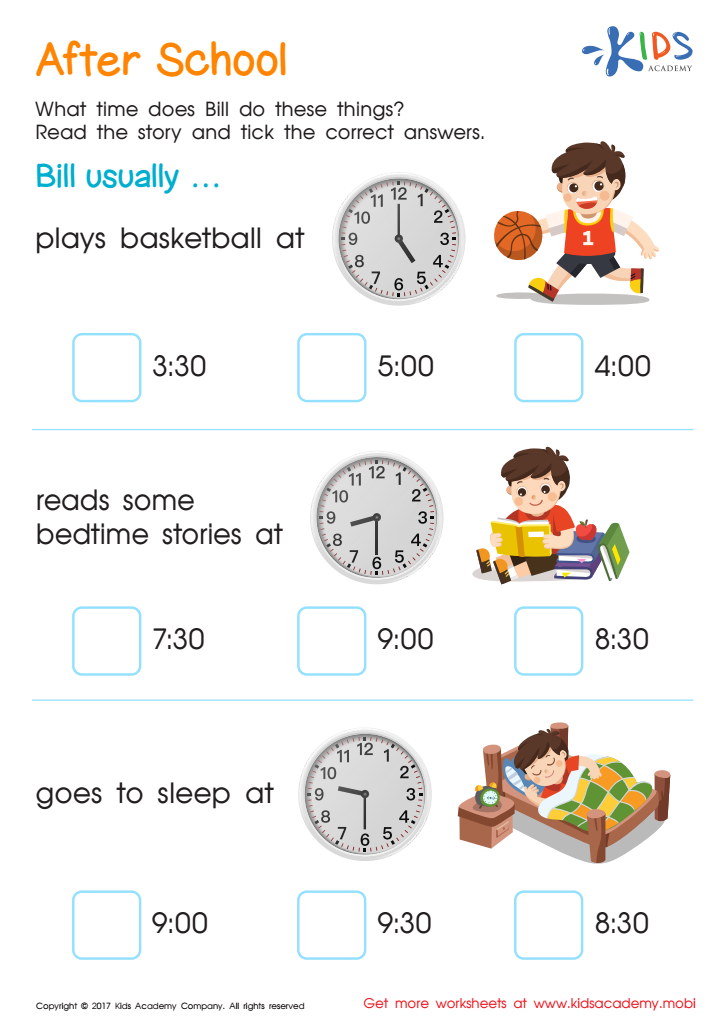
After School Time Printable
Meet Bill, a fun character who does the same things as all of us! This time-telling printable worksheet, 'After School', is an enjoyable way for your child to get familiar with Bill. It's a quick and cute activity to help understand the clocks and learn more about this new friend.
After School Time Printable
Worksheet
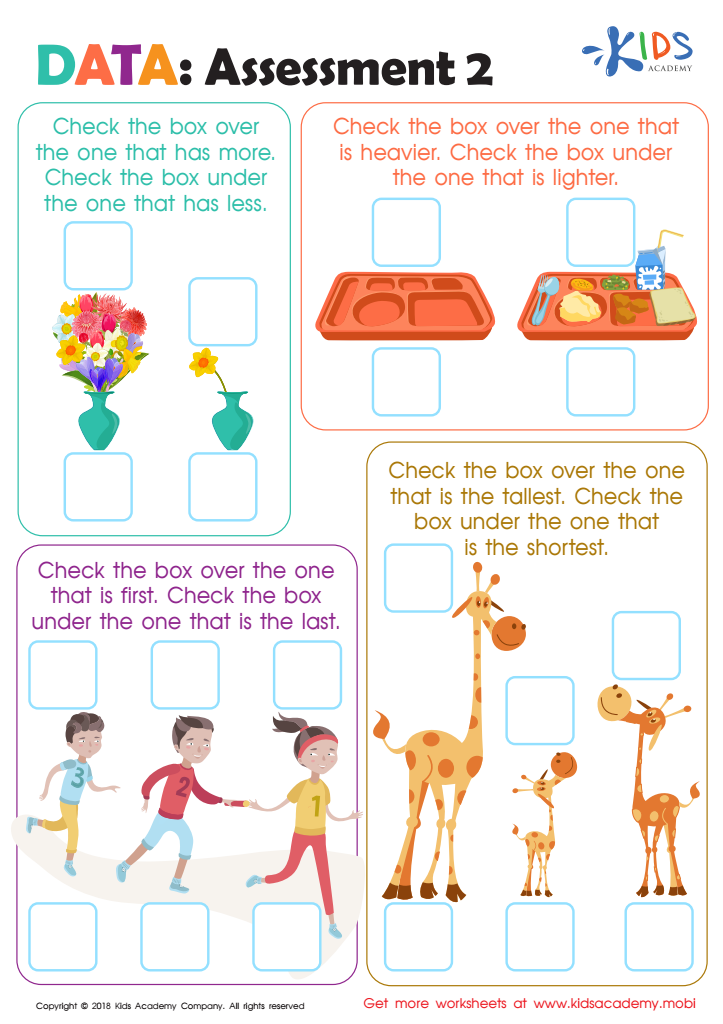
Data: Assessment 2 Worksheet
This printable worksheet tests students' understanding of words related to quantity and measurement, such as "more", "less", "heavy", "light", "first", "last", "tall", and "short". It helps children compare and contrast when solving measurement problems. Ideal for math classes, it encourages students to gain the essential skills needed in subjects like math, science, and reading.
Data: Assessment 2 Worksheet
Worksheet
Join Kids Academy for Free
Who is primarily going to use this learning content?


.jpg)




.jpg)
Developing analytical thinking in children aged 5-6 is essential for their cognitive growth and future learning. At this age, children's brains are at a prime stage for acquiring foundational skills. Analytical thinking encourages them to question, explore, and understand their environment. It involves breaking down problems, recognizing patterns, and making informed decisions—skills that are crucial not only in academics but also in daily life.
When parents and teachers foster analytical skills through age-appropriate activities, such as puzzles, sorting games, and problem-solving tasks, they help children learn to navigate challenges independently. This process improves critical thinking, enhances creativity, and promotes perseverance, traits that are valuable as they advance in their educational journey.
Moreover, strong analytical skills lay the groundwork for future subjects like mathematics and science, where logic and reasoning are vital. Children equipped with these skills are more likely to excel in collaborative environments, as they learn to understand different perspectives and communicate effectively. By prioritizing analytical thinking, parents and teachers empower young learners to develop the tools needed for success, ultimately nurturing confidence and curiosity that extends beyond the classroom. Encouraging these skills ultimately prepares them for a complex world where thoughtful decision-making is essential.








