Animal recognition Worksheets for Ages 5-6 - Page 5
118 filtered results
-
From - To
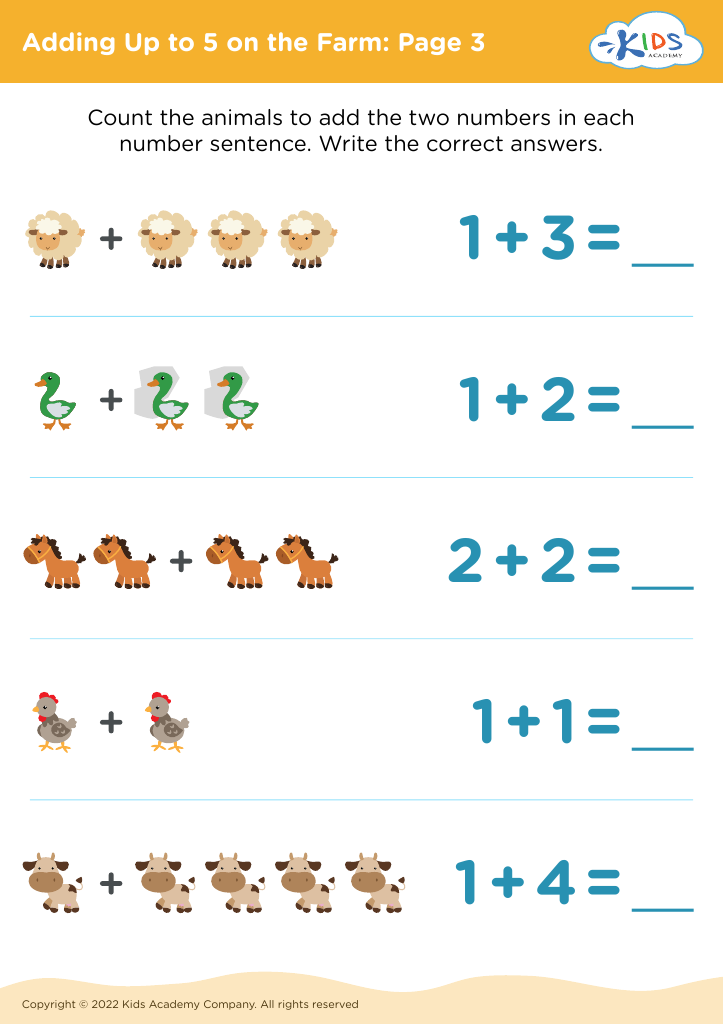
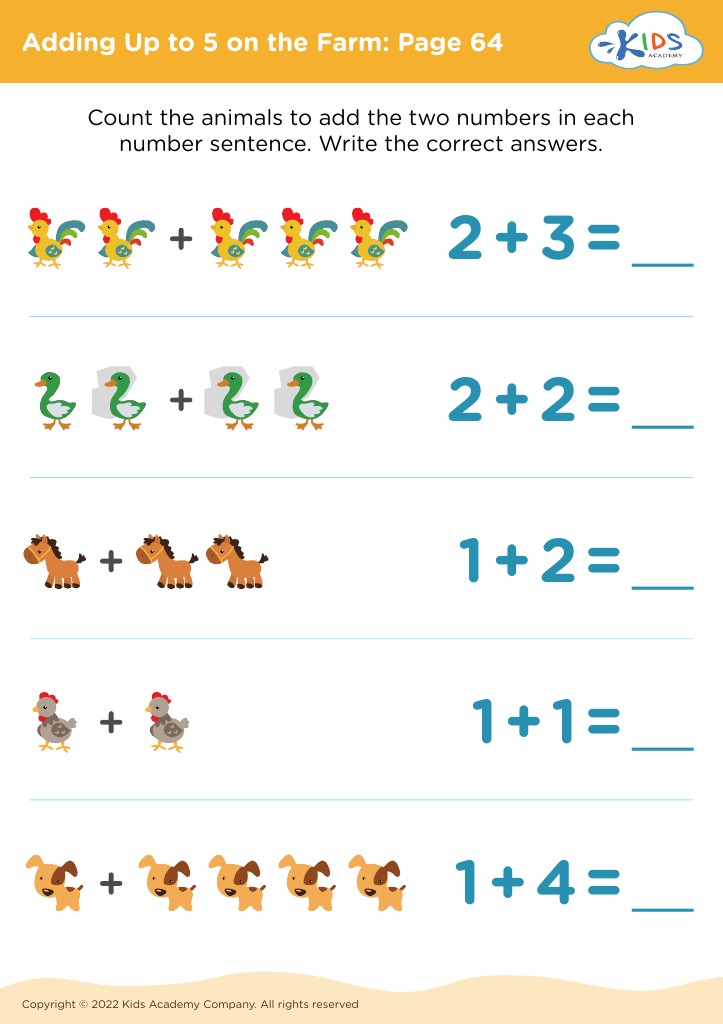
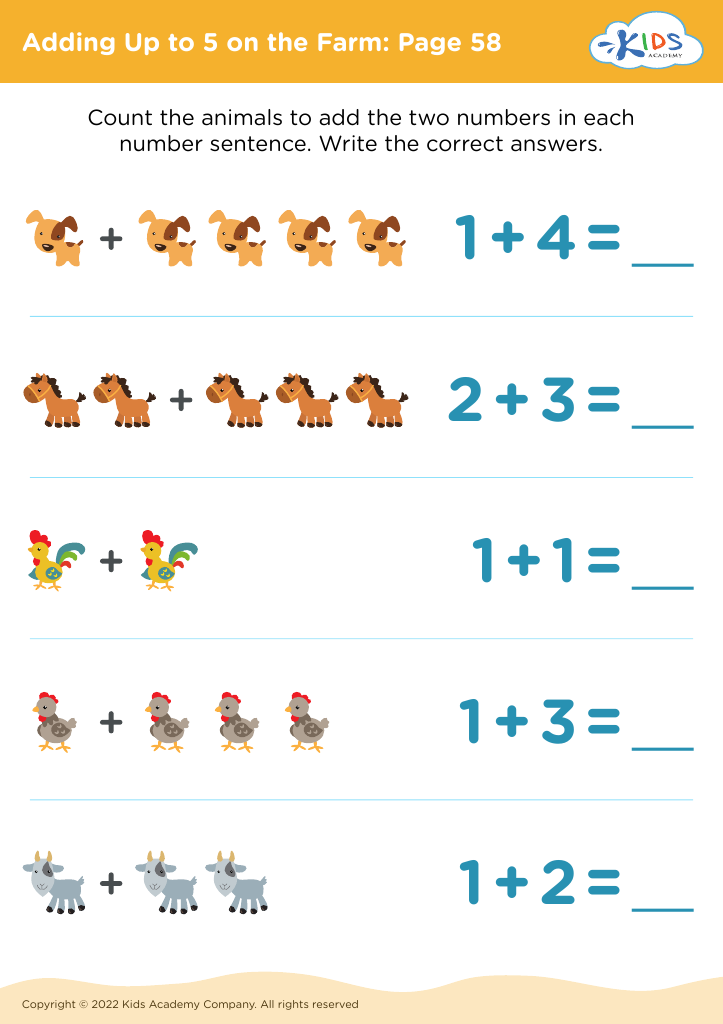
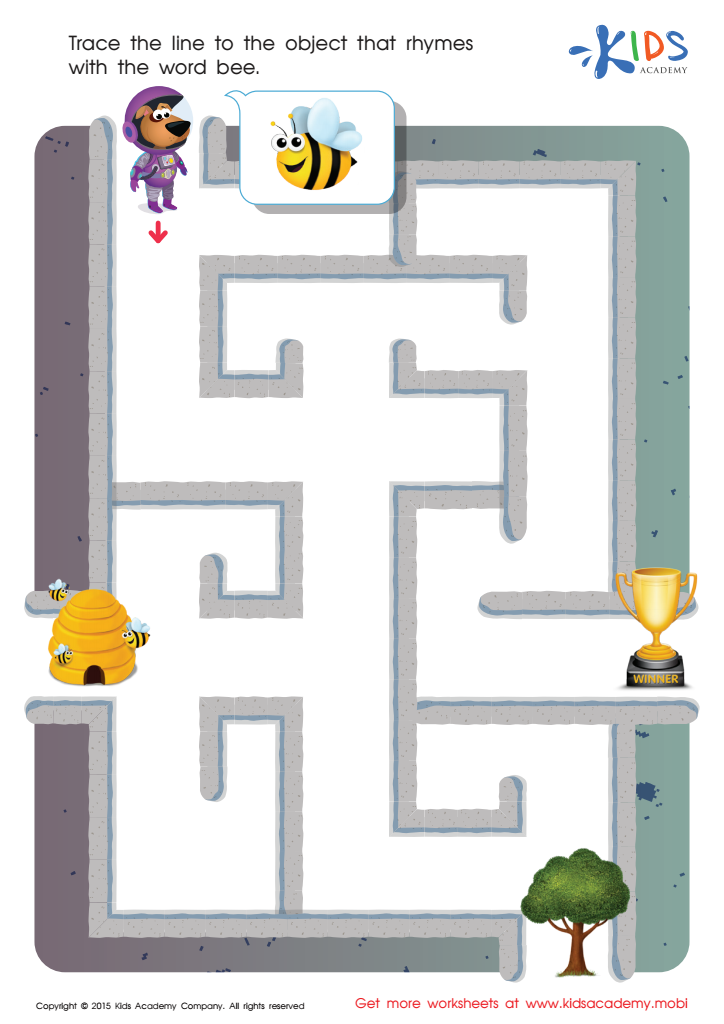
Bee Rhyming Words Worksheet
 Assign to My Students
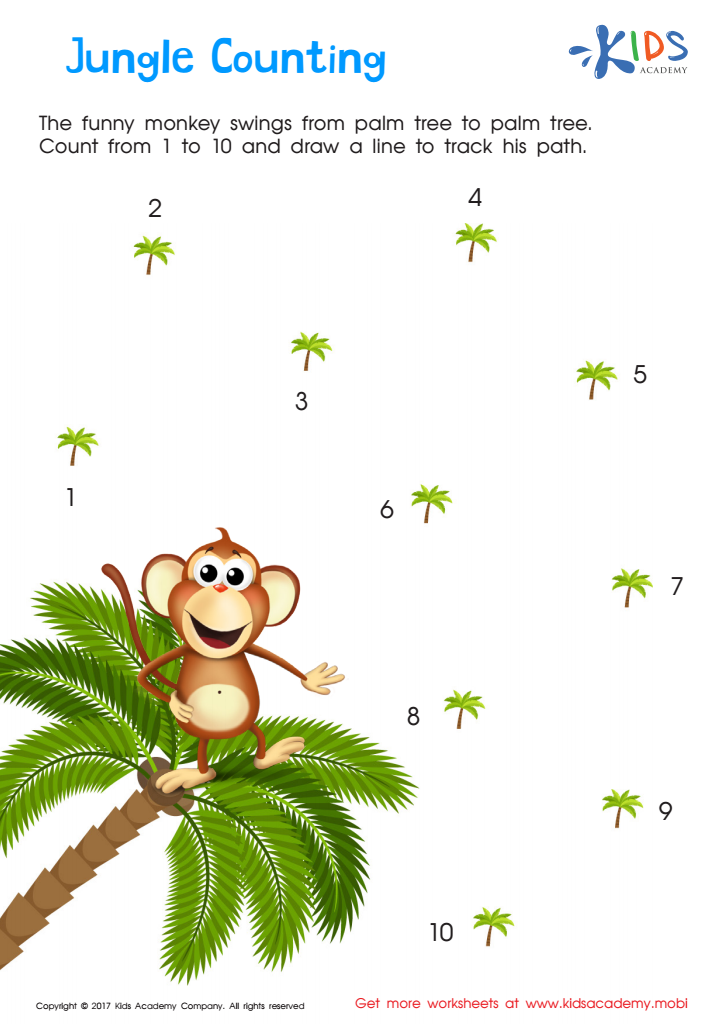
Jungle Counting Connect Dots Worksheet
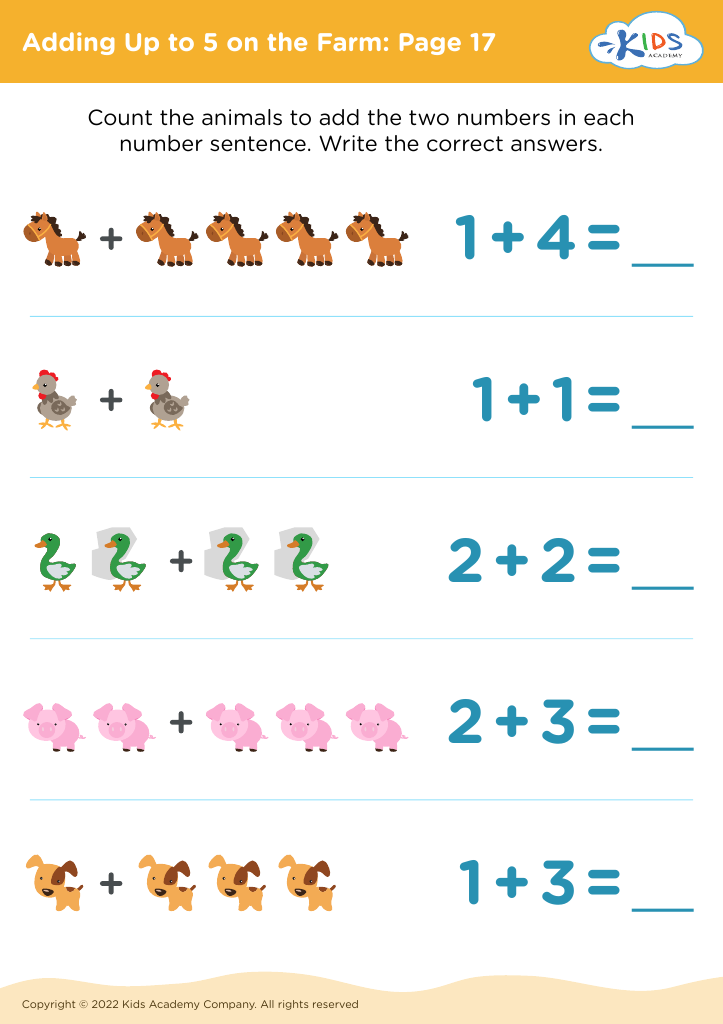
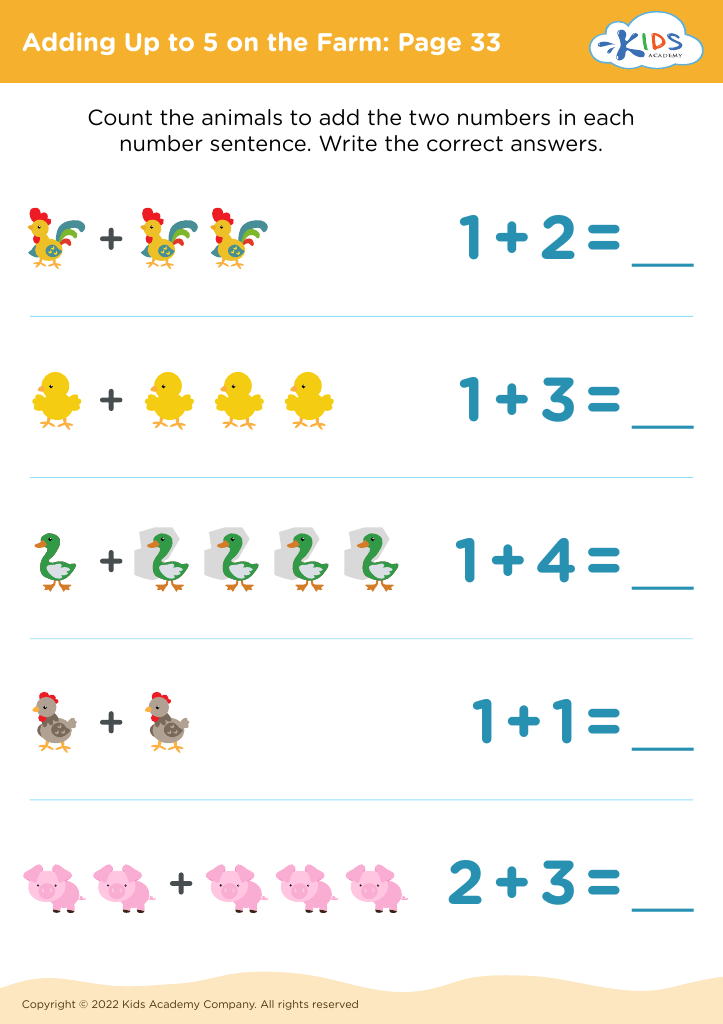
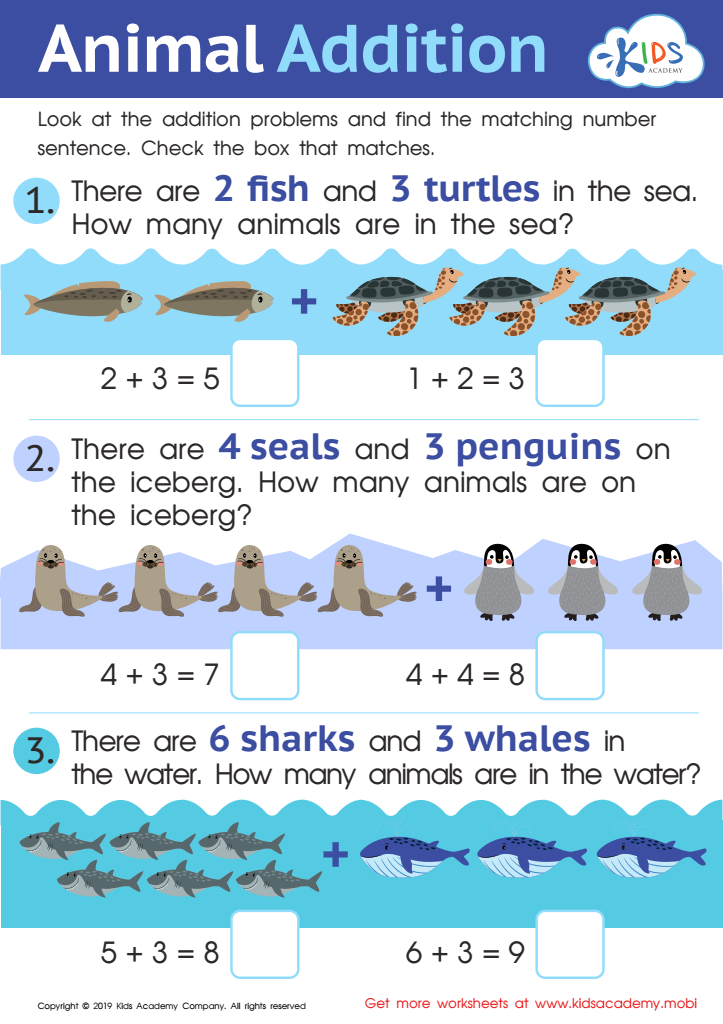
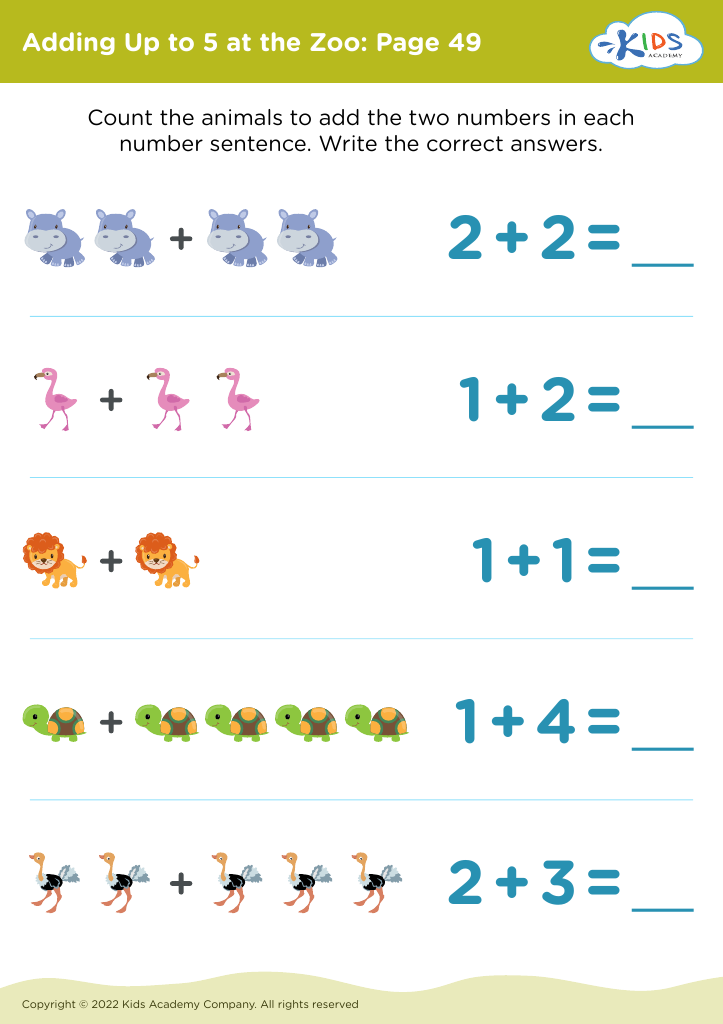
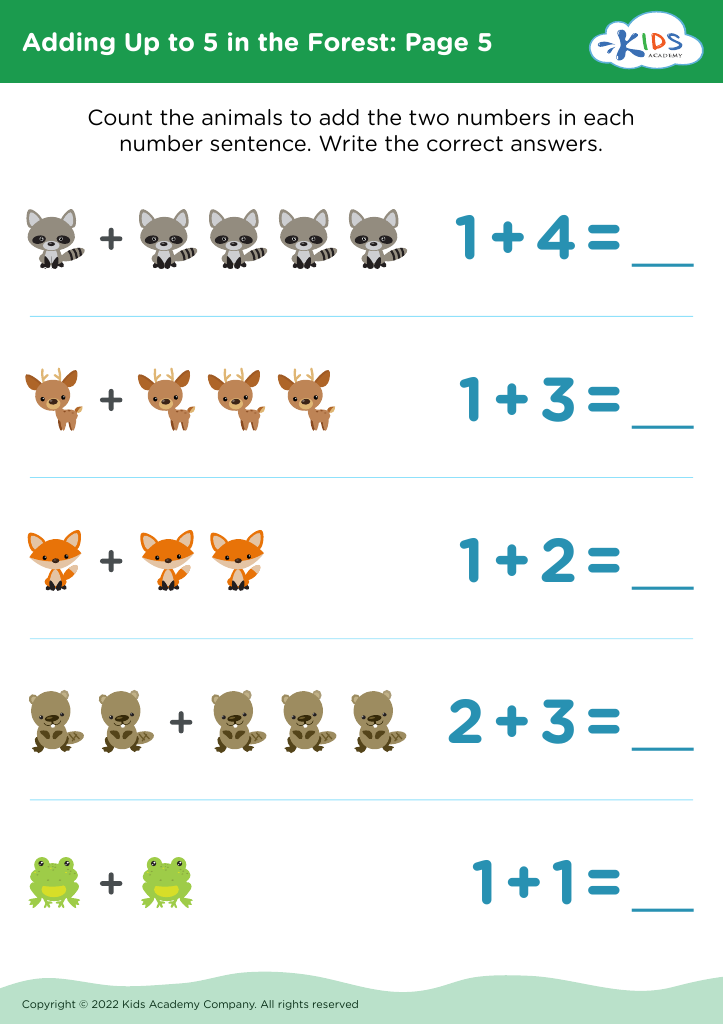
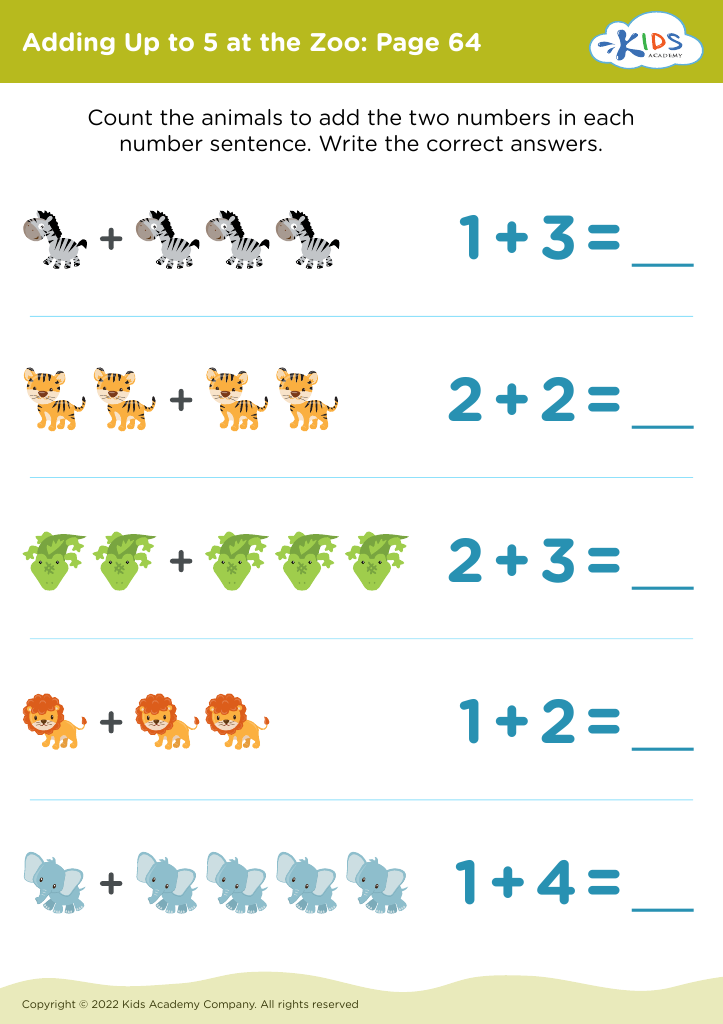
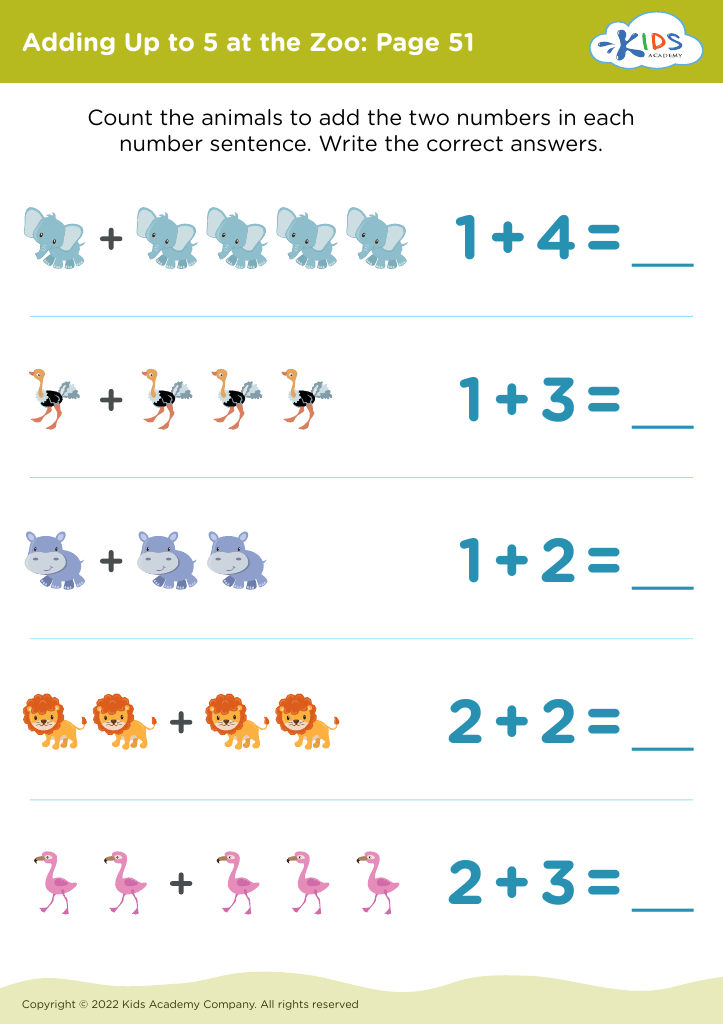
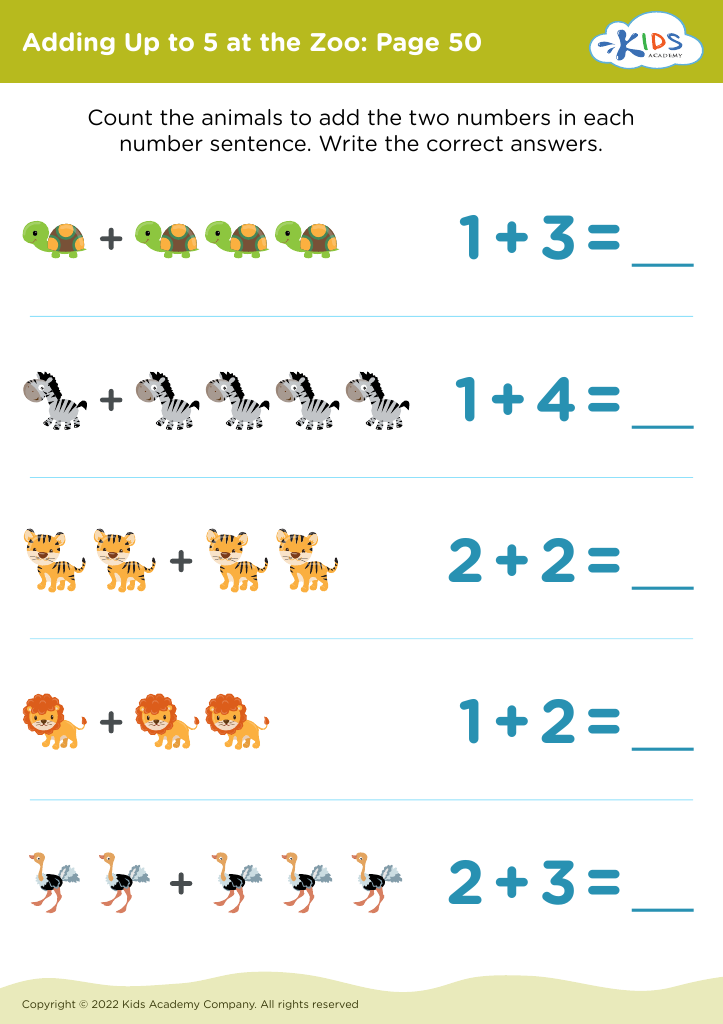
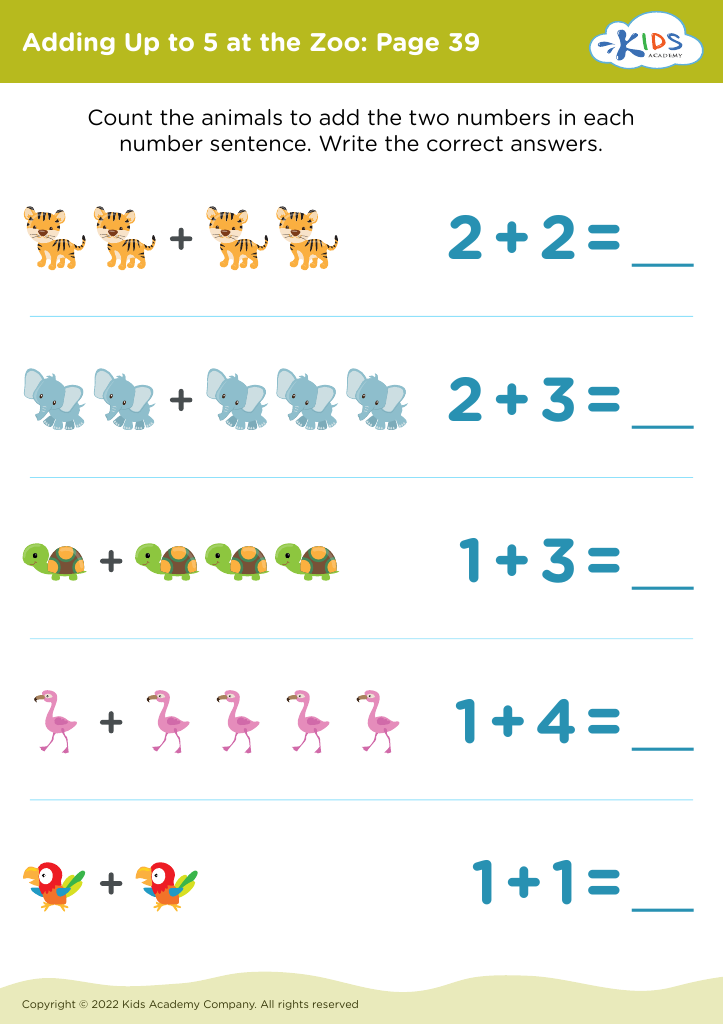
Animal Addition Worksheet
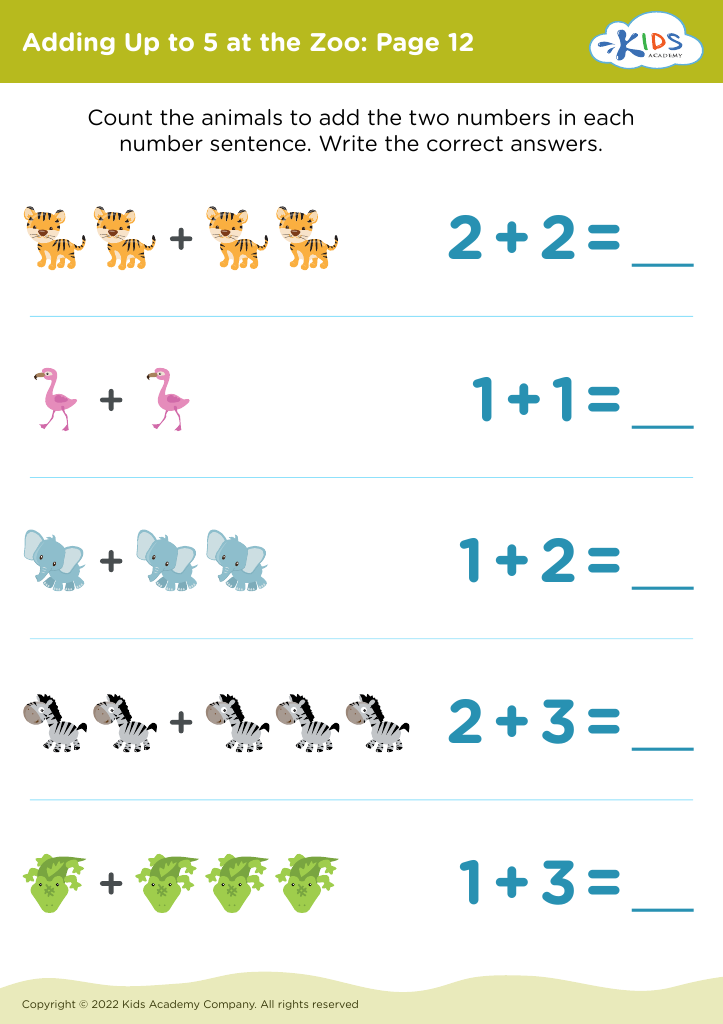
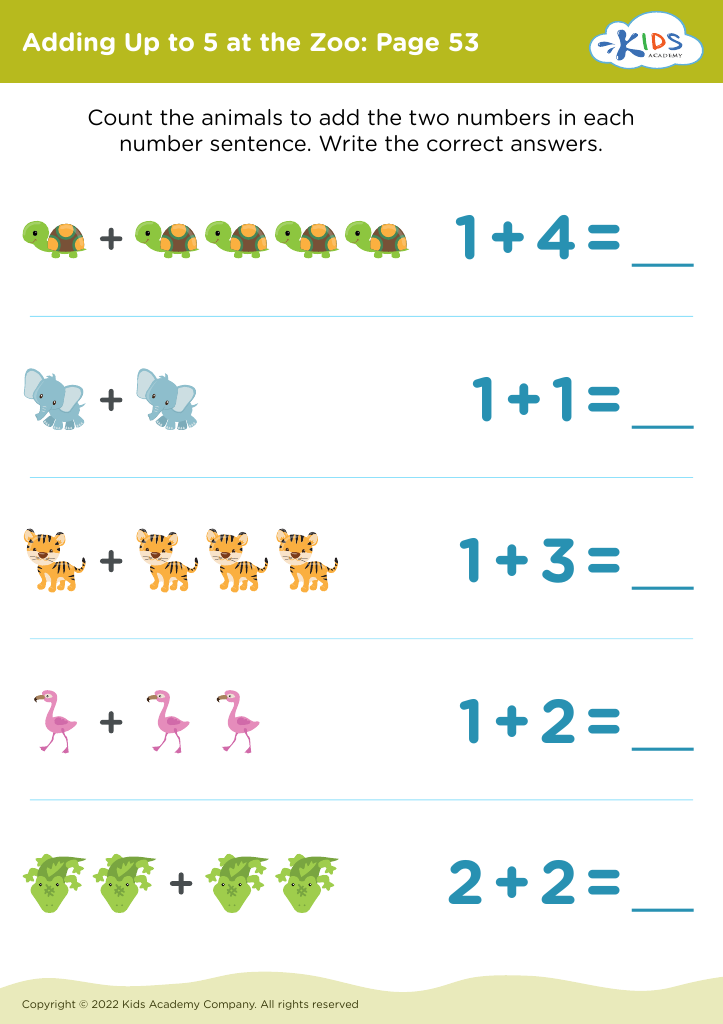
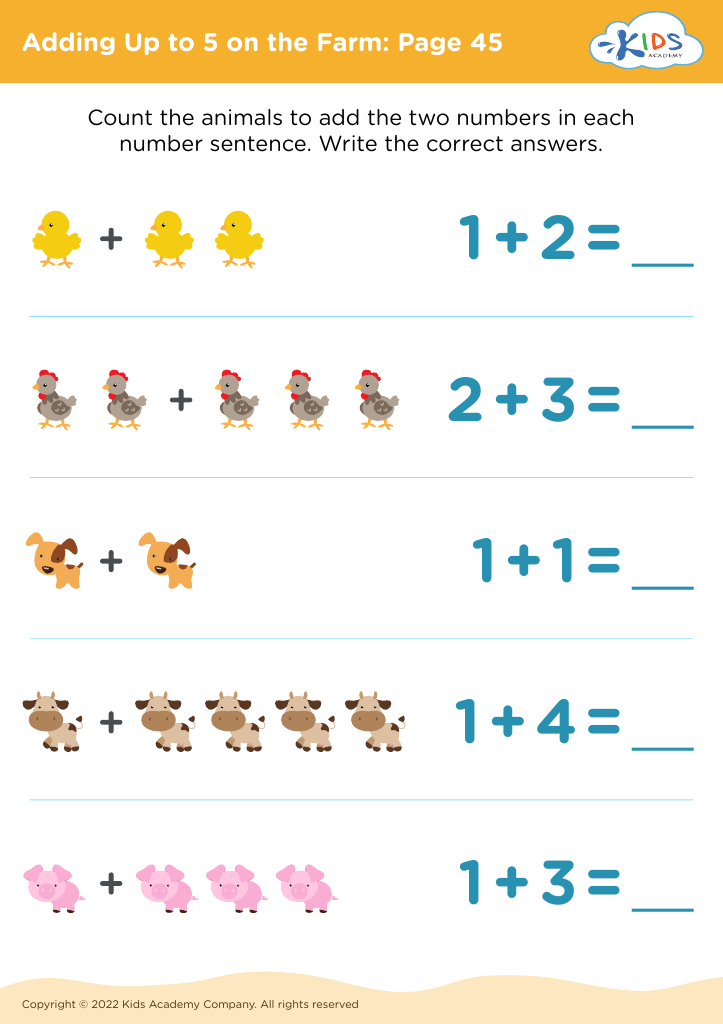
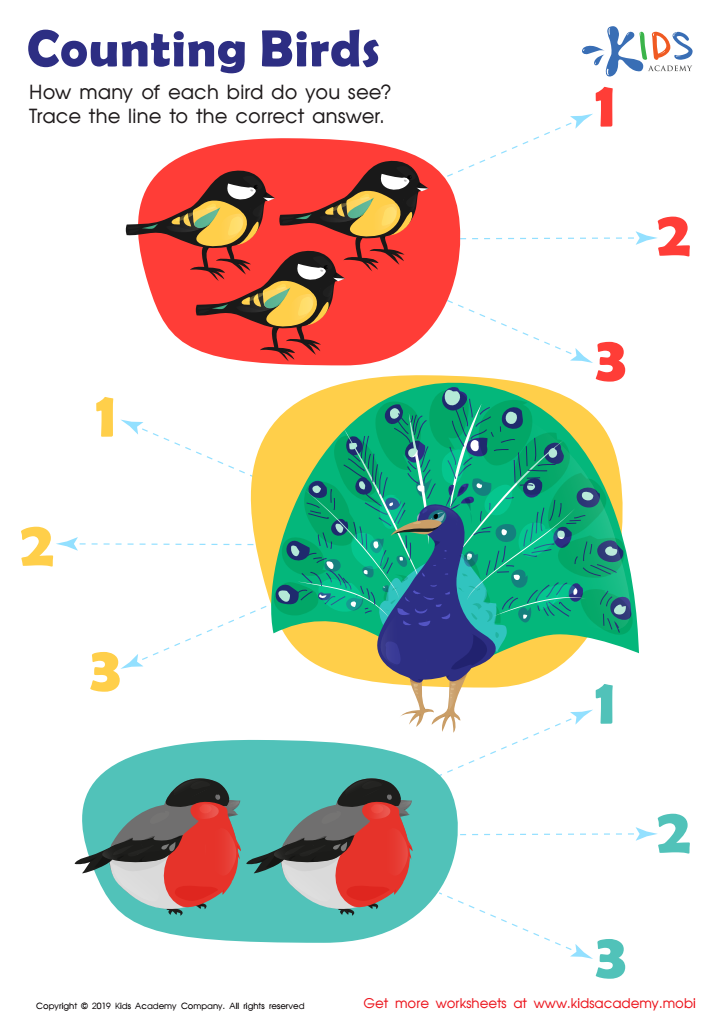
Counting Birds Worksheet
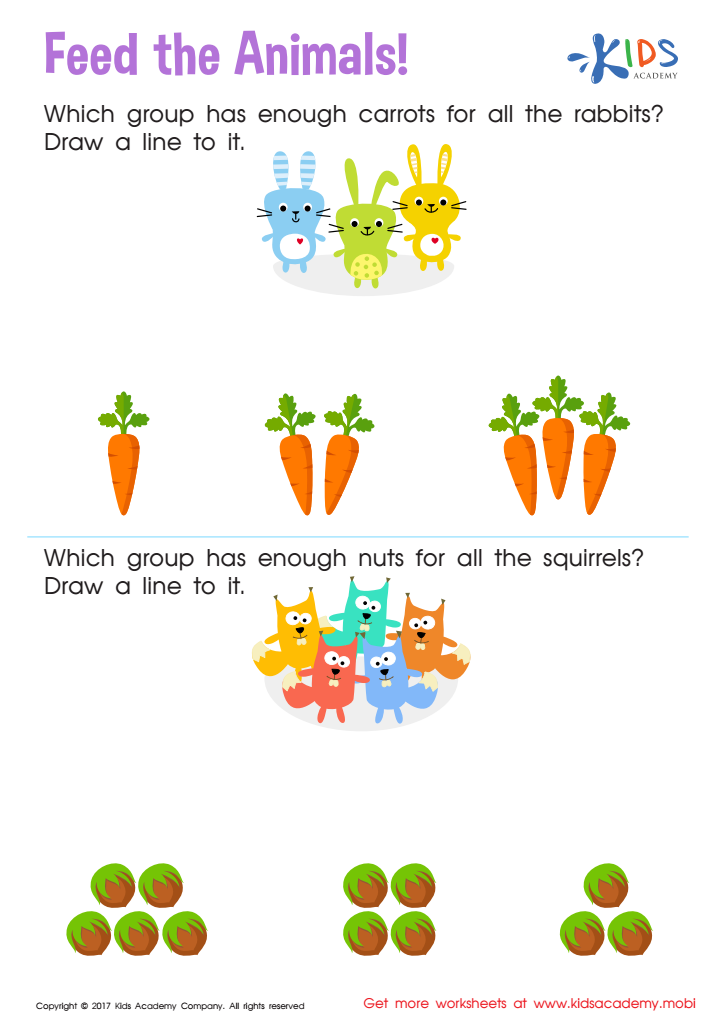
Count and Match: Feed the Animals Worksheet
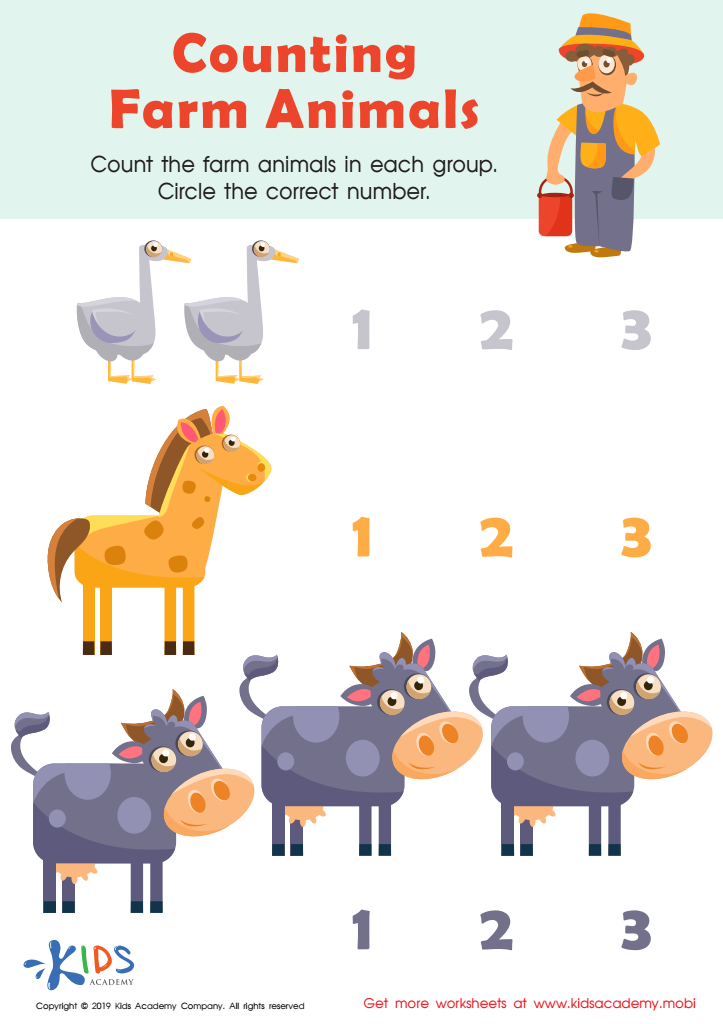
Counting Farm Animals Worksheet
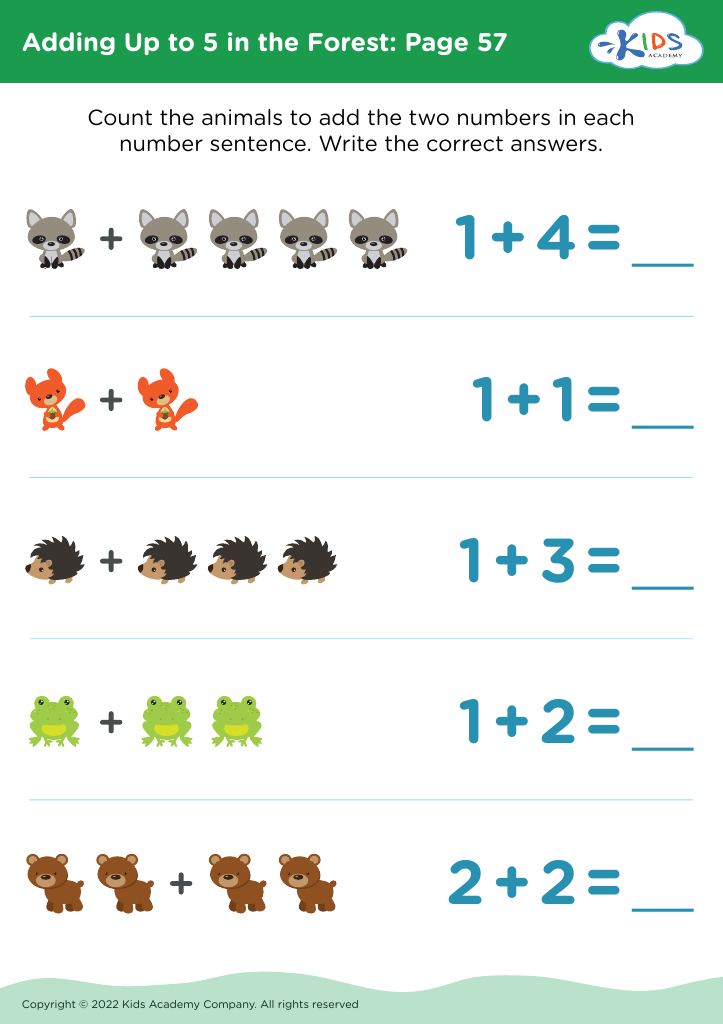







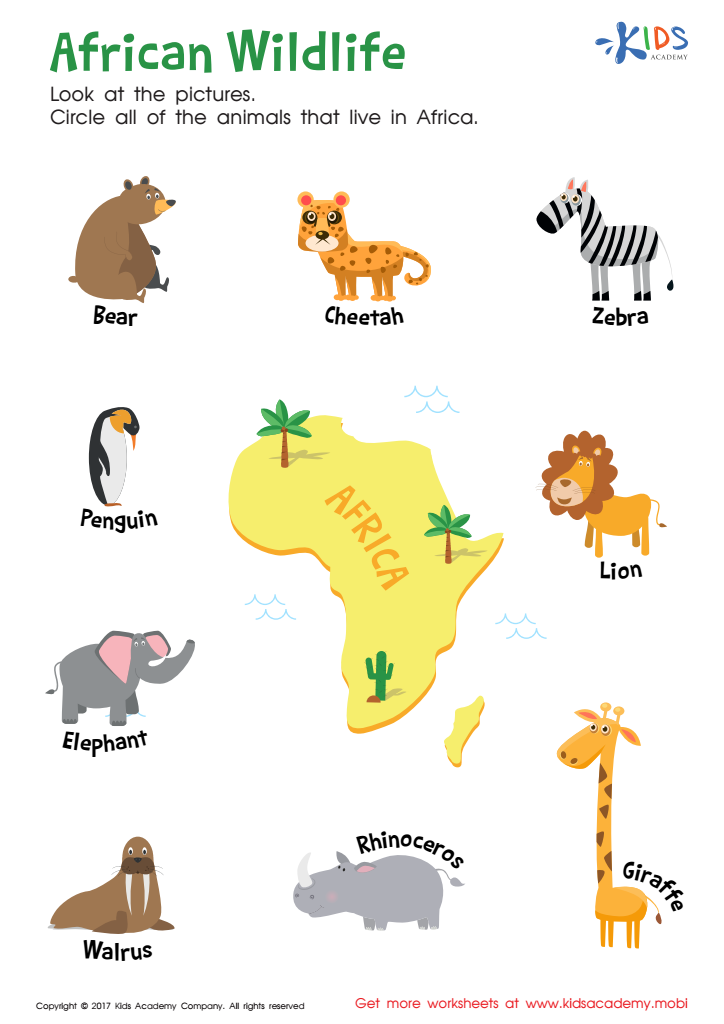
Animal recognition is crucial for children aged 5-6 as it promotes cognitive, social, and emotional development. At this young age, children are naturally curious about their environment, and learning about animals can stimulate their interest in the world around them. Recognizing different animals helps children develop essential cognitive skills, such as memory, classification, and reasoning, as they learn to differentiate various species based on appearance, sounds, and habitats.
Additionally, teaching animal recognition fosters empathy and compassion. Understanding characteristics and behaviors of animals encourages children to appreciate living beings and instills a sense of responsibility towards their care and conservation. This knowledge helps to cultivate an awareness of nature and wildlife, nurturing future environmental stewardship.
Moreover, animal recognition can serve as a powerful bridge to literacy and language development. Books, songs, and games featuring animals can introduce new vocabulary and storytelling skills, while also enhancing listening and observational abilities. Teachers and parents can harness these opportunities to create engaging and meaningful learning experiences that connect various subjects, from science to art.
Ultimately, animal recognition enriches a child's overall learning journey and promotes essential life skills, making it a vital aspect of early education.








