Basic geometry Worksheets for Ages 5-6
3 filtered results
-
From - To
Discover our engaging Basic Geometry Worksheets tailored for children ages 5-6! Designed to spark early math skills, these worksheets introduce young learners to fundamental geometric concepts such as shapes, patterns, and spatial awareness. Each worksheet features colorful illustrations and fun activities that make learning enjoyable while strengthening essential skills like shape recognition and measurement. Perfect for at-home practice or classroom use, our resources help children develop confidence in their mathematical abilities. Foster a love for learning and establish a strong foundation in geometry with our user-friendly worksheets suitable for kindergarten readiness and beyond. Explore today and watch your child's skills flourish!
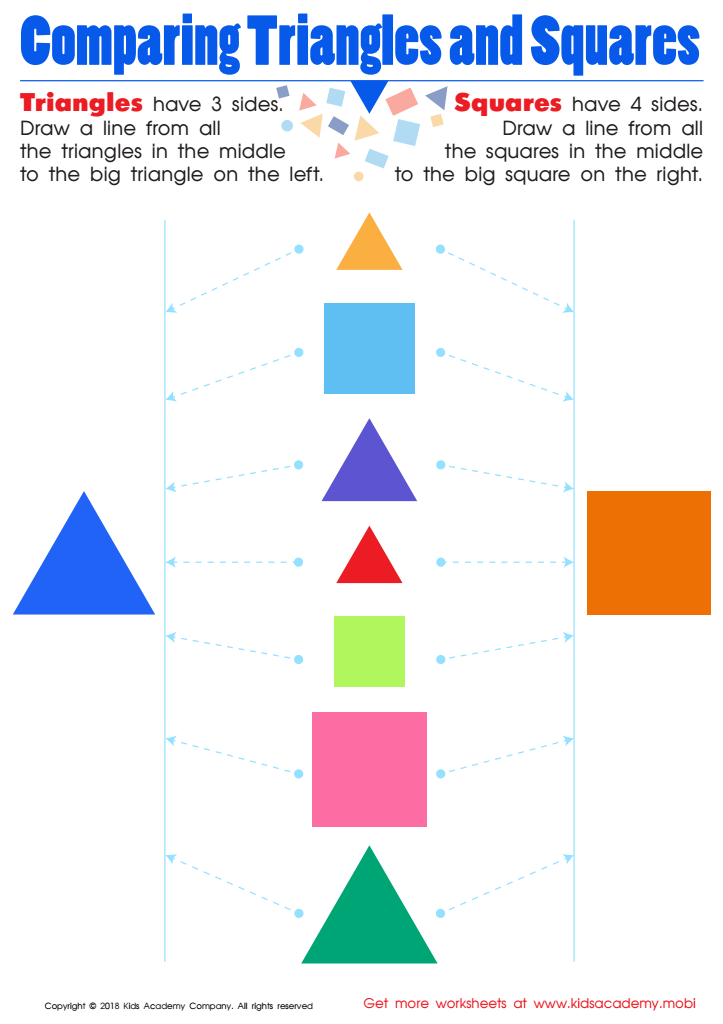
Comparing Triangles Squares Worksheet
 Assign to My Students
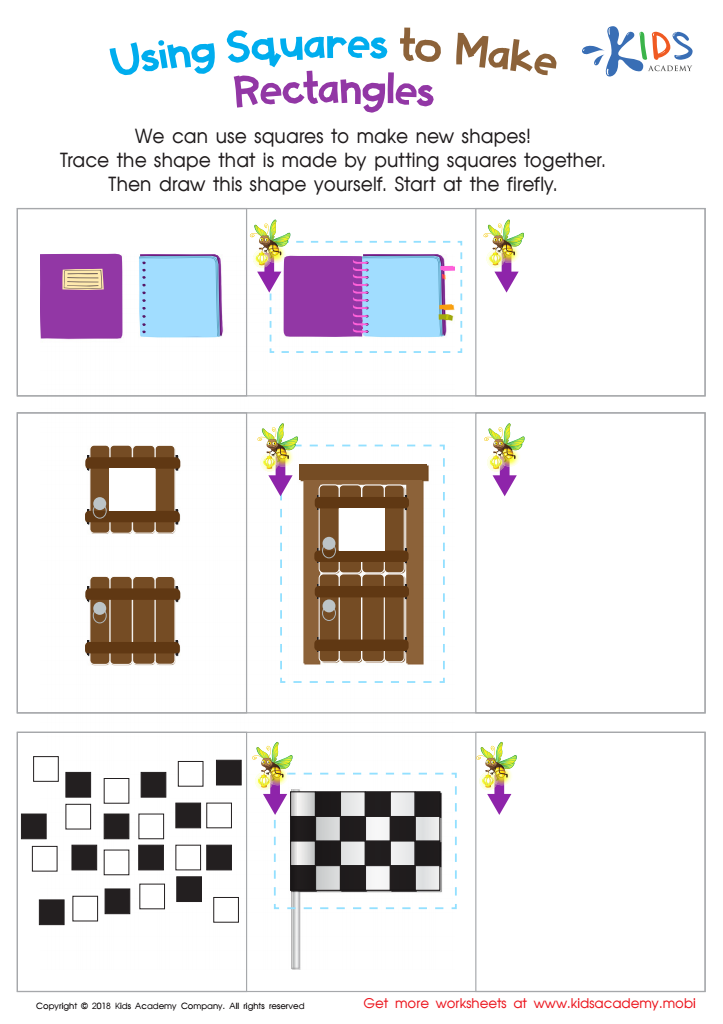
Using Squares to Make Rectangles Worksheet
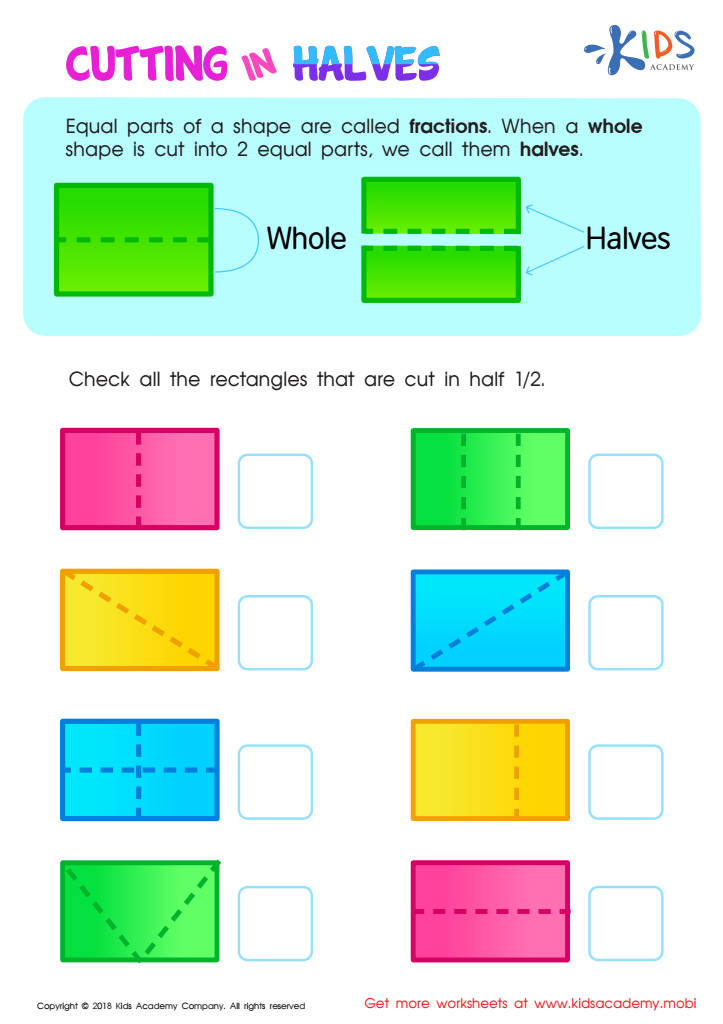
Cutting in Halves Worksheet








Parents and teachers should prioritize basic geometry for children aged 5-6 because it lays a foundational understanding of spatial awareness and critical thinking skills. At this age, children become attuned to shapes, sizes, and the relationships between objects, which are essential building blocks for future mathematical concepts.
Engaging with geometry helps young learners develop problem-solving skills and enhances their ability to categorize and analyze the world around them. Activities involving shapes and spatial relationships can build dexterity and coordination through hands-on exploration, such as building with blocks or engaging in shape art.
Moreover, early exposure to geometry fosters an appreciation for math in a fun and meaningful way. Children learn to identify and distinguish properties of various shapes, which can lead to improved cognitive flexibility. Practicing geometry also supports language development by teaching them terminology that enhances communication skills.
Ultimately, an understanding of basic geometry not only enhances math literacy but also encourages a broader intellect and encourages a positive attitude towards learning. Parents and teachers play a crucial role in nurturing this skill set, ultimately paving the way for academic success as children advance in their education.








