Basic geometry knowledge Worksheets for Ages 5-6
3 filtered results
-
From - To
Introduce your child to the fundamentals of geometry with our engaging and fun Basic Geometry Knowledge Worksheets for Ages 5-6. At Kids Academy, we offer a variety of worksheets designed to help young learners identify and understand basic shapes, patterns, and spatial relationships. Our interactive activities make learning enjoyable and effective, fostering critical thinking and problem-solving skills. Tailored specifically for early learners, these printable worksheets support important developmental milestones, ensuring a solid foundation in geometry that will benefit your child in future math endeavors. Download and start building a strong mathematical foundation today!
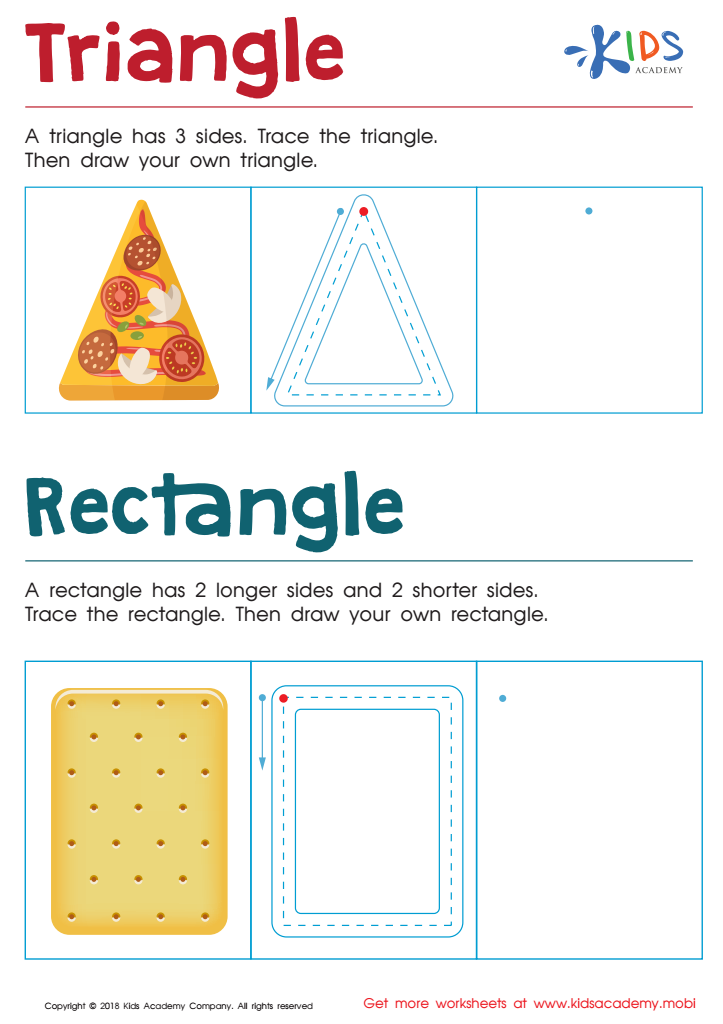
Triangle Rectangle Worksheet
 Assign to My Students
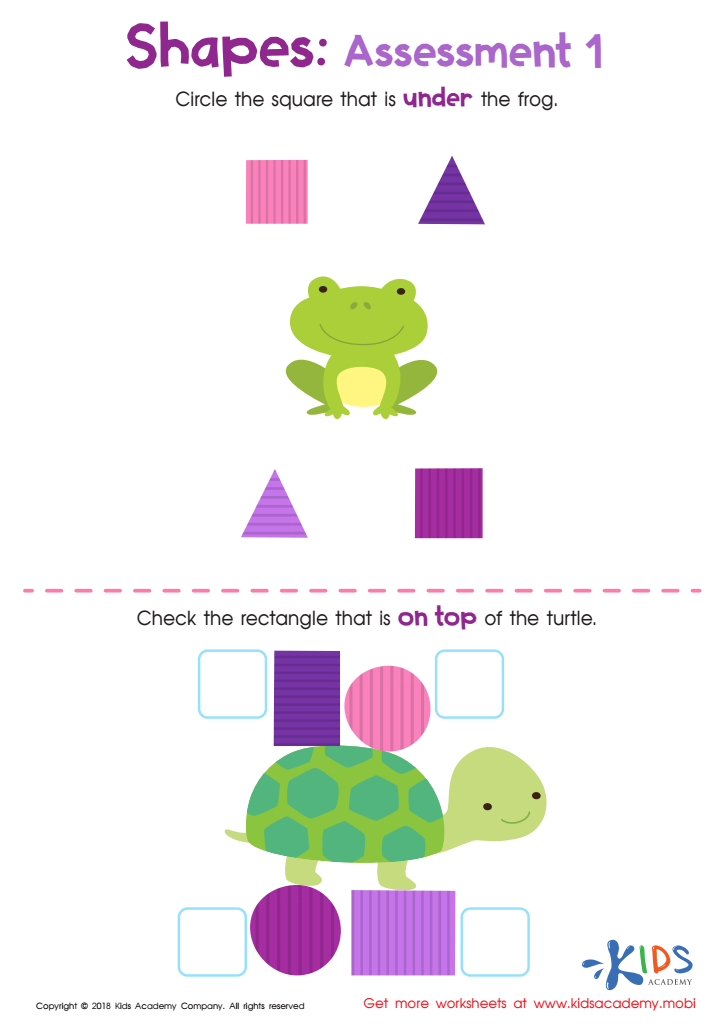
Geometry – Assessment 1 Worksheet
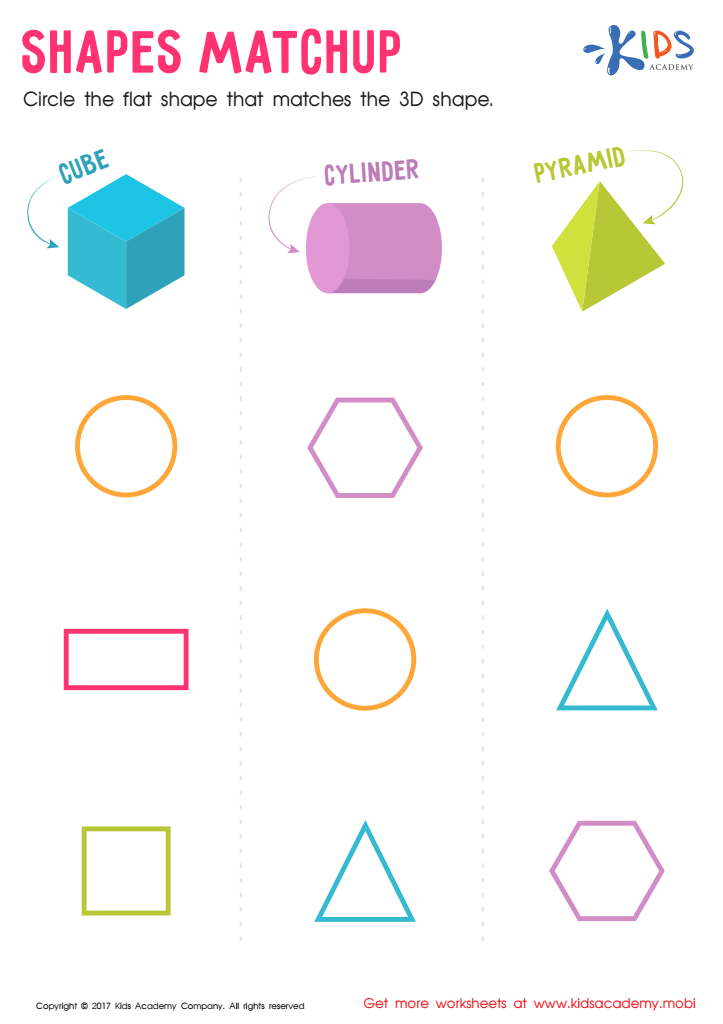
Shapes Matchup Worksheet







Basic geometry knowledge is crucial for young children, ages 5-6, as it lays the groundwork for their overall cognitive development and future academic success. At this formative stage, learning about shapes, patterns, and spatial relationships enhances their observational skills, boosts their ability to describe the world around them, and builds a strong foundation for more complex math skills. Recognizing and comparing shapes like circles, squares, triangles, and rectangles helps children develop visual-spatial awareness and critical thinking skills, which are essential for problem-solving in everyday life.
In addition, basic geometry introduces children to vocabulary and concepts that will be important in their later education, not only in math but also in science, art, and even language arts. Engaging with geometry through hands-on activities encourages children to experiment, explore, and become more confident learners.
For parents and teachers, fostering this early understanding can make a significant difference in a child’s educational journey. It ensures that children are prepared for the structured learning environments of school, reducing anxiety and improving their ability to cope with new material. Moreover, incorporating fun and interactive geometry activities can nurture a love for learning, making education an enjoyable and rewarding experience for young minds.








