Cognitive skill development Worksheets for Ages 5-6
5 filtered results
-
From - To
Unlock your child's potential with our carefully crafted cognitive skill development worksheets for ages 5-6. Designed to sharpen young minds, these worksheets enhance critical thinking, problem-solving, and memory skills in a fun and engaging way. Our printable activities cover essential areas such as pattern recognition, logical reasoning, and spatial awareness, laying the foundation for academic success. Perfect for both classroom and at-home learning, our worksheets make cognitive development an exciting adventure. Boost your child's brainpower today – explore our comprehensive collection and watch them thrive!

Cities and States: Matching Worksheet
 Assign to My Students
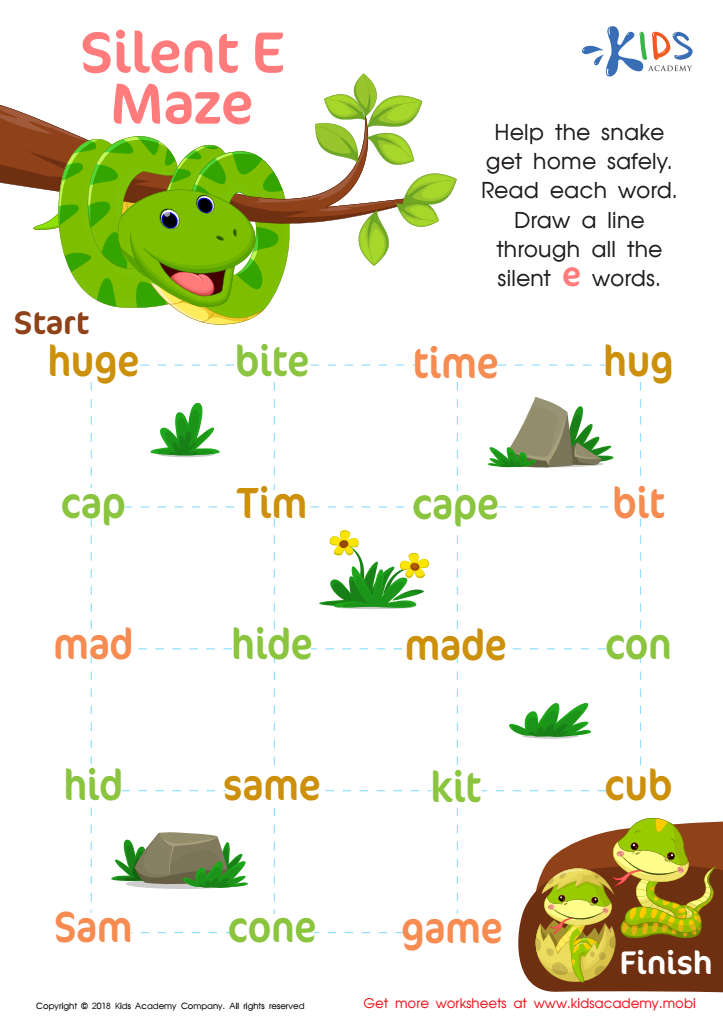
Silent E Maze Worksheet
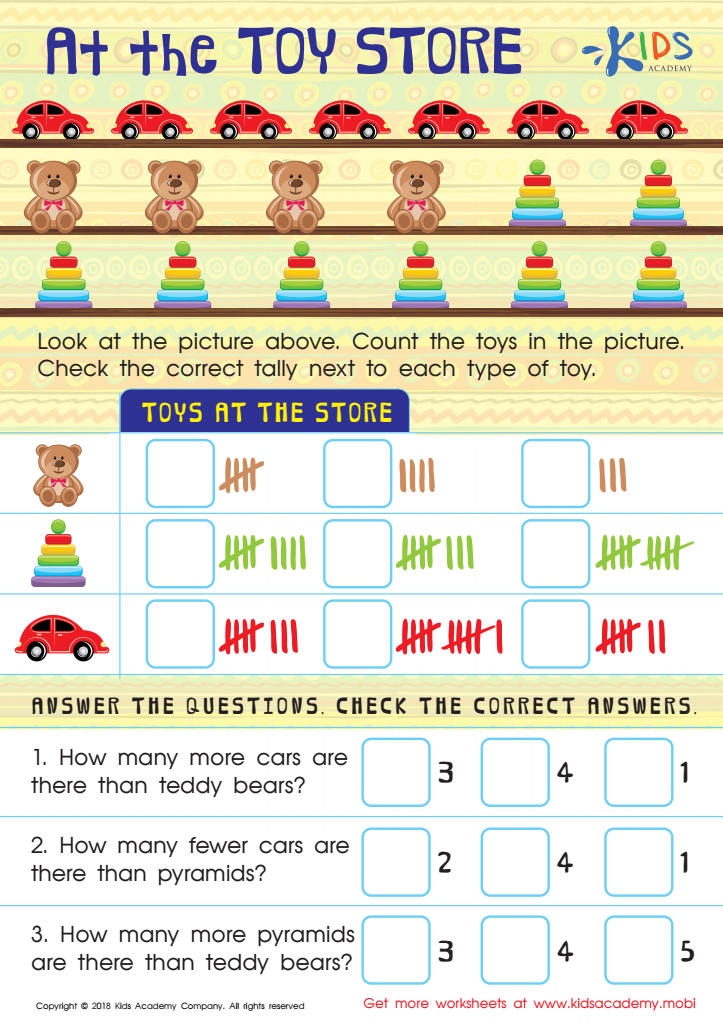
Tally Chart: At the Toy Store Worksheet

Notation of Checkmate Worksheet








Cognitive skill development is crucial for children aged 5-6 as it lays the foundation for their future learning, problem-solving, and social interactions. At this stage, children's brains are highly receptive and rapidly developing, making it an optimal time to foster essential cognitive abilities.
Parents and teachers play a pivotal role in nurturing these skills. Firstly, cognitive development enhances a child's ability to process information, improving their memory, attention, and reasoning capabilities. This better prepares them for more complex tasks, like reading and mathematical reasoning, which are core components of their academic journey.
Secondly, cognitive skills contribute to emotional and social growth. Effective communication, empathy, and conflict resolution—all skills that develop during this period—are grounded in strong cognitive foundations. By supporting these, caregivers ensure children acquire the tools to interact harmoniously with their peers and navigate various social settings.
Furthermore, early support in cognitive development fosters a love for learning, curiosity, and creativity. Engaging activities like puzzles, storytelling, and exploratory play stimulate a child's intellectual growth and imagination.
In summary, focusing on cognitive development for children aged 5-6 sets them on a trajectory of academic success, social competence, and lifelong learning. Thus, it is imperative for both parents and teachers to actively engage in and support their developmental journey.








