Comparative skills Worksheets for Ages 5-6
3 filtered results
-
From - To
Unlock the potential of your young learners with our engaging Comparative Skills Worksheets designed for children aged 5 to 6! These carefully crafted resources help develop essential comparing and contrasting abilities, fostering critical thinking and observational skills. Our worksheets feature vibrant illustrations and hands-on activities that make learning fun and interactive. Perfect for both classroom settings and at-home practice, these worksheets encourage kids to identify differences and similarities, enhancing their comprehension skills. Support your child's educational journey and watch them thrive in language and cognitive development. Explore the variety of printable worksheets to inspire curiosity and learning today!
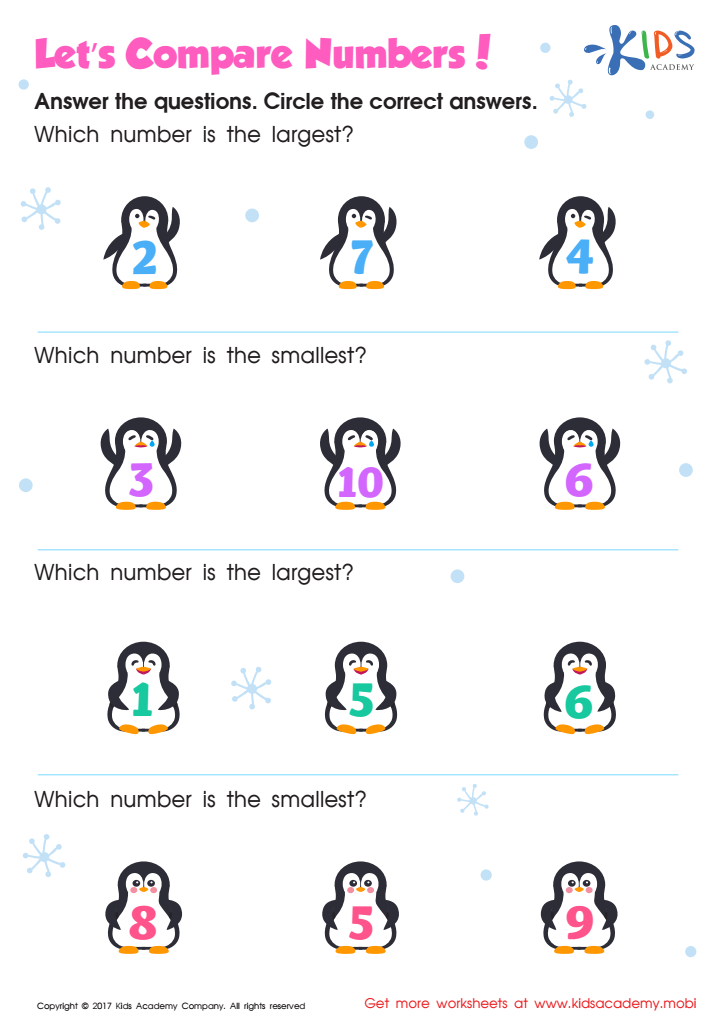
Comparing Numbers 1–10 Worksheet Kindergarten
 Assign to My Students
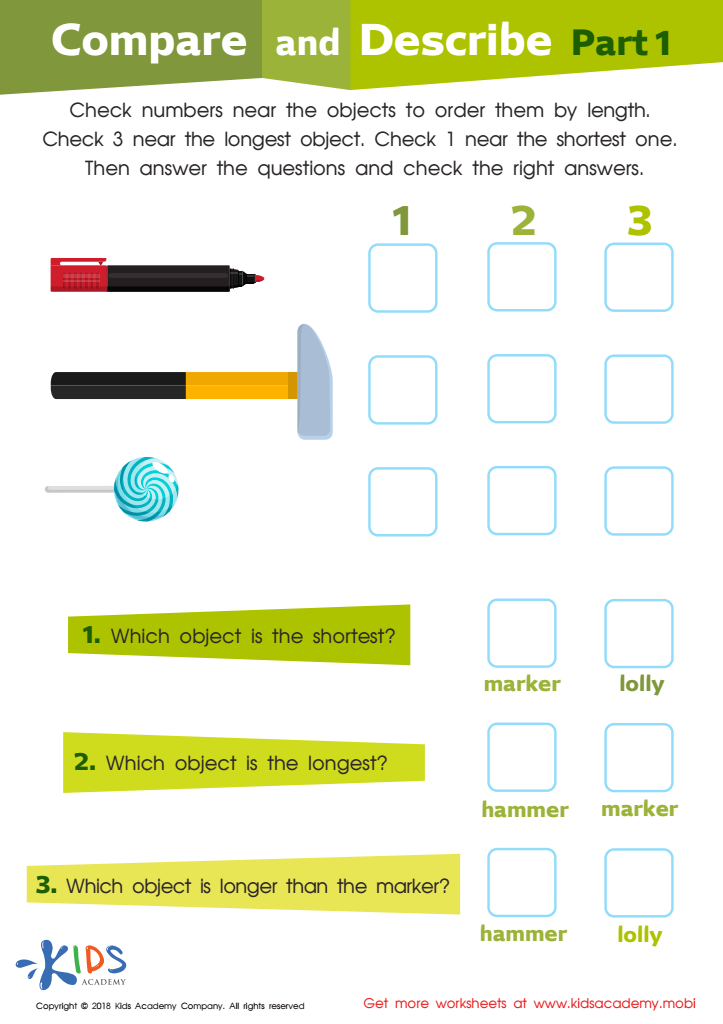
Compare and Describe: Part 1 Worksheet
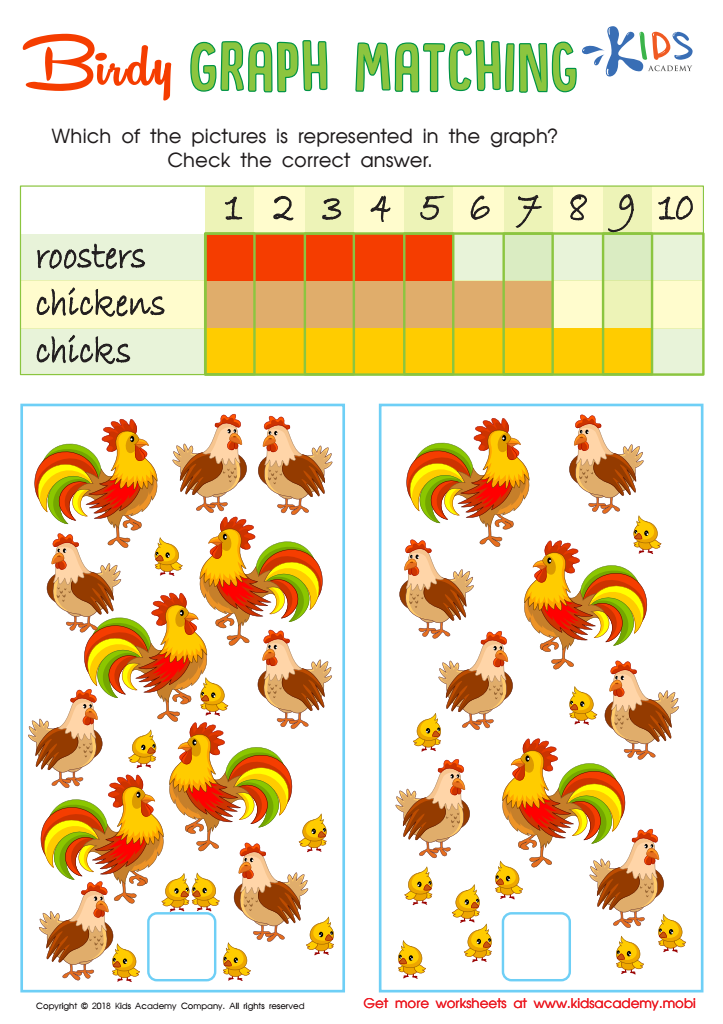
Birdy Graph Matching Worksheet








Comparative skills are essential for children aged 5-6 as they form the foundation for critical thinking, problem-solving, and effective communication. At this young age, children begin to understand differences and similarities, which are vital cognitive processes. Engaging in activities that promote comparative skills helps children articulate their observations about size, quantity, and qualities, fostering vocabulary development and enhancing their ability to discuss and reason.
For parents and teachers, nurturing these skills encourages curiosity and a love for learning. By introducing comparisons through playful activities—such as sorting objects by size, weight, or color—adults can help children develop logical thinking. This hands-on approach increases cognitive engagement and makes learning enjoyable.
Moreover, comparative skills contribute to mathematical foundations, including concepts of greater than, less than, and equal, which are crucial for future math proficiency. Beyond academics, these skills support social development, allowing children to navigate relationships by understanding preferences and differences among peers.
By emphasizing the importance of comparative skills, parents and teachers can foster holistic development, preparing children for future learning and everyday decision-making. Supporting children in these early years sets them on a path toward becoming critical thinkers and effective communicators.








