Enhancing calculation skills Worksheets for Ages 5-6
5 filtered results
-
From - To
At Kids Academy, we offer enhancing calculation skills worksheets designed specifically for children ages 5-6. These engaging and educational worksheets help young learners develop essential arithmetic skills through playful and interactive activities. The exercises cover basic addition and subtraction, number recognition, and problem-solving, providing a strong mathematical foundation. With visually appealing and easy-to-understand tasks, our worksheets support cognitive development and boost your child's confidence in their mathematical abilities. Perfect for both classroom settings and homeschooling, these worksheets make learning fun while preparing your child for future academic success. Discover the joy of learning at Kids Academy today!
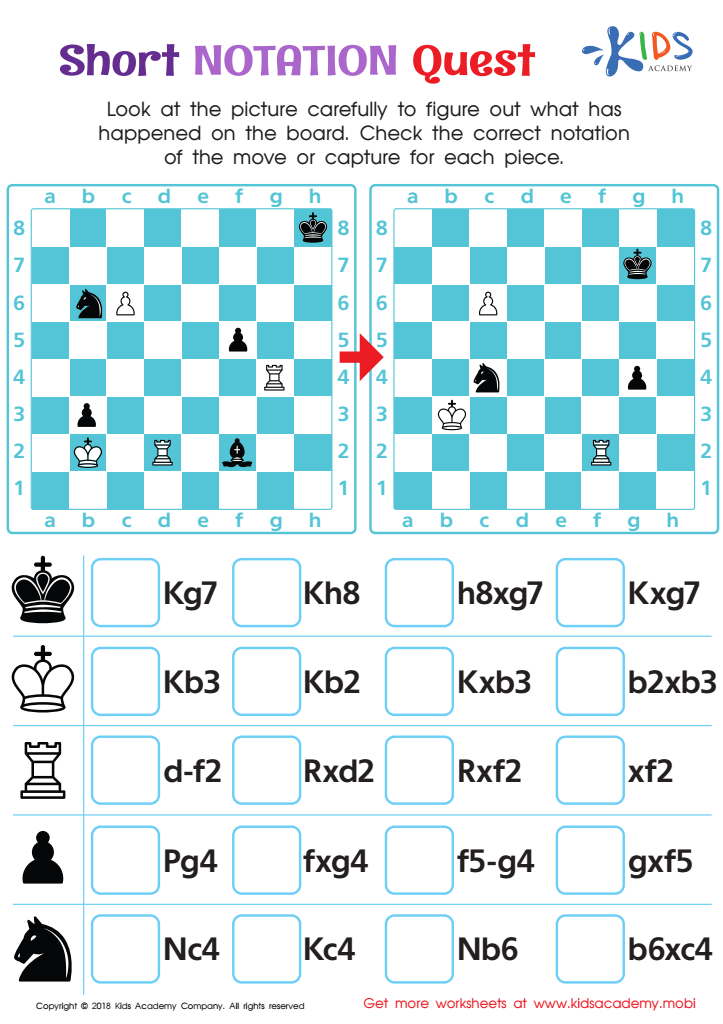
Short Notation Quest Worksheet
 Assign to My Students
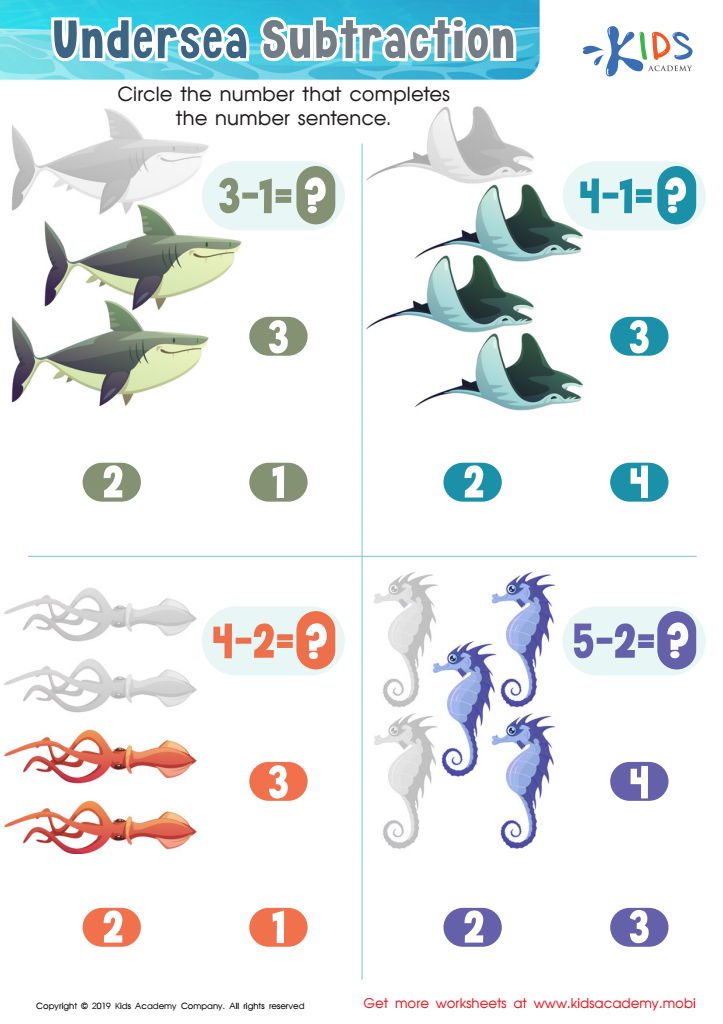
Undersea Subtraction Worksheet
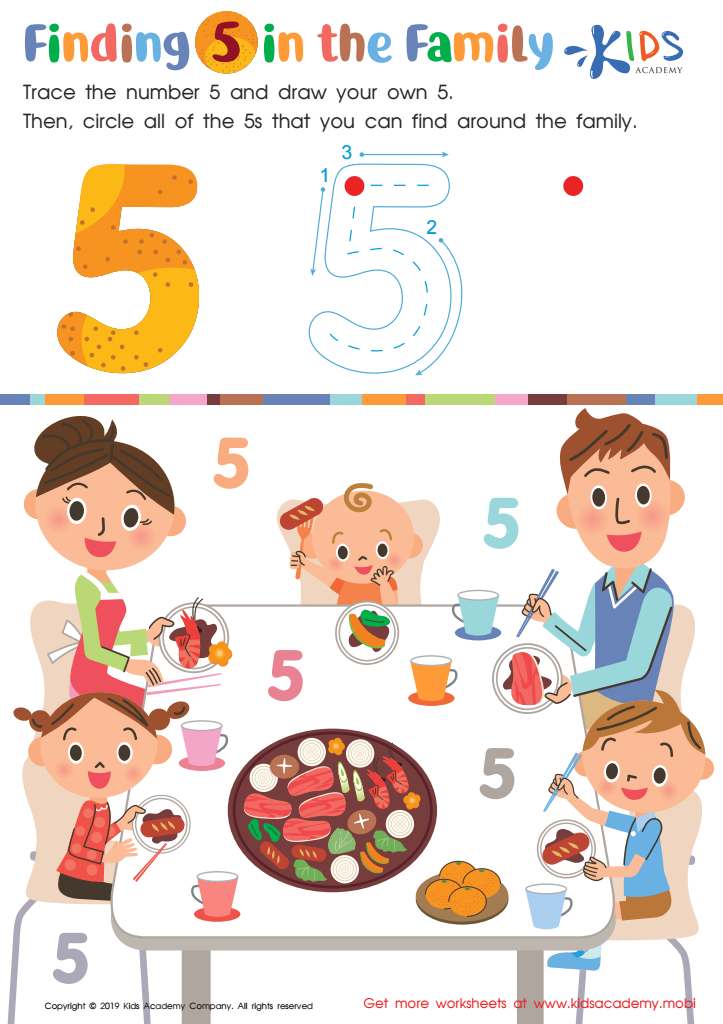
Finding 5 in the Family Worksheet
Pea Rhyming Words Worksheet


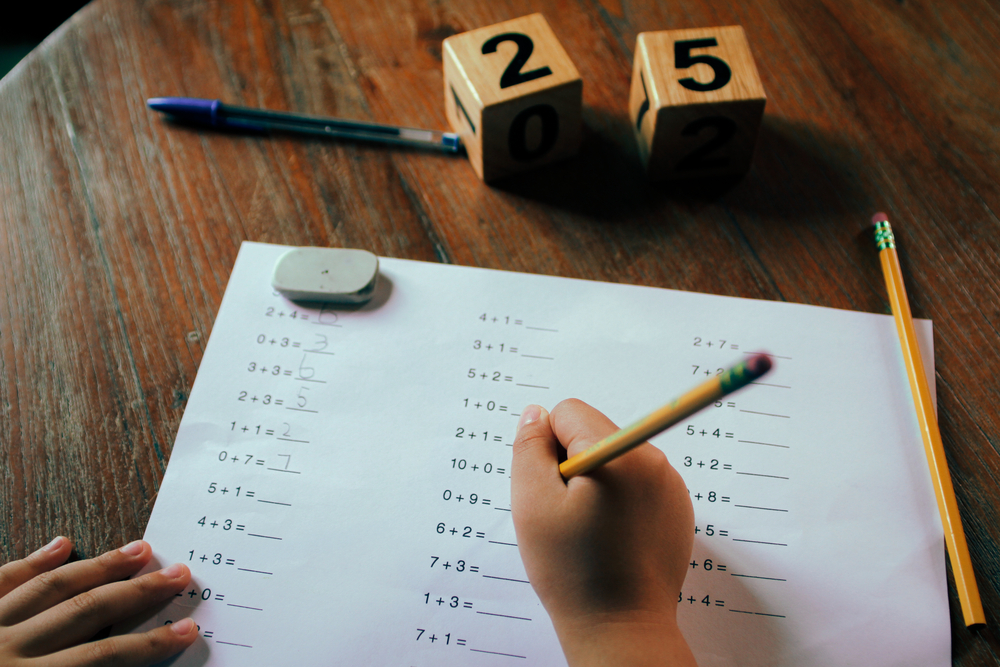



Enhancing calculation skills for children aged 5-6 is foundational for their academic and personal development. At this stage, young minds are especially receptive to learning and grasping new concepts. Strong calculation skills form the basis for future mathematical abilities such as addition, subtraction, multiplication, and division, crucial for advanced subjects in later years.
First, early exposure to calculation trains the brain to approach problems logically and strategically, fostering critical thinking and problem-solving skills. These young learners begin to understand patterns, relationships, and sequencing, which can benefit them not just in mathematics but across all subjects and in everyday decision-making tasks.
Second, building confidence in calculation skills can significantly impact a child’s self-esteem and academic motivation. Mastery of basic arithmetic offers a sense of accomplishment, thereby encouraging a positive attitude towards more challenging concepts as they progress in their education.
Finally, enhancing early calculation skills has broader developmental benefits. It sharpens attention spans, enhances memory, and improves precision and accuracy in tasks. These skills are essential not only in academic settings but also in social interactions where number sense is required, such as sharing and playing games.
In sum, prioritizing the development of calculation skills in early childhood can set the trajectory for lifelong learning and critical thinking, forming a very competent and confident foundation for the future.








