
Enhancing fine motor skills Worksheets for Ages 5-6
4 filtered results
Difficulty Level
Grade
Age
-
From - To
Subject
Activity
Standards
Welcome to our "Enhancing Fine Motor Skills Worksheets for Ages 5-6" page! Here, you'll find a collection of engaging worksheets designed to support young learners in developing essential fine motor skills. These activities, perfect for home or classroom use, focus on hand-eye coordination, dexterity, and control, featuring cutting, tracing, and coloring exercises that are both fun and educational. Our worksheets not only promote skill development but also foster creativity and concentration. Ideal for children aged 5-6, these resources help prepare them for more complex tasks ahead and provide a solid foundation for future learning. Explore and download today!
Favorites
With answer key
Interactive
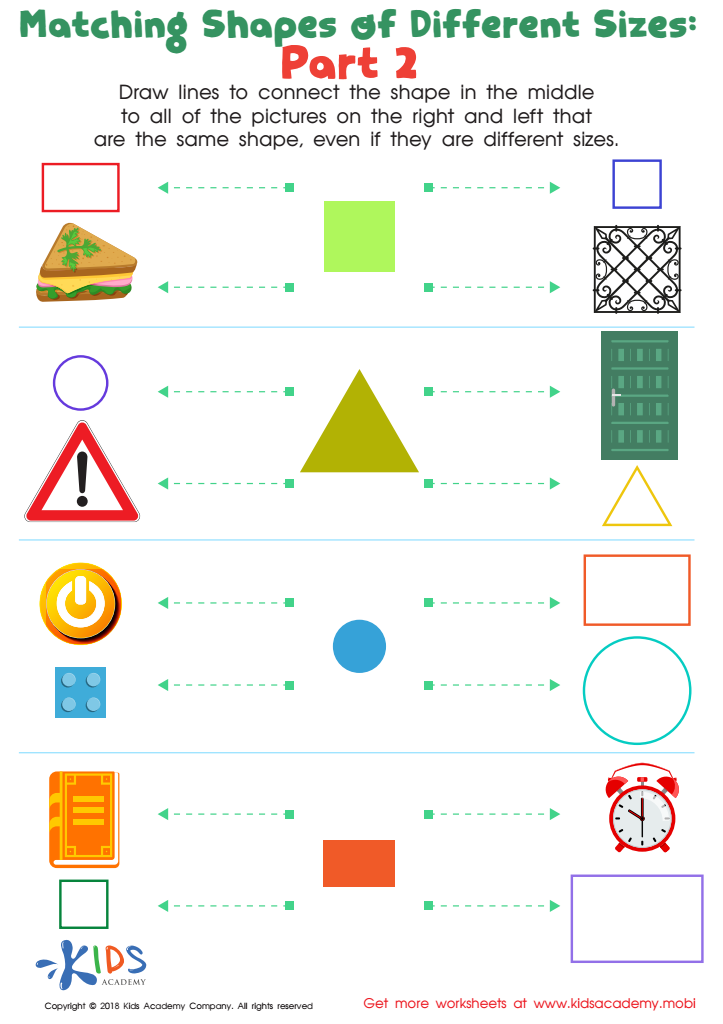
Geometry: Part 2 Worksheet
Third grade geometry gets a challenge with this free worksheet. Kids match shapes to everyday objects like sandwiches, alarm clocks and books for a better understanding of geometry in their lives. Printable pdf is included.
 Assign to My Students
Geometry: Part 2 Worksheet
Worksheet
Join Kids Academy for Free
Who is primarily going to use this learning content?








Enhancing fine motor skills in children aged 5-6 is crucial for their overall development and future academic success. At this age, children are developing the ability to use their hands and fingers more precisely, which lays the groundwork for pivotal tasks such as writing, drawing, and self-care activities. Engaging in activities that promote fine motor skills helps improve hand-eye coordination, dexterity, and concentration.
Parents and teachers should care because strong fine motor skills correlate with better academic performance, particularly in literacy and mathematics. Children who struggle with these skills may face challenges in school, leading to frustration and decreased self-esteem.
Furthermore, engaging in fine motor activities fosters creativity and problem-solving abilities. Activities like cutting, tracing, and assembling puzzles not only enhance fine motor development but also encourage cognitive growth.
Involving children in arts and crafts, building games, or practical life skills, like buttoning shirts or tying shoelaces, creates opportunities for practice and reinforces the importance of perseverance and patience. By prioritizing fine motor skill development, parents and teachers can support children's readiness for school, contribute to their emotional well-being, and equip them with essential tools for lifelong learning and independence.








