
Fruit identification Worksheets for Ages 5-6
3 filtered results
Difficulty Level
Grade
Age
-
From - To
Subject
Activity
Standards
Explore our engaging Fruit Identification Worksheets designed specifically for children aged 5-6! These interactive resources help young learners recognize and name a variety of fruits while enhancing their observational skills. Our worksheets feature colorful images and fun activities that make learning about fruits enjoyable and exciting. Ideal for classroom or home use, these worksheets support early literacy and vocabulary development as children practice identifying and describing different fruits. Foster a love for healthy eating and nature while providing a solid foundation for knowledge. Perfect for enhancing math and science lessons in a playful, creative way. Get started with our fruit identification activities today!
Favorites
With answer key
Interactive
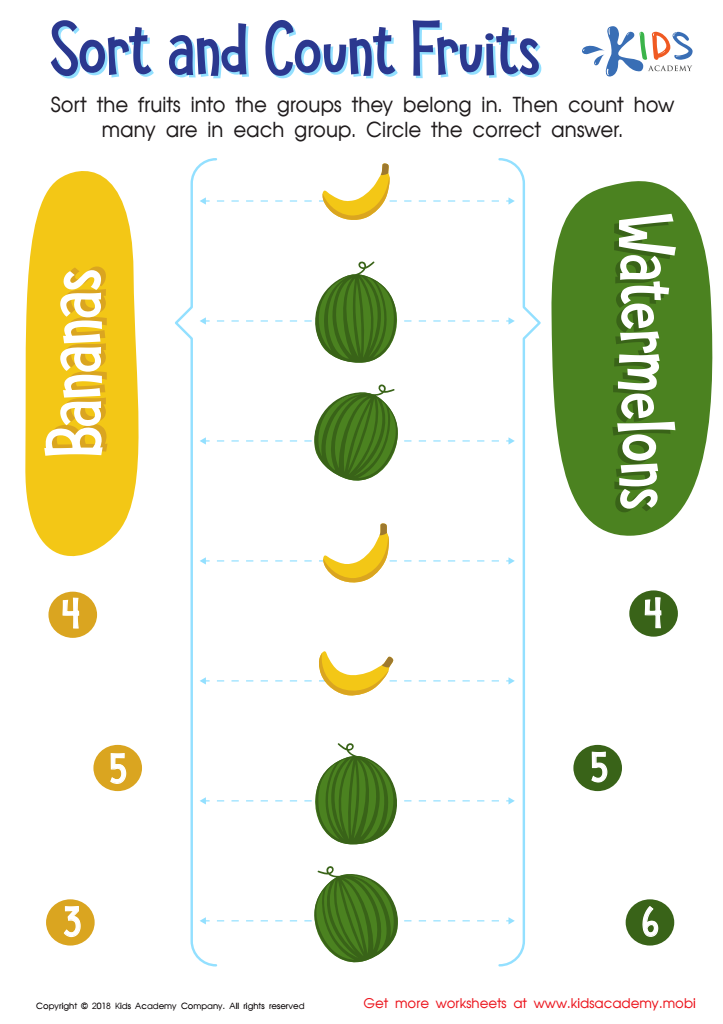
Sort and Count Fruits Worksheet
Allow your children to hone their critical thinking and number reasoning skills with this free worksheet. They'll sort, count, and trace fruits while learning basic number sense. A fun, delicious learning experience with familiar pictures they'll love.
 Assign to My Students
Sort and Count Fruits Worksheet
Worksheet
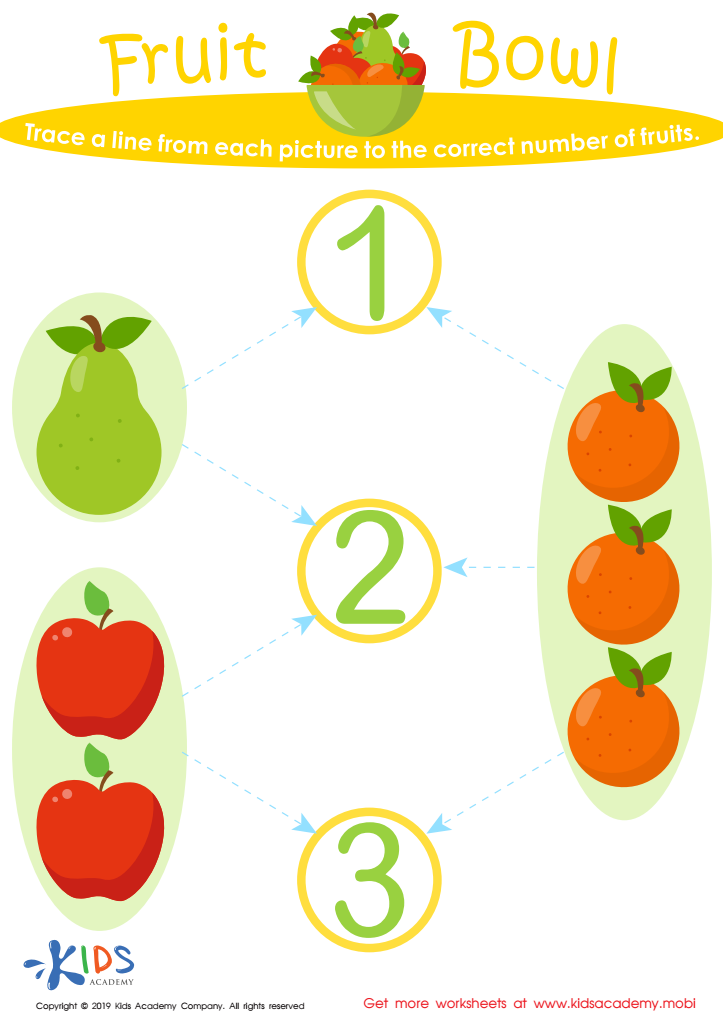
Fruit Bowl Worksheet
Kids love counting fruit! This fun math worksheet lets them count the number of fruit in each group and use the traceable lines to connect the correct number. It's a great way to learn one-to-one number representation, plus it's yummy and delicious!
Fruit Bowl Worksheet
Worksheet
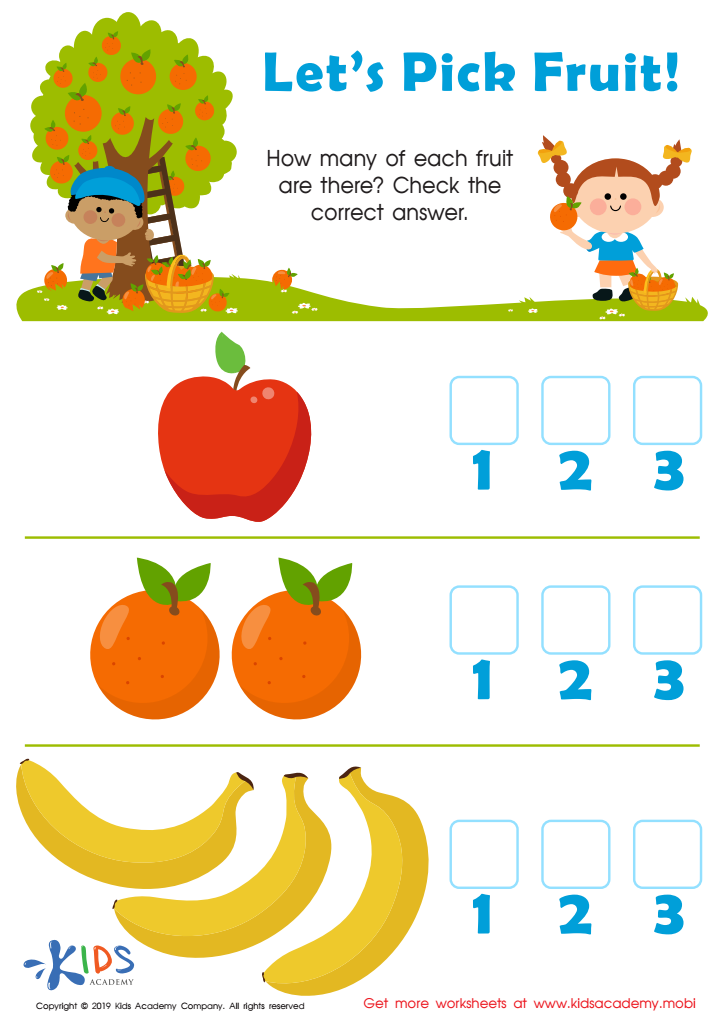
Let's Pick Fruit Worksheet
Picking fruit is fun - and counting it is even better! This free worksheet is perfect for young math learners. They'll use picture representation to count the fruit in each problem and then select the correct answer from the multiple-choice boxes. It's a great way to teach number sense in an easy, fun way!
Let's Pick Fruit Worksheet
Worksheet
Join Kids Academy for Free
Who is primarily going to use this learning content?






Fruit identification is an essential learning experience for children ages 5-6, as it supports their cognitive, social, and physical development. When parents and teachers engage children in identifying various fruits, they enhance vocabulary and comprehension skills, enriching their understanding of language through the names, colors, shapes, and textures of fruits. This activity cultivates sensory awareness, allowing children to learn through touch, sight, and taste, thereby fostering curiosity and exploration.
Additionally, recognizing different fruits encourages healthy eating habits. By familiarizing children with a variety of fruits, they learn about nutrition in an engaging way, developing preferences for healthy food choices early in life. This understanding can impact their lifelong attitudes towards food.
Moreover, fruit identification activities can spark social interactions, providing opportunities for cooperative learning and shared experiences in group settings, whether in a classroom or home environment. Parents and teachers can also incorporate creative projects, like drawing and crafting, to make learning fun and memorable. Ultimately, fruit identification is not just an educational task; it is a multifaceted activity that promotes holistic development, health awareness, and community engagement, making it vital for both educators and caregivers to prioritize in early childhood education.








