Graph interpretation Worksheets for Ages 5-6
3 filtered results
-
From - To
Discover our engaging Graph Interpretation Worksheets designed specifically for children aged 5-6! These activities help young learners develop essential skills by analyzing colorful charts, pictographs, and bar graphs. Our worksheets introduce basic graph concepts, enabling kids to compare data visually, make simple observations, and answer fun questions based on their findings. With a variety of themes and interactive exercises, these worksheets encourage critical thinking and foster a love for mathematics. Perfect for enhancing classroom learning or supplementing home education, our Graph Interpretation Worksheets support early numeracy in a playful, imaginative way, laying a strong foundation for future mathematical success!
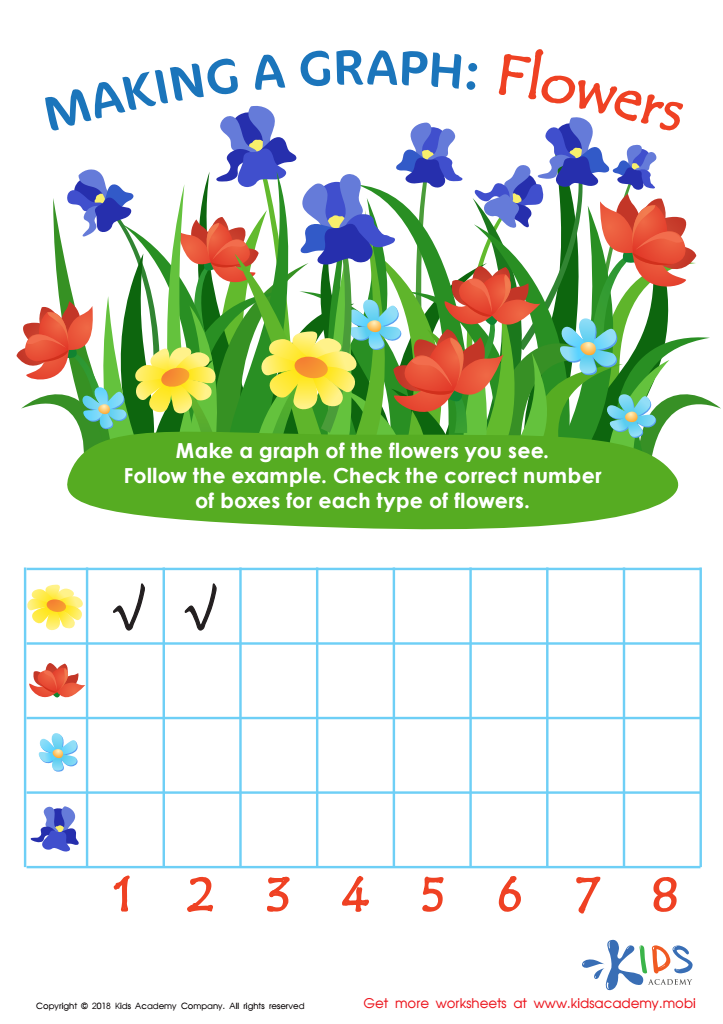
Making a Graph: Flowers Worksheet
 Assign to My Students
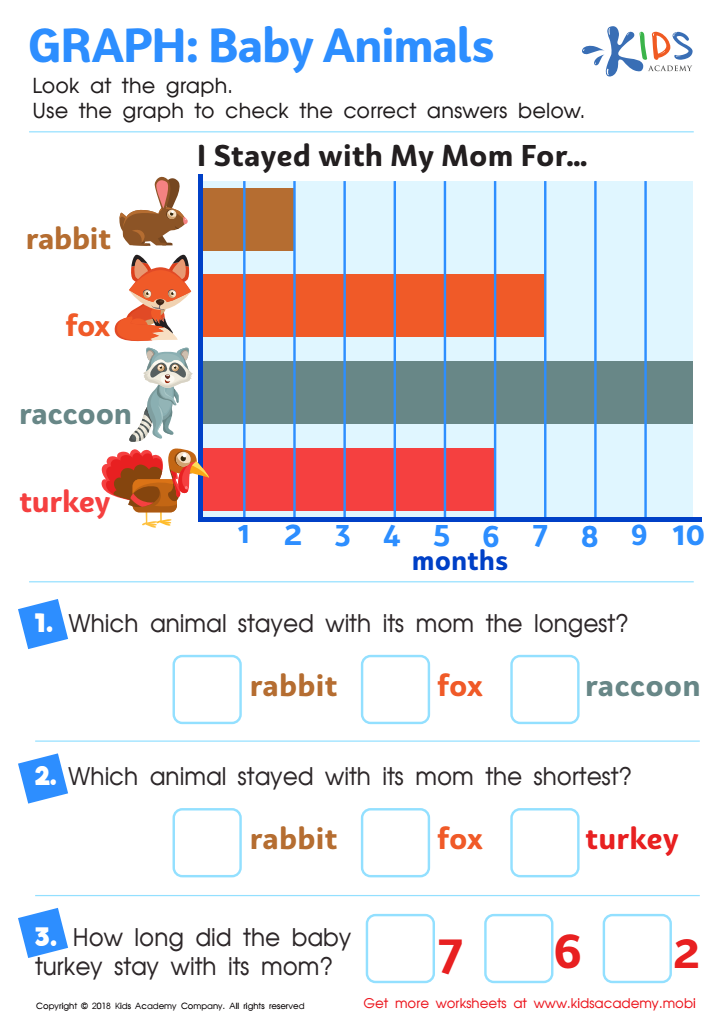
Graph: Baby Animals Worksheet
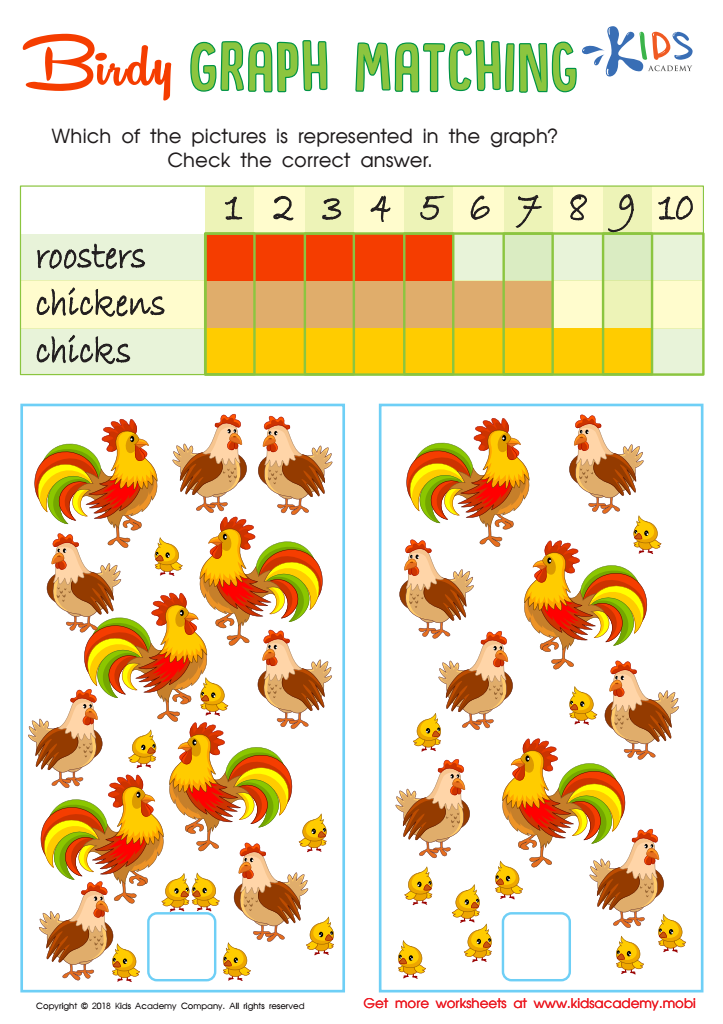
Birdy Graph Matching Worksheet







Graph interpretation is a fundamental skill for children aged 5-6, serving as a building block for critical thinking and data literacy. At this age, children are naturally curious and often ask questions about the world around them. Teaching them how to read simple graphs—like pictographs or bar graphs—engages their curiosity and helps them interpret information visually. This is crucial in developing their mathematical understanding and promotes logical reasoning.
Understanding graphs allows young learners to recognize patterns and relationships in data, nurturing analytical skills. It encourages them to make sense of information, fostering an early appreciation for statistics, which is increasingly important in our data-driven society. By interpreting graphs, students learn to draw conclusions from visual information, a skill applicable across subjects, whether in reading charts in science or analyzing data in social studies.
Moreover, when parents and teachers emphasize graph interpretation, they enrich children's communication skills. Discussing graphs can enhance vocabulary and the ability to express thoughts clearly. Overall, grasping graph interpretation not only supports academic success in mathematics but also cultivates essential life skills, such as decision-making and problem-solving—both of which are vital as children progress in their education and personal development.








