
Identifying differences Worksheets for Ages 5-6
3 filtered results
Difficulty Level
Grade
Age
-
From - To
Subject
Activity
Standards
Discover our engaging "Identifying Differences Worksheets" designed specifically for children aged 5-6! These printable worksheets enhance visual perception and critical thinking skills as kids explore fun scenarios and spot the contrasting elements. With colorful illustrations and age-appropriate content, these worksheets make learning enjoyable and interactive. Perfect for home or classroom use, they encourage children to compare images while promoting attention to detail and improving their observational abilities. Each worksheet is crafted to challenge young minds, making learning a playful adventure. Empower your little learners today with resources that will spark their curiosity and enhance their cognitive development!
Favorites
With answer key
Interactive
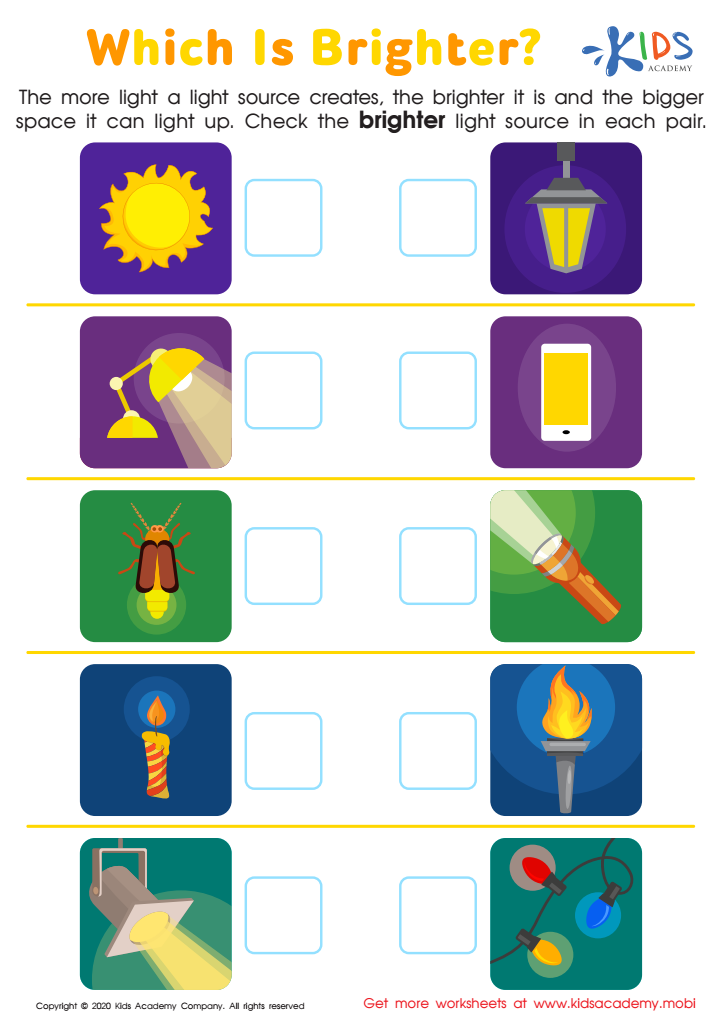
Which Is Brighter? Worksheet
Before the exercise, ask students to recall sources of light. Use this worksheet to explain that the brighter the light source, the more space it can light up. Identify the different light sources in the pictures, then check the brighter light source in each pair. The biggest natural source of light is the sun.
 Assign to My Students
Which Is Brighter? Worksheet
Worksheet
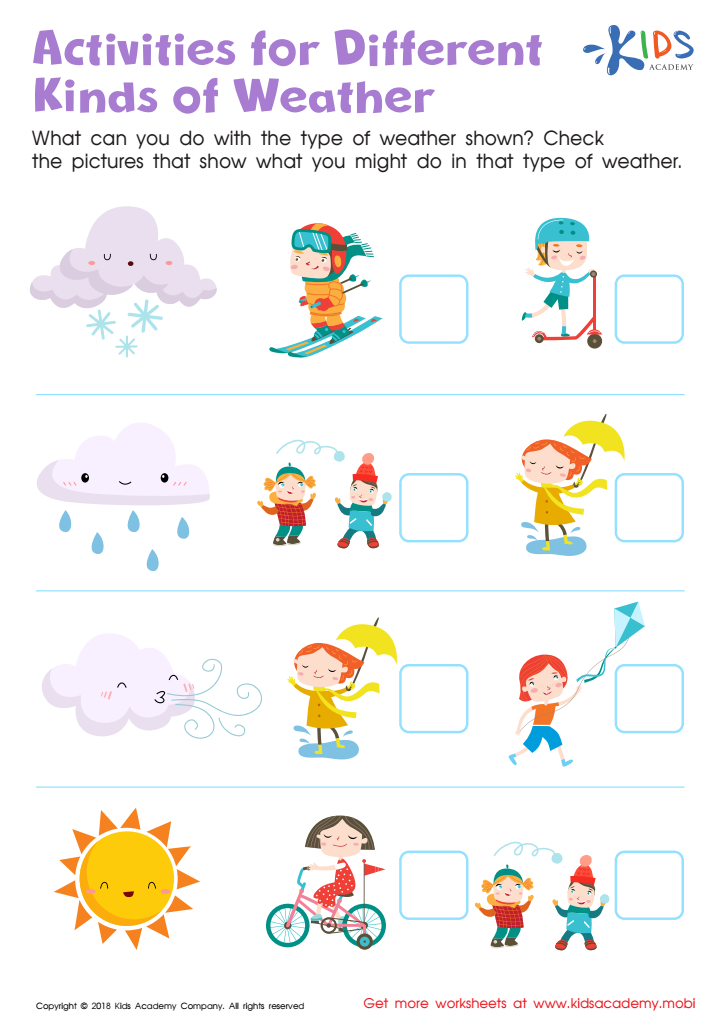
Activities for Different Kinds of Weather Worksheet
Help your child explore the changing seasons with this interactive worksheet. Ask them to name the different seasons and activities associated with each type of weather. Show the pictures and explain what they can do in that kind of weather. Have them check off the activities to help them learn and enjoy the changing seasons.
Activities for Different Kinds of Weather Worksheet
Worksheet
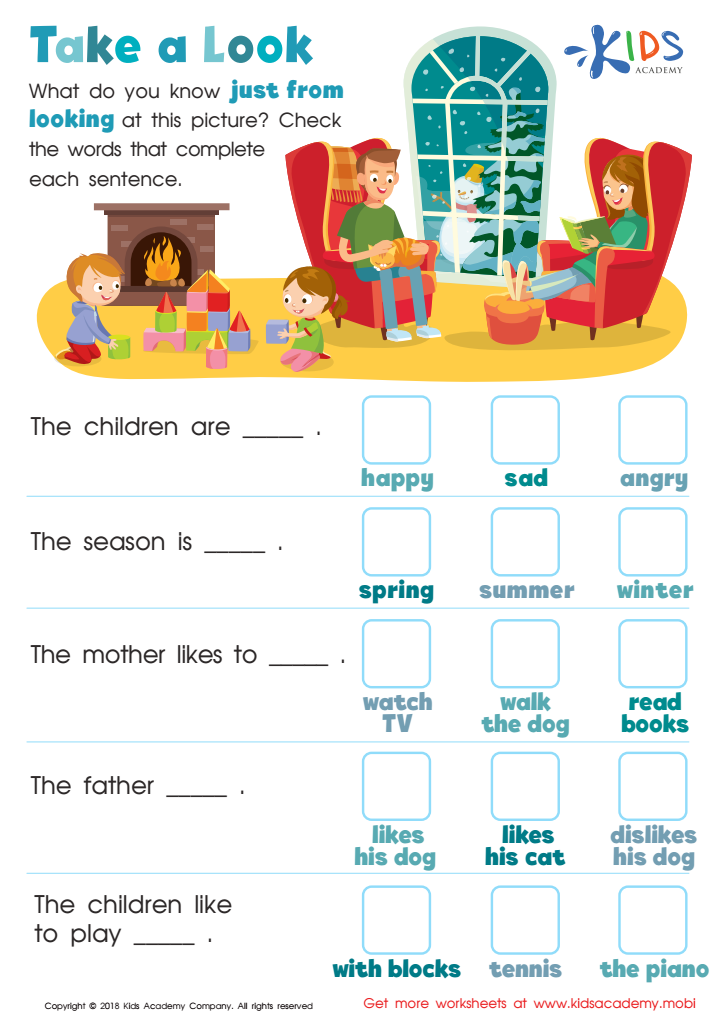
Take a Look - Part 1 Worksheet
Young learners gain understanding when using picture clues when reading. Looking at illustrations can help students learn the meaning of key vocabulary when reading fiction or informational text. Ask your students to look at the worksheet and observe what they can learn from the picture. It's a great comprehension strategy for early readers.
Take a Look - Part 1 Worksheet
Worksheet
Join Kids Academy for Free
Who is primarily going to use this learning content?








Identifying differences is crucial for children aged 5-6, as this stage lays the foundation for social, emotional, and cognitive development. Parents and teachers should care about nurturing this skill for several reasons. Firstly, recognizing differences fosters critical thinking. Children learn to observe, compare, and categorize information, which enhances their problem-solving abilities.
Secondly, understanding differences enables children to appreciate diversity. In our increasingly multicultural world, celebrating uniqueness—whether it's race, culture, abilities, or interests—helps cultivate empathy and respect. Sharing varied perspectives broadens their understanding and prepares them for future collaborations in diverse settings.
Moreover, this skill supports emotional intelligence. When children learn to identify differences, they also become more attuned to others' feelings and needs, promoting healthy relationships and communication skills. It empowers them to express their individuality while accepting and honoring the uniqueness of others.
Finally, early engagement with recognizing differences lays the groundwork for lifelong learning. By developing these observational skills, children become more adaptable and open-minded, crucial attributes for academic and personal growth in an interconnected world. Therefore, parents and teachers play an essential role in facilitating activities that encourage children to see and celebrate the differences around them.








