Money recognition Worksheets for Ages 5-6
6 filtered results
-
From - To
Discover an engaging collection of money recognition worksheets for ages 5-6 designed to foster early financial literacy! Our interactive resources help young learners identify coins and bills, understand their values, and practice simple math skills related to money. Each worksheet is thoughtfully crafted to encourage hands-on learning through visually stimulating activities like counting, matching, and coin identification exercises. Ideal for both classroom settings and home education, these worksheets come equipped with clear instructions and vibrant illustrations that captivate children’s attention. Start your child’s journey to financial awareness today with our fun and educational money recognition worksheets!
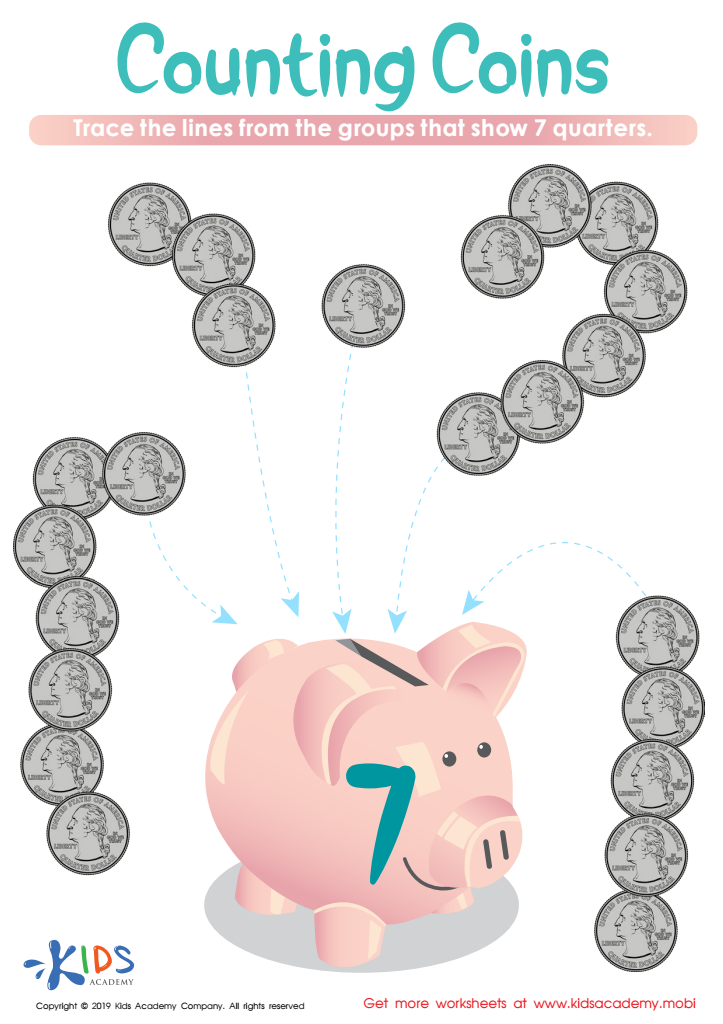
Counting Coins Worksheet
 Assign to My Students
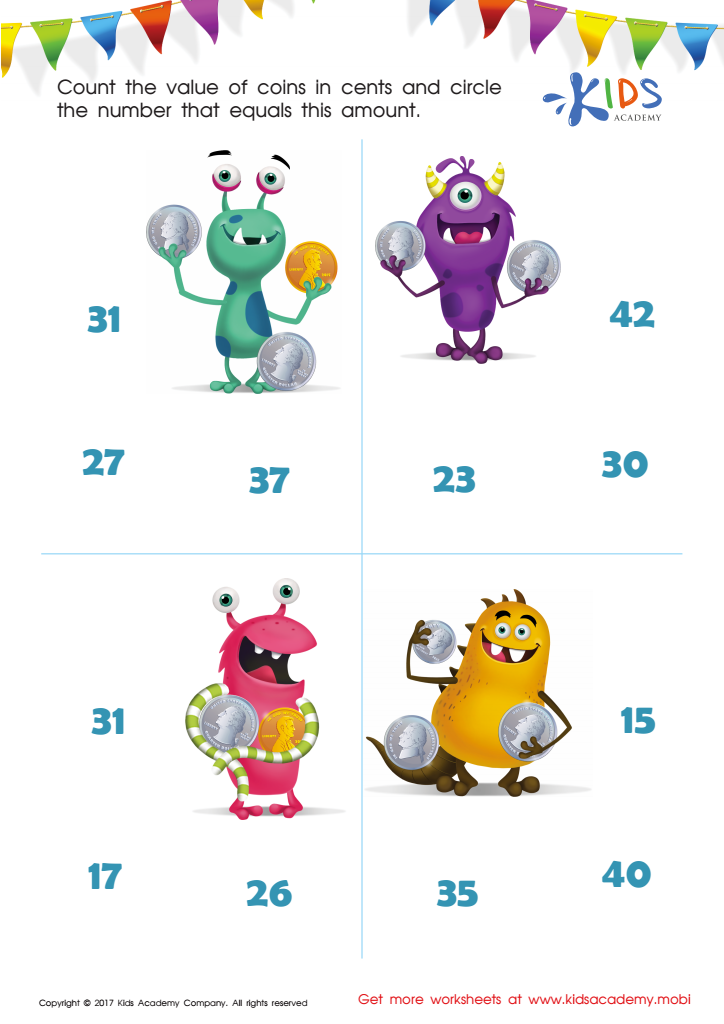
How Many Coins Money Worksheet
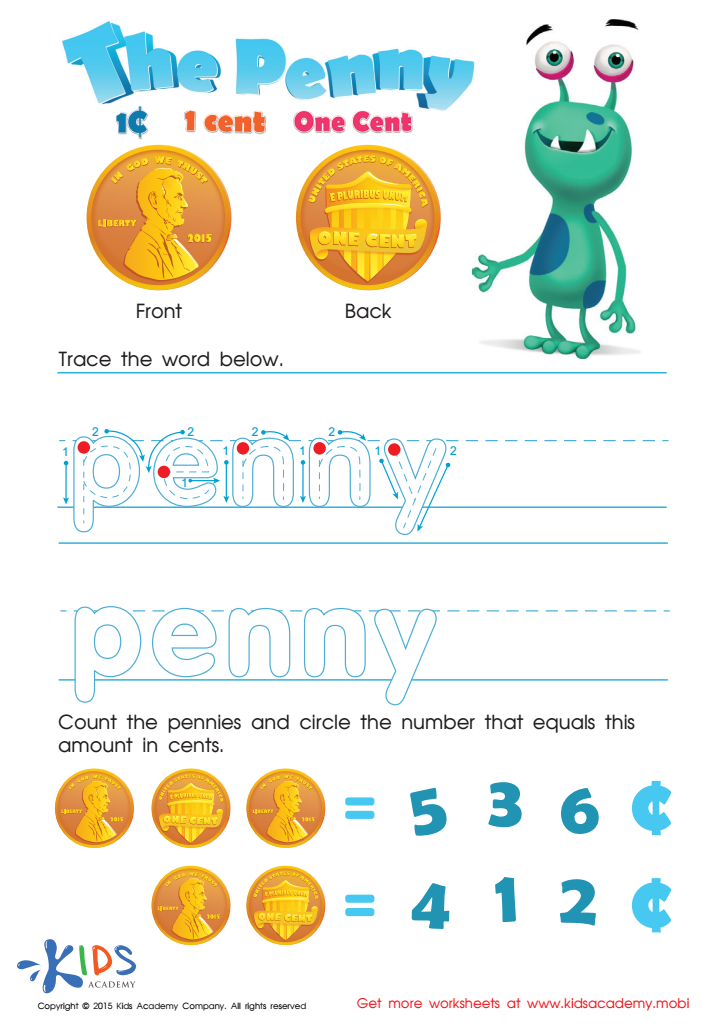
One Cent or the Penny Money Worksheet
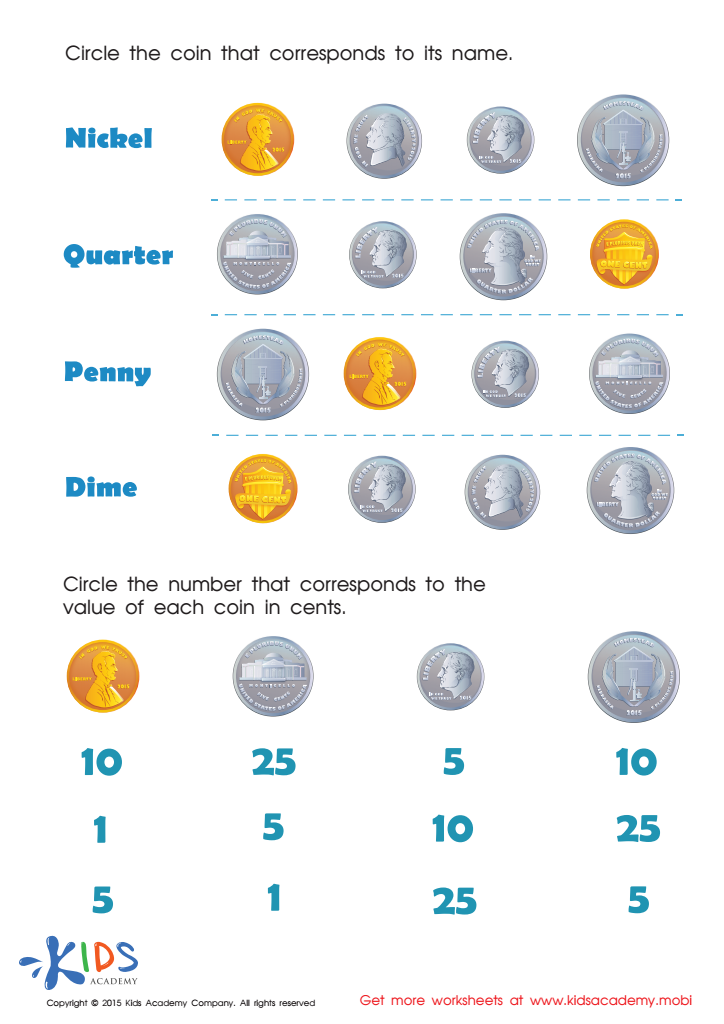
Coin Names and Values Money Worksheet
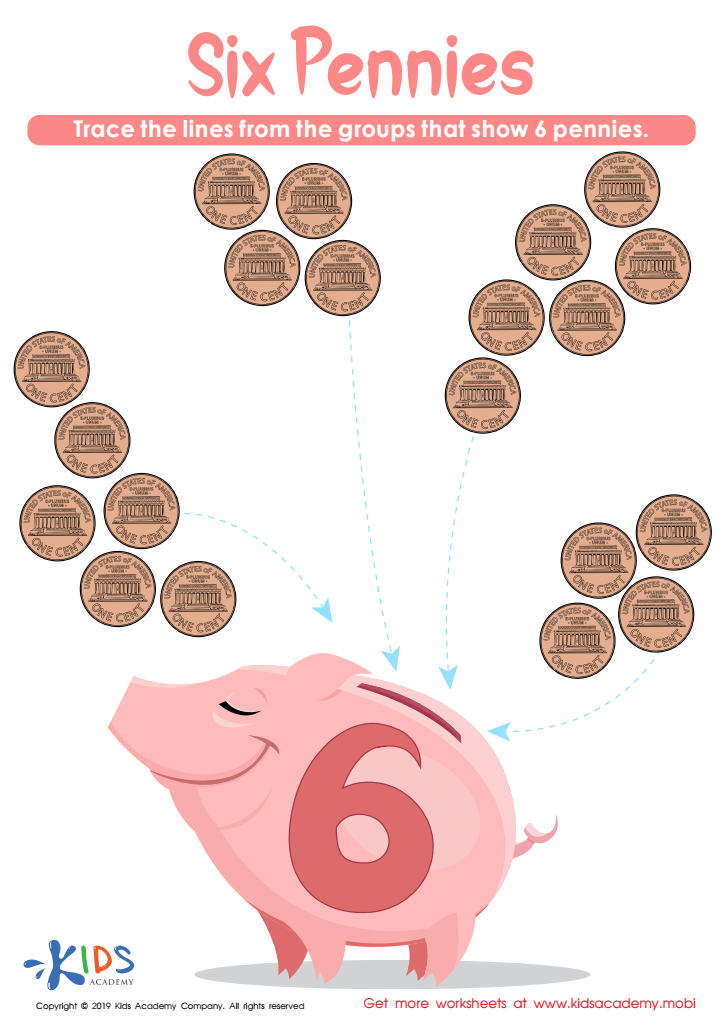
Six Pennies Worksheet
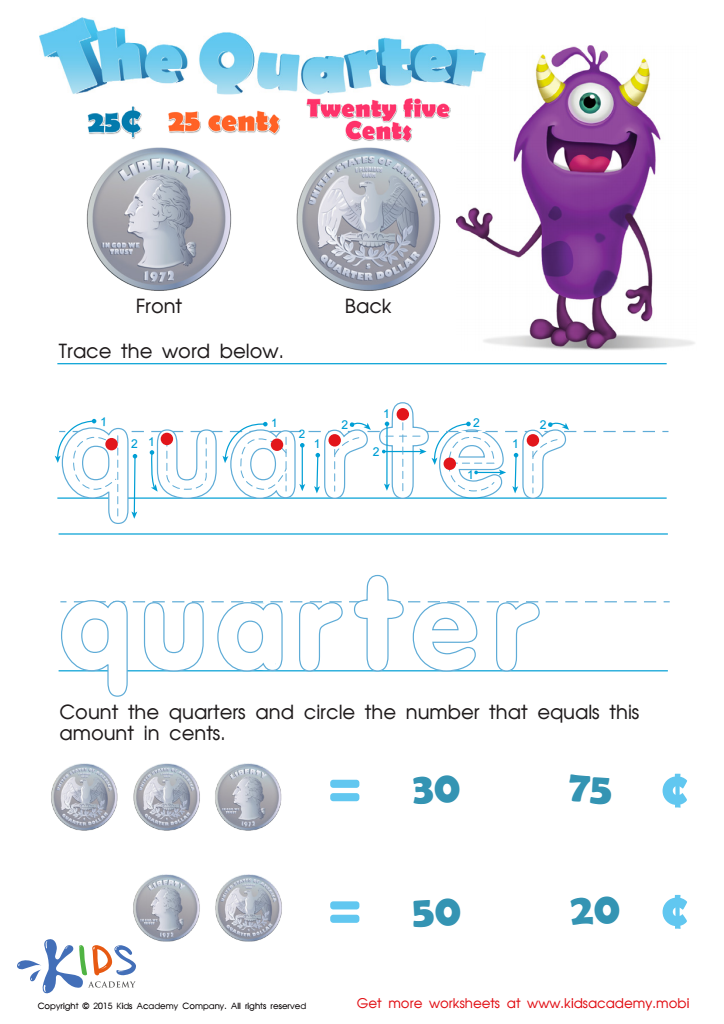
Twenty Five Cents or the Quarter Money Worksheet






Money recognition is a crucial skill for children aged 5-6, as it lays the foundation for financial literacy and responsible spending habits in later life. At this developmental stage, children are naturally curious and eager to learn about the world around them. Introducing them to the concept of money not only nurtures this curiosity but also enhances their cognitive and numerical skills. Recognizing different coins and bills helps children develop essential counting, sorting, and comparative skills, which are fundamental components of mathematics.
Moreover, understanding money promotes independence and confidence. As children learn to identify and use money, they'll feel empowered to make small purchases, fostering critical life skills such as decision-making and budgeting. This knowledge helps them grasp the value of goods and services, instilling a sense of responsibility for their spending choices.
Parents and teachers play a pivotal role in this education process. By incorporating money recognition activities into everyday experiences, such as shopping, counting allowances, or playing games, they can create enjoyable and meaningful learning opportunities. Ultimately, nurturing money recognition in early childhood not only prepares children for future financial responsibilities but also contributes to their overall development as savvy, self-sufficient individuals.








