Problem-solving abilities Worksheets for Ages 5-6 - Page 2
43 filtered results
-
From - To
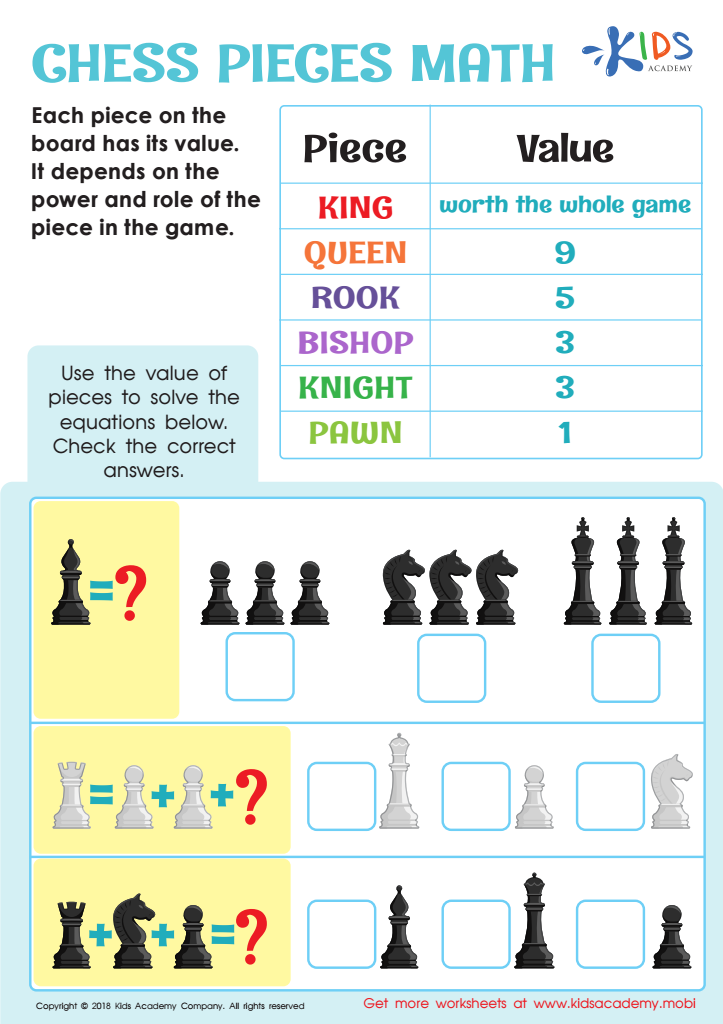
Chess Pieces Math Worksheet
 Assign to My Students
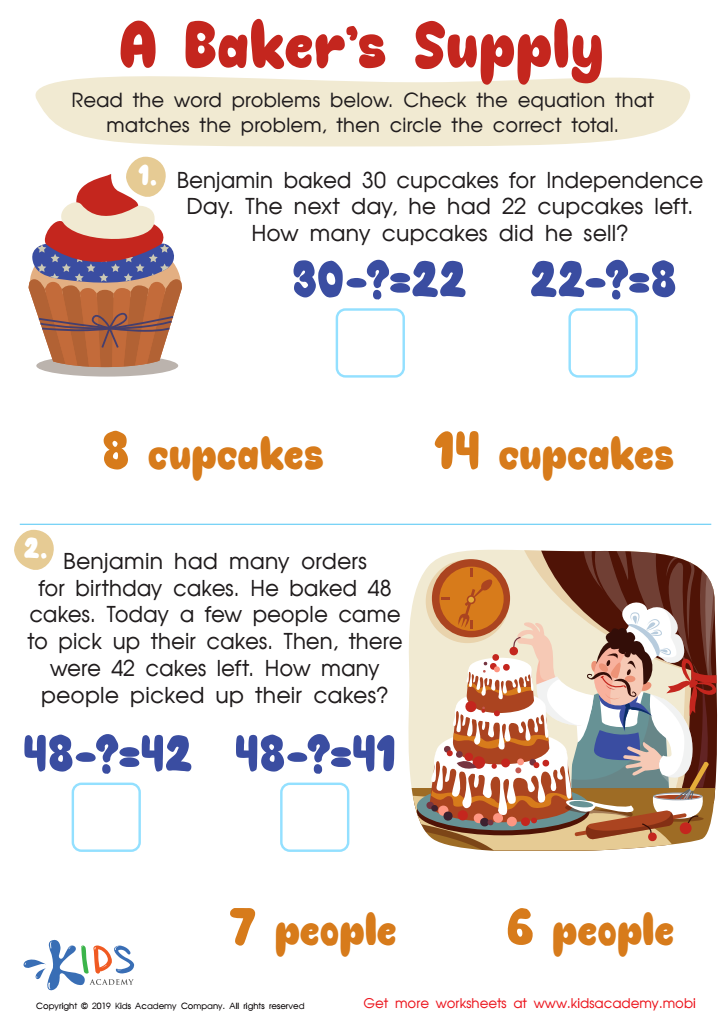
A Baker's Supply Worksheet
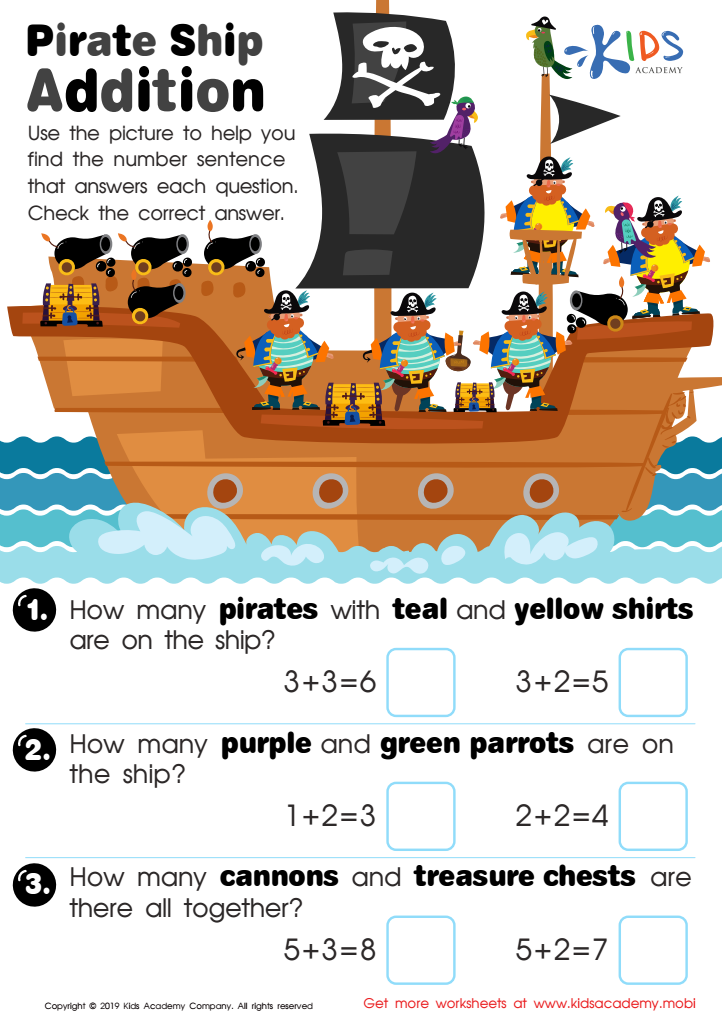
Pirate Ship Addition Worksheet
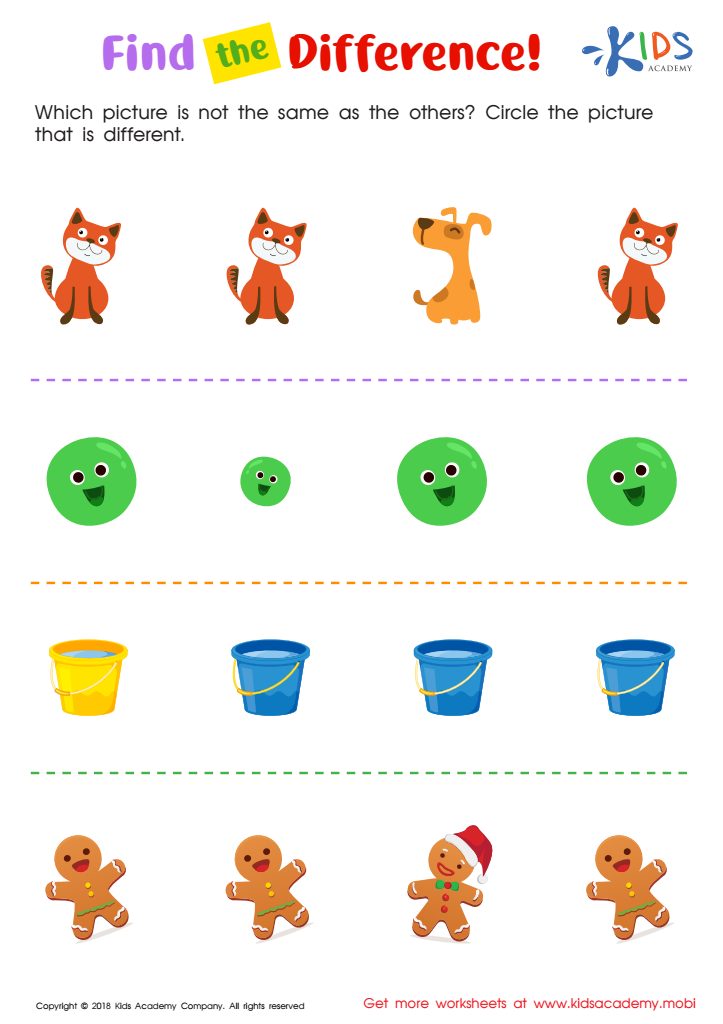
Find the Difference Worksheet
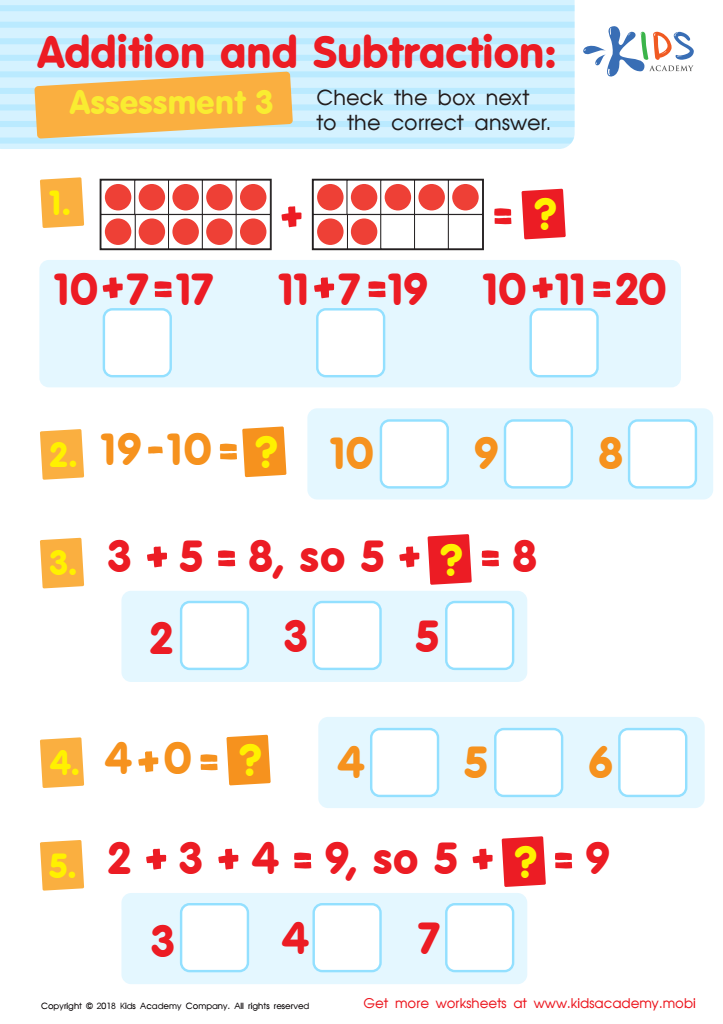
Addition and Subtraction Assessment 3 Worksheet

Sweet Shop – Counting Coins Worksheet
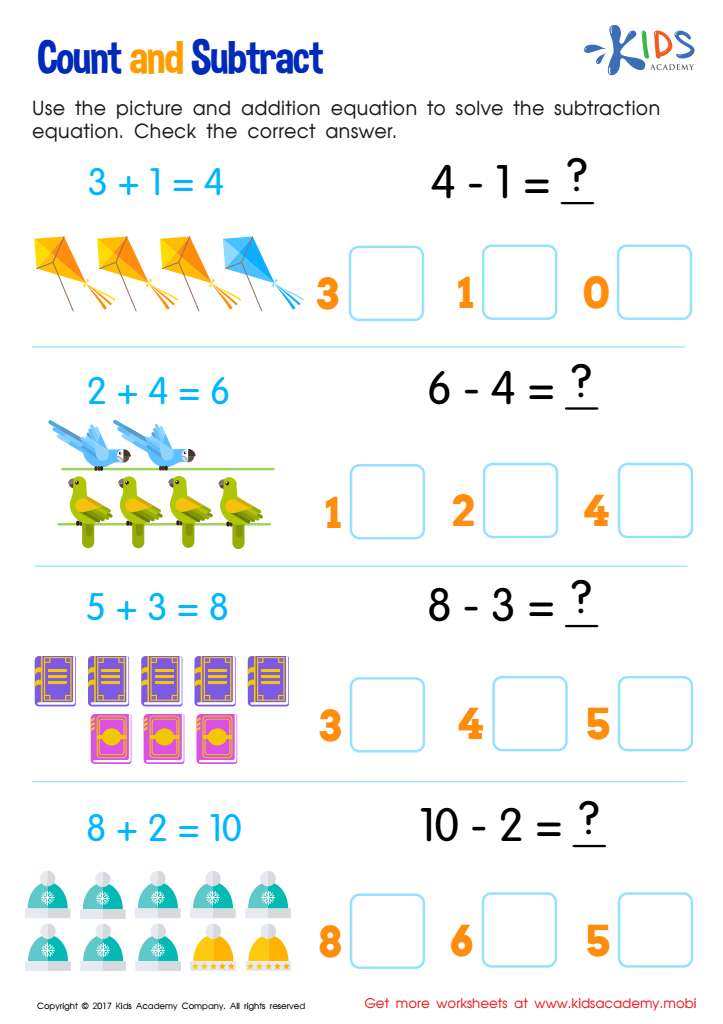
Count and Subtract Worksheet
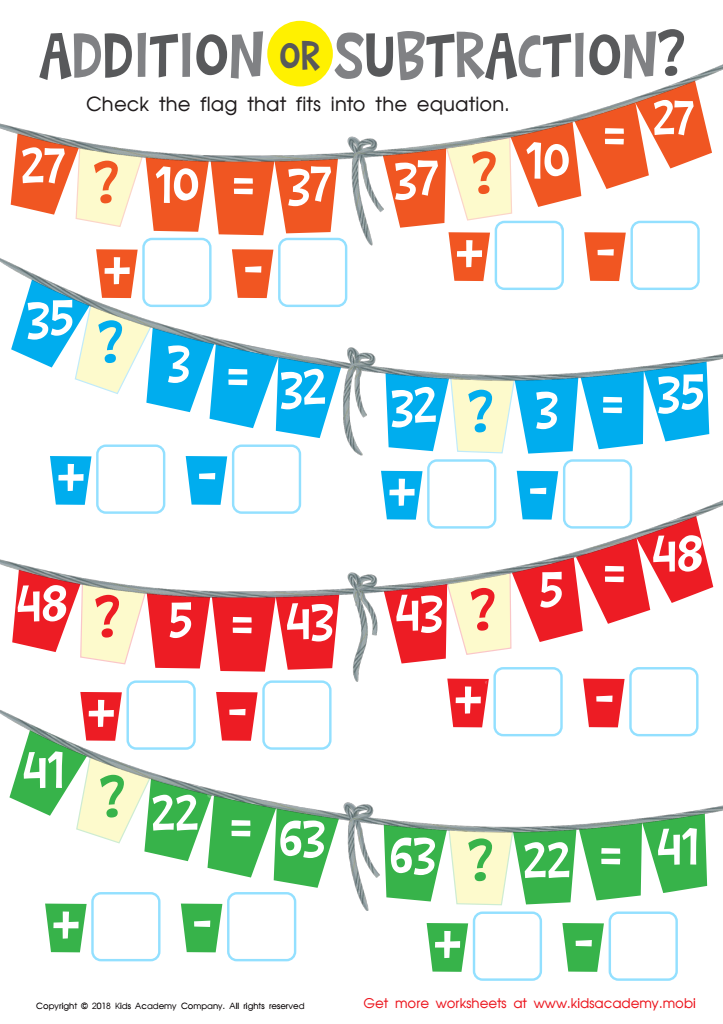
Addition or Subtraction? Worksheet
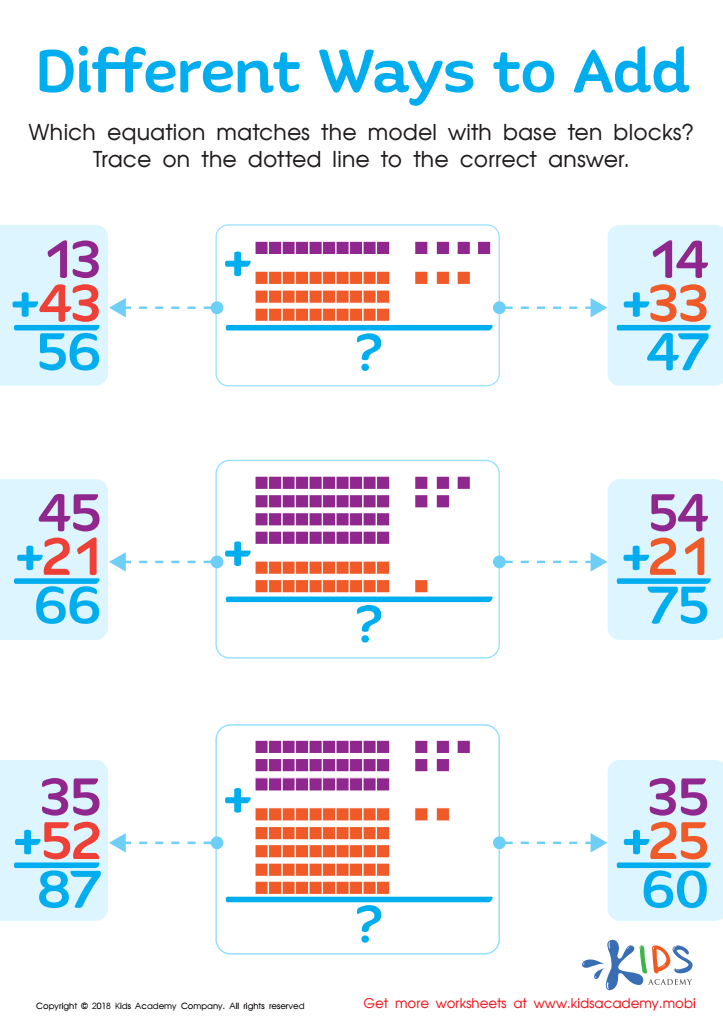
Different Ways to Add Worksheet
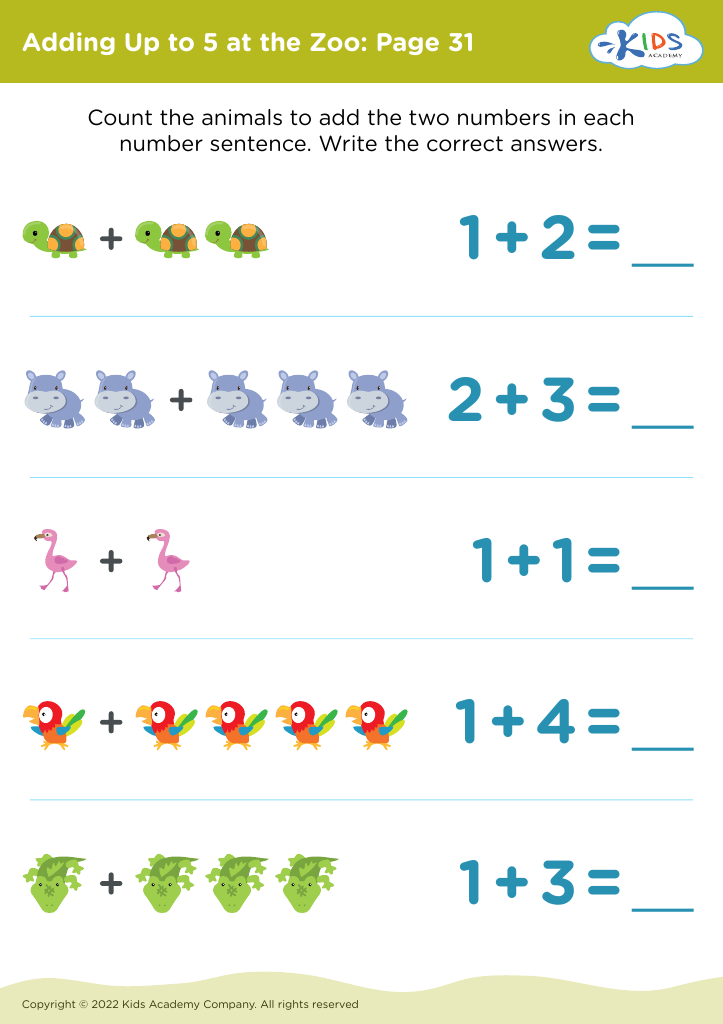
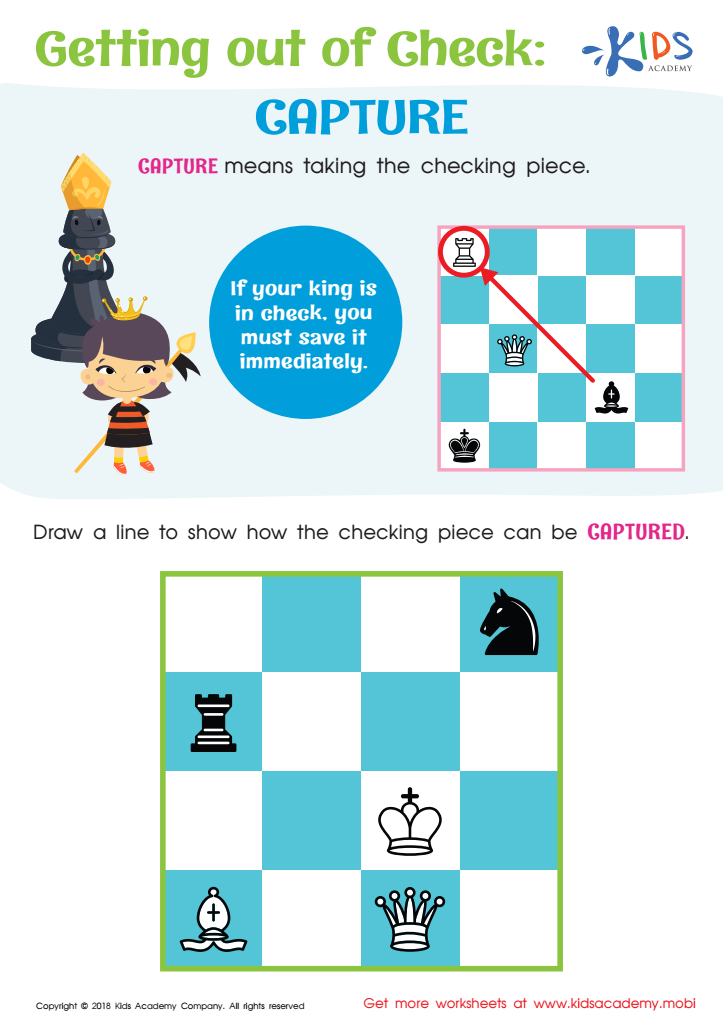
Getting out of Check: Capture

Sudoku Worksheet
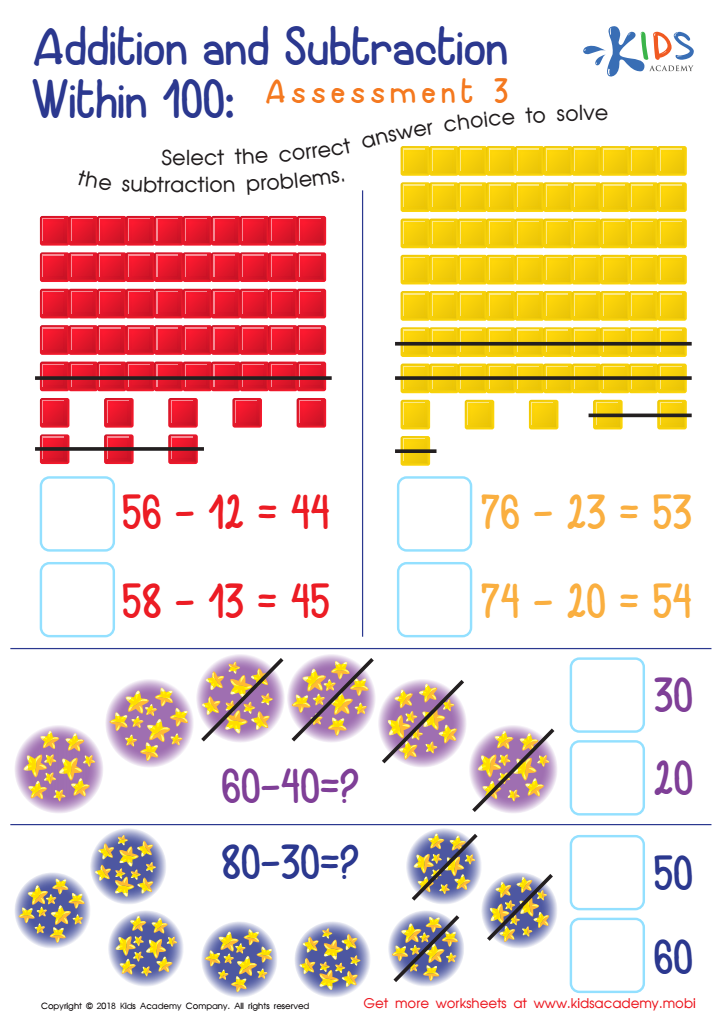
Addition and Subtraction Within 1: Assessment 3 Worksheet
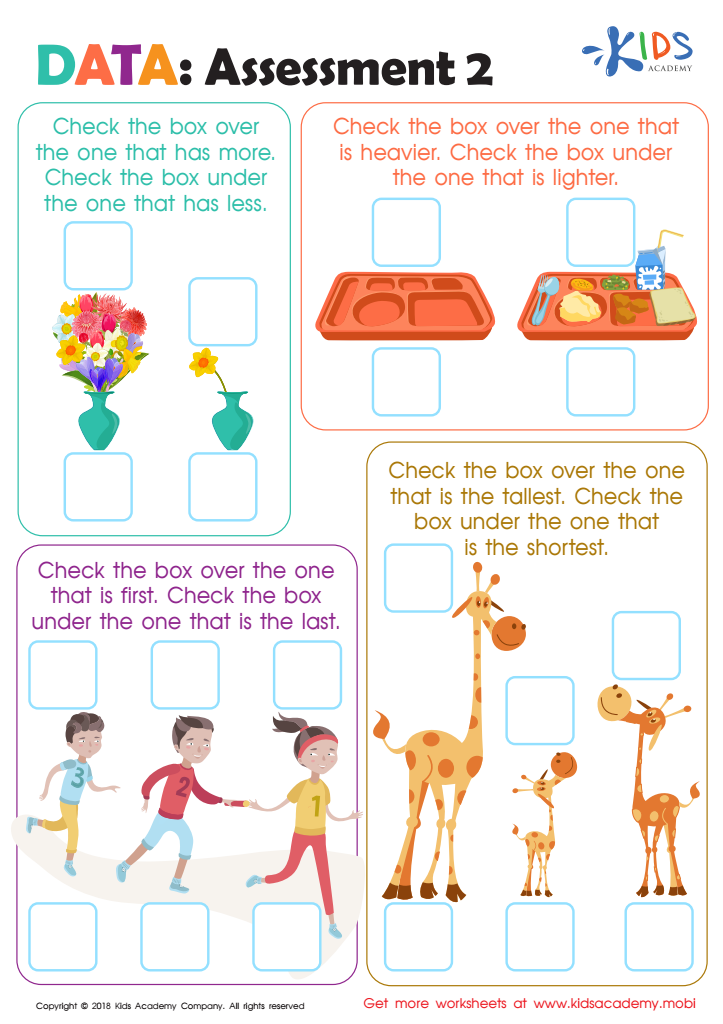
Data: Assessment 2 Worksheet
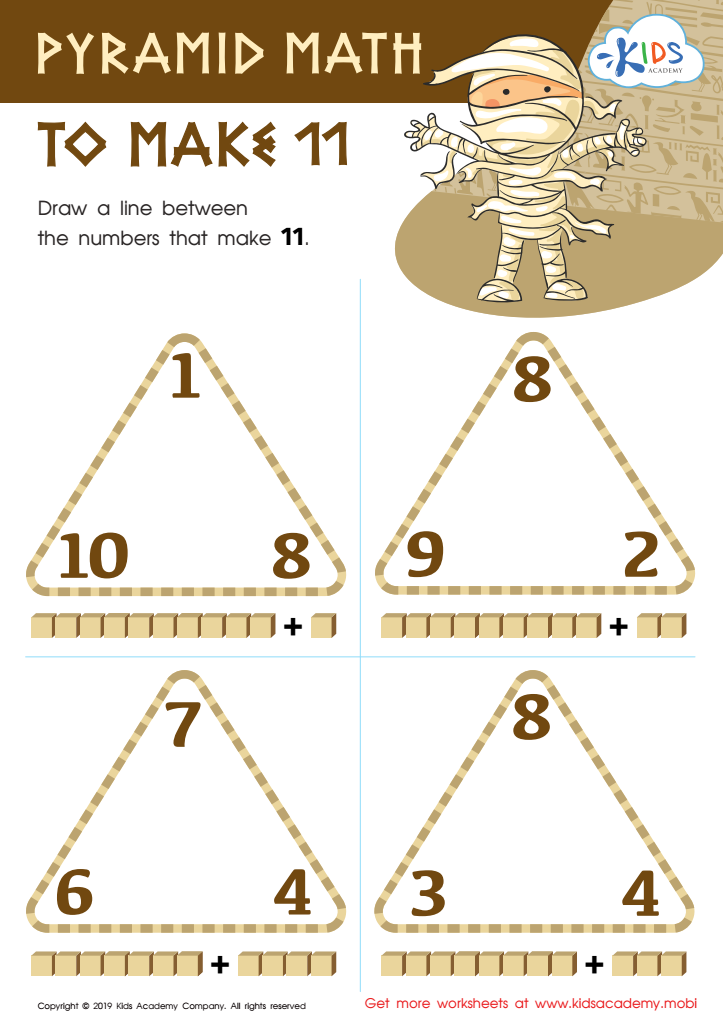
Pyramid Math to Make 11 Worksheet
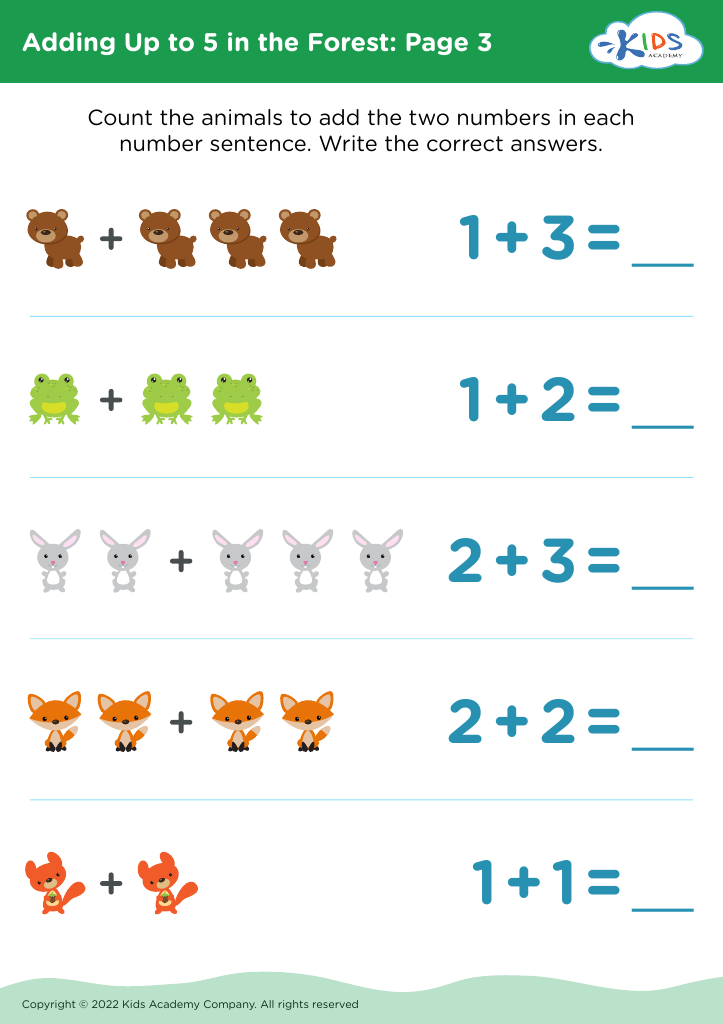




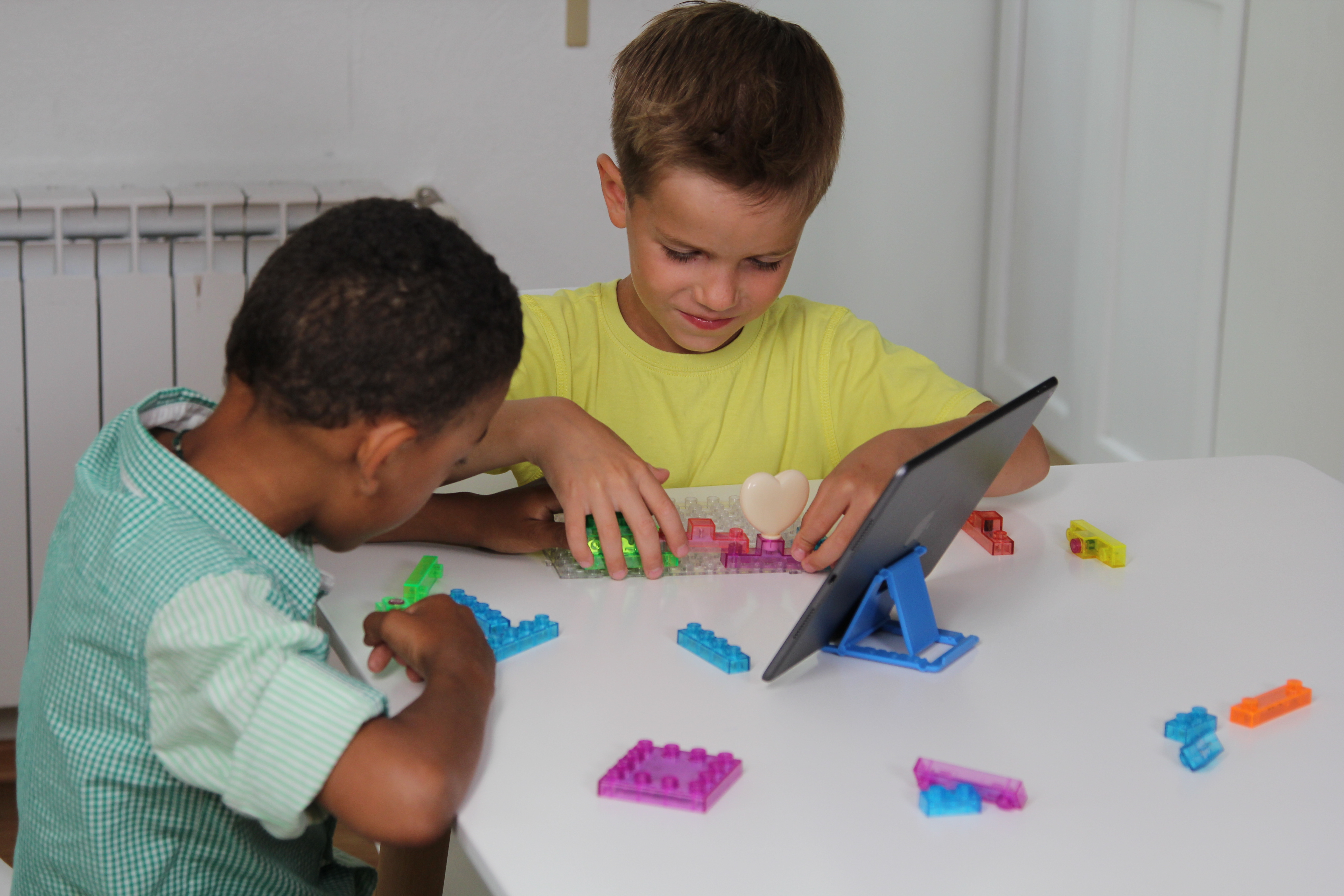



Problem-solving abilities are crucial for children ages 5-6 as they lay the foundation for future learning, social interactions, and emotional health. At this age, kids are naturally curious and beginning to explore the world around them independently. Enhancing problem-solving skills supports cognitive development by encouraging critical thinking, creativity, and decision-making.
When parents and teachers foster problem-solving abilities, they help children understand how to break down complex issues into manageable parts, develop persistence and patience, and learn from their mistakes. This not only aids academic success, reflecting in improved performance in subjects like mathematics and science, but also promotes practical life skills. For instance, a child who can work out how to resolve conflicts with peers will have better social interactions and a healthier emotional life.
Moreover, children who develop strong problem-solving skills tend to become confident and autonomous learners. They are more likely to approach challenges with a positive attitude, lessening feelings of frustration and helplessness. By focusing on these abilities early, parents and teachers equip children with tools that will benefit them across various situations throughout their lives. Investing time in building these skills can lead to lifelong advantages, setting the stage for adaptable, resilient, and successful individuals.








