Recognizing Patterns Worksheets for Ages 5-6
11 filtered results
-
From - To
Unlock your child's cognitive potential with our "Recognizing Patterns Worksheets for Ages 5-6". Designed to enhance early learning skills, these engaging printable worksheets help young learners identify and understand various patterns. By incorporating colorful sequences and fun activities, our resources foster logical thinking, problem-solving abilities, and attention to detail. Perfect for classroom or home use, these worksheets provide a solid foundation in recognizing patterns, essential for math and early literacy development. Boost your child's confidence and curiosity with our expertly crafted worksheets—making learning a delightful adventure! Check out our free options to get started today!
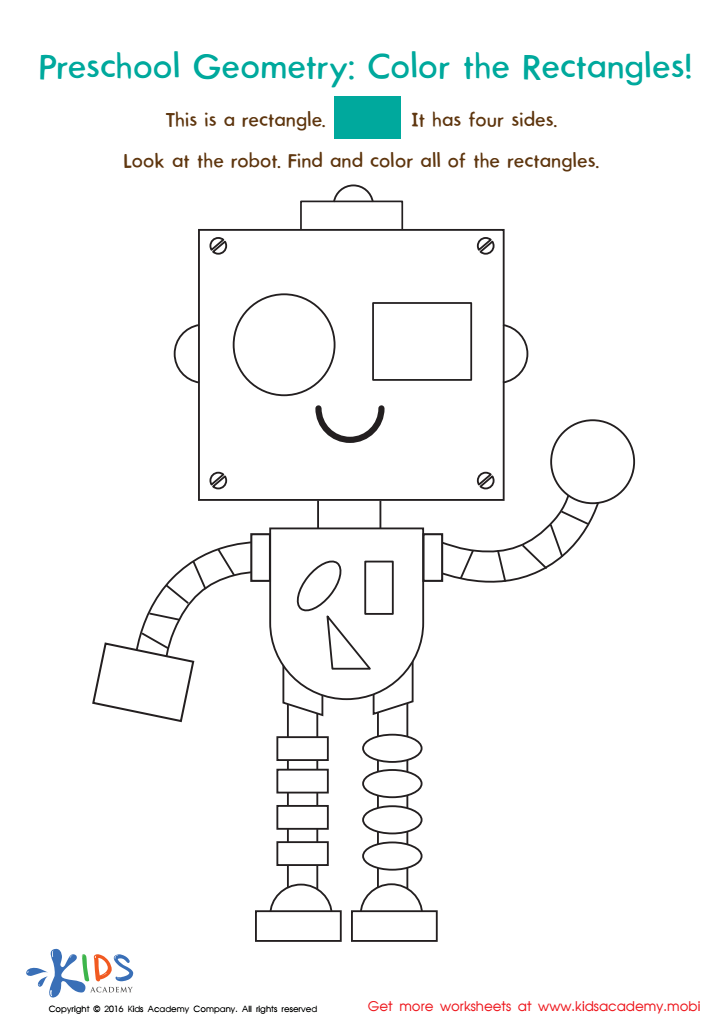
Geometry Worksheet
 Assign to My Students
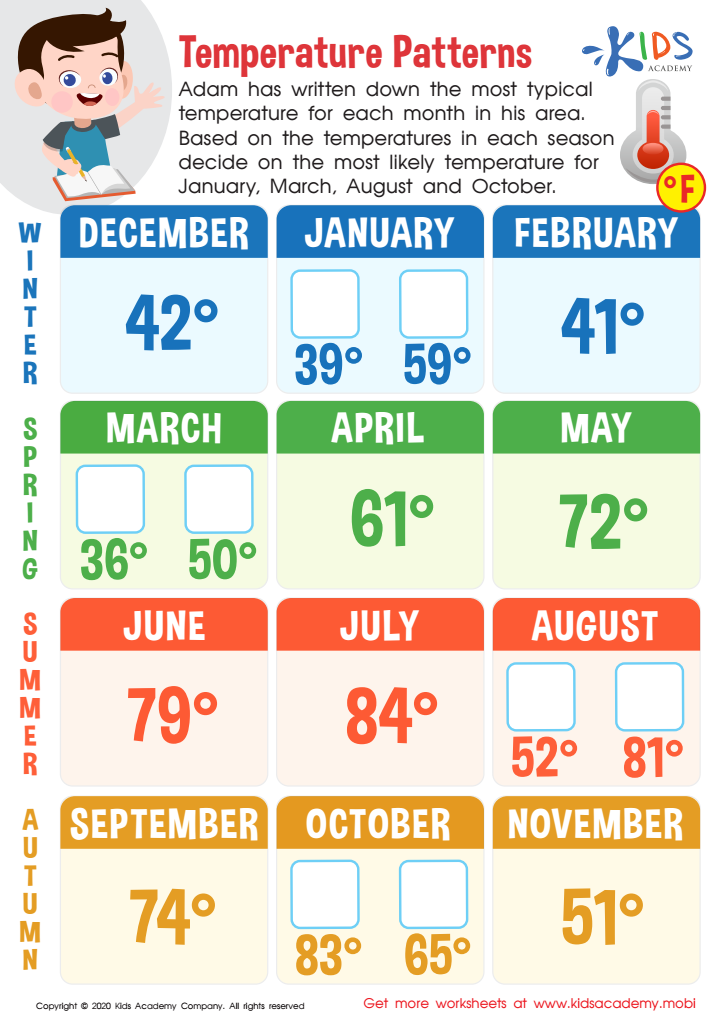
Temperature Patterns Worksheet
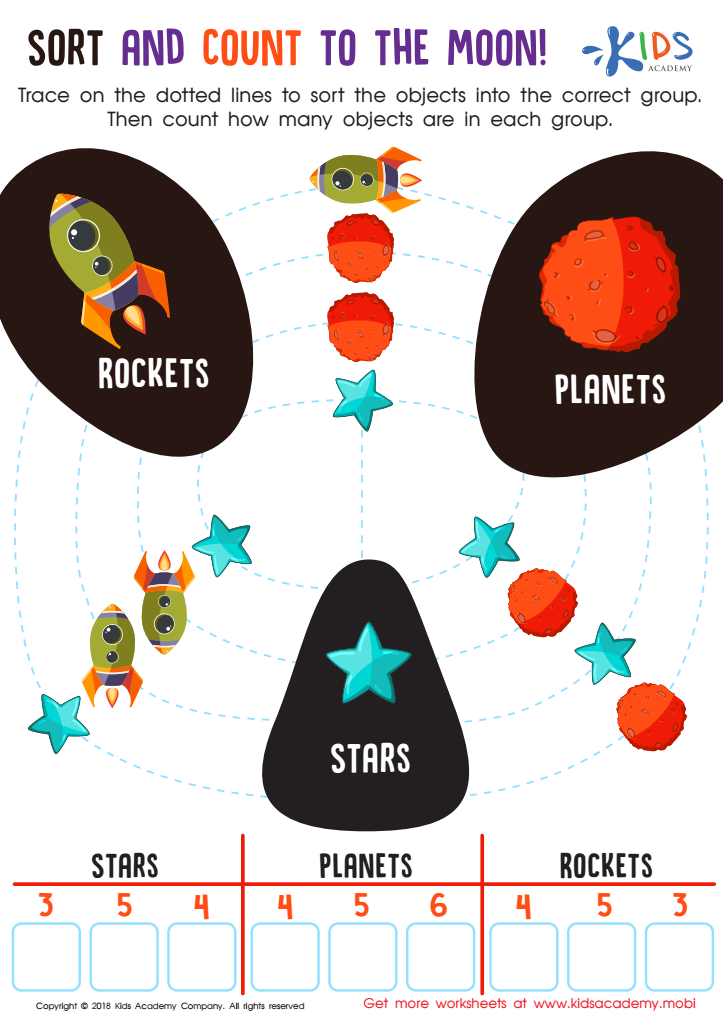
Sort and Count to the Moon Worksheet
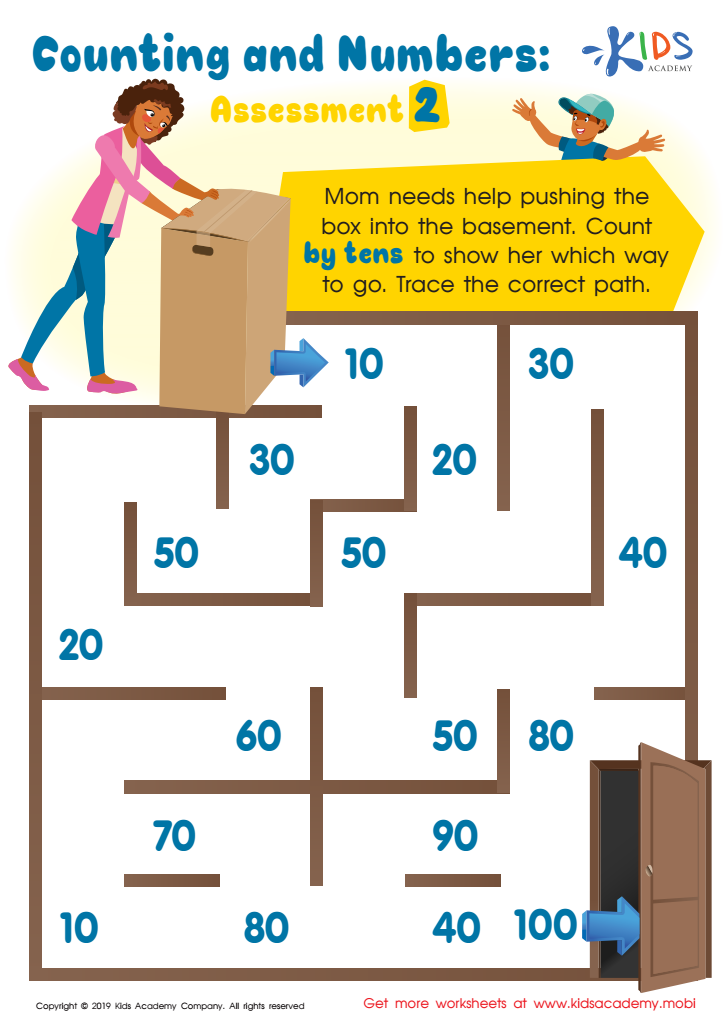
Counting and Numbers: Assessment 2 Worksheet
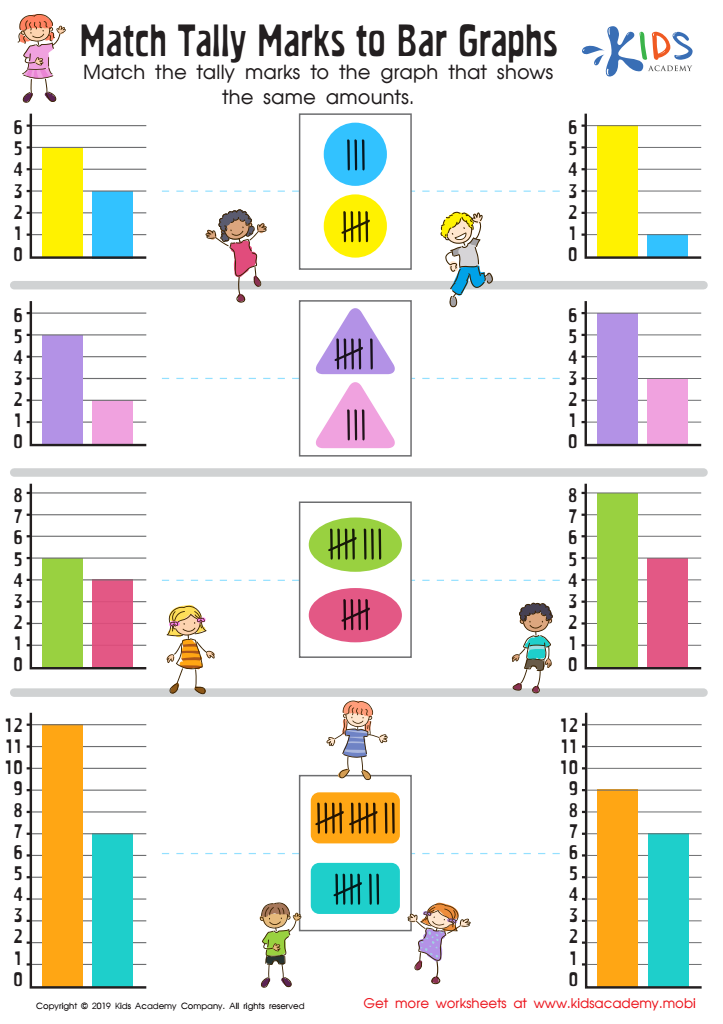
Match Tally Marks to Bar Graphs Worksheet
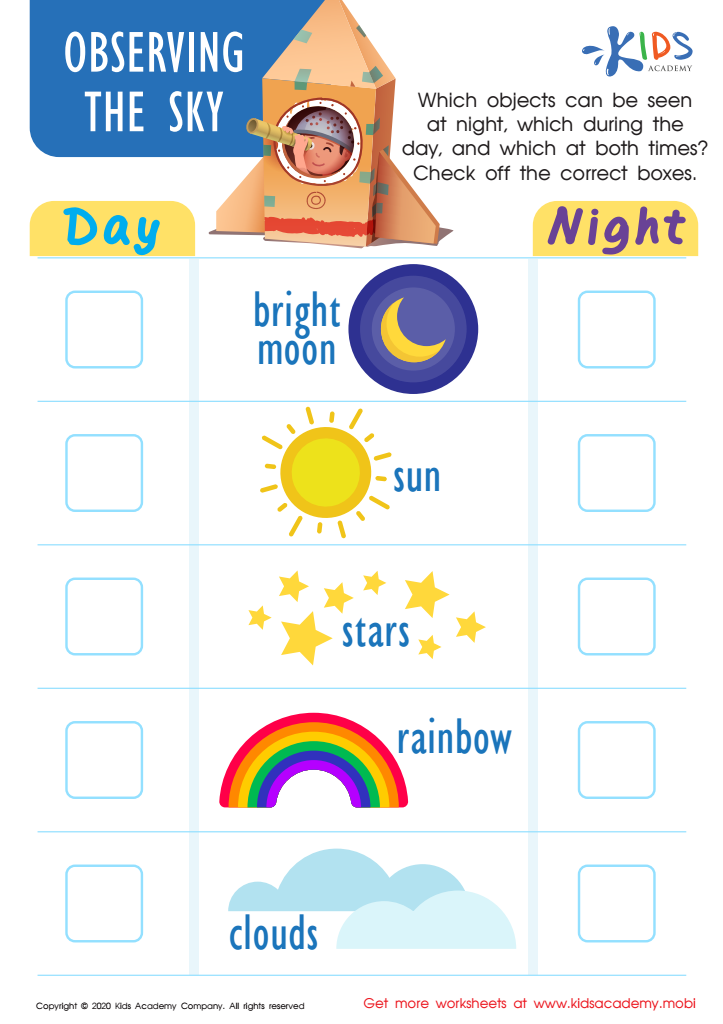
Observing the Sky Worksheet
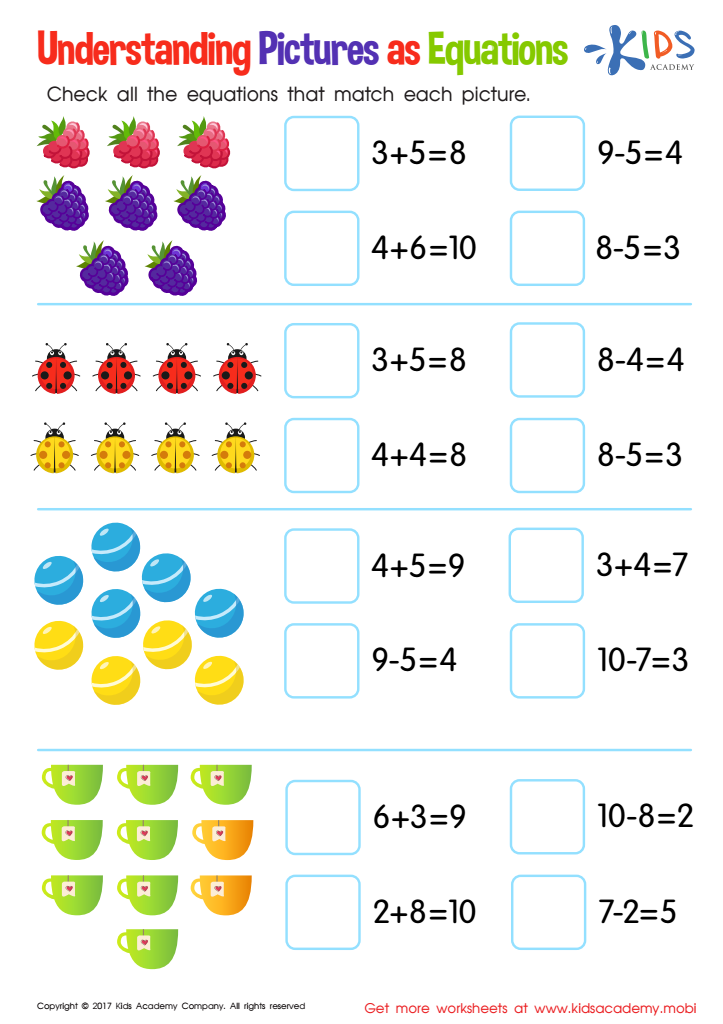
Understanding Pictures as Equations Worksheet
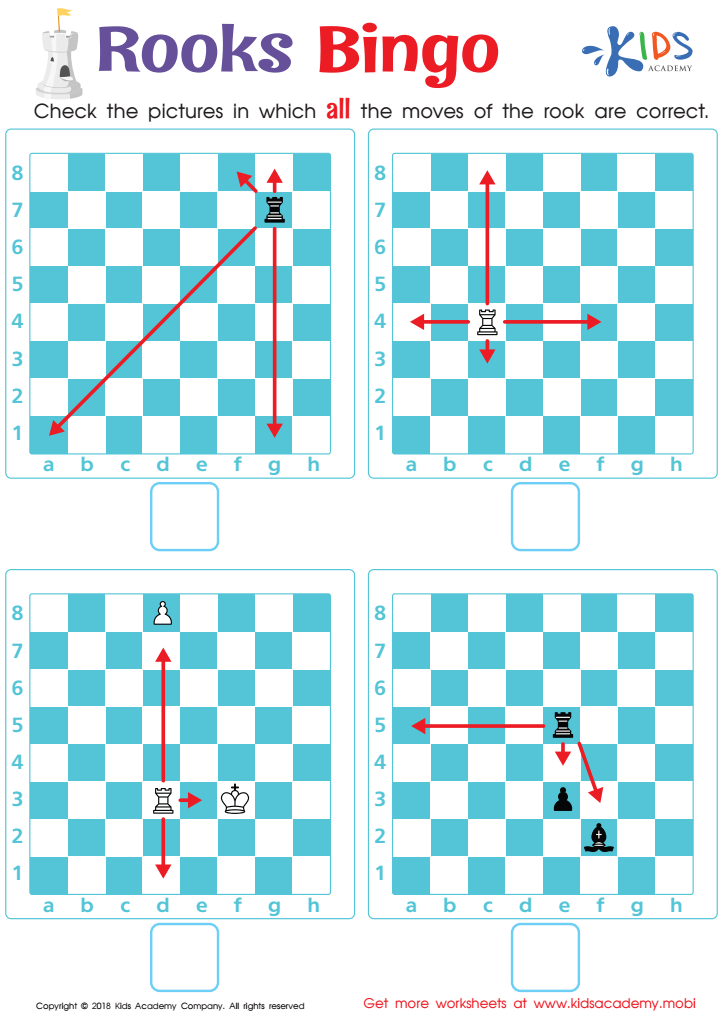
Rooks Bingo Worksheet



.jpg)



Recognizing patterns is a crucial cognitive skill for children ages 5-6, as it lays the foundation for essential academic and life skills. At this formative stage, pattern recognition enhances a child's ability to identify relationships, predict outcomes, and grasp abstract concepts, which are vital for future learning in mathematics and language arts.
When a child recognizes patterns, they learn to categorize information logically, which is a cornerstone for mathematical thinking – from simple sequences to more complex algebraic concepts. For instance, identifying number patterns (counting by twos, fives, etc.) aids in understanding addition, subtraction, and eventually multiplication.
In language arts, patterns help children understand phonics and word families, facilitating reading and writing skills. Recognizing letter combinations, rhymes, and rhythms enhances their ability to decode and form words, boosting literacy.
Beyond academics, pattern recognition helps children make sense of the world around them. It sharpens their observational skills and improves their ability to follow routines and adhere to schedules. Socially, recognizing patterns in behavior can help children develop empathy and anticipate how different actions affect interactions.
In summary, focusing on pattern recognition for children ages 5-6 helps build a strong educational foundation, enhances cognitive development, and promotes better-adjusted social interactions, making it a vital area of focus for parents and teachers.








