Science vocabulary expansion Worksheets for Ages 5-6
3 filtered results
-
From - To
Boost your child's scientific understanding with our engaging Science Vocabulary Expansion Worksheets designed specifically for ages 5-6! These interactive worksheets foster curiosity, making learning science fun and captivating. Each activity encourages young learners to expand their vocabulary while exploring essential concepts through vivid images and relatable examples. The worksheets cover a variety of topics tailored to ignite a love for science, from living organisms to simple machines. Ideal for classroom or home use, these resources not only enhance critical thinking skills but also promote literacy in science. Help your little one become a scientific explorer today!
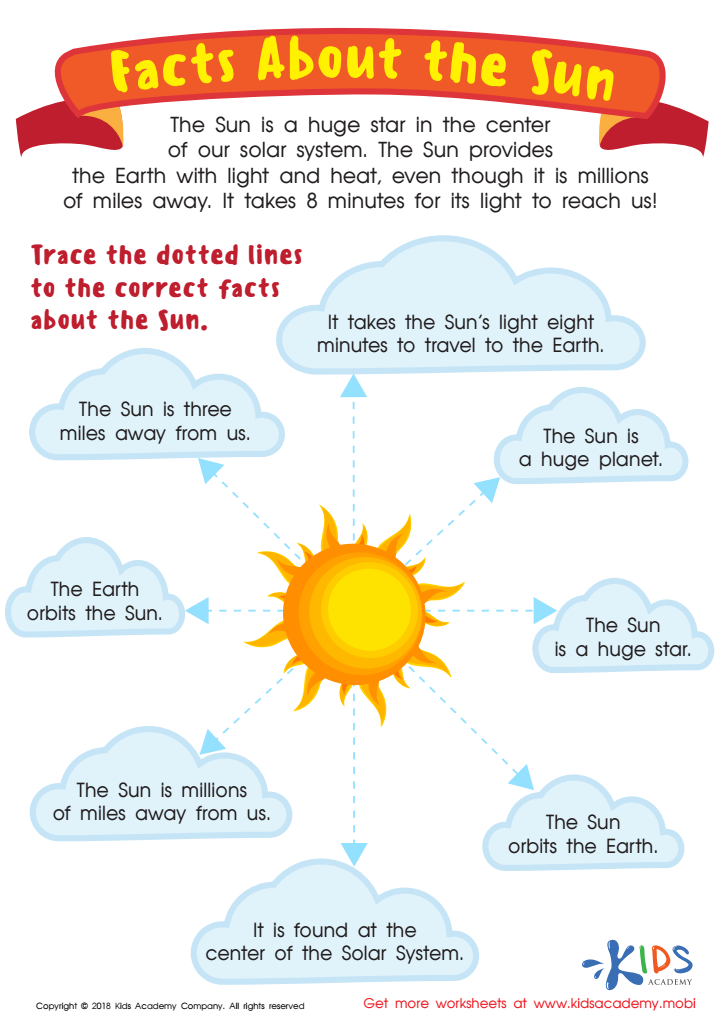
Facts About the Sun Worksheet
 Assign to My Students
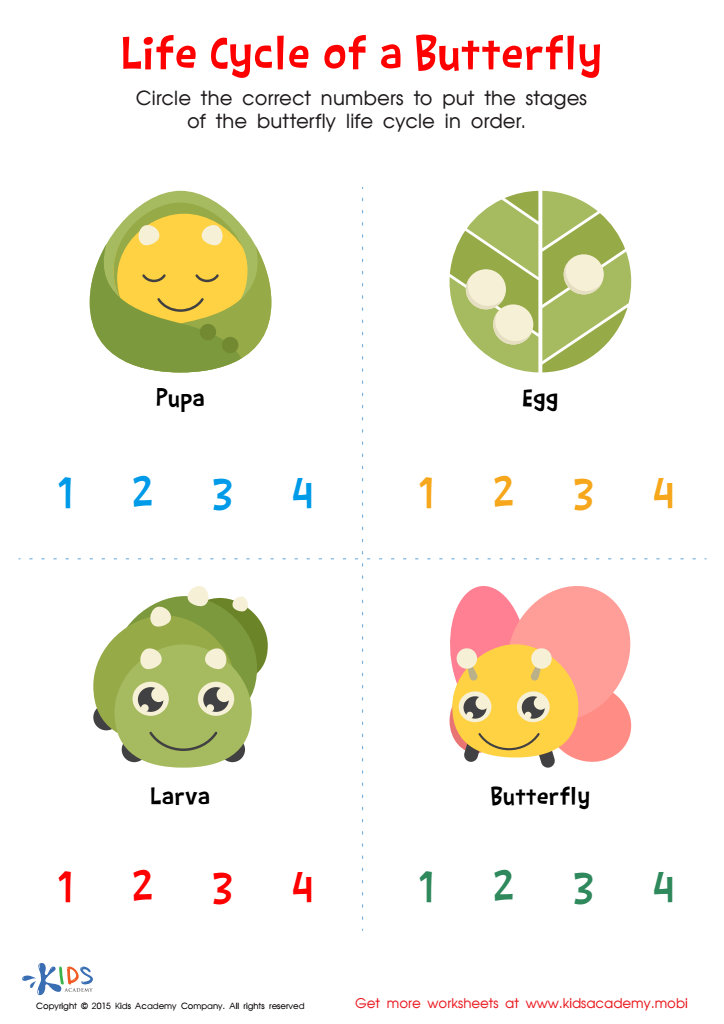
Life Cycle of Butterfly Printable
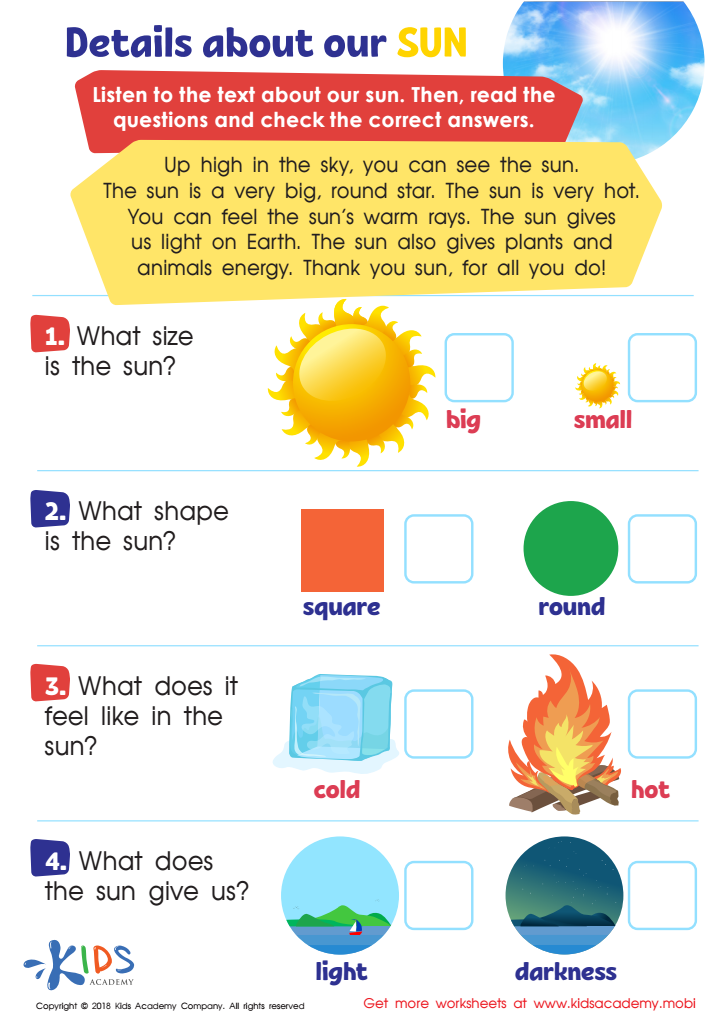
Details About Our Sun Worksheet







Science vocabulary expansion for ages 5-6 is crucial for fostering a love of learning and curiosity about the world. At this developmental stage, children are naturally inquisitive, asking questions about their environment. Expanding their science vocabulary enhances comprehension and encourages exploration, which is foundational for STEM (science, technology, engineering, and mathematics) education.
By introducing age-appropriate scientific terms, parents and teachers help children articulate their observations and understand new concepts. This vocabulary enrichment lays the groundwork for critical thinking and problem-solving skills vital for their future academic journey. Moreover, engaging young learners with accessible scientific language allows them to connect their personal experiences with broader scientific ideas, making learning relatable and enjoyable.
A strong science vocabulary also supports literacy development, as children learn to decode and comprehend text that contains these terms. Additionally, it empowers them to participate in discussions, ask questions, and express their thoughts clearly. By prioritizing science vocabulary expansion in early education, parents and teachers play a vital role in cultivating curious, knowledgeable, and confident learners ready to tackle the complexities of the world around them. Investing in this foundational skill at an early age promotes lifelong learning and a holistic understanding of science.








