Strategic thinking Worksheets for Ages 5-6
3 filtered results
-
From - To
Introduce your little ones to the exciting world of strategic thinking with our engaging worksheets for ages 5-6! Designed to promote critical thinking skills, our activities encourage children to analyze, plan, and solve problems in a fun and interactive way. Each worksheet is crafted to challenge young minds, fostering creativity and logic through puzzles, games, and stimulating scenarios. Perfect for at-home use or classroom settings, these resources will help your child improve their decision-making abilities while having a great time! Start building a strong foundation for future learning with our delightful strategic thinking worksheets today!
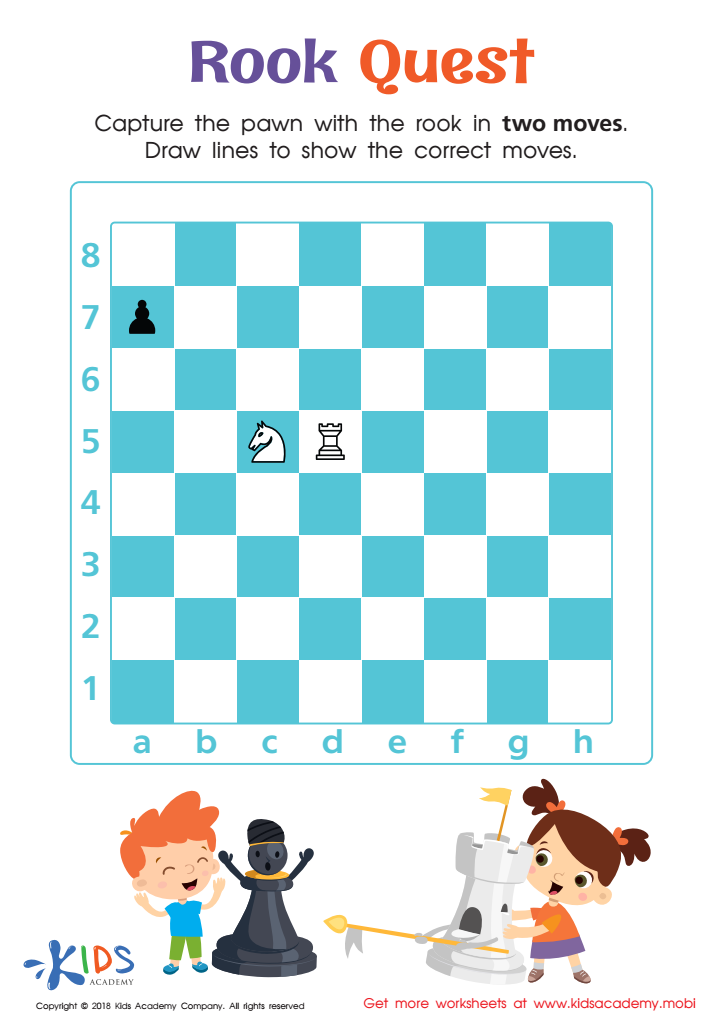
Rook Quest Worksheet
 Assign to My Students
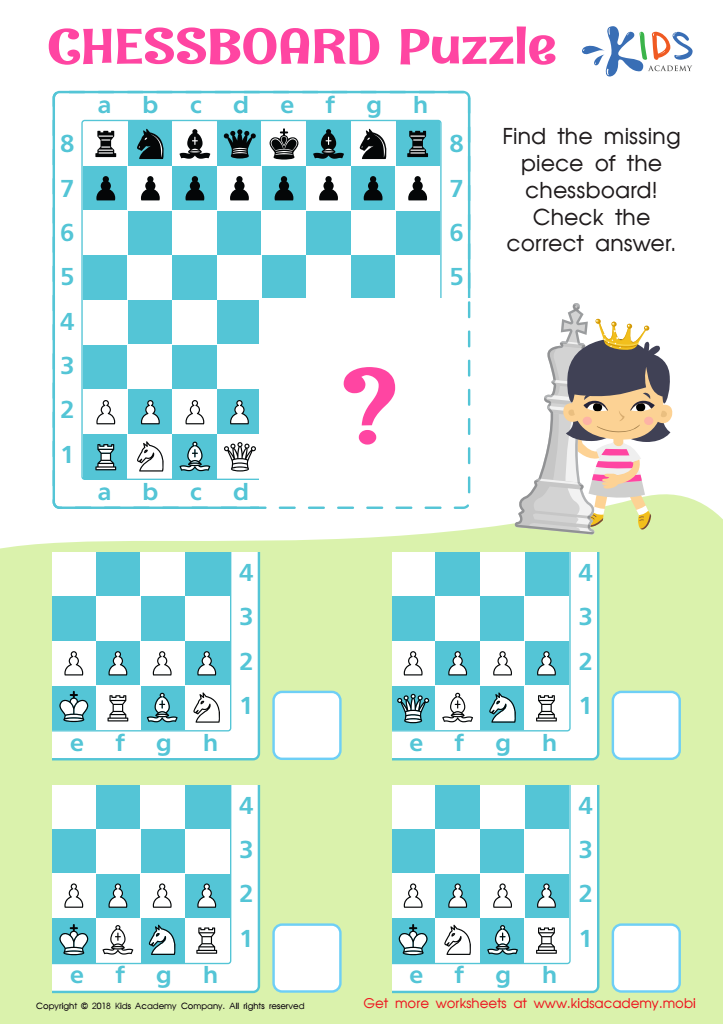
Chessboard Puzzle Worksheet
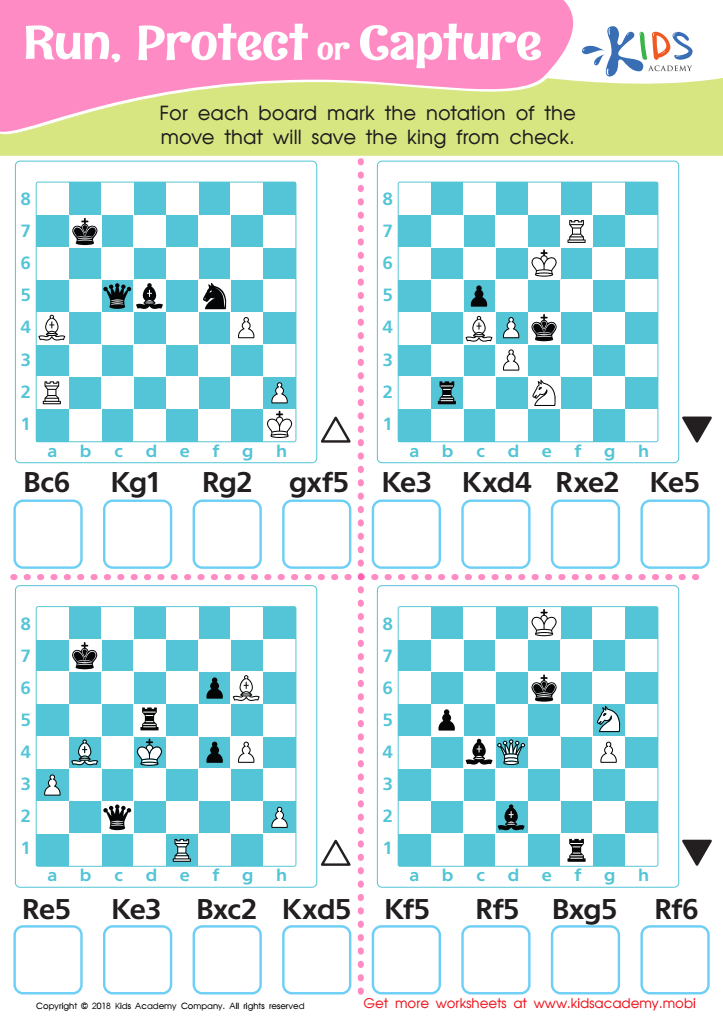
Run, Protect or Capture Worksheet








Strategic thinking at ages 5-6 is crucial for cognitive development and lays the foundation for future learning. At this age, children are beginning to explore problem-solving more independently. Encouraging strategic thinking helps children learn how to plan, predict outcomes, and evaluate the effectiveness of their choices.
This skill not only enhances their academic abilities, such as critical thinking and decision-making, but it also promotes social skills. For example, when children engage in games that require planning and foresight, they learn to cooperate, negotiate, and consider others' perspectives. This collaborative effort breeds empathy and improves communication skills.
Moreover, promoting strategic thinking nurtures resilience. Children learn that failure is a valuable part of learning, leading them to view obstacles as opportunities to grow rather than dead ends. Parents and teachers can incorporate this into daily interactions through simple strategies such as discussion games, puzzles, or storytelling, encouraging kids to think about different possibilities and outcomes.
Ultimately, fostering strategic thinking early cultivates a lifelong love of learning, empowering children to tackle challenges with confidence and creativity. Thus, parents and teachers play a vital role in helping young learners develop these essential skills early on.








