Time-telling skills Worksheets for Ages 5-6
5 filtered results
-
From - To
Enhance your child's understanding of time with our engaging Time-Telling Skills Worksheets for ages 5-6! Designed to introduce young learners to the fundamentals of telling time, these worksheets are fun and interactive. Children will practice reading both analog and digital clocks, developing essential skills in time recognition through colorful illustrations and age-appropriate exercises. Each worksheet encourages critical thinking and boosts fine motor skills as children draw, match, and complete various time-related activities. Ideal for parents and educators, these resources promote a solid foundation in time-telling, ensuring your little one is ready for school and beyond. Let the learning begin!
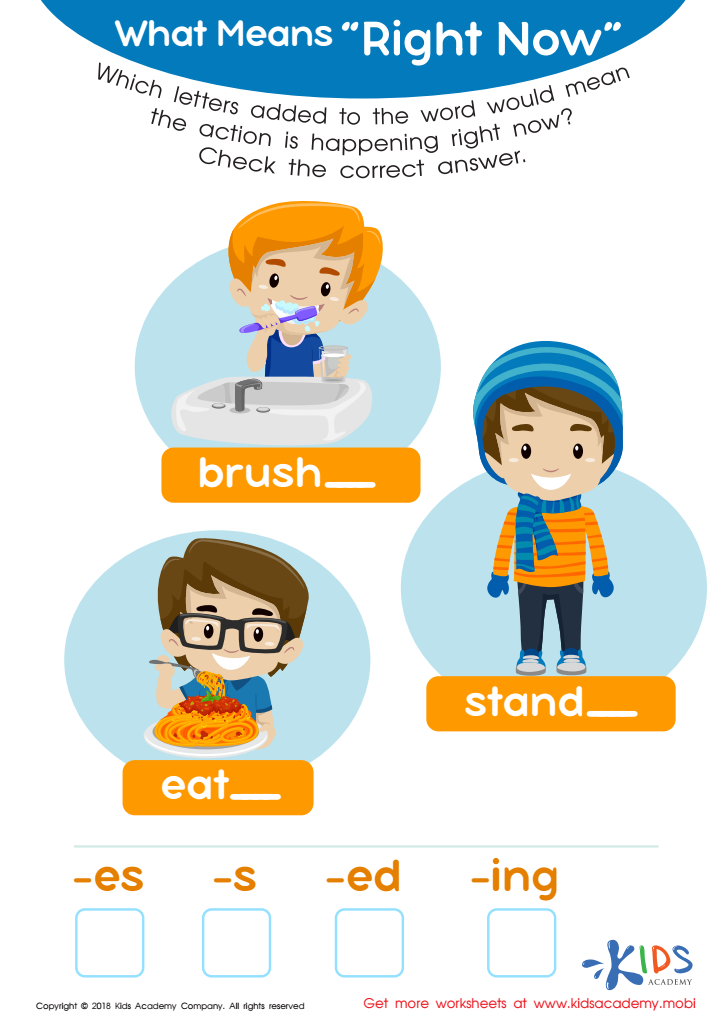
What Means "Right Now" Worksheet
 Assign to My Students
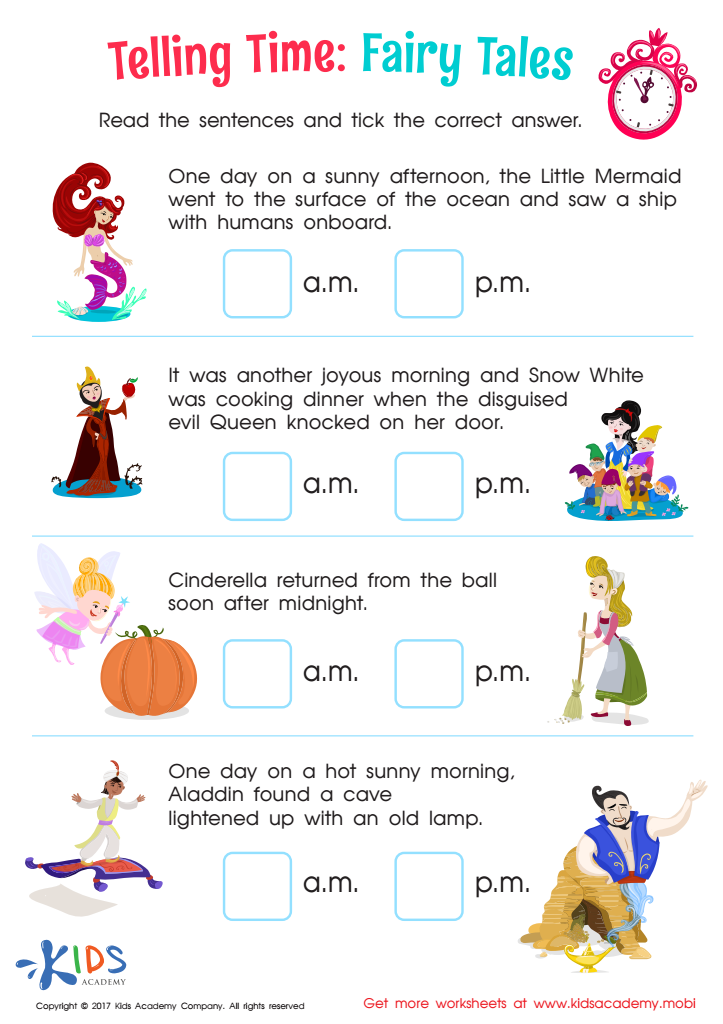
Telling Time: Fairy Tales Worksheet
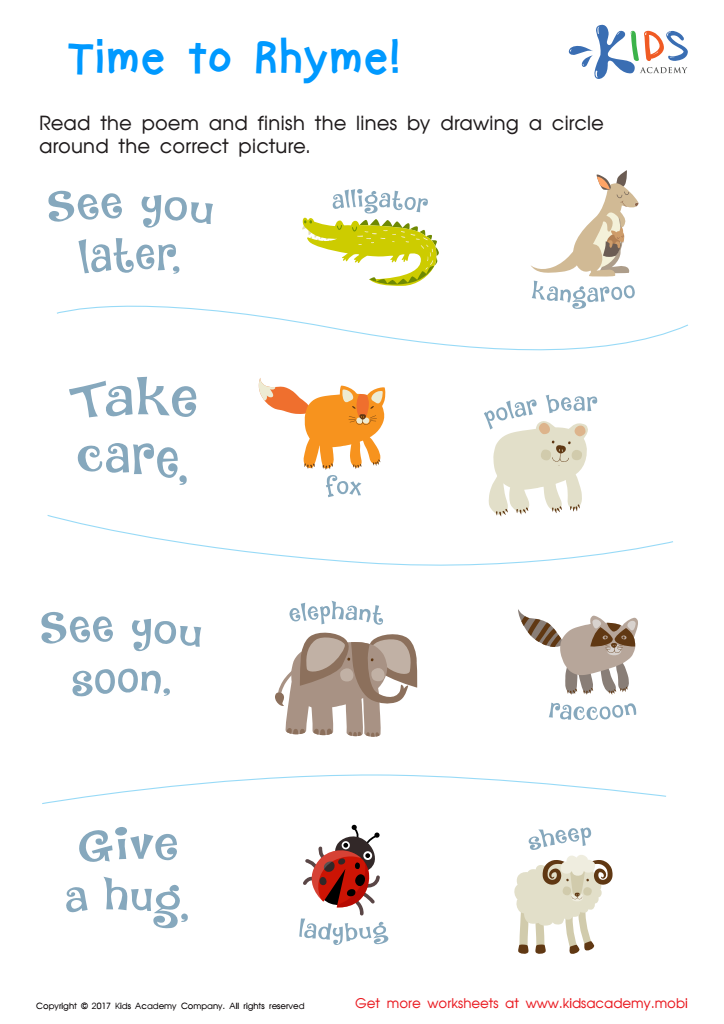
Time to Rhyme Rhyming Worksheet
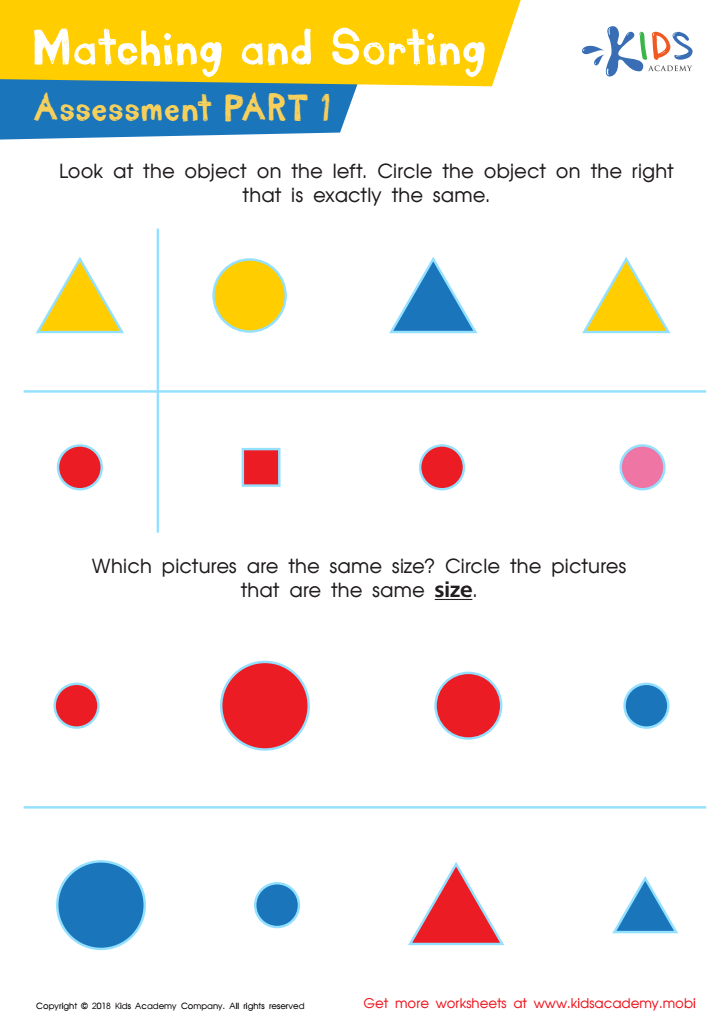
Matching and Sorting for Kindergarten: Assessment 1 Worksheet







Time-telling skills are essential for children aged 5-6 as they lay the foundation for various everyday skills and academic success. Understanding how to tell time develops critical thinking, enhances a child’s sense of responsibility, and promotes independence. As children learn to read digital and analog clocks, they grasp concepts of time management, scheduling, and sequencing, which are vital for their daily routines—like knowing when to get ready for school or when to participate in activities.
Additionally, time-telling skills enhance mathematical understanding, as children must grasp numbers and fractions when working with clock faces. This integration of math in real-world contexts helps solidify their learning.
Moreover, mastering these skills fosters confidence and social responses—by being aware of time, children can engage in playdates, meetings, and teamwork more effectively. This awareness not only reduces anxiety about being late but also promotes respect for others' time.
For parents and teachers, encouraging time-telling is crucial. It cultivates independence, promotes self-regulation, and equips children with tools to navigate their day-to-day lives, ultimately preparing them for the demands of the future both in and out of the classroom. The skills learned at this age will influence other areas of development throughout their lives.








