Understanding clocks Worksheets for Ages 5-6
3 filtered results
-
From - To
Enhance your child's reading time skills with our engaging "Understanding Clocks Worksheets" designed specifically for ages 5-6. These worksheets provide an interactive way for young learners to grasp the basics of telling time. Through colorful illustrations and age-appropriate exercises, children will learn to identify clock faces, differentiate between hours and minutes, and understand the concepts of AM and PM. Each worksheet is crafted to build confidence and reinforce time-telling skills, ensuring that learning is both fun and effective. Download our free printable worksheets today and help your child master the concept of time with ease!
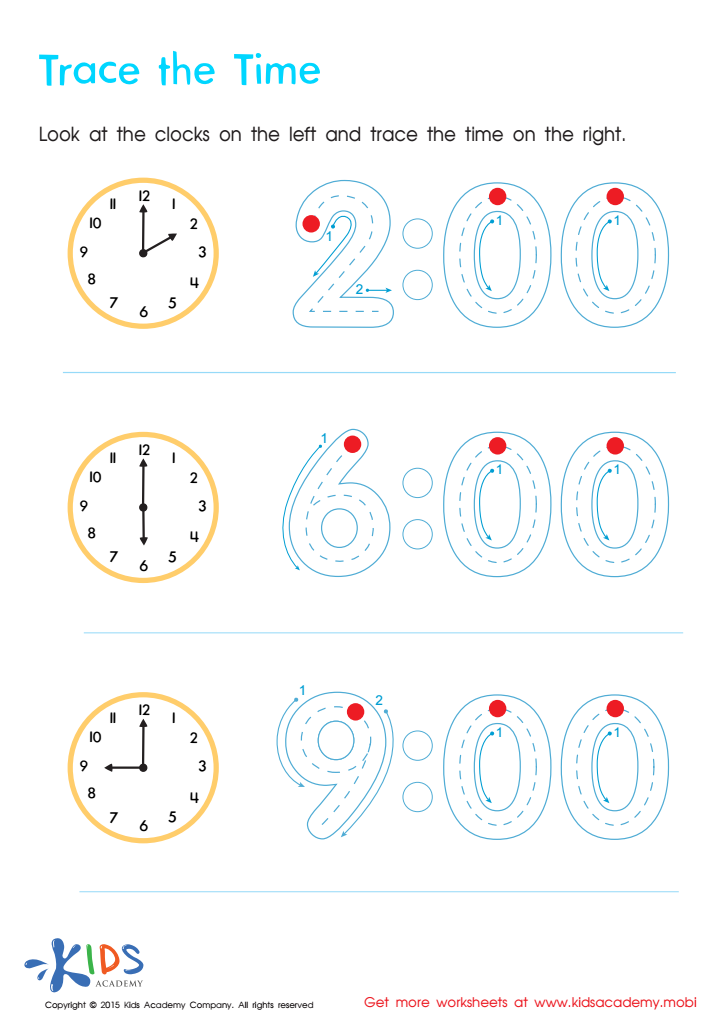
Telling The Time Worksheet: Part 2
 Assign to My Students
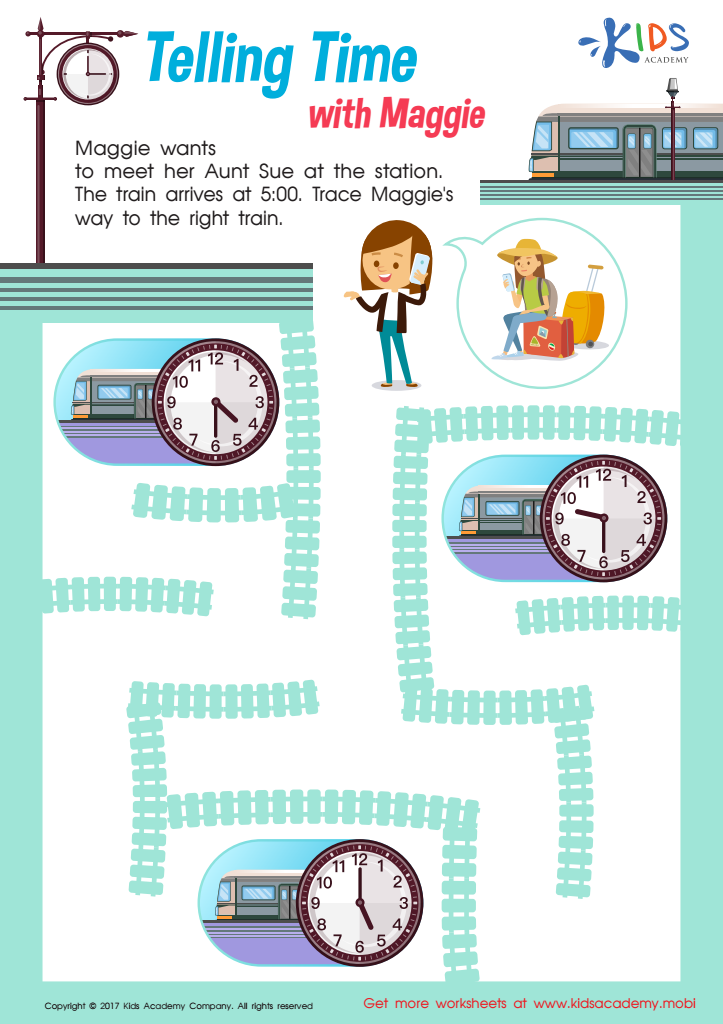
Telling Time With Maggie Time Worksheet
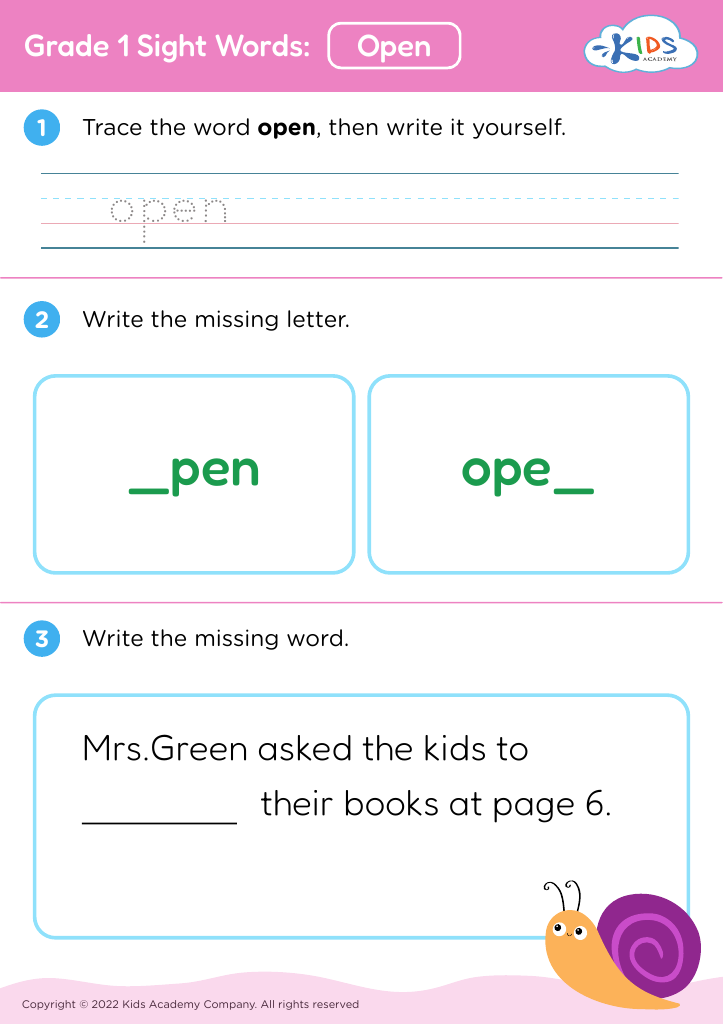








Understanding clocks is crucial for children aged 5-6 as it lays the foundation for essential life skills. Learning to tell time enhances their cognitive development and encourages critical thinking. Knowing how to read a clock fosters independence; children can manage their schedules, recognize the importance of routines, and understand the concept of time management early on.
Moreover, being able to understand clocks connects children to their environment and daily activities. This skill helps them relate to the world around them, as time plays a significant role in organizing events like school, play, meals, and bedtime. It also promotes discussions about sequences, durations, and the passage of time, which are fundamental mathematical concepts.
Additionally, understanding clocks can enhance literacy skills. Teachers and parents can incorporate storytelling around time-telling scenarios, making learning more engaging. Instilling a sense of time encourages responsibility and discipline, essential traits as children grow.
Overall, helping young children grasp the concept of time not only prepares them academically and socially, but it also cultivates a sense of control over their lives, contributing to their overall development and confidence. Thus, teachers and parents should prioritize teaching these foundational skills.








