
Understanding compound words Worksheets for Ages 5-6
3 filtered results
Difficulty Level
Grade
Age
-
From - To
Subject
Activity
Standards
Unlock the magical world of language with our "Understanding Compound Words Worksheets" for ages 5-6! Designed to make learning fun, these engaging worksheets help young learners easily grasp the concept of compound words by combining two smaller words to form a new one. Colorful illustrations and interactive exercises enhance vocabulary skills, boost reading comprehension, and foster a love for words. Perfect for both classroom and home use, our worksheets provide a strong foundation in language arts, ensuring your child’s early literacy success. Explore this vital learning tool and watch your little one’s language prowess bloom!
Favorites
With answer key
Interactive
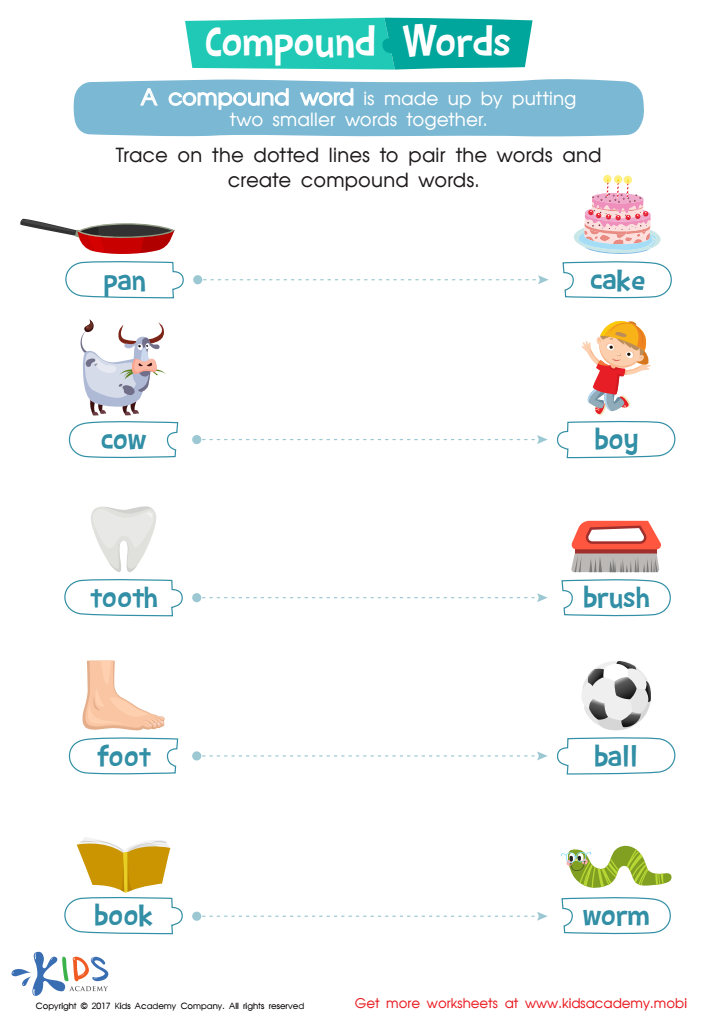
Compound Words Word Structure Worksheet
Studying compound words is a great way to improve reading and writing skills! Try this fun worksheet: Compound Words – trace the lines to make new words! It's an easy and enjoyable way to get better at English.
 Assign to My Students
Compound Words Word Structure Worksheet
Worksheet
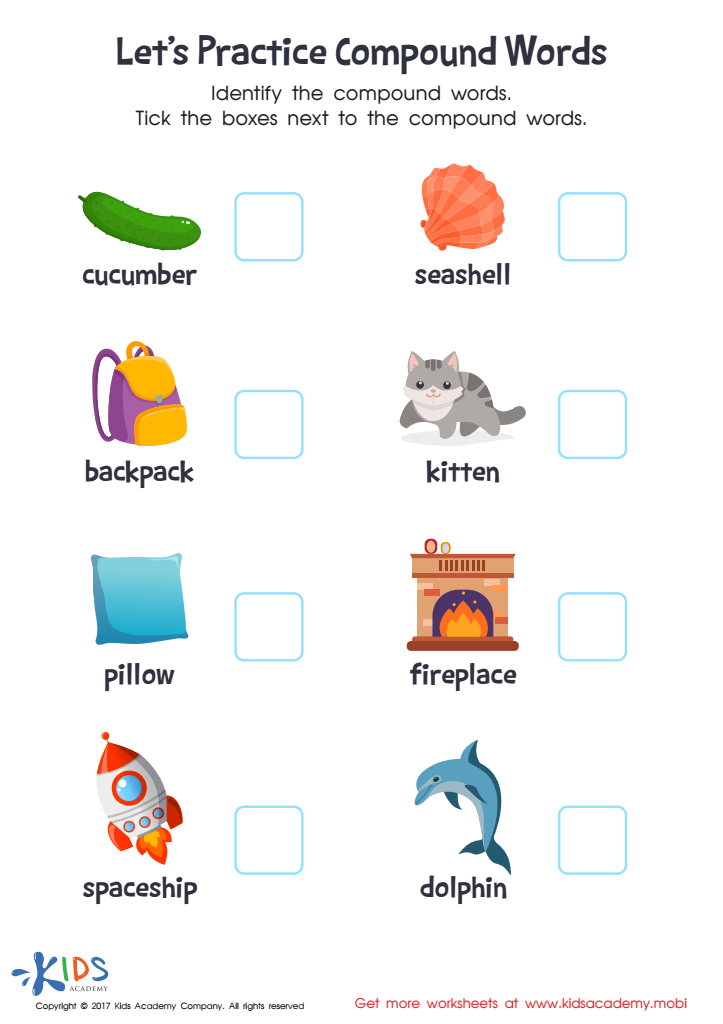
Let's Practice Compound Words Word Structure Worksheet
Test their knowledge of compound words with this fun worksheet and help them build their vocabulary. Have them say the words out loud as they work!
Let's Practice Compound Words Word Structure Worksheet
Worksheet
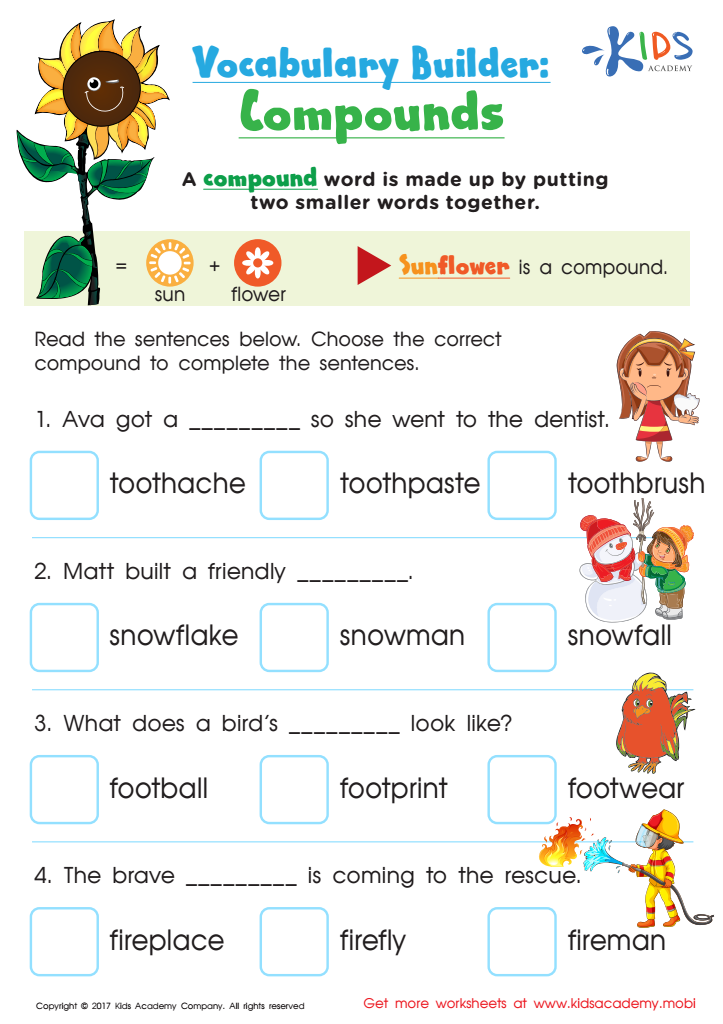
Compound Words Worksheet
Help your child get to grips with compound words! From sunflowers to snowflakes, firemen to fireflies, some words are made up of two. Introduce them to the world of compound words with this grade 2 PDF worksheet, packed with fun activities!
Compound Words Worksheet
Worksheet
Join Kids Academy for Free
Who is primarily going to use this learning content?








Understanding compound words is a crucial aspect of early literacy development for children aged 5-6. At this stage, young learners are beginning to recognize and decode words, which lays the foundation for fluent reading and effective communication. Compound words, formed by joining two smaller words (e.g., "sunflower" or "raincoat"), help expand vocabulary, boost comprehension, and make learning more engaging.
For parents and teachers, emphasizing compound words can enrich a child’s linguistic exposure and comprehension skills. Knowing compound words helps children understand that smaller, familiar words can come together to form new, related meanings. This not only enhances their vocabulary but also encourages a deeper understanding of how language works. For instance, recognizing that "playground" combines "play" and "ground" can help children visualize and understand the term better.
Moreover, exploring compound words fosters curiosity and encourages kids to play with language, making learning fun and interactive. Activities such as matching games, hands-on exercises, and storytelling involving compound words can significantly enhance their engagement and retention.
In summary, integrating compound words into early literacy education is vital. It supports vocabulary growth, comprehension, and cognitive skills, making the process of learning to read and write more effective and enjoyable for young children.








