Understanding graphs Worksheets for Ages 5-6
3 filtered results
-
From - To
Introducing our "Understanding Graphs Worksheets for Ages 5-6," designed to engage young learners in the fundamentals of graphing! These worksheets provide colorful, interactive activities that make learning fun and accessible. Children will explore various types of graphs as they practice skills in counting, sorting, and data interpretation. Each worksheet encourages early critical thinking, helping kids comprehend basic concepts like bar graphs and pictographs. Ideal for preschool and kindergarten classrooms or at-home learning, our resources promote confidence in math while fostering curiosity. Download our easily printable worksheets and empower your child to become a young data explorer today!
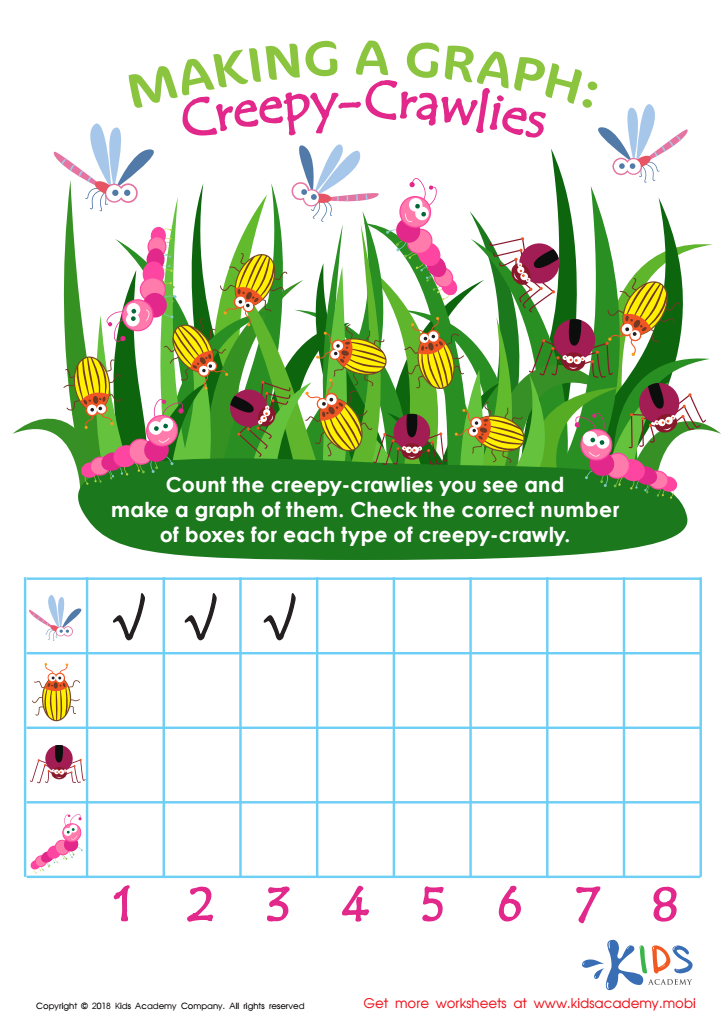
Making a Graph: Creepy Crawlies Worksheet
 Assign to My Students
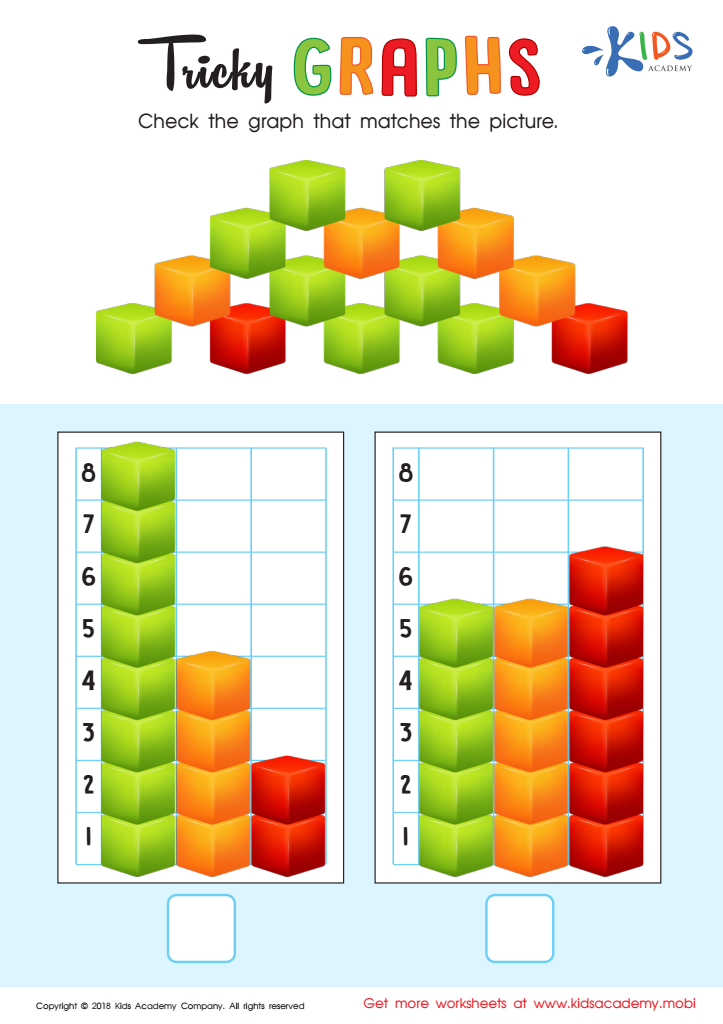
Tricky Graphs Worksheet
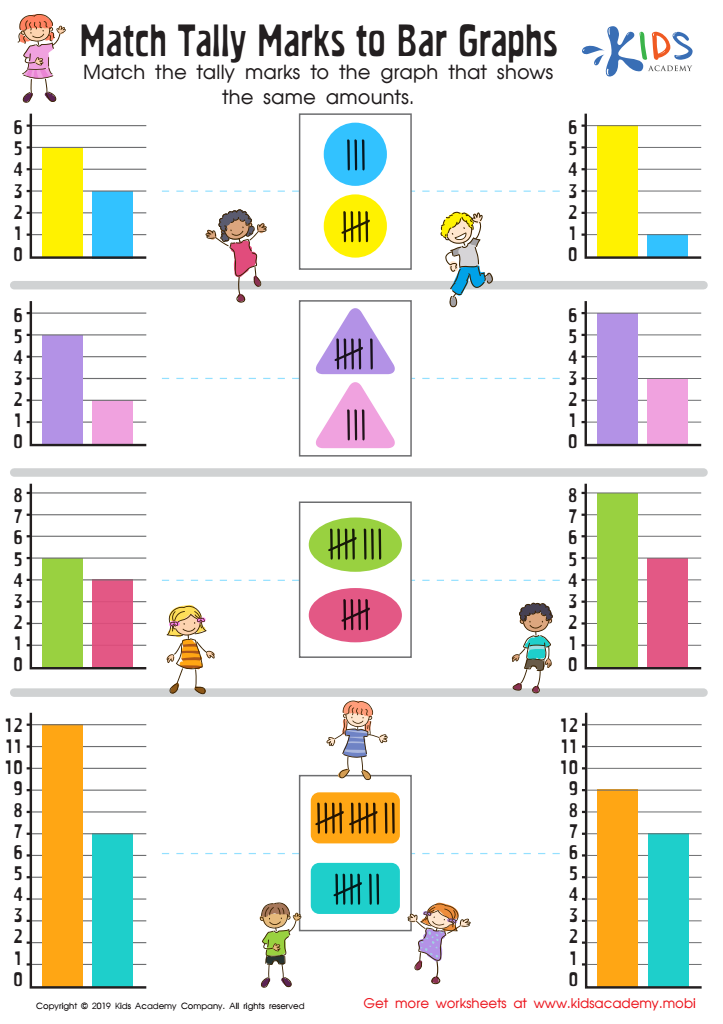
Match Tally Marks to Bar Graphs Worksheet








Understanding graphs is essential for young learners, particularly for children aged 5-6, as it fosters critical thinking and data literacy skills at an early age. At this developmental stage, children are naturally curious and begin to understand their surroundings, making it an ideal time to introduce concepts like graphs to help visualize information.
Graphs translate complex data into accessible, visual representations that enhance comprehension. By learning to interpret simple graphs, children can categorize information, identify patterns, and make connections between different concepts. This skill promotes analytical thinking, as they learn to ask questions based on what they see, such as "Which group is the largest?" or "What happens when we change this variable?"
Moreover, graphing activities provide opportunities for collaboration and communication, as children often work together to collect data or present findings. Engaging with graphs can nurture a love for mathematics and science, laying the foundation for future academic success.
Parents and teachers play a pivotal role in creating a supportive learning environment, encouraging exploration through hands-on activities with graphs. By prioritizing graph literacy, caregivers can cultivate essential skills that empower children to navigate the world with confidence and clarity.








