
Understanding gravity Worksheets for Ages 5-6
4 filtered results
Difficulty Level
Grade
Age
-
From - To
Subject
Activity
Standards
Introduce your little ones to the captivating world of gravity with our "Understanding Gravity Worksheets for Ages 5-6." Designed specifically for early learners, these engaging worksheets simplify the concept of gravity through fun illustrations and straightforward activities. Kids will explore how gravity affects objects, discover the idea of weight, and understand why things fall. With interactive tasks that spark curiosity and critical thinking, these worksheets foster a love for learning science from an early age. Perfect for teachers and parents alike, our resources are tailored to make foundational science enjoyable and accessible. Let your child embark on a gravitational adventure today!
Favorites
With answer key
Interactive
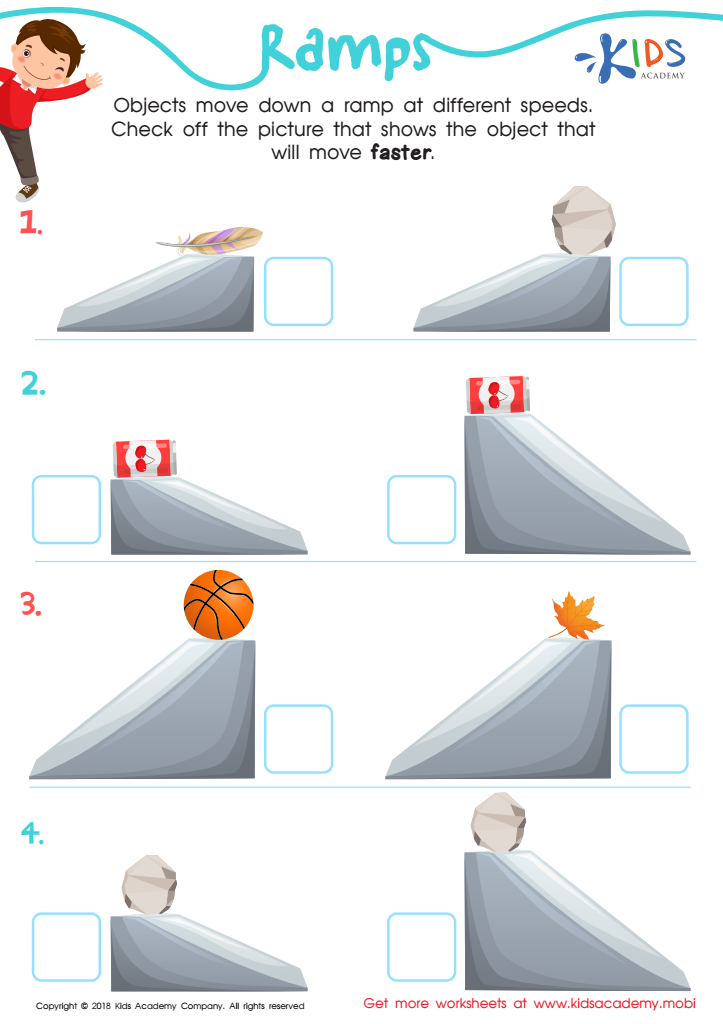
Ramps Worksheet
If your child has seen a ramp, they'll find this worksheet easy. A ramp is sloped for objects to move quickly downwards. The printout has images of objects on different ramps. Ask your child to identify which object will move faster.
 Assign to My Students
Ramps Worksheet
Worksheet
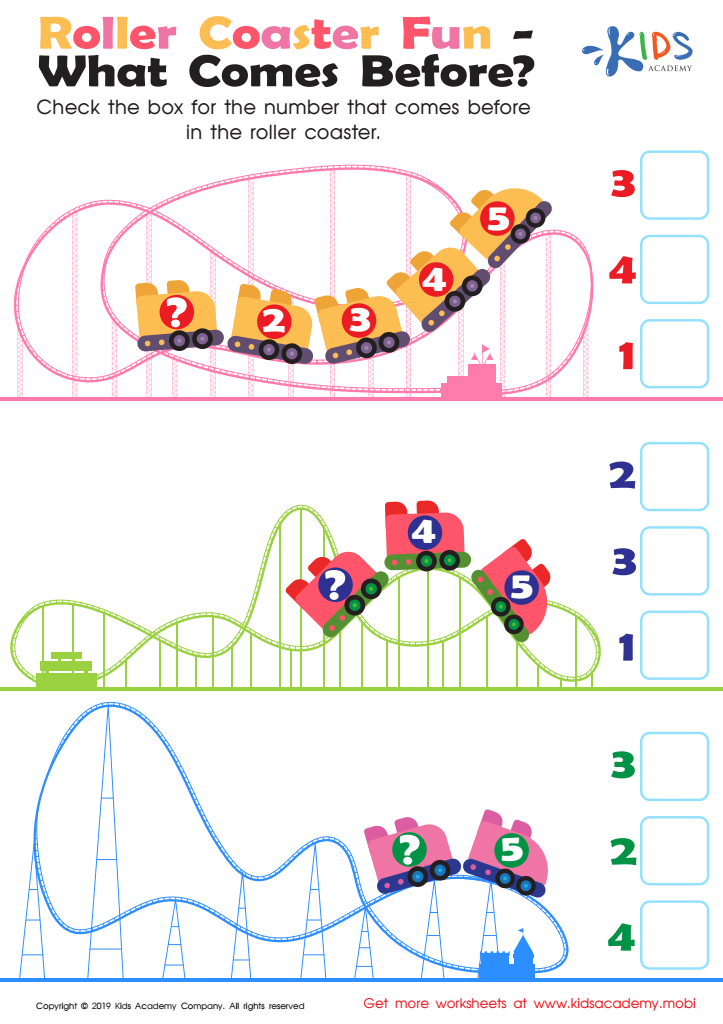
Roller Coaster Fun Worksheet
Ride a roller coaster and experience the thrill! Kids will love checking off the number that comes before each one on the worksheet. With three roller coasters to choose from, the fun never stops! Ask your kids if they've been on a roller coaster and where. Let them explore the excitement and joy of this thrilling ride!
Roller Coaster Fun Worksheet
Worksheet
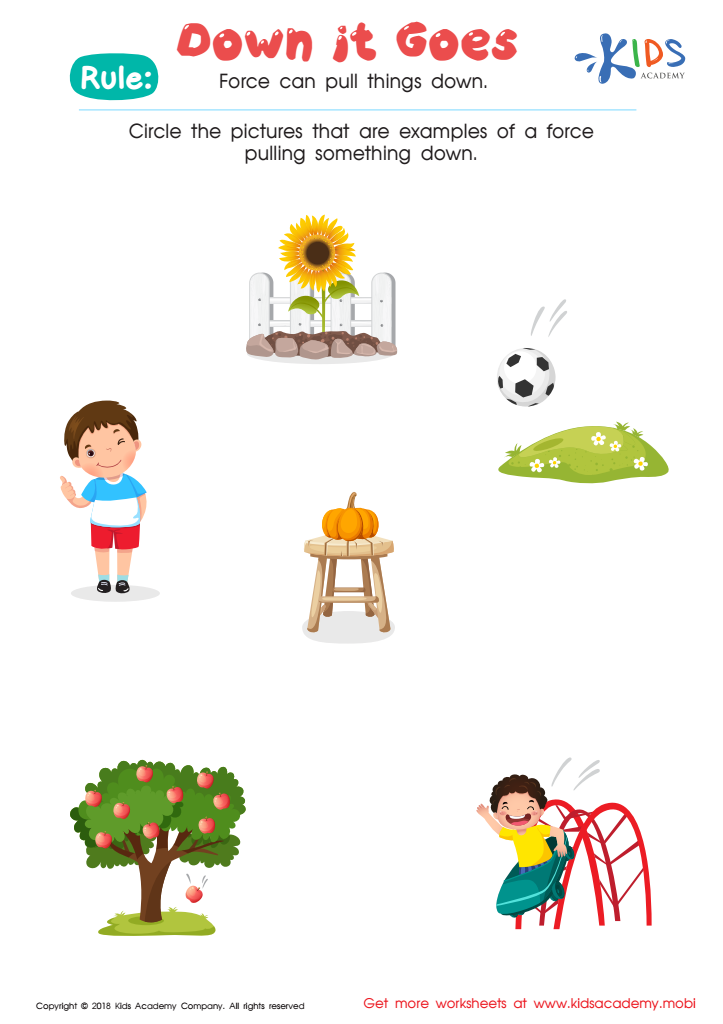
Down it Goes Worksheet
Explain gravity to your child using this fun worksheet. Ask them to give examples of things pulled down with force, then instruct them to circle the pictures that show this. It's a great way to help them understand the concept of gravity.
Down it Goes Worksheet
Worksheet
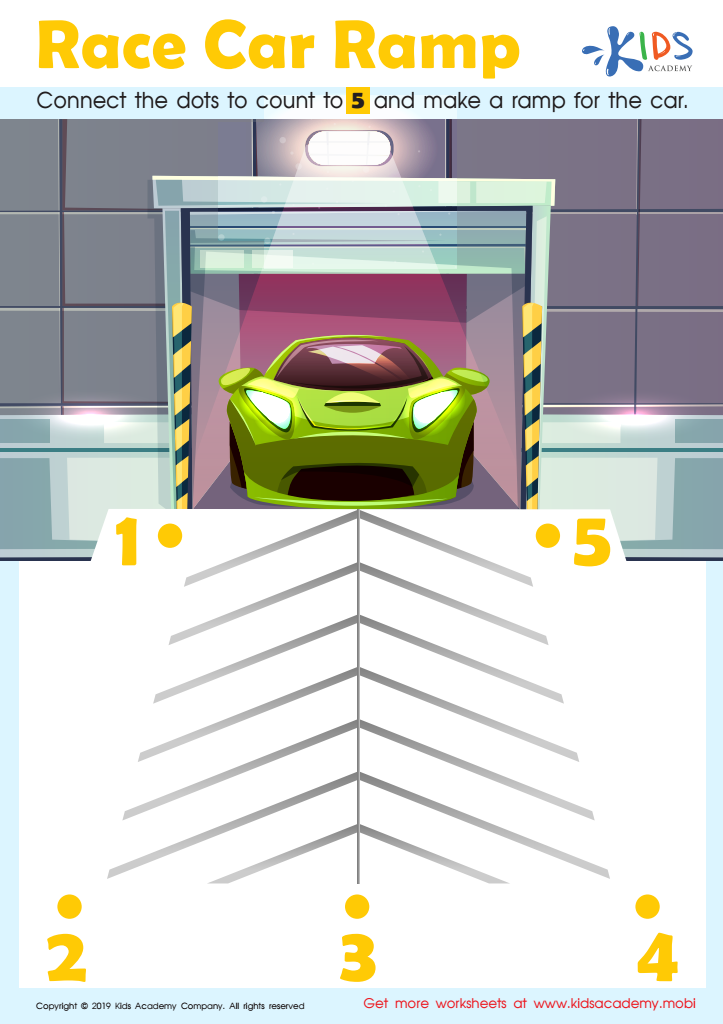
Race Car Ramp Worksheet
Kids can learn numbers quickly and have fun with this worksheet! It teaches preschoolers counting to 5 and allows them to draw a car ramp. It's a creative way to learn numbers, making them fun and easy to remember.
Race Car Ramp Worksheet
Worksheet
Join Kids Academy for Free
Who is primarily going to use this learning content?





Understanding gravity is essential for young learners ages 5-6 as it lays the foundation for scientific inquiry and critical thinking. At this age, children are naturally curious and eager to explore their surroundings. Introducing the concept of gravity helps them make sense of the world, facilitating their understanding of why objects fall, why they can jump, and how they move.
By exploring gravity through playful activities and experiments, such as dropping different objects or observing playground swings, children will develop observational skills and begin to ask questions about their experiences. This hands-on learning fosters a love for science and encourages problem-solving abilities, which are crucial for their overall development.
Moreover, grasping gravity also supports learning in related subjects like physics and mathematics later on, connecting concepts in an age-appropriate manner. Offering experiences related to gravity promotes teamwork, as children can work together to predict outcomes and discuss observations.
Parents and teachers should care about teaching gravity to help ignite children’s imagination and curiosity, serving as a springboard for more complex scientific understanding in the future. By nurturing these early interests, we can inspire the next generation of thinkers, innovators, and problem solvers.








