Understanding measurement units Worksheets for Ages 5-6
3 filtered results
-
From - To
Discover our engaging "Understanding Measurement Units" worksheets designed specifically for children aged 5-6! These interactive resources help young learners grasp essential concepts of measurement, including length, weight, and volume through fun activities and relatable examples. Each worksheet encourages hands-on learning, promoting both critical thinking and creativity. From colorful visuals to delightful exercises, these materials make mastering measurement enjoyable. Ideal for home or classroom use, our worksheets support foundational math skills while catering to diverse learning styles. Help your child explore the world around them as they develop confidence in measurement units with these stimulating and age-appropriate worksheets!
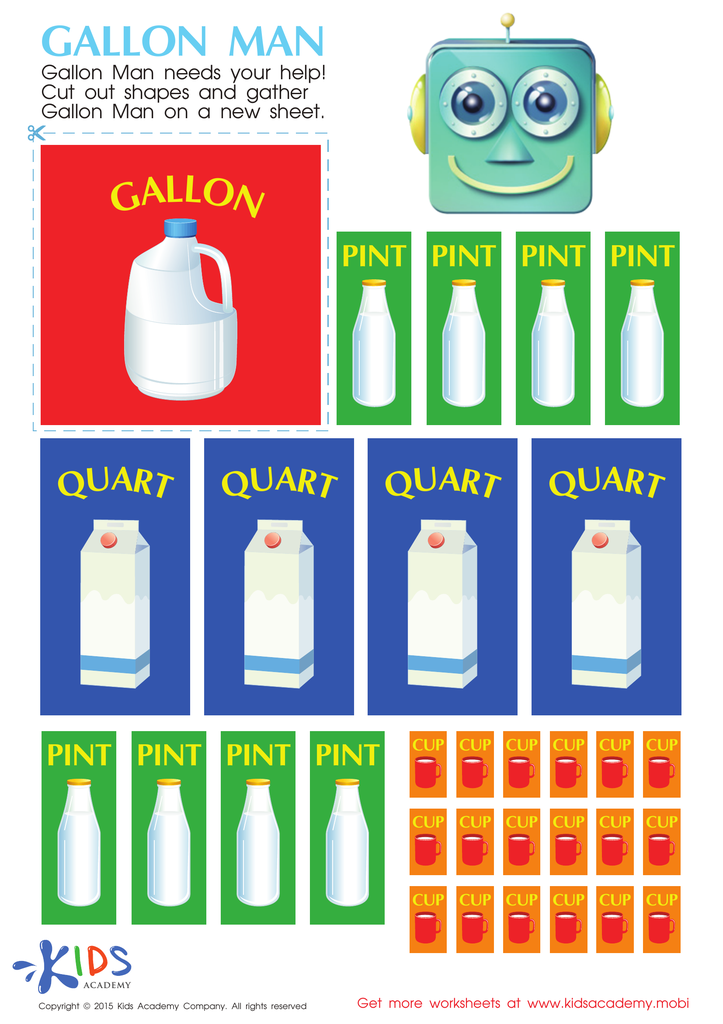
Cups, Pints and Quarts With Gallon Man Worksheet
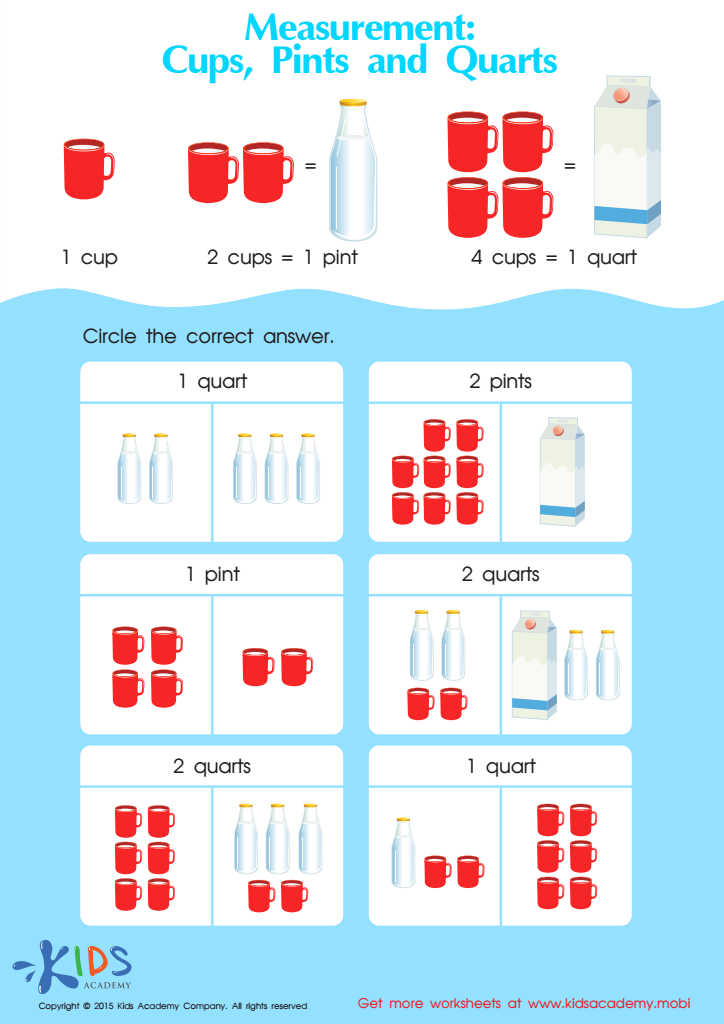
Cups, Pints and Quarts Worksheet
 Assign to My Students
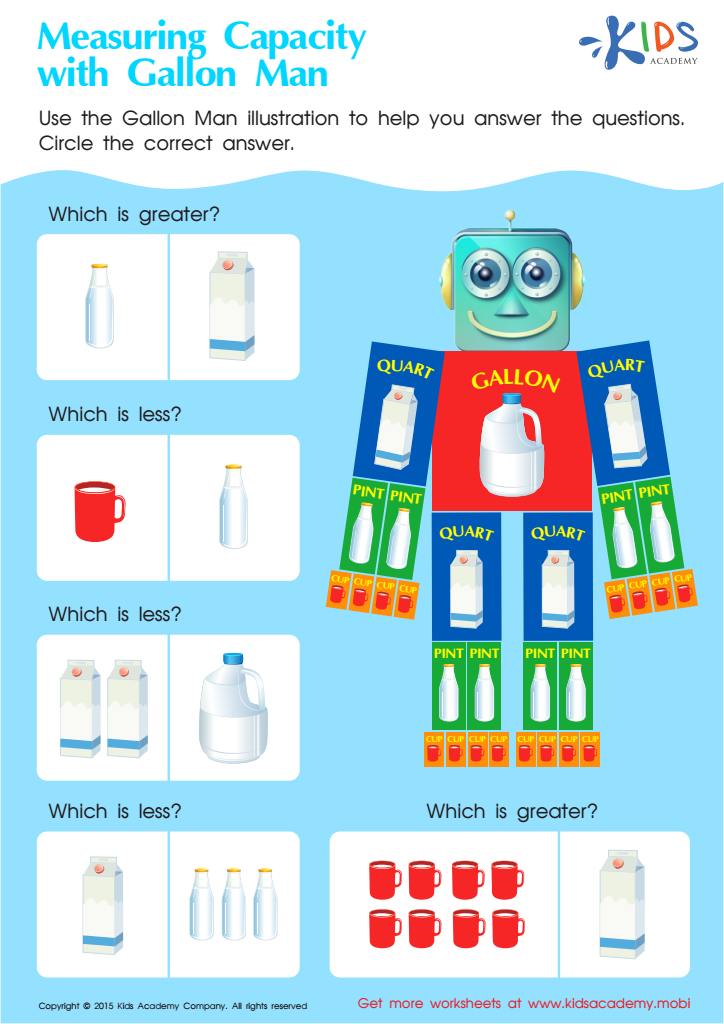
Measurement: Measuring Capacity with Gallon Man Worksheet






Understanding measurement units is crucial for children aged 5-6 as it forms the foundation for their mathematical and everyday skills. At this age, children are naturally curious and eager to explore the world around them. Incorporating measurement concepts into their learning helps foster this curiosity. It teaches them not only about numbers but also about quantity, size, and comparison, which are essential for logical thinking.
Measuring items, whether length, weight, or capacity, encourages hands-on learning. Using real-life objects, children learn to measure with non-standard units, like blocks or their own foot, progressing later to standard units like inches and centimeters. This hands-on approach helps solidify abstract math concepts into tangible experiences.
Moreover, understanding measurement units equips children with vital life skills. They begin predicting and estimating, setting the stage for problem-solving abilities that's pivotal in later academic pursuits. Parents and teachers play a fundamental role in this developmental stage, providing opportunities for discussions about measurements during daily activities—like cooking or building.
Overall, emphasizing measurement units helps cultivate math fluency and critical thinking in young learners while connecting mathematical concepts to real-world experiences. This strong foundation will support their future studies and everyday decision-making.








