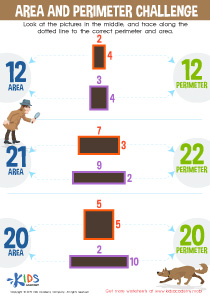
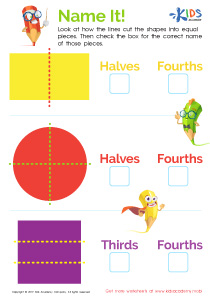
Pattern recognition 2D Shapes Worksheets for Ages 5-6
3 filtered results
-
From - To
Discover our engaging Pattern Recognition 2D Shapes Worksheets designed specifically for children ages 5-6! These worksheets provide fun and interactive activities that help young learners identify and differentiate between various 2D shapes. Perfect for early math education, these resources promote essential skills such as visual recognition, critical thinking, and problem-solving. Each worksheet is thoughtfully crafted to keep children motivated while promoting their understanding of patterns. Whether at home or in the classroom, these worksheets are an excellent way to enhance your child's learning experience! Explore our collection today to support your child’s educational journey in a playful way!
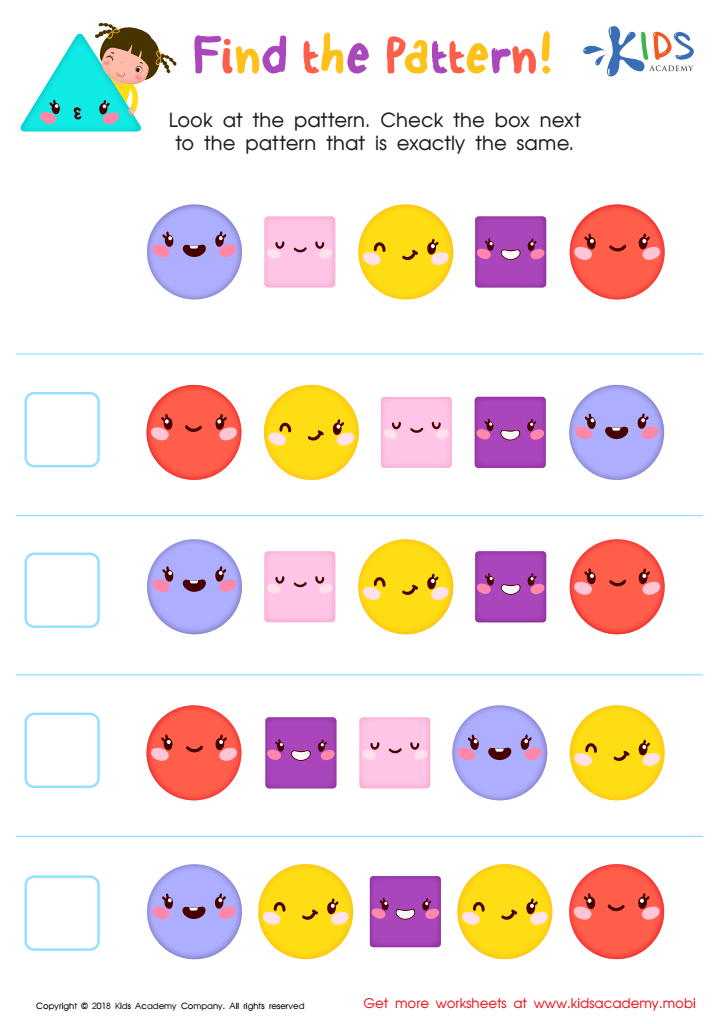
Find the Pattern Worksheet
 Assign to My Students











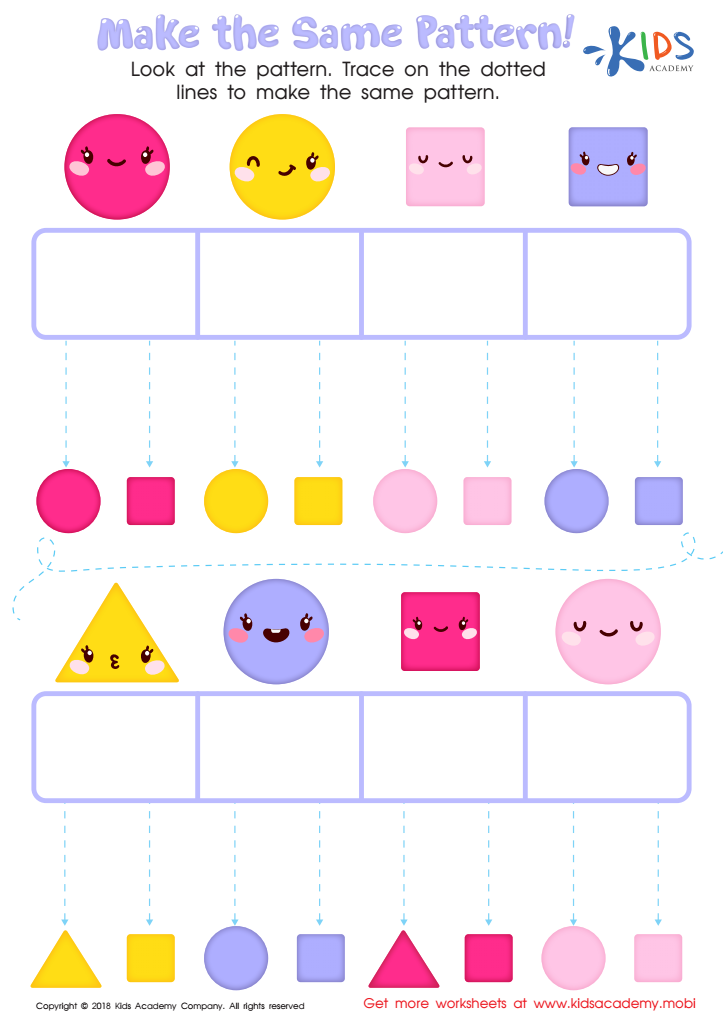
Make the Same Pattern Worksheet
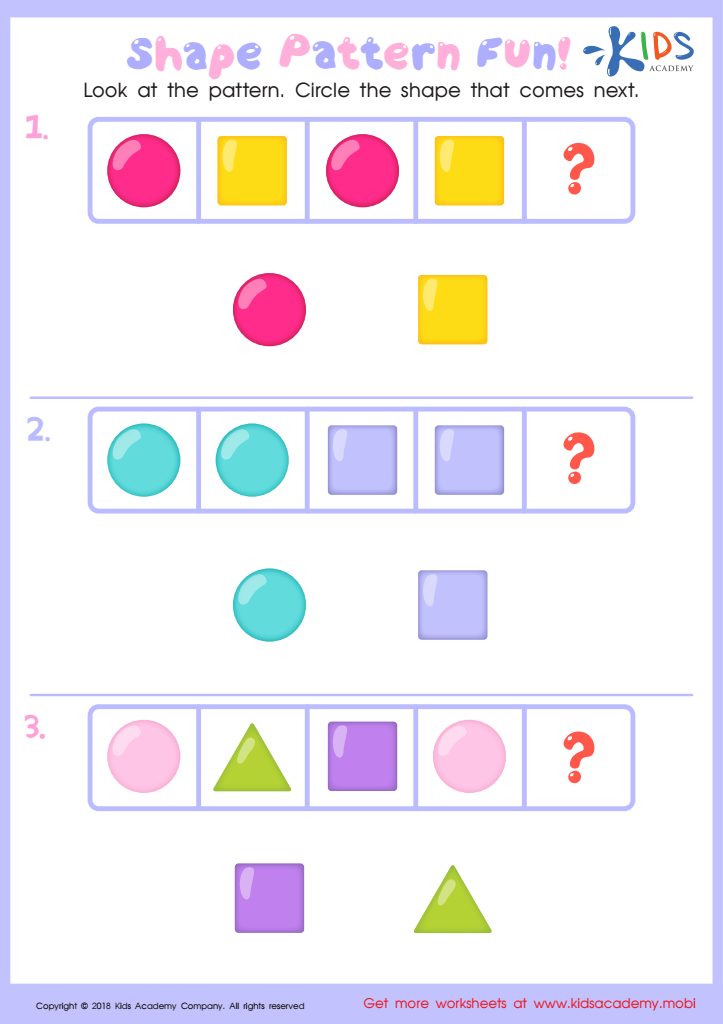
Shape Pattern Fun Worksheet








Pattern recognition, especially in 2D shapes for children ages 5-6, is crucial for early development. At this stage, children are building foundational cognitive skills that are essential for mathematics, science, and critical thinking later on. Recognizing patterns helps children understand relationships and identify similarities and differences. This skill fosters logical reasoning and problem-solving, as they learn to predict and extrapolate from what they observe.
Additionally, shape recognition develops spatial awareness, which is important for geolocation understanding and real-world navigation. Shapes and patterns form the basis of geometry, which they will encounter in more complex forms as they progress in their education. Encouraging awareness of these concepts enhances creativity and observational skills, allowing children to engage with their environment in a meaningful way.
Importantly, this learning exploits children’s natural curiosity. Interactive activities, such as sorting objects and creating patterns, keep young learners engaged and promote social skills when done in groups. Overall, recognizing patterns in 2D shapes lays a strong foundation for academic achievement, and it equips children with tools they will utilize throughout their lives, making it essential for parents and educators to prioritize in early learning.