Vocabulary enhancement 2D Shapes Worksheets for Ages 5-6
6 filtered results
-
From - To
Boost your child's vocabulary and shape recognition with our engaging 2D Shapes Worksheets designed for ages 5-6. These worksheets focus on enhancing language skills through fun activities that introduce key vocabulary associated with various shapes, such as circles, squares, rectangles, and triangles. Each worksheet promotes cognitive development and helps children describe shapes accurately, improving their communication skills. Perfect for at-home learning or in the classroom, our resources encourage playful learning experiences, allowing young learners to explore and identify shapes while expanding their word bank. Discover the joy of learning with our captivating 2D shapes vocabulary activities today!
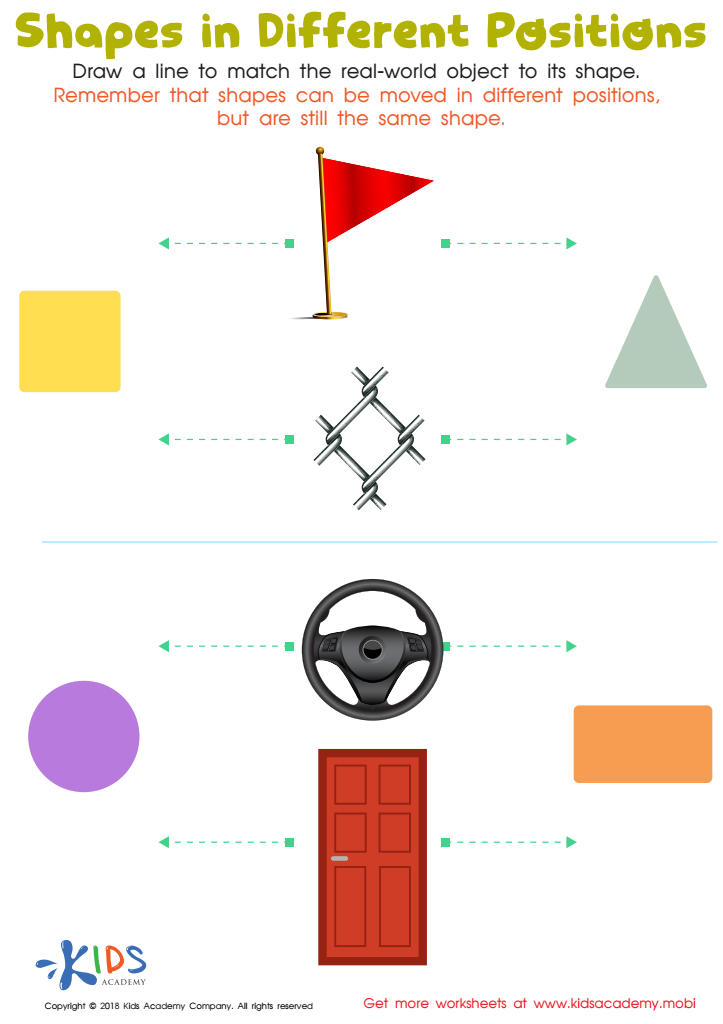
Shapes in Different Positions Worksheet
 Assign to My Students


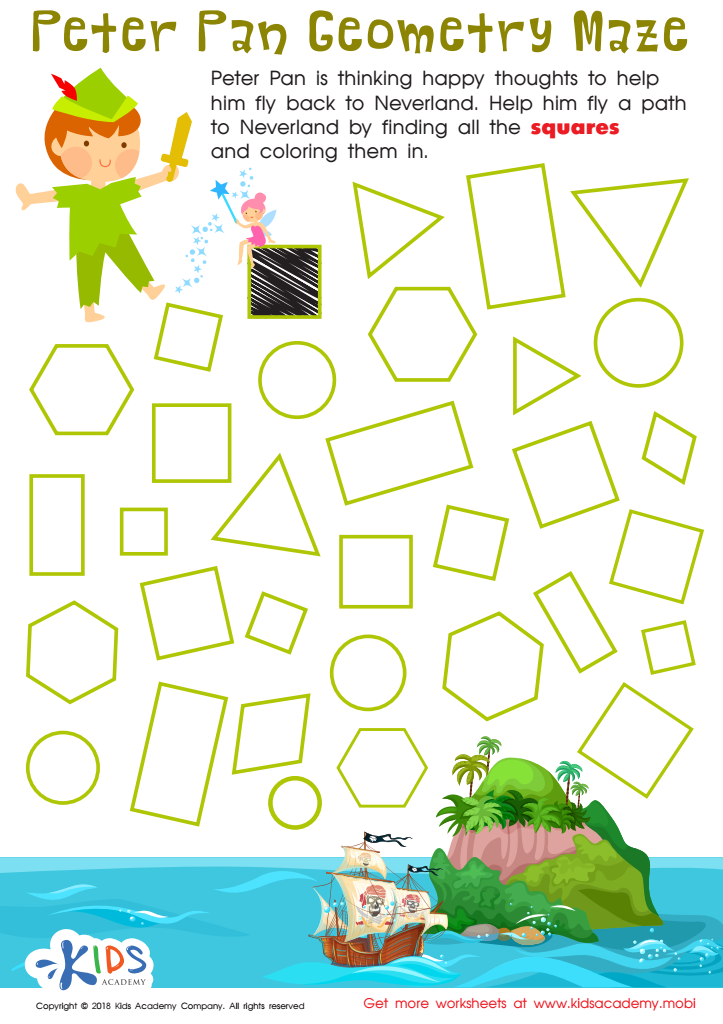
Peter Pan Worksheet
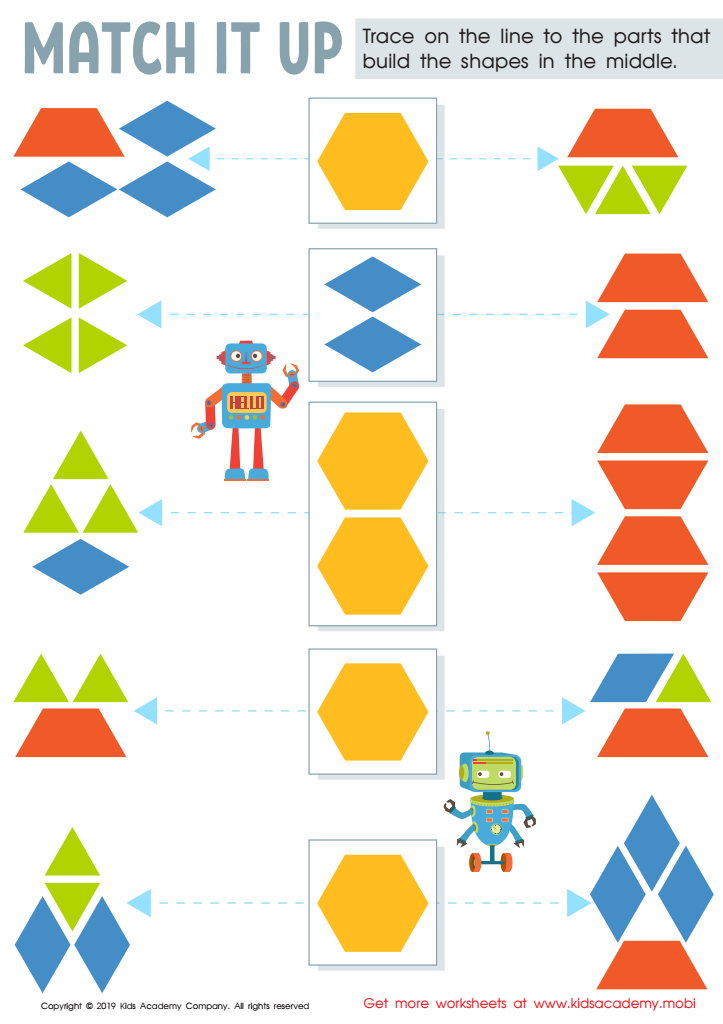
Match It up Worksheet
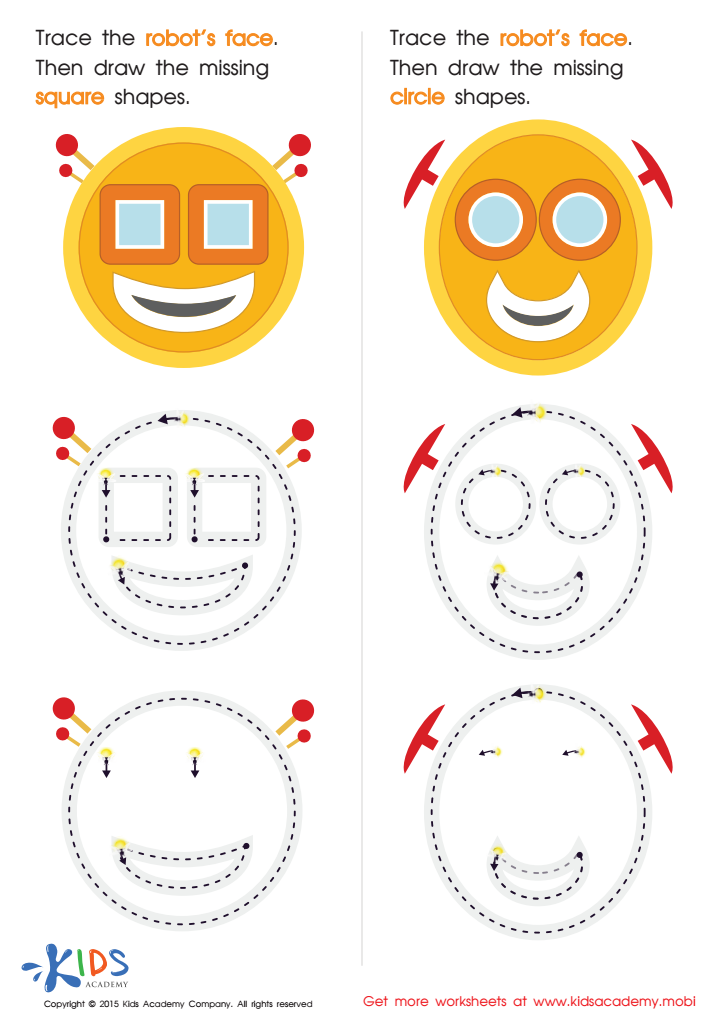
Practicing to Draw Circles And Squares Printable
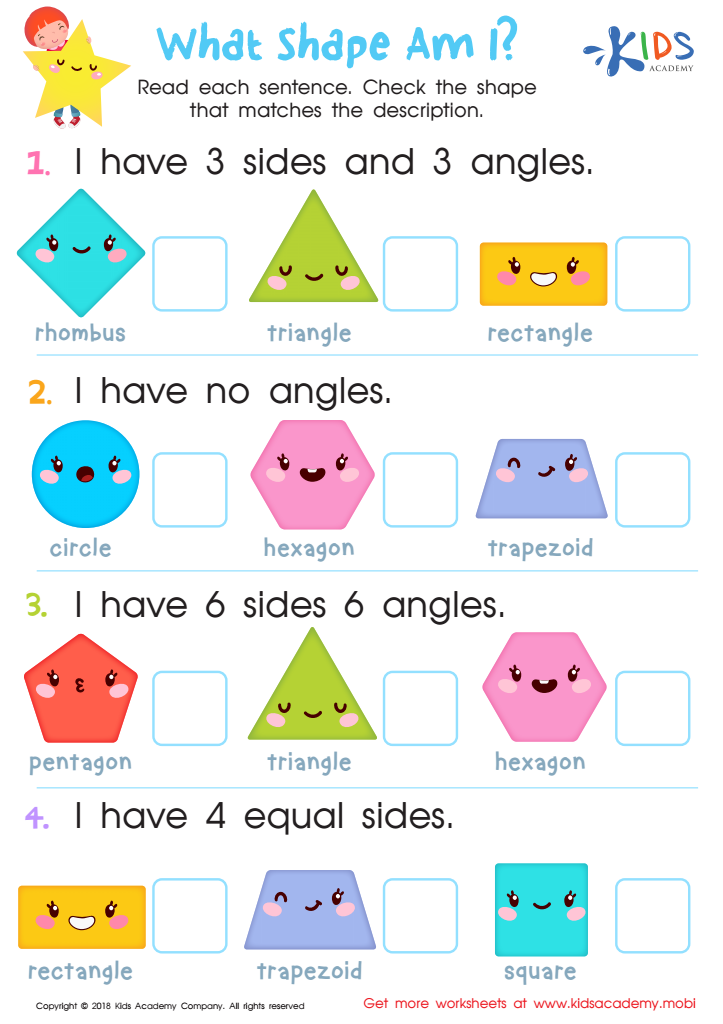
What Shape Am I? Worksheet
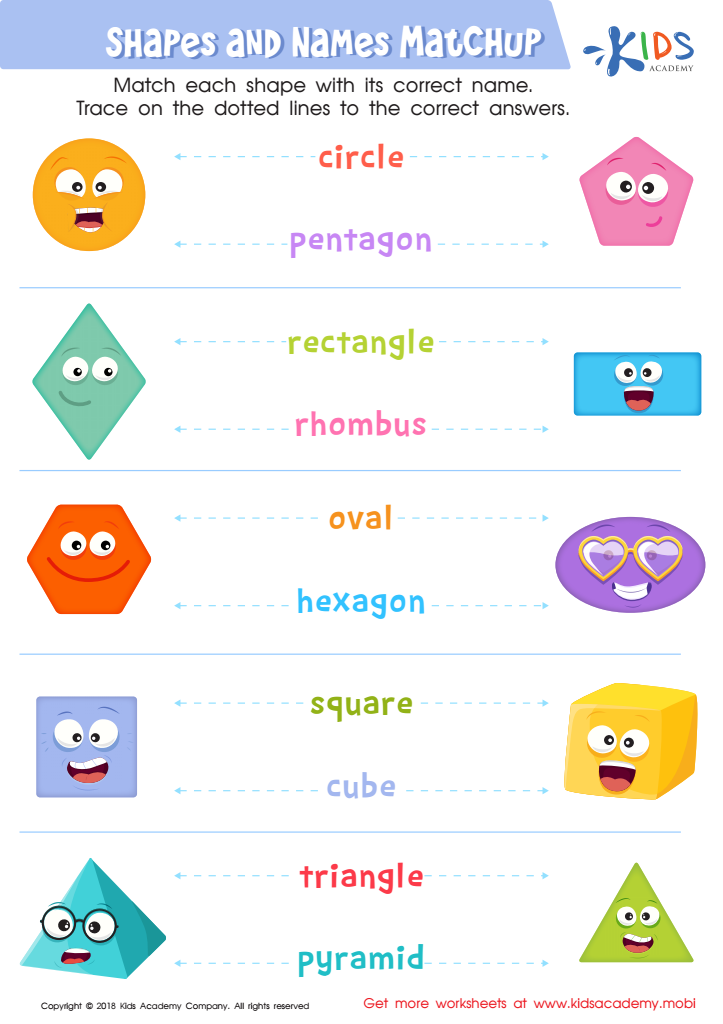
Shapes and Names Matchup Worksheet








Vocabulary enhancement in the context of 2D shapes for ages 5-6 is crucial for children's cognitive, linguistic, and spatial development. At this stage, toddlers are naturally curious and receptive to new information. Introducing shape-related vocabulary—such as "circle," "square," "triangle," and "rectangle"—expands their language skills and helps them communicate ideas more vividly.
Understanding shapes is foundational for later math skills. When children confidently identify and describe 2D shapes, they build essential problem-solving abilities. These concepts also link to geometry, measurement, and spatial reasoning, which are reinforced through playful activities like drawing or building with blocks.
Moreover, vocabulary enhancement aligns with literacy development. As children learn to associate words with shapes, they improve their sentence structure and communication skills. Engaging with shape books, songs, and games stimulates interest and retention.
For teachers and parents, nurturing this vocabulary goes beyond language acquisition—it lays the groundwork for future academic success and critical thinking. By incorporating fun, interactive learning experiences, children forge connections between language and the world around them, fostering a lifelong love of learning. Thus, enhancing vocabulary in the context of 2D shapes is key to empowering young minds.