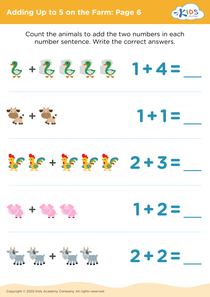
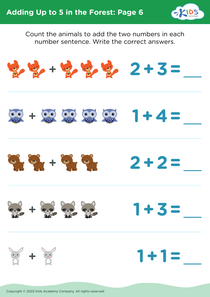
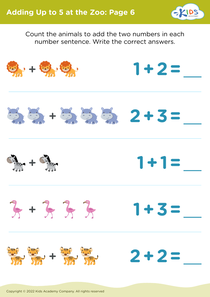
Problem-Solving Skills Adding in the Sea Worksheets for Ages 5-6
8 filtered results
-
From - To
Discover our engaging "Problem-Solving Skills Adding in the Sea Worksheets" designed for children ages 5-6! These worksheets offer a fun and interactive way to enhance mathematical understanding while diving into ocean-themed activities. Young learners will explore essential problem-solving techniques as they tackle addition questions within a vibrant underwater setting. Each worksheet emphasizes critical thinking and logical reasoning, ensuring that children not only master basic addition but also develop foundational skills vital for future learning. Perfect for home or classroom use, these resources make math enjoyable and accessible. Dive deep into knowledge with our sea-inspired problem-solving worksheets today!
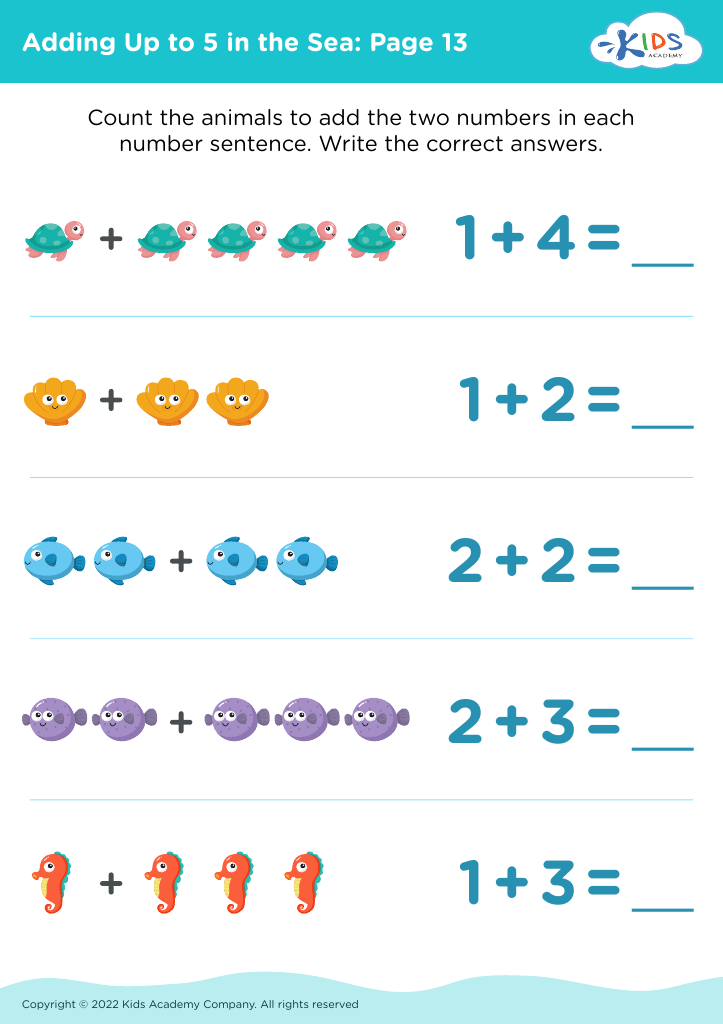
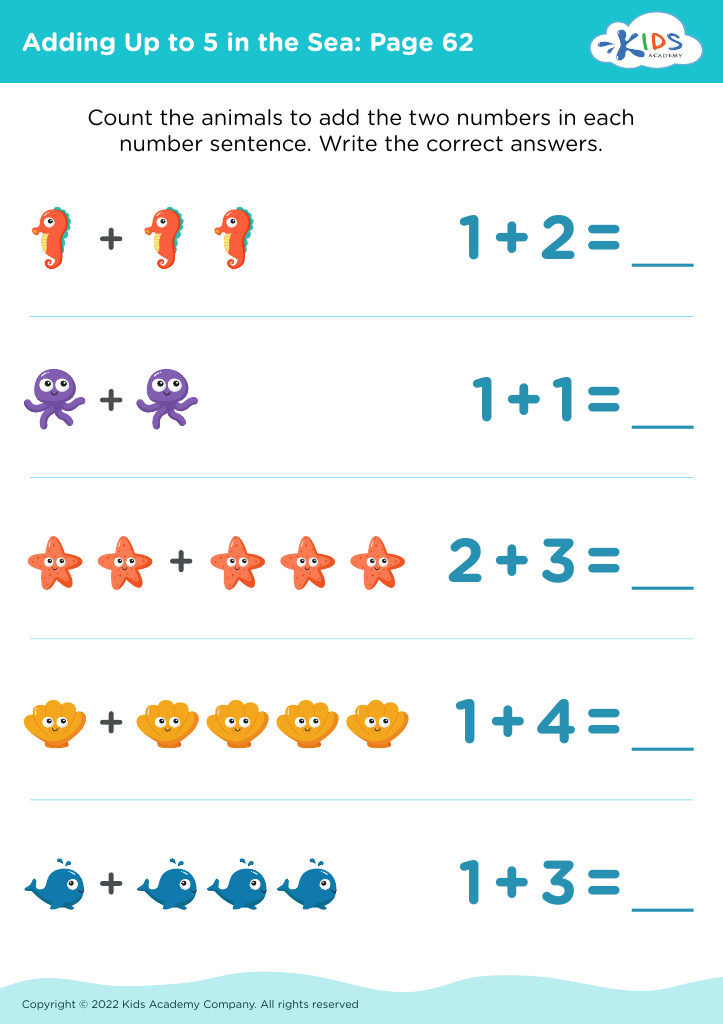
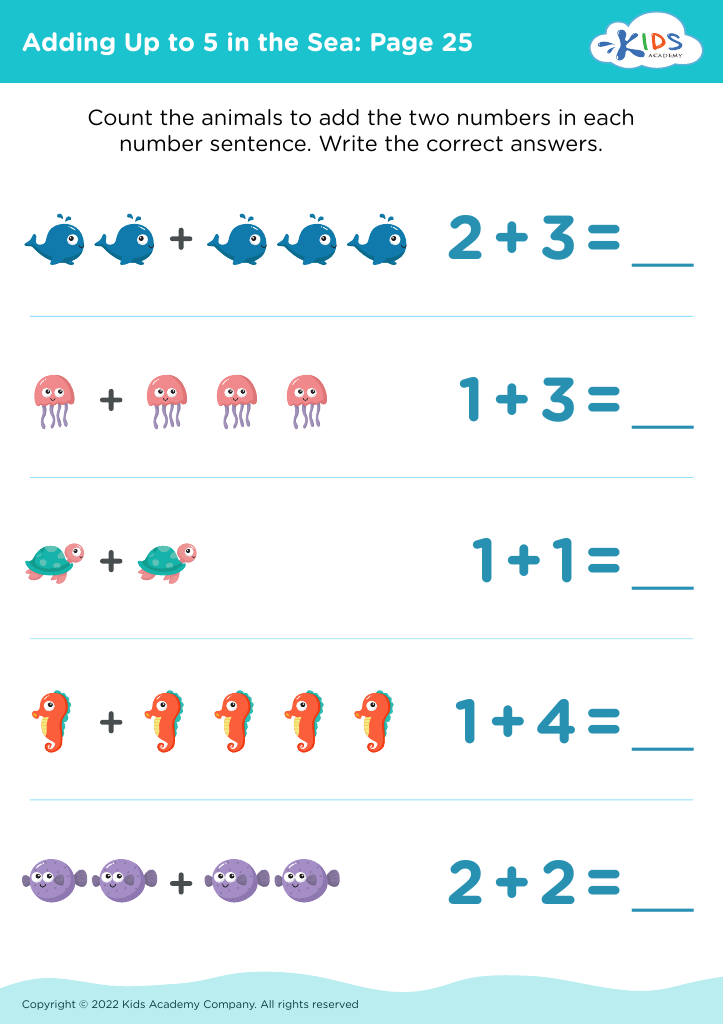
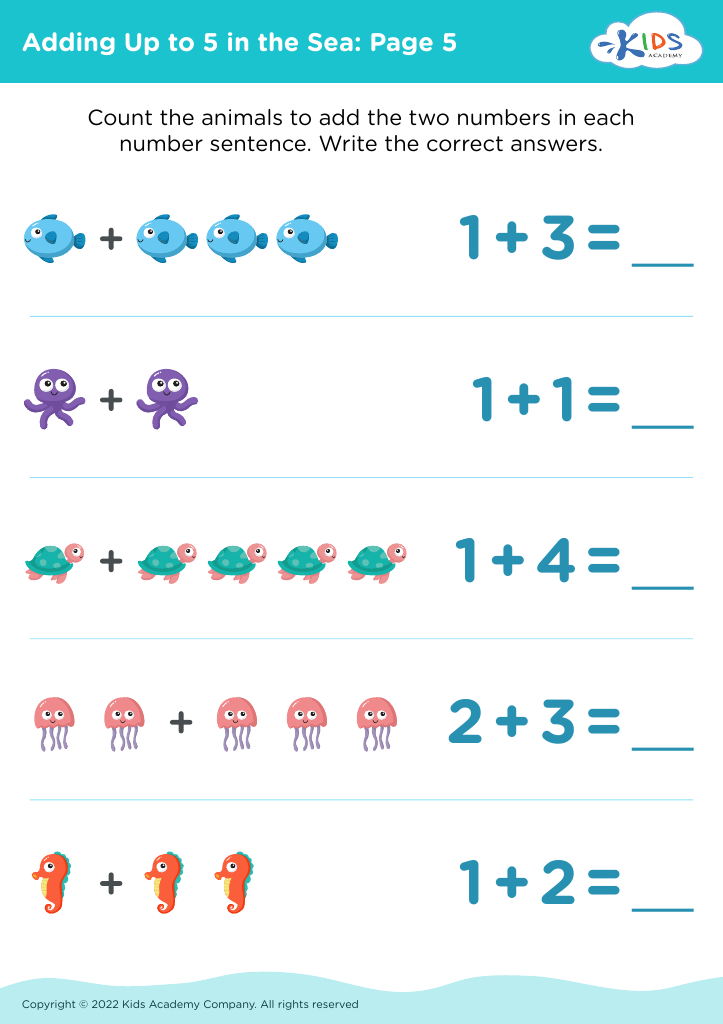
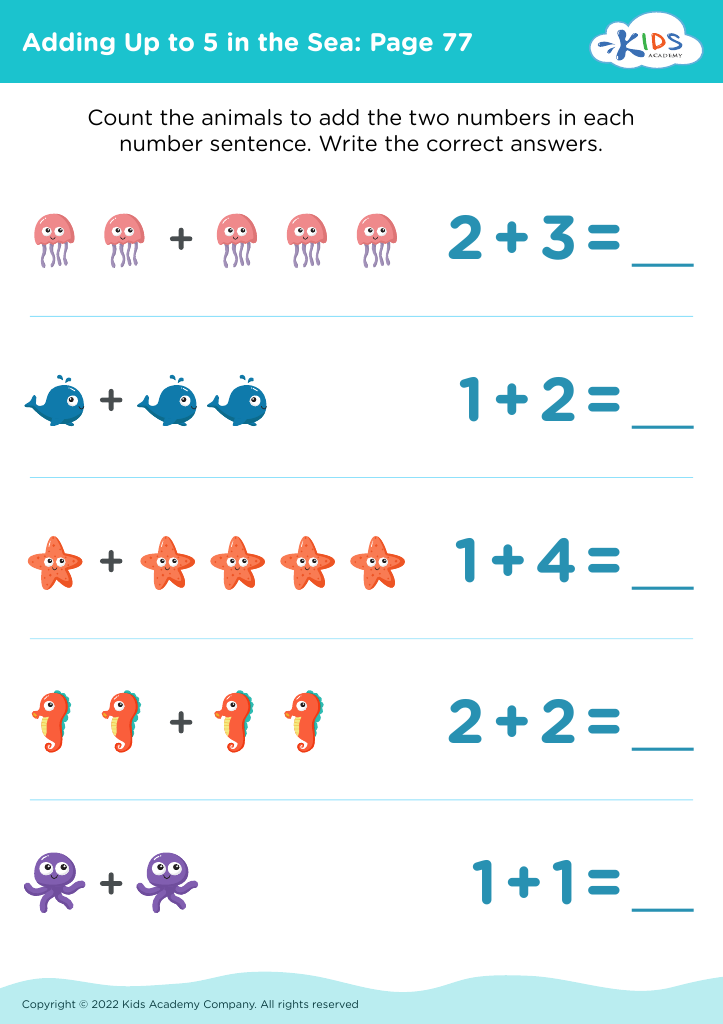
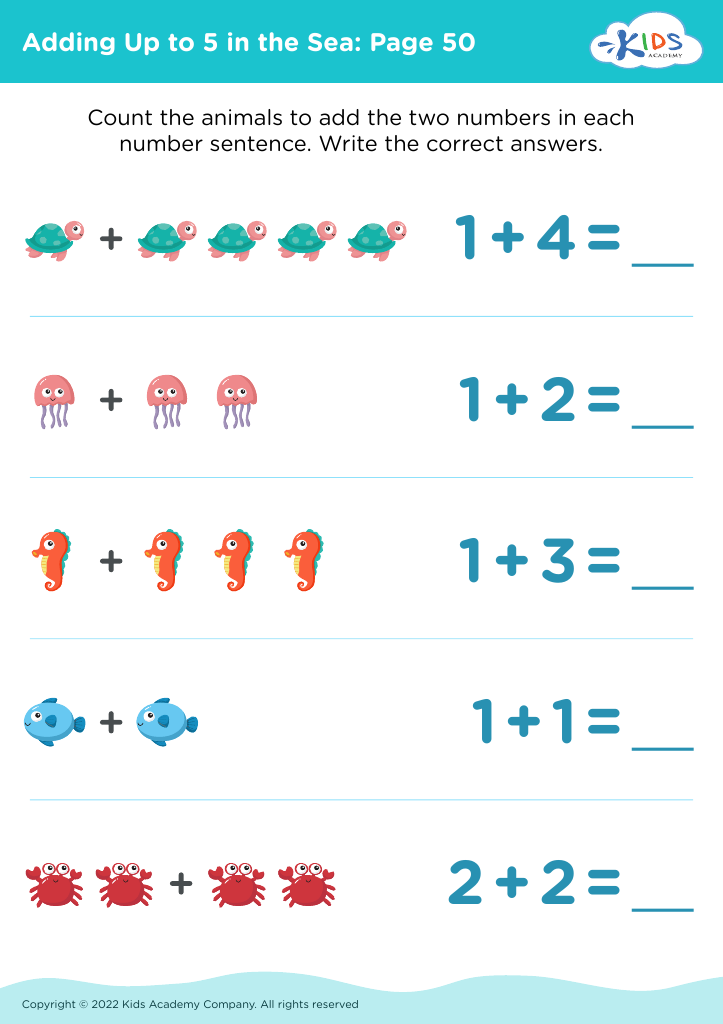
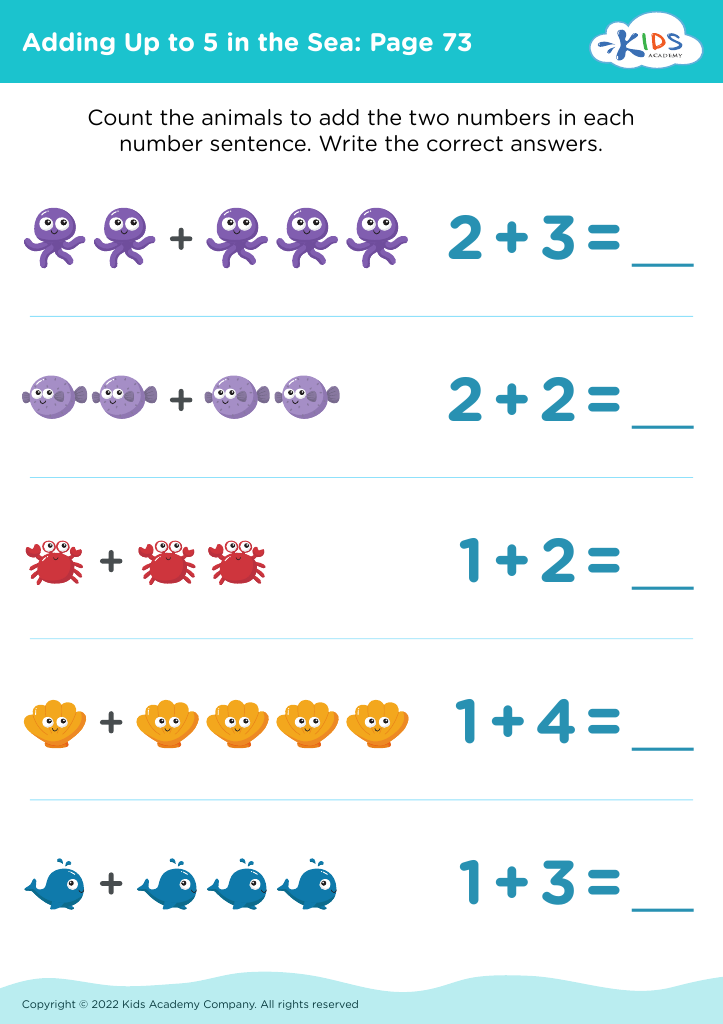
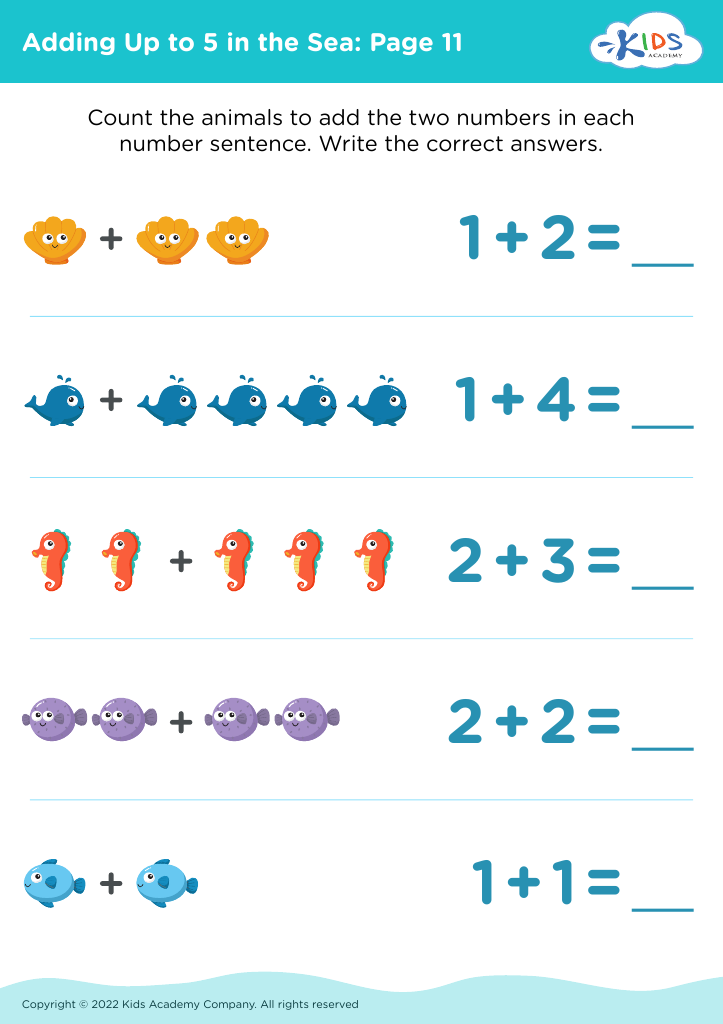



Problem-solving skills are essential for young children, as they lay the foundation for critical thinking and self-confidence. Engaging in activities like "Problem-Solving Skills Adding in the Sea" for children ages 5-6 helps cultivate these vital skills in an enjoyable manner.
Firstly, early problem-solving activities encourage children to think creatively and try out different approaches. In "Adding in the Sea," for instance, students may encounter various math problems in a themed aquatic environment, reinforcing their understanding of addition through playful scenarios. This connects learning to real-life experiences, making math more relatable and fun.
Secondly, problem-solving skills enhance emotional development. As children encounter challenges and learn to persist in finding solutions, they develop resilience and a growth mindset. They learn that mistakes are part of learning, building their capacity to face future challenges with confidence.
Lastly, fostering problem-solving abilities aligns with essential educational standards and prepares children for productive learning in later grades. When teachers and parents prioritize these skills, they not only aid in academic growth but also encourage social skills and teamwork as children engage in collaborative problem-solving activities. Ultimately, strong problem-solving skills empower young learners to navigate their world effectively.