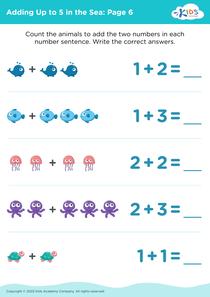
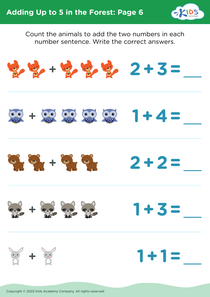
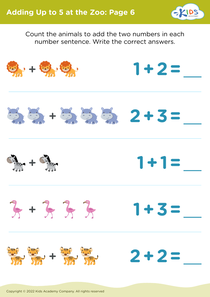
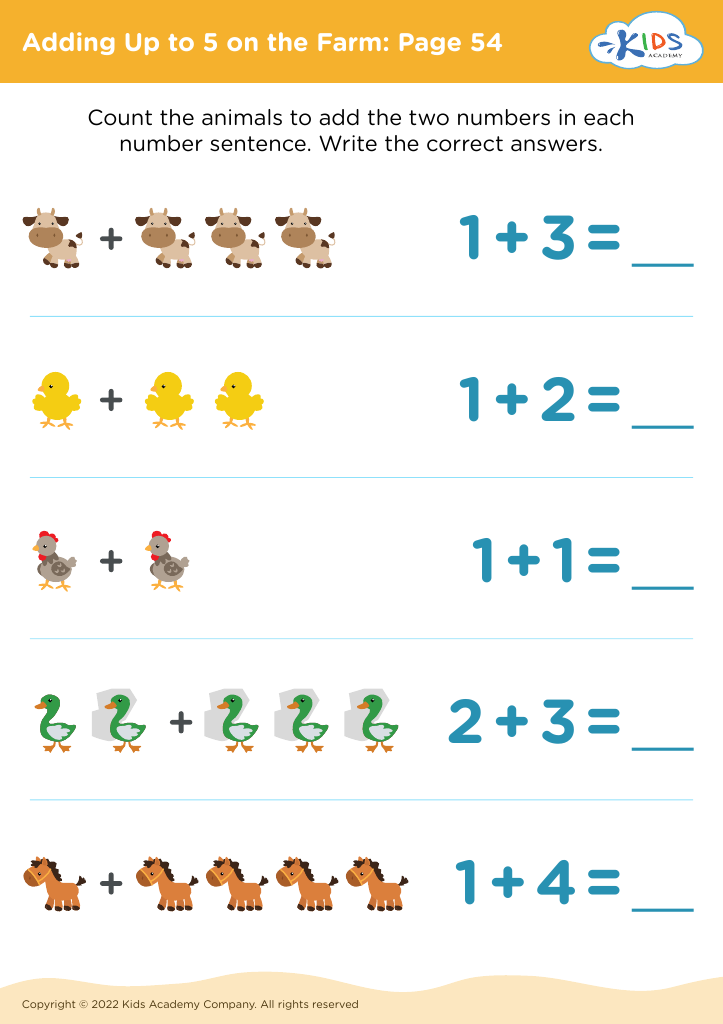
Animal identification Adding on the Farm Worksheets for Ages 5-6
15 filtered results
Difficulty Level
Grade
Age
-
From - To
Subject
Activity
Standards
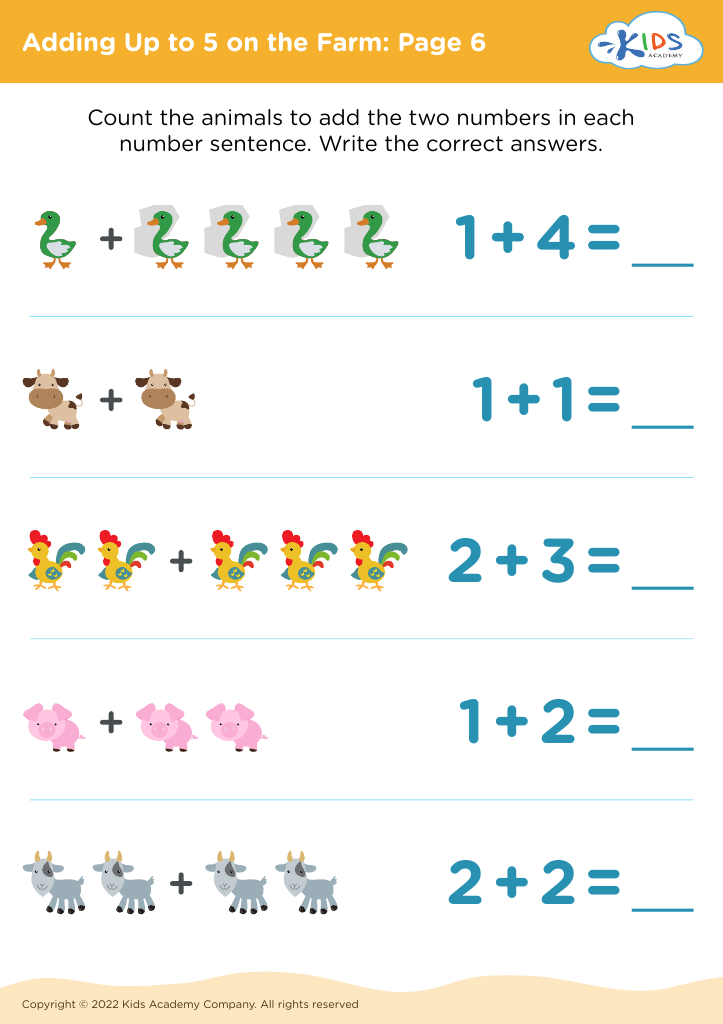
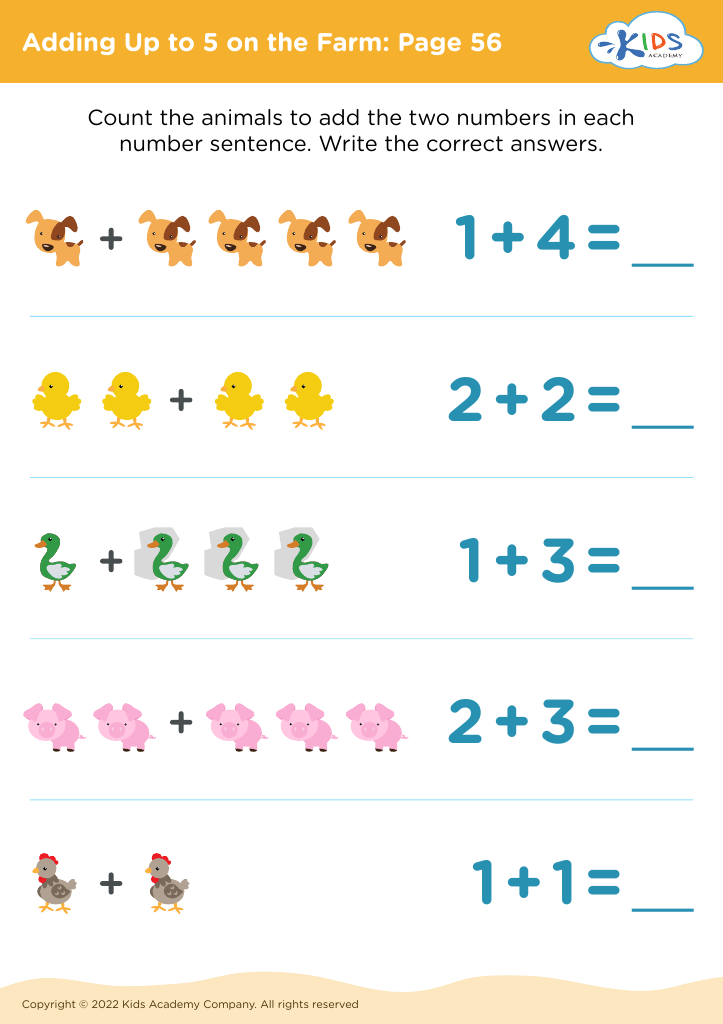
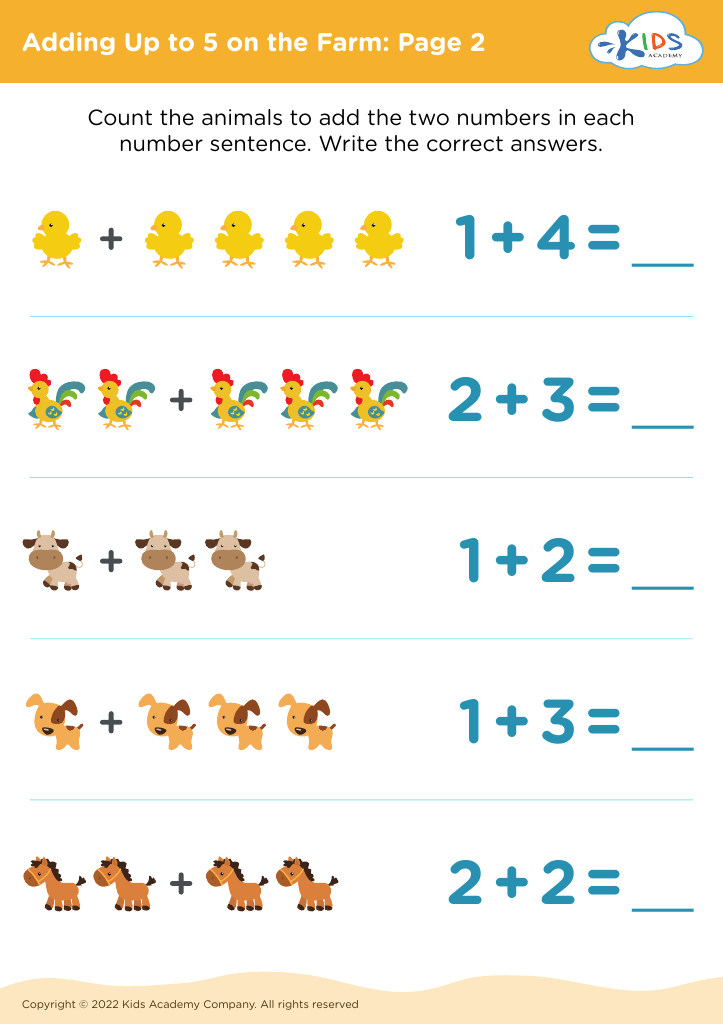
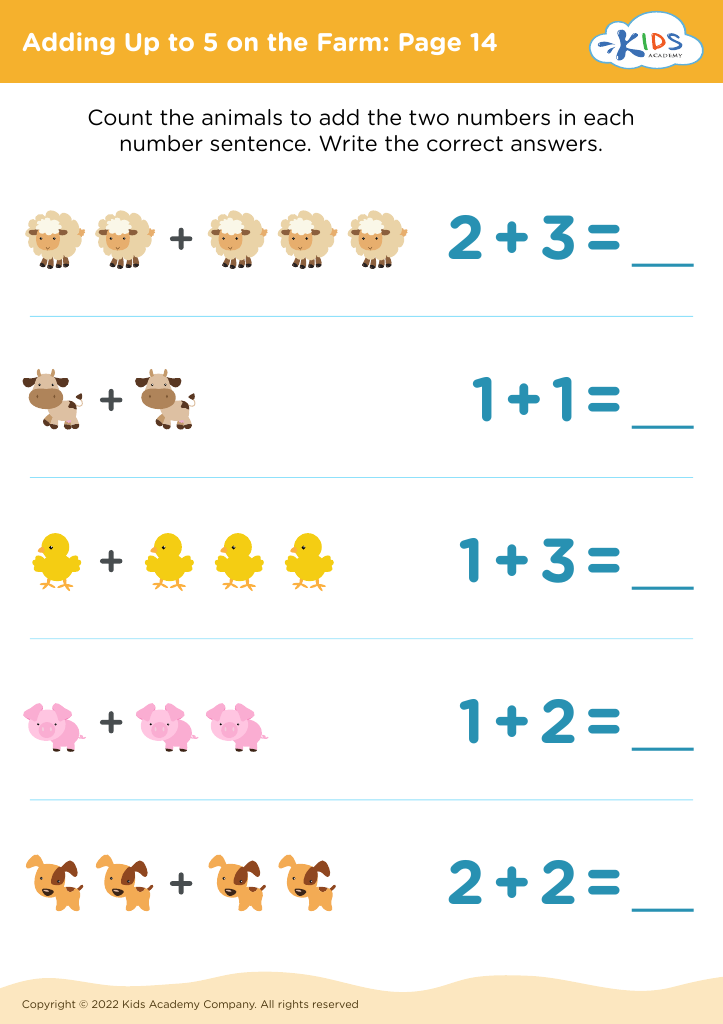
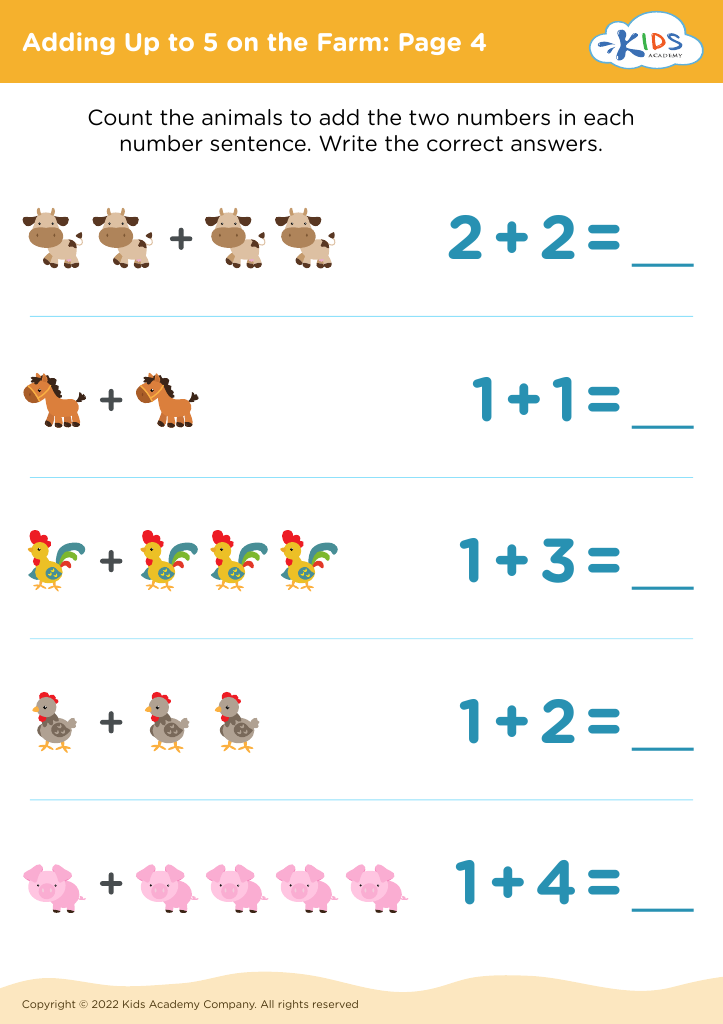
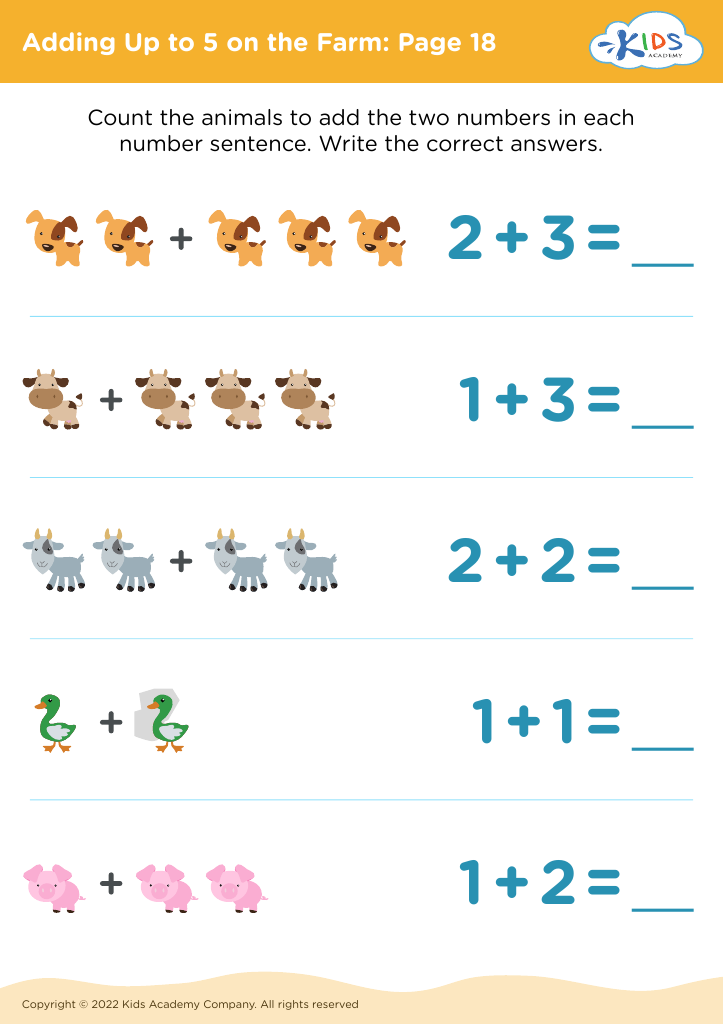
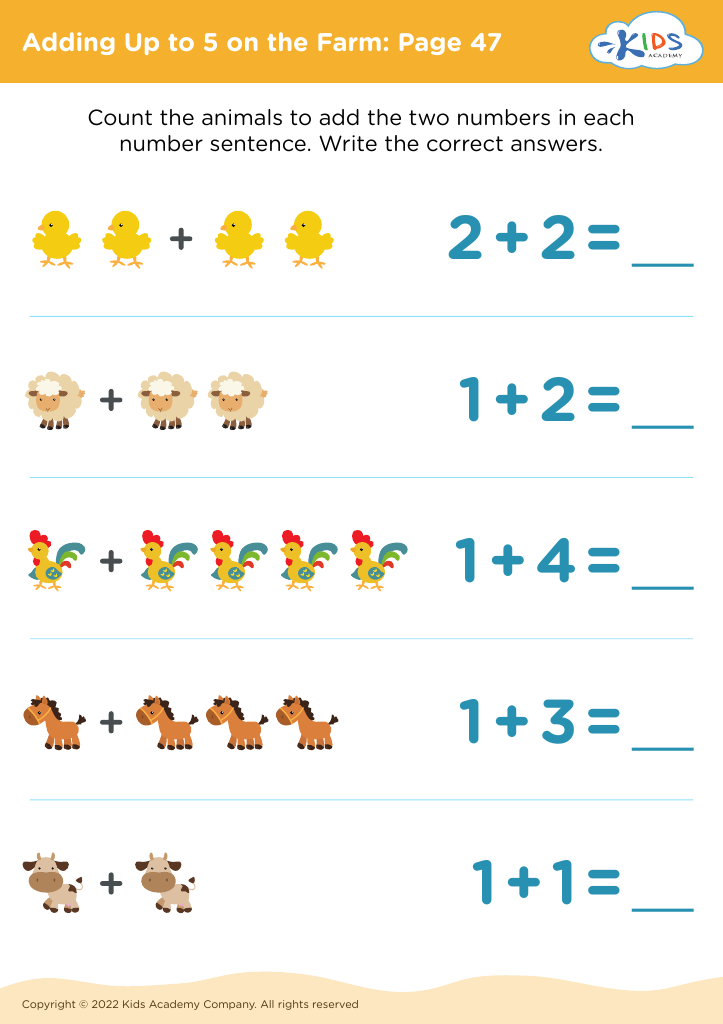
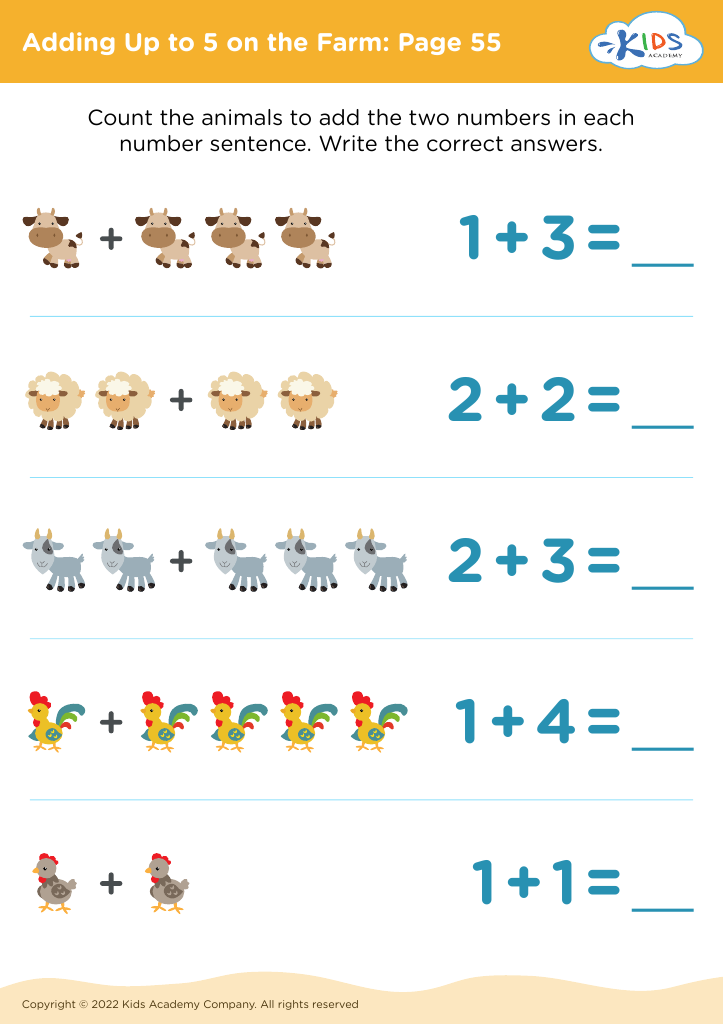
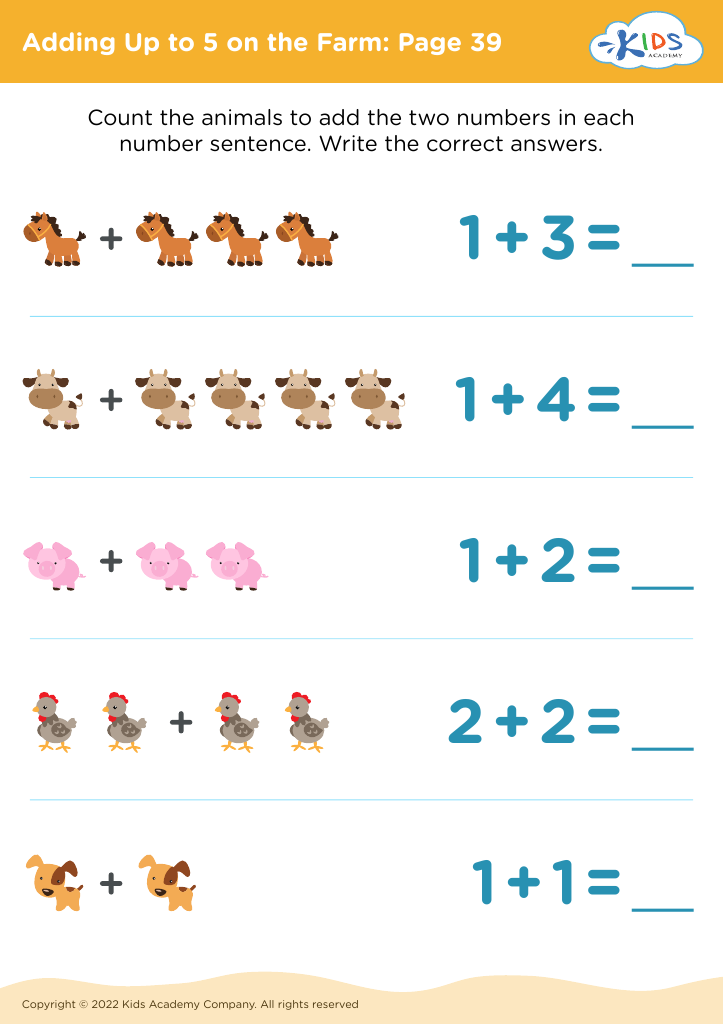
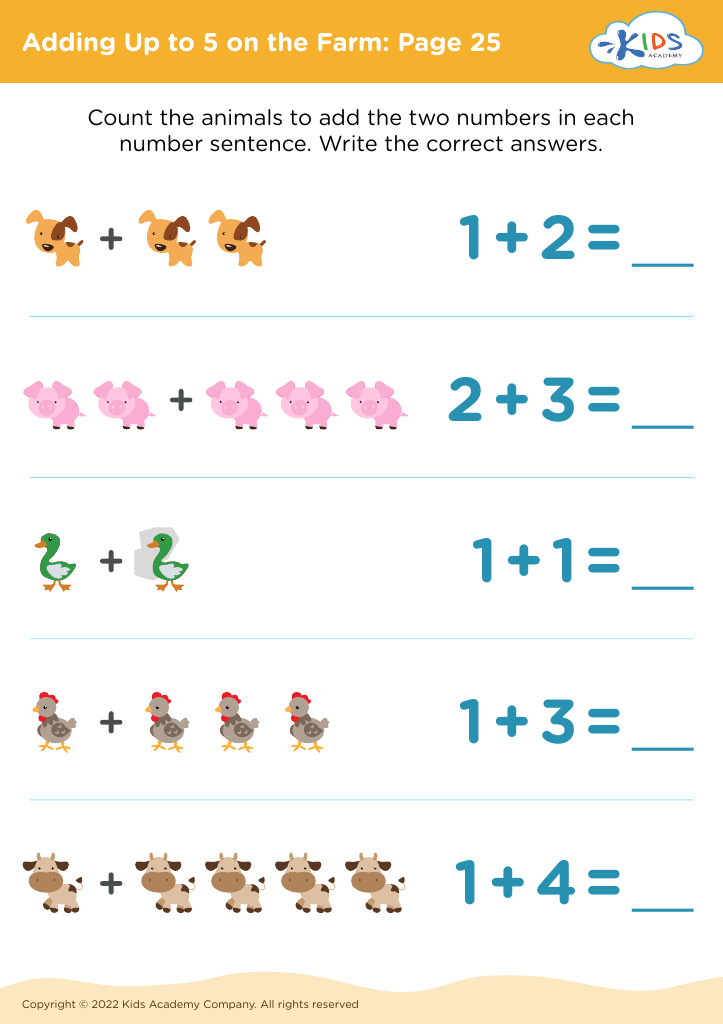
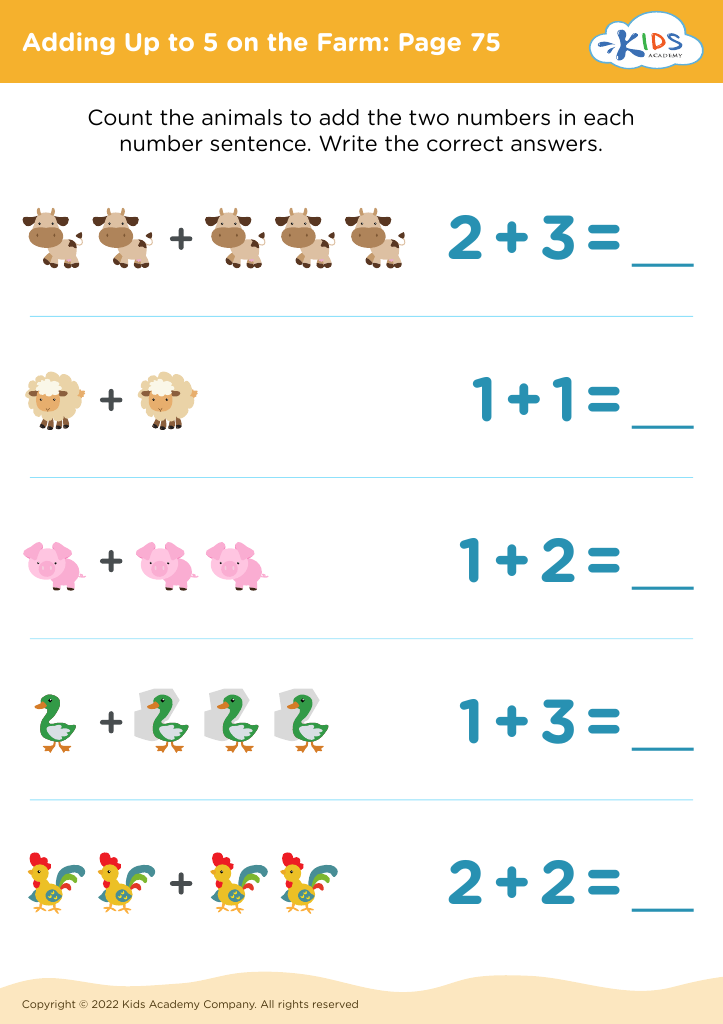
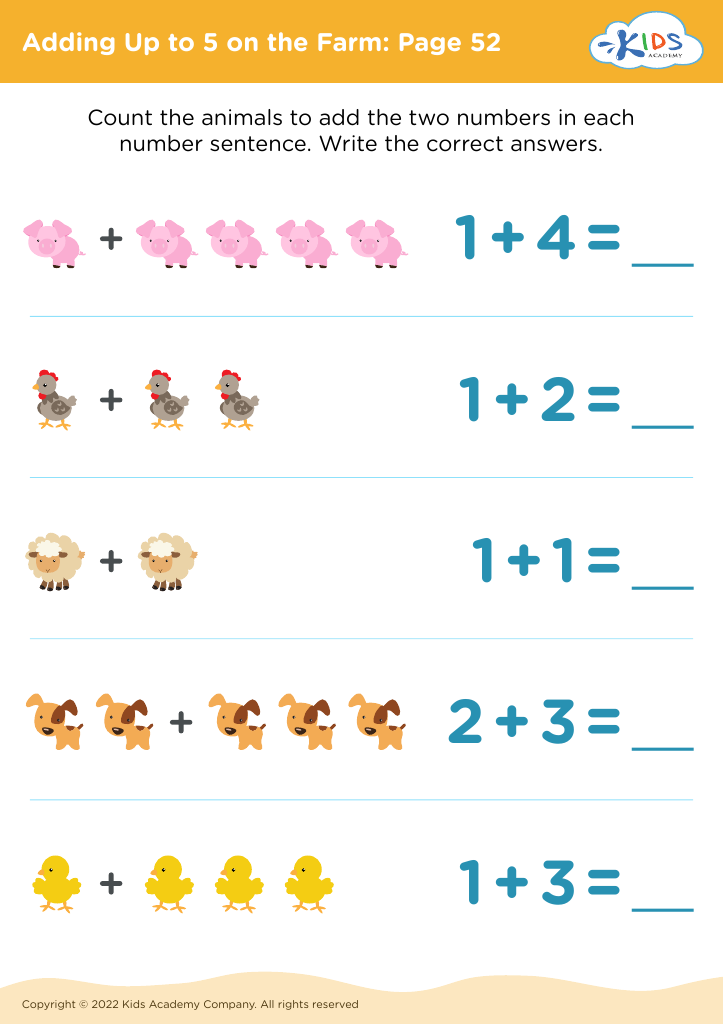
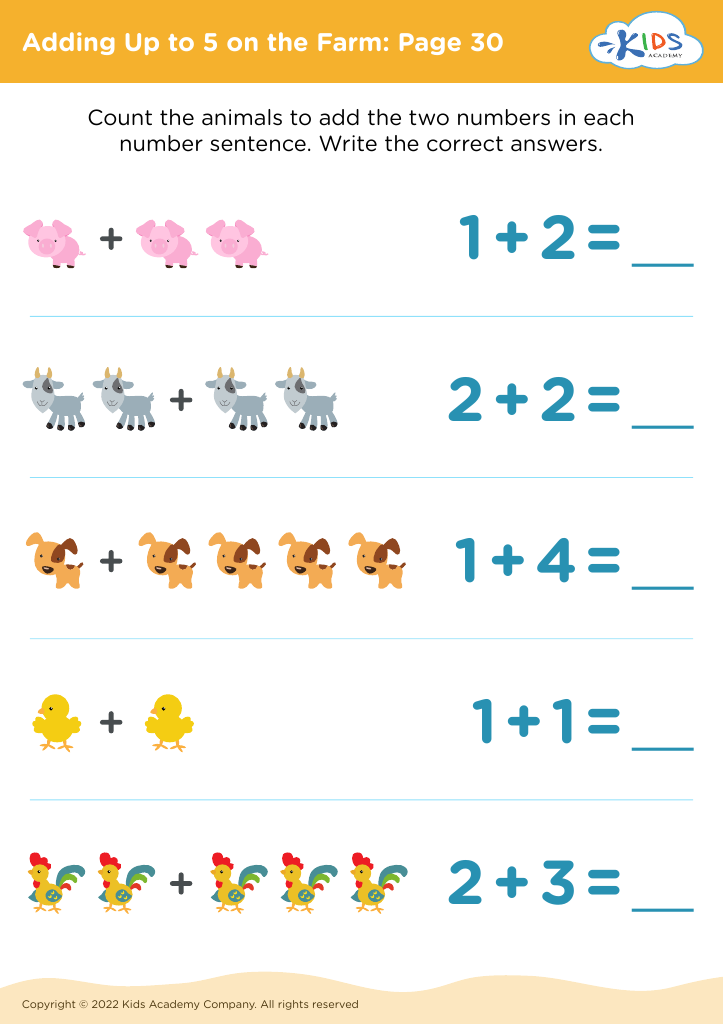
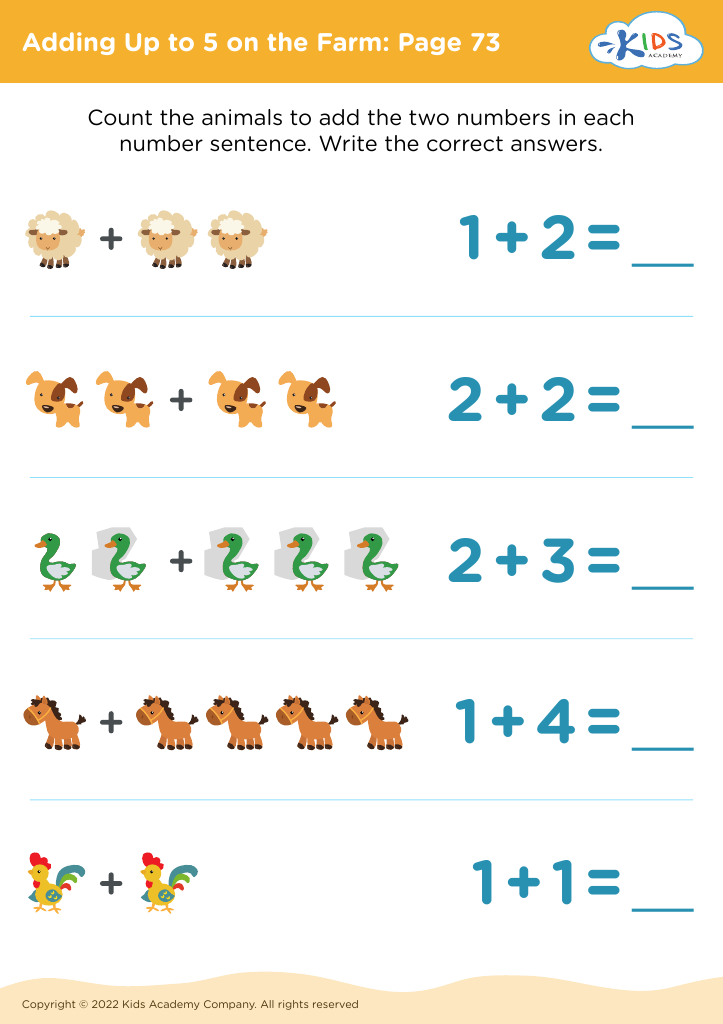
Welcome to our "Animal Identification Adding on the Farm Worksheets" for ages 5-6! These engaging worksheets are designed to combine the fun of animal identification with foundational math skills in addition. Kids will explore various farm animals while practicing math through colorful illustrations and easy-to-follow exercises. Each worksheet encourages young learners to recognize different animals, reinforcing their understanding while developing their addition skills in a playful context. Perfect for home or classroom use, our resources help foster curiosity and creativity in early learners. Dive into the farmyard today and watch your child's learning come alive with joy!
Favorites
With answer key
Interactive
Join Kids Academy for Free
Who is primarily going to use this learning content?



Animal identification on a farm is an important topic for parents and teachers to emphasize to young children, ages 5-6, for several reasons. First, it helps children learn about responsibility. Each animal on a farm has its own needs, and understanding how to identify them teaches kids about caring for living beings properly.
Second, animal identification fosters curiosity and encourages observation skills. When children can recognize different animals, they become more interested in their characteristics and roles on the farm, such as milk production from cows or egg-laying by hens.
Moreover, discussing animal identification enhances vocabulary through terms like "breed," "species," and "traits." This elementary exposure enriches their language skills in a fun and interactive way.
Additionally, it instills the importance of respect for animals. Knowing the animals helps children appreciate their role in farming and the environment.
Lastly, teaching identification promotes teamwork, especially during activities like feeding or caring for the animals when kids collaborate to ensure everything is done correctly. In sum, understanding farm animal identification lays the foundational knowledge for responsible citizenship and nurtures empathy towards all beings, core values that contribute to a child's emotional and social development.