Understanding quantity Adding on the Farm Worksheets for Ages 5-6
8 filtered results
-
From - To
Discover a fun and engaging way to help your little ones grasp the concept of quantity with our “Understanding Quantity: Adding on the Farm” worksheets! Designed specifically for children ages 5-6, these worksheets combine interactive farm-themed activities that make learning math exciting. Kids will explore fundamental addition concepts using colorful visuals and relatable farm animals, fostering their understanding of numbers and quantities. Ideal for at-home practice or classroom use, these worksheets encourage exploration and hands-on learning, setting a solid foundation for their math skills. Get ready for a delightful educational experience on the farm that your child will love!
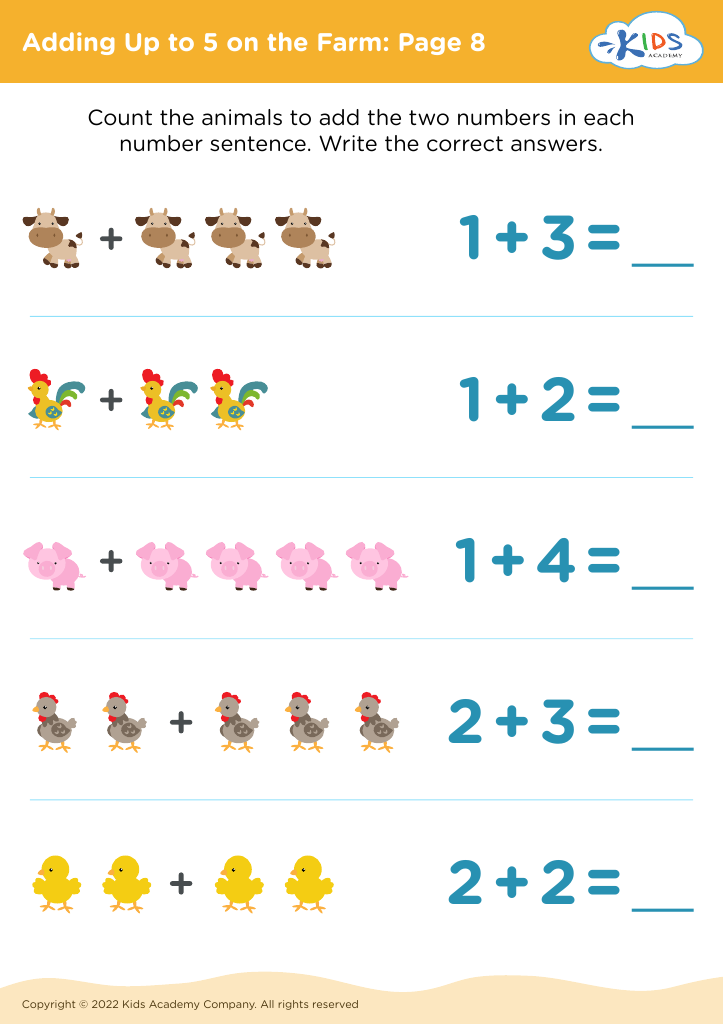
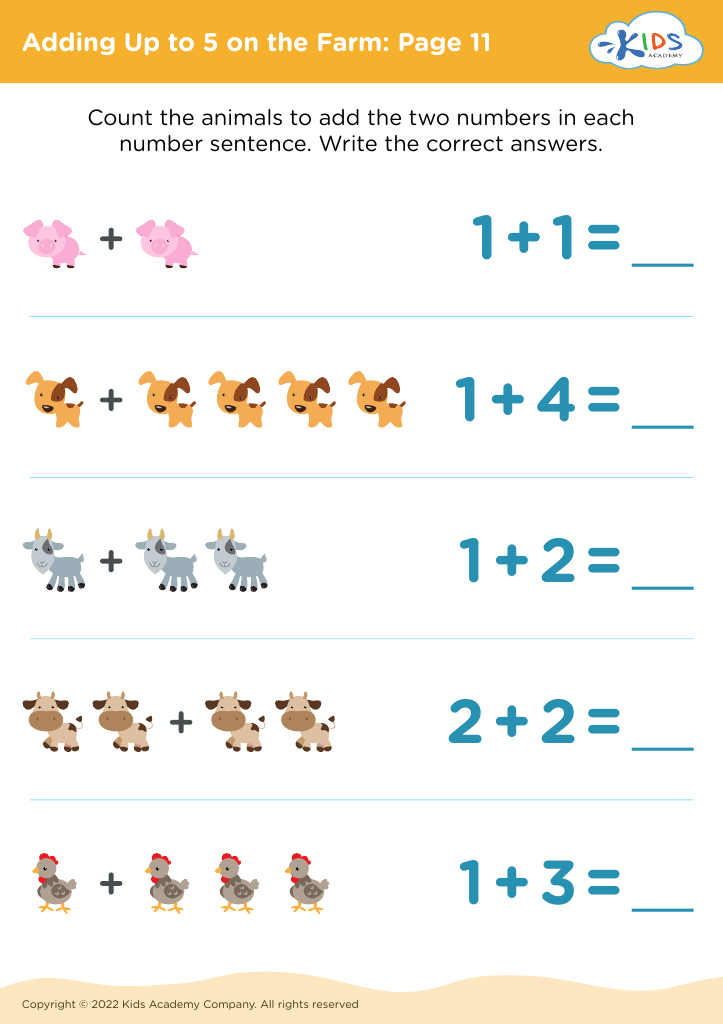
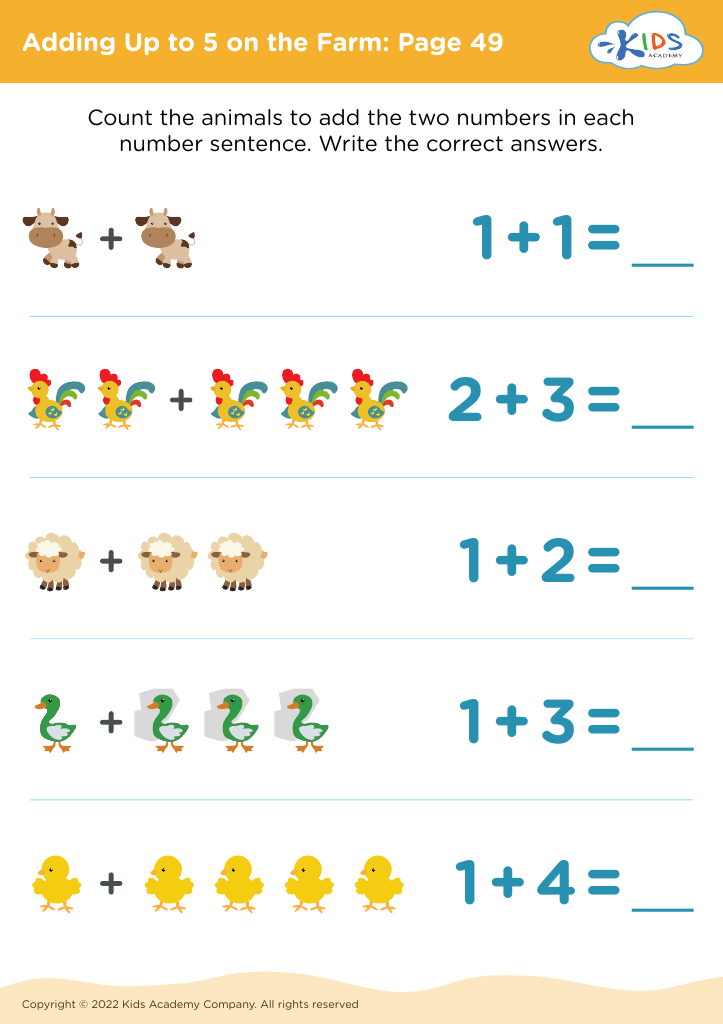
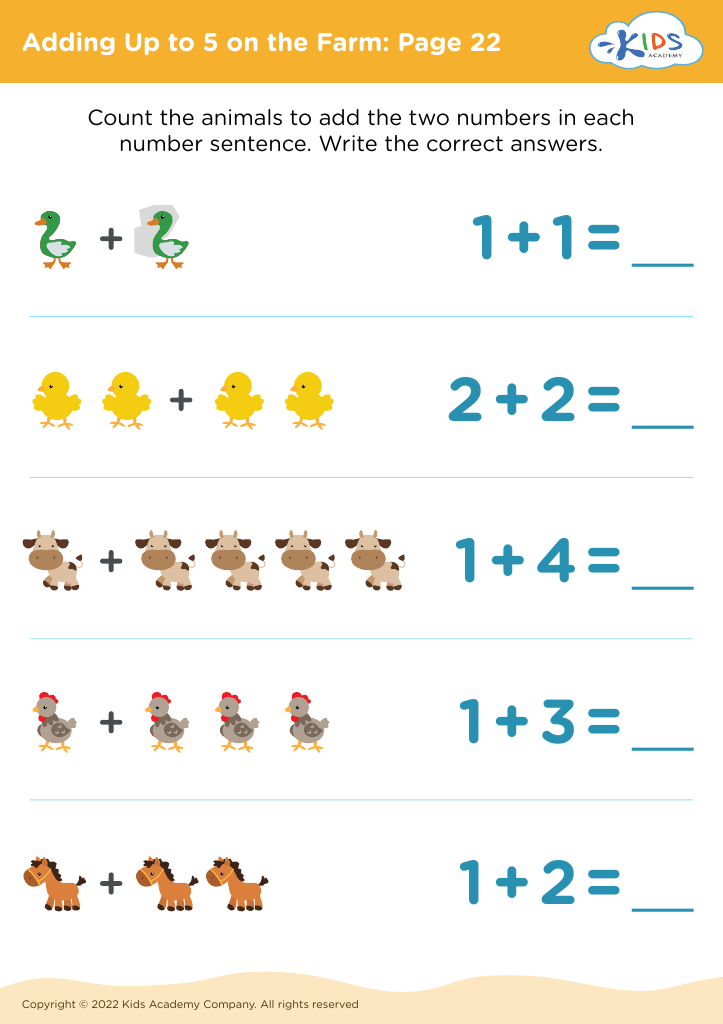
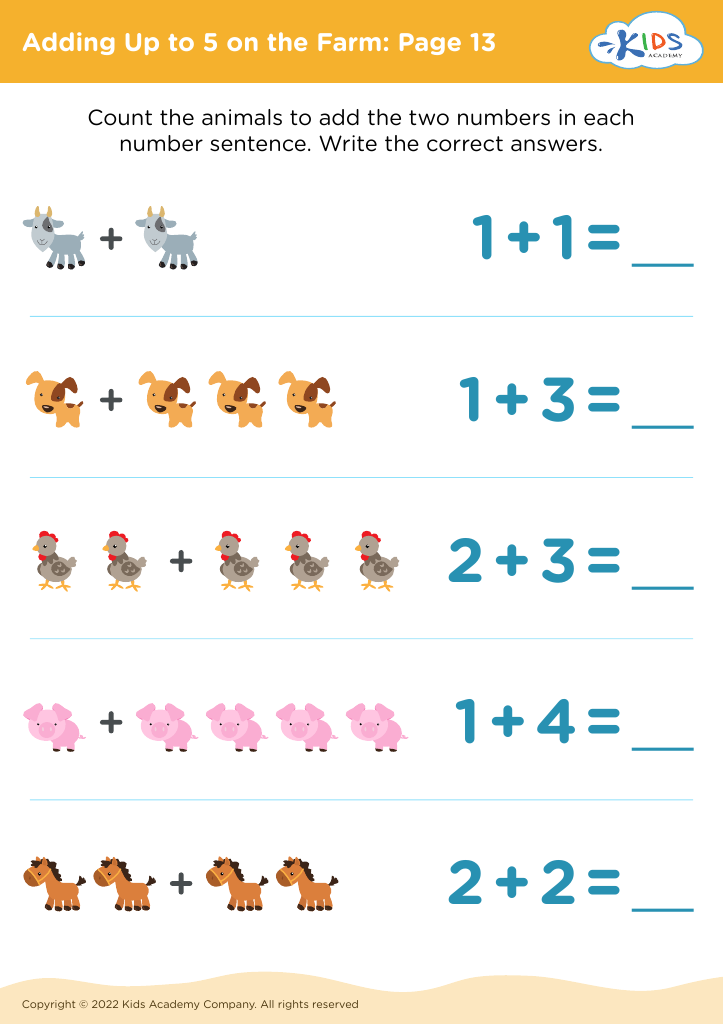
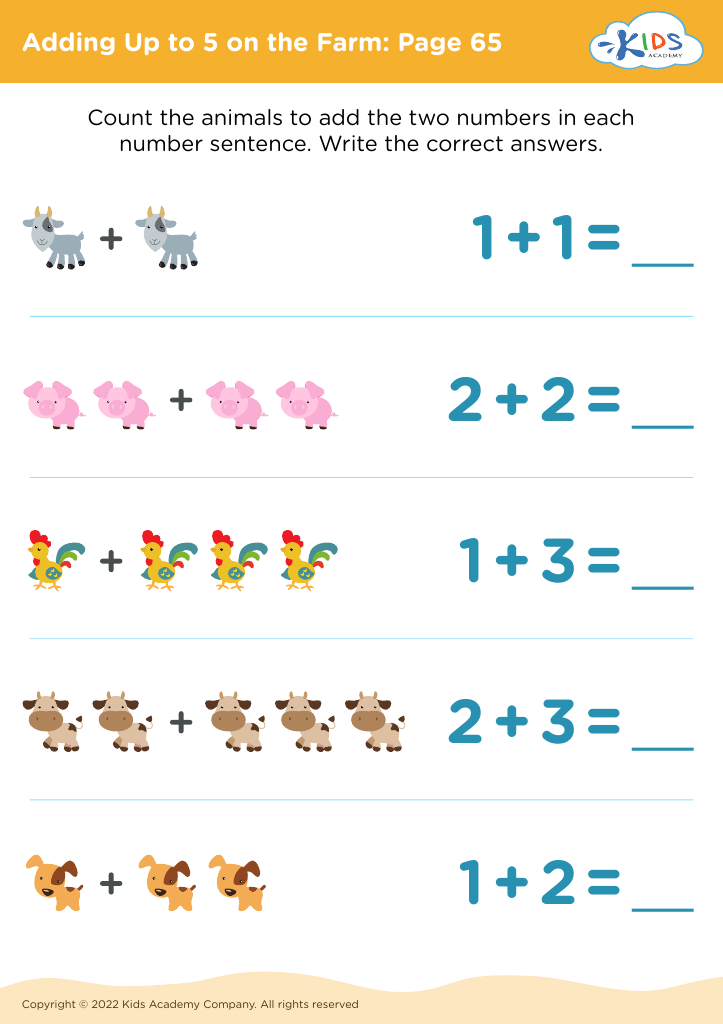
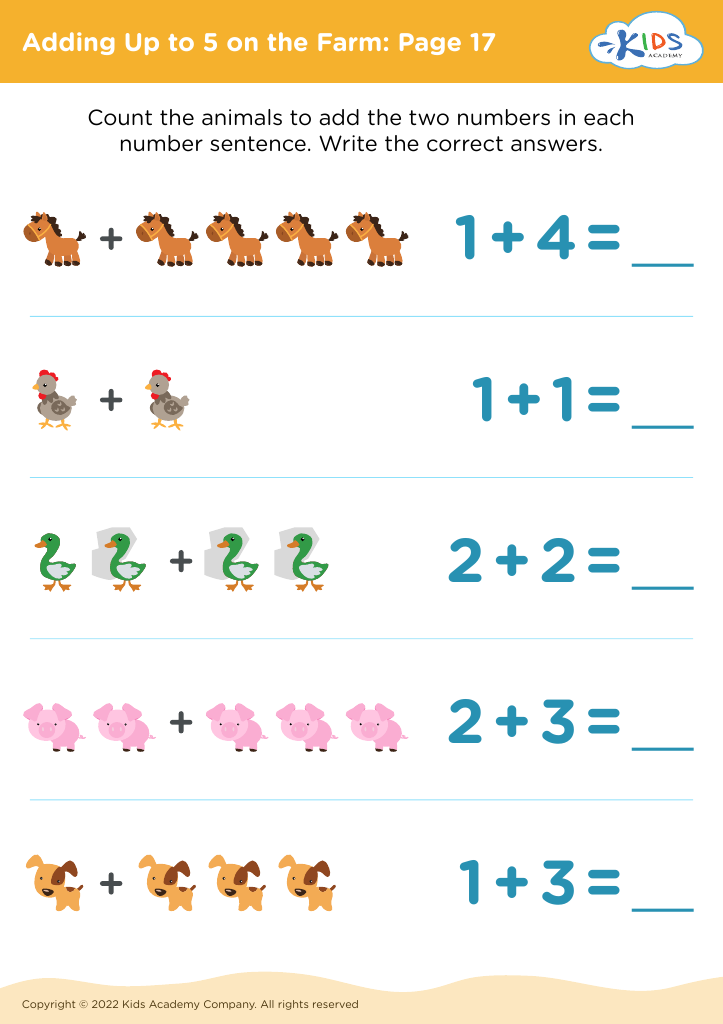
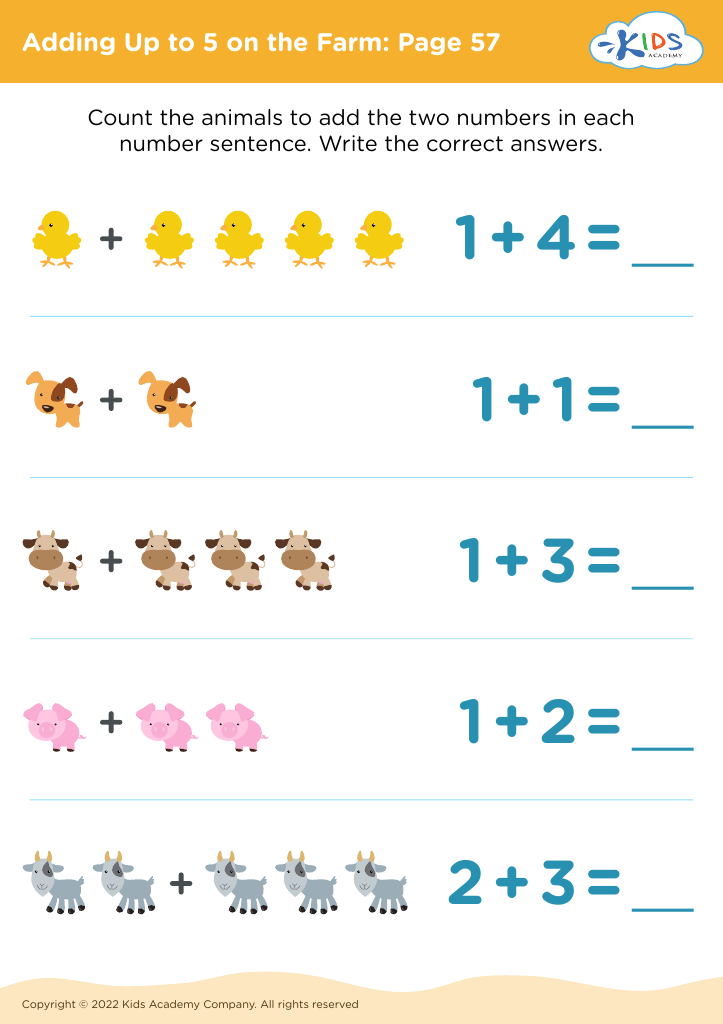



Understanding quantity and addition in the context of a familiar setting like a farm is crucial for children aged 5-6. At this age, children are naturally curious about the world around them, and the farm environment provides relatable examples to engage their learning. By using farm-related scenarios—such as counting animals, measuring crops, or adding quantities of produce—teachers and parents can make mathematical concepts tangible and enjoyable.
Learning about quantity and addition not only helps children develop essential mathematical skills but also enhances critical thinking and problem-solving abilities. These foundational skills are vital for their overall cognitive development. When children approach math through engaging themes like a farm, they are more likely to remain motivated and attentive, fostering a positive attitude towards learning.
Additionally, incorporating real-life situations helps children understand the relevance of math in everyday life. By connecting addition to items they can see and touch, such as fruits or animals, children can more easily grasp abstract concepts. This hands-on learning promotes better retention and application of skills, preparing them for more complex mathematics in the future. Thus, aiding children in understanding quantity and addition in a fun and relatable way benefits both their academic growth and their enthusiasm for learning.