Filters

95 filtered results

Clear all filters
Favorites
With answer key
Interactive

95 filtered results

Difficulty Level

Grade


Check out this FREE Trial Lesson on Adding Up to 5 for age 5-6!

X

Favorites
With answer key
Interactive
  • 5-6
  • Cognitive Development
  • Adding Up to 5
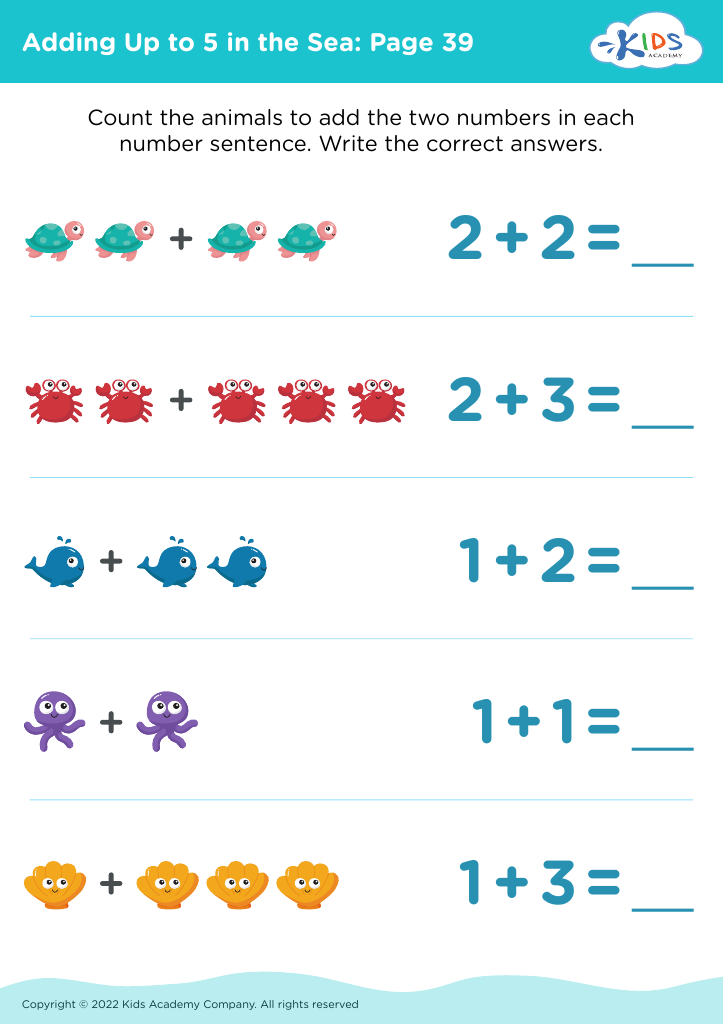
Adding Up to 5 in the Sea: Page 39
Worksheet
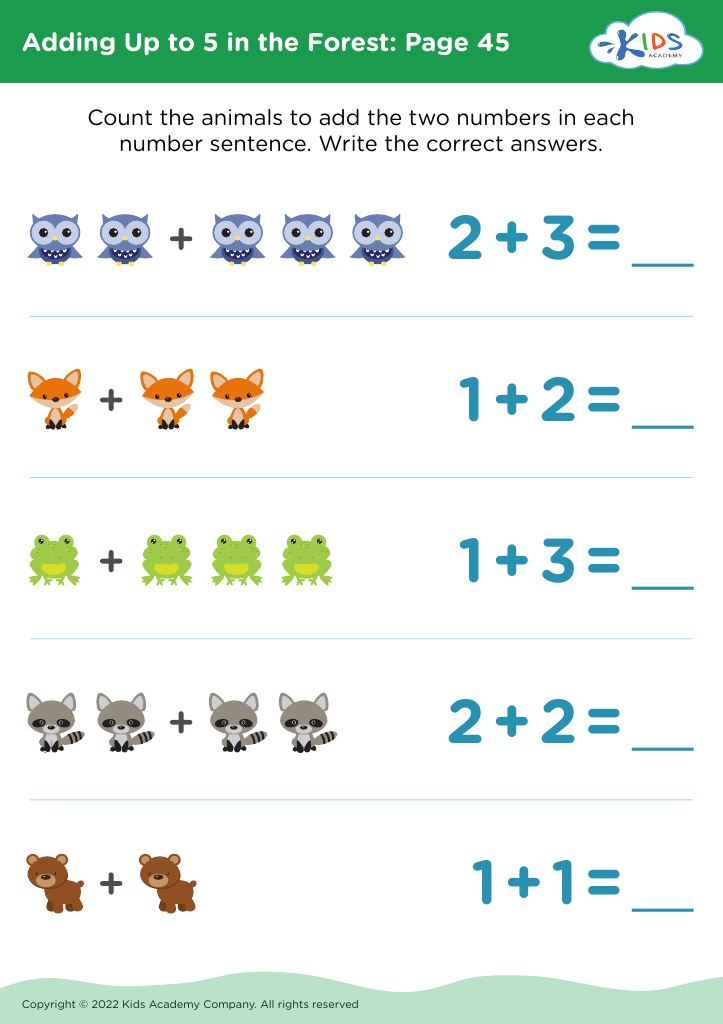
Adding Up to 5 in the Forest: Page 45
Worksheet
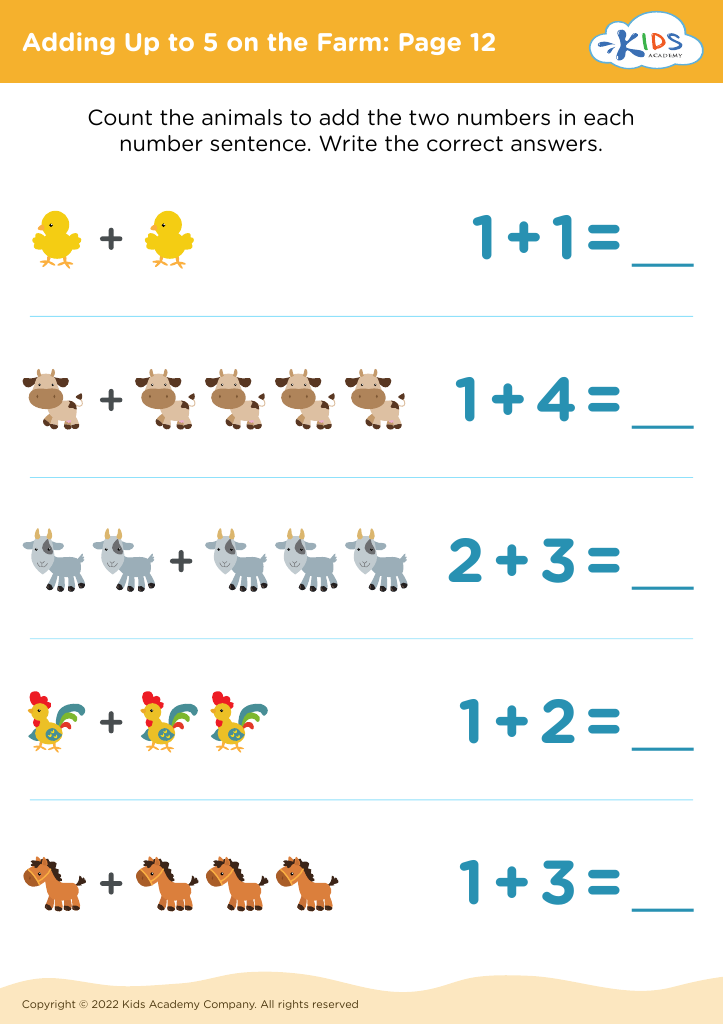
Adding Up to 5 on the Farm: Page 12
Worksheet
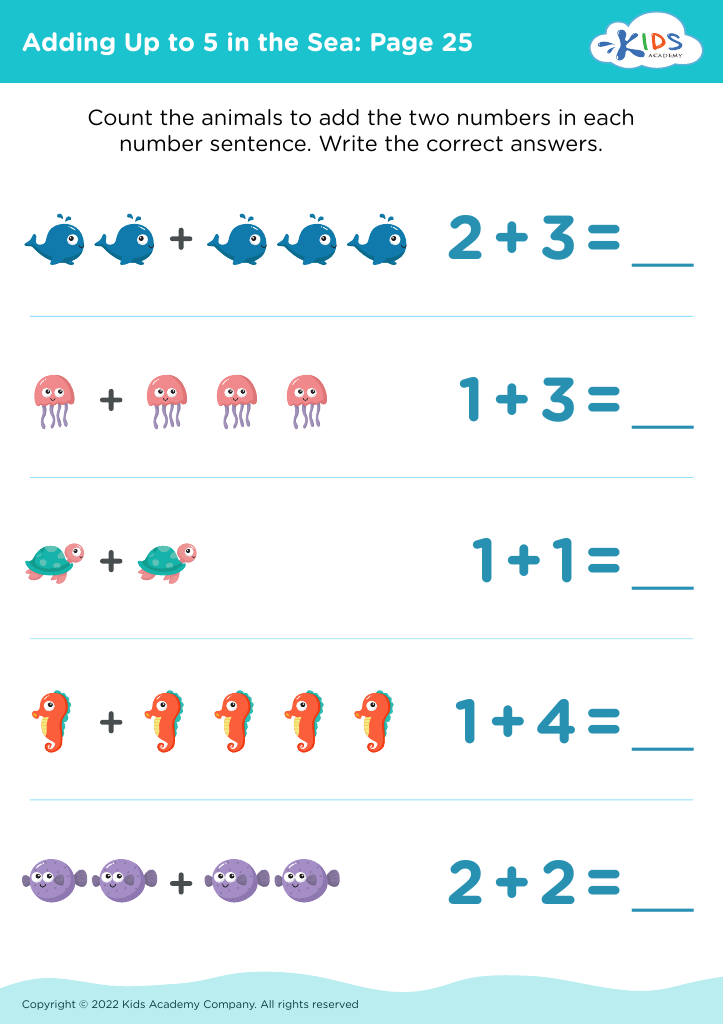
Adding Up to 5 in the Sea: Page 25
Worksheet
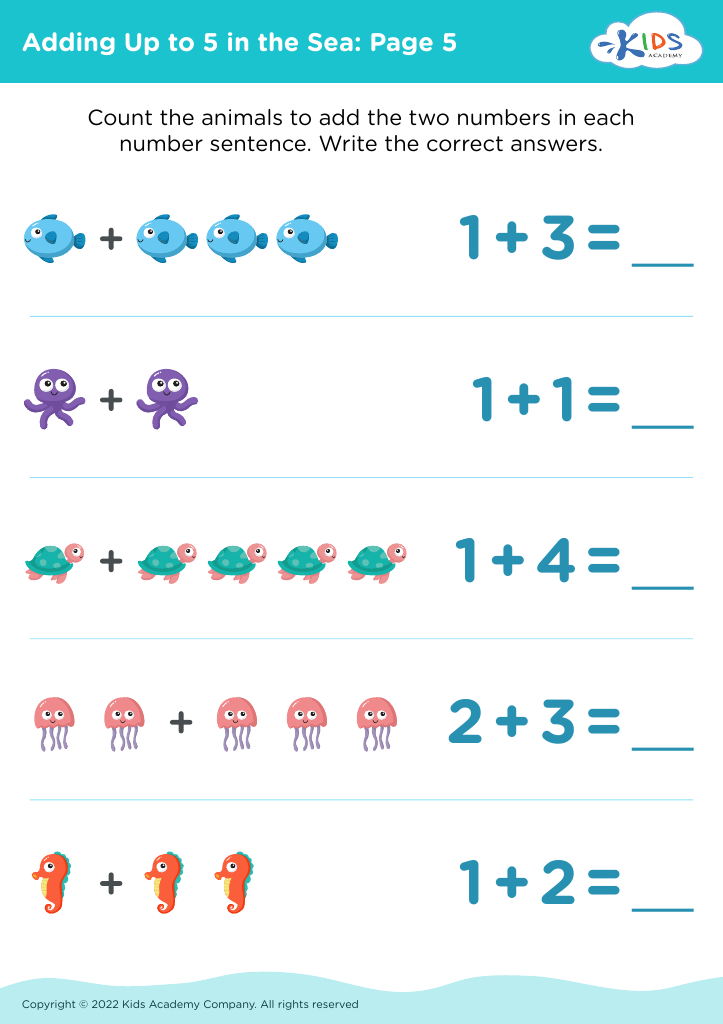
Adding Up to 5 in the Sea: Page 5

Adding Up to 5 in the Sea: Page 5

Adding Up to 5 in the Sea: Page 5
Worksheet
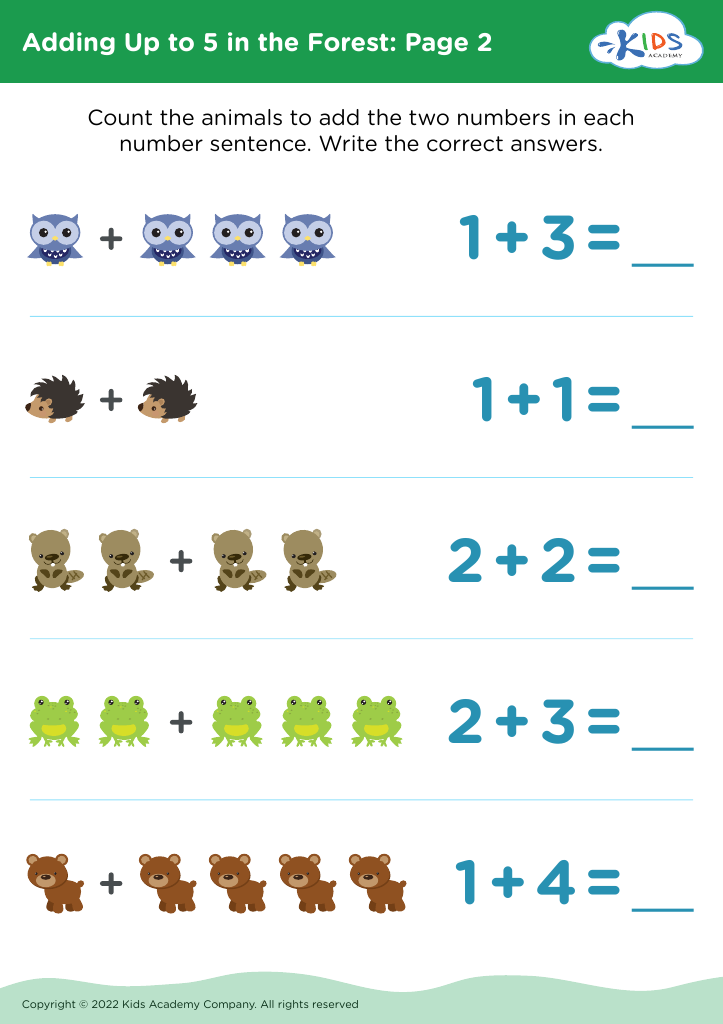
Adding Up to 5 in the Forest: Page 2
Worksheet
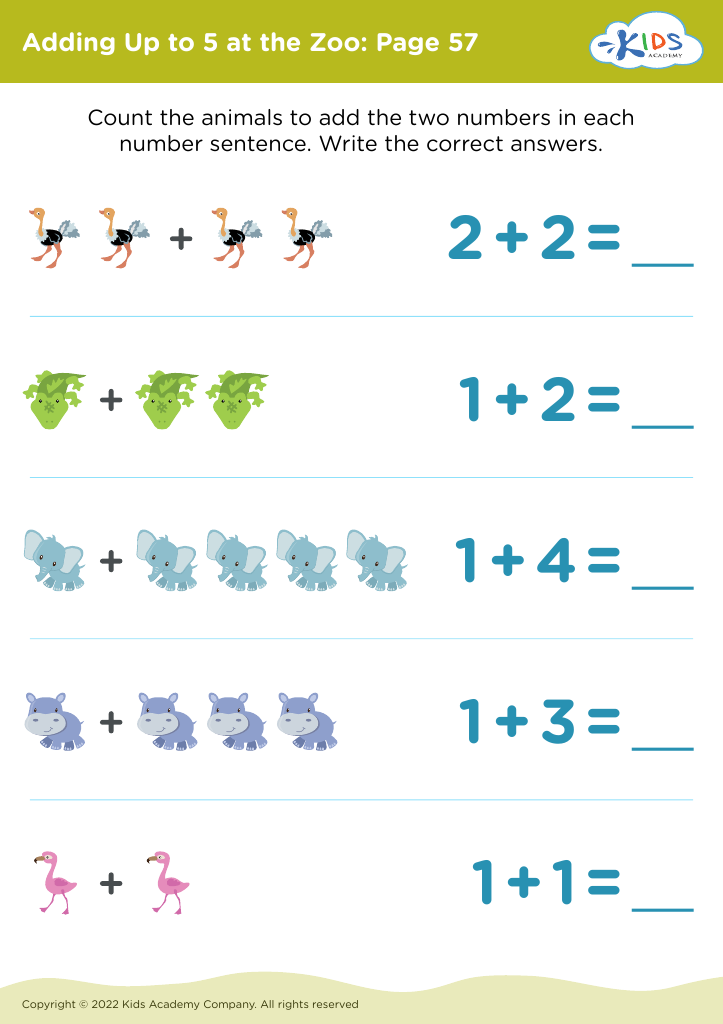
Adding Up to 5 at the Zoo: Page 57
Worksheet
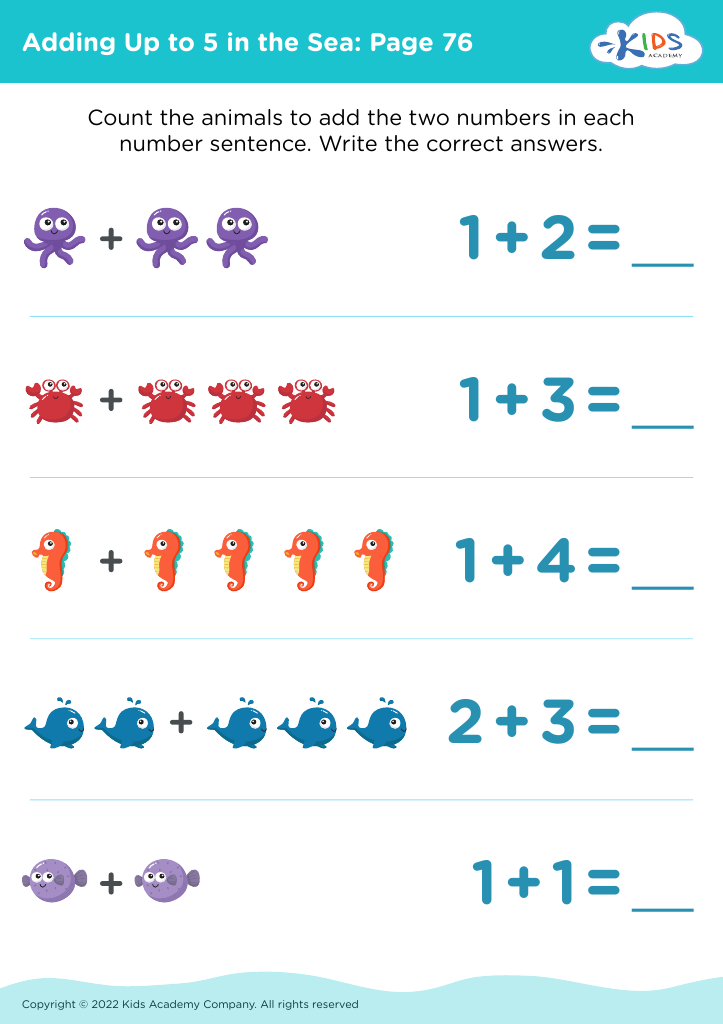
Adding Up to 5 in the Sea: Page 76
Worksheet
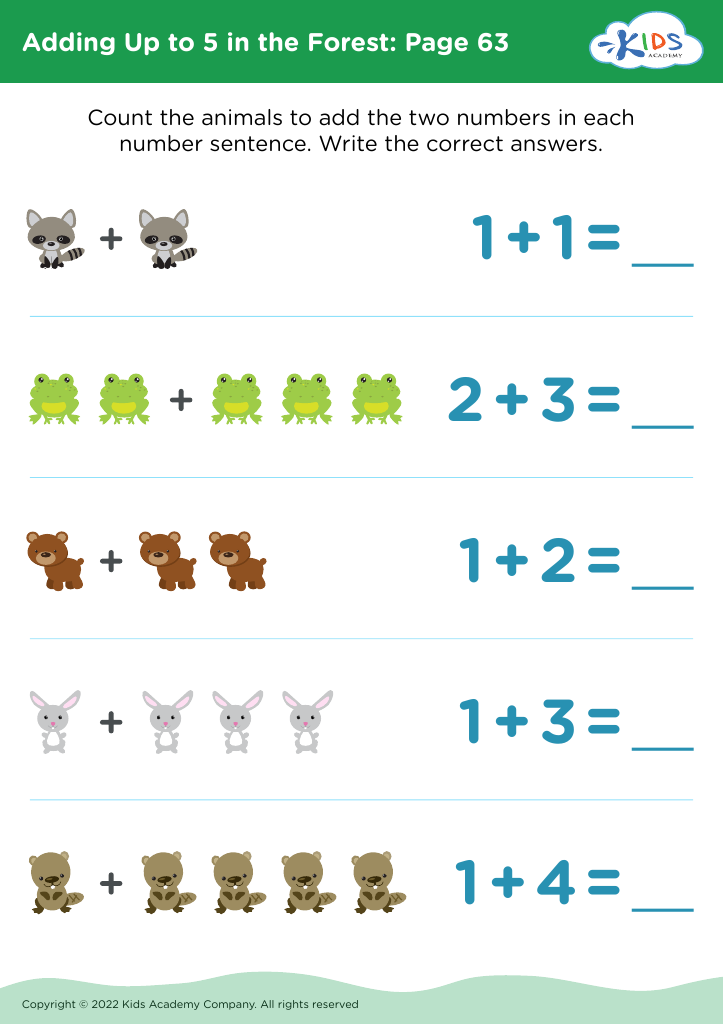
Adding Up to 5 in the Forest: Page 63
Worksheet
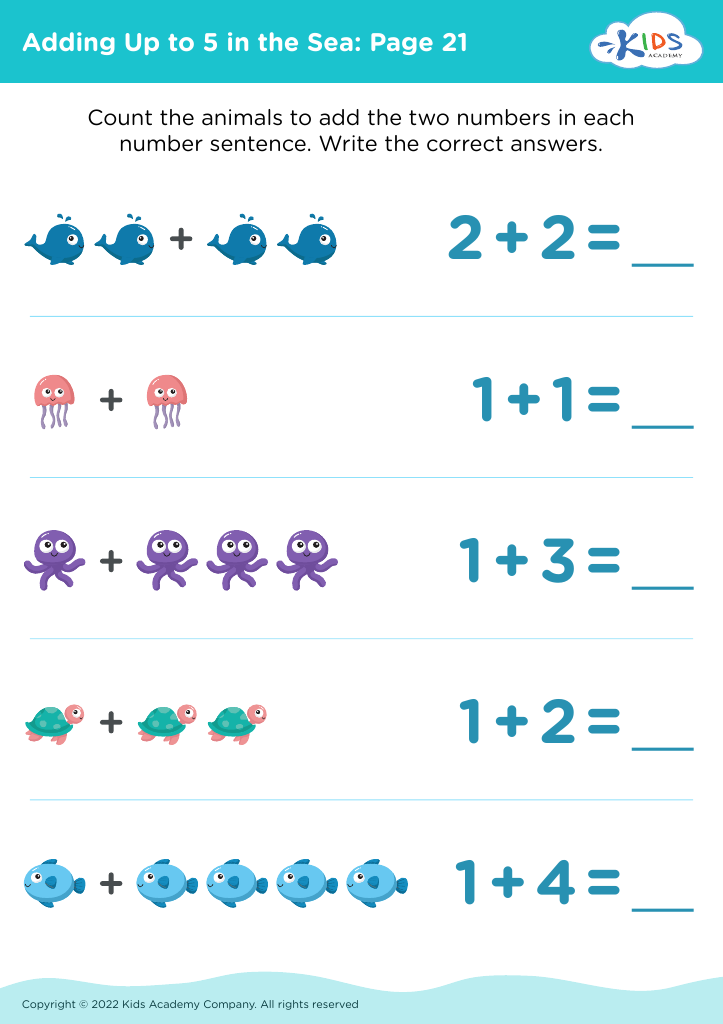
Adding Up to 5 in the Sea: Page 21
Worksheet
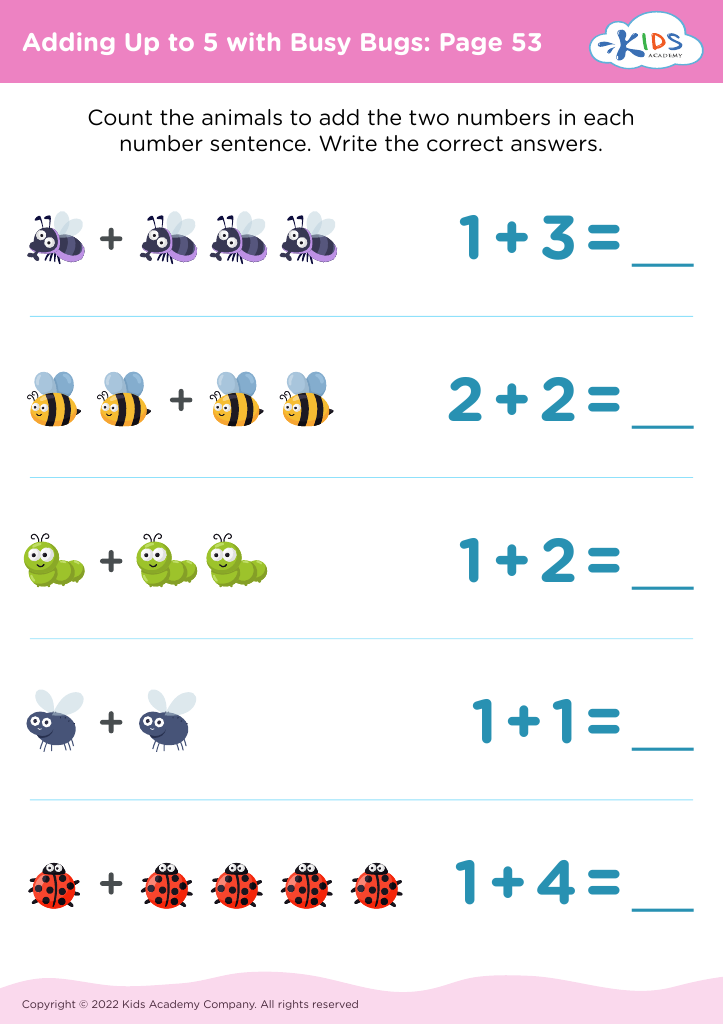
Adding Up to 5 with Busy Bugs: Page 53
Worksheet
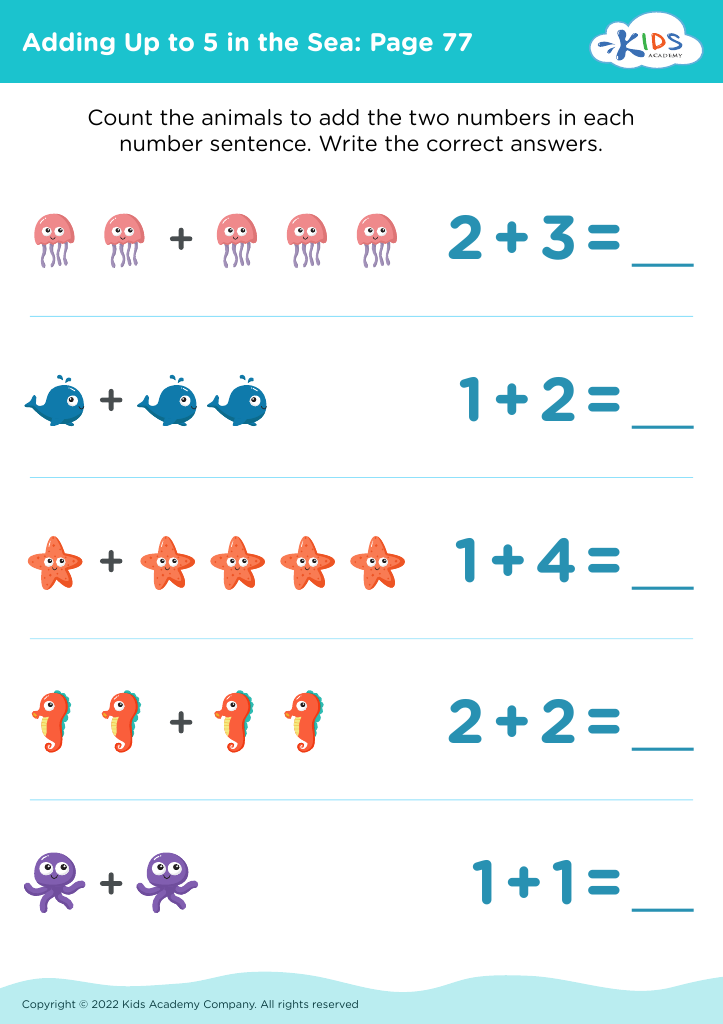
Adding Up to 5 in the Sea: Page 77
Worksheet
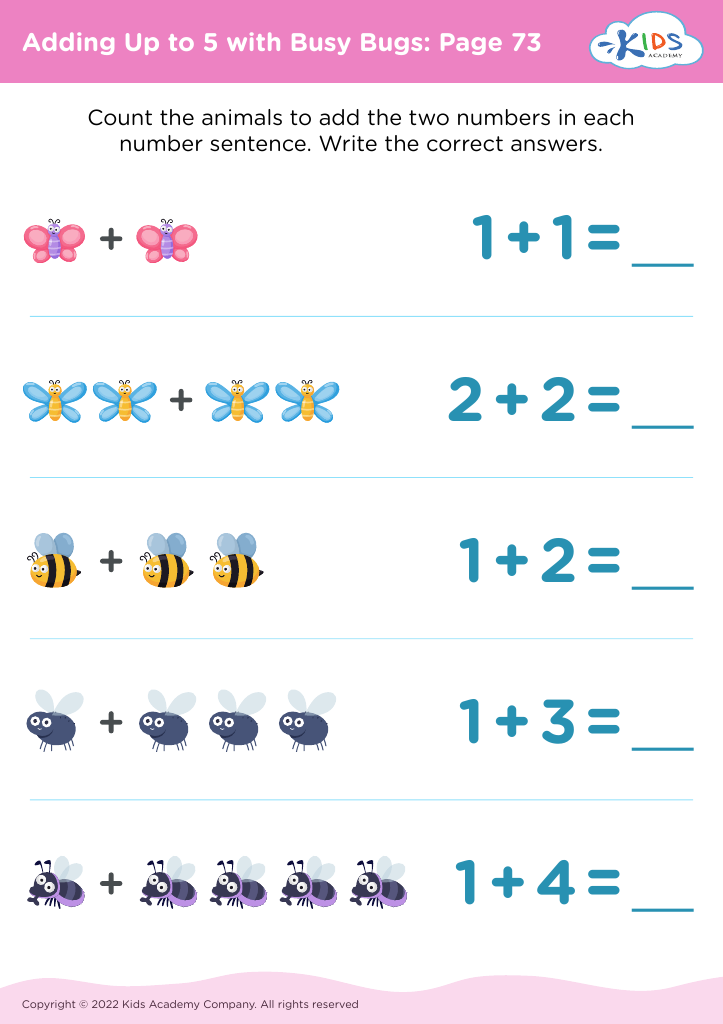
Adding Up to 5 with Busy Bugs: Page 73
Worksheet
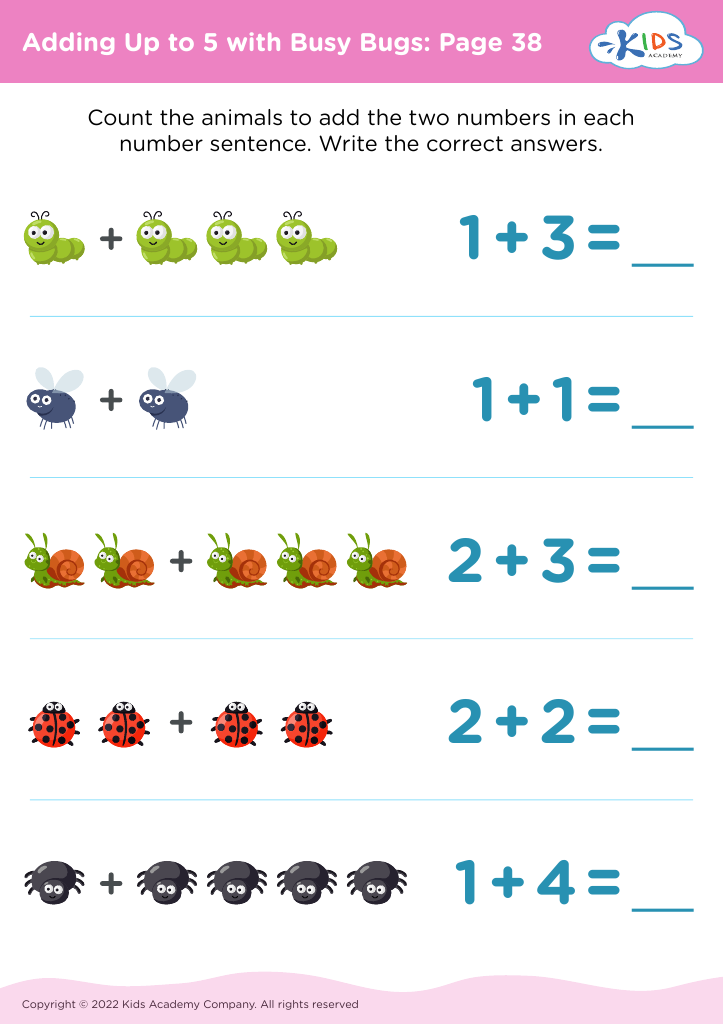
Adding Up to 5 with Busy Bugs: Page 38
Worksheet
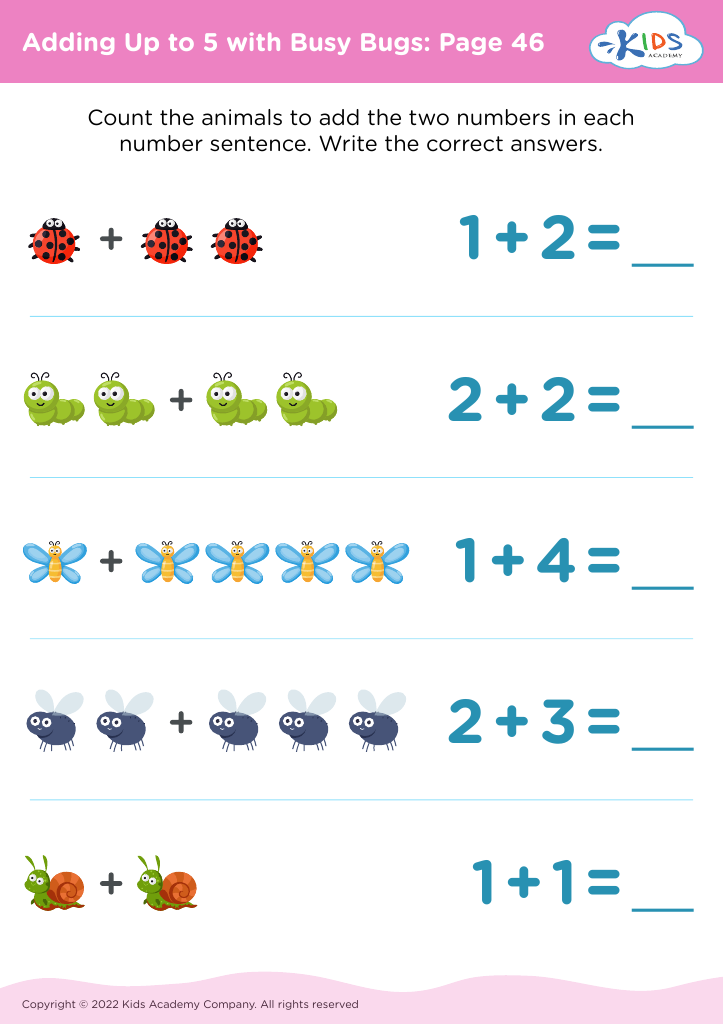
Adding Up to 5 with Busy Bugs: Page 46
Worksheet
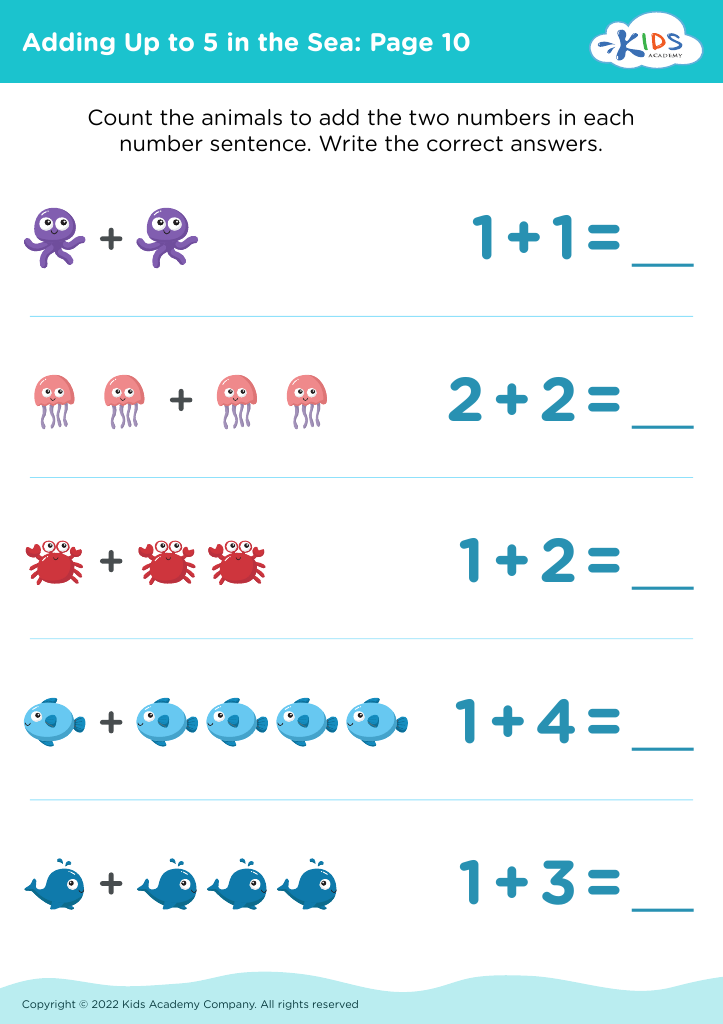
Adding Up to 5 in the Sea: Page 10
Worksheet
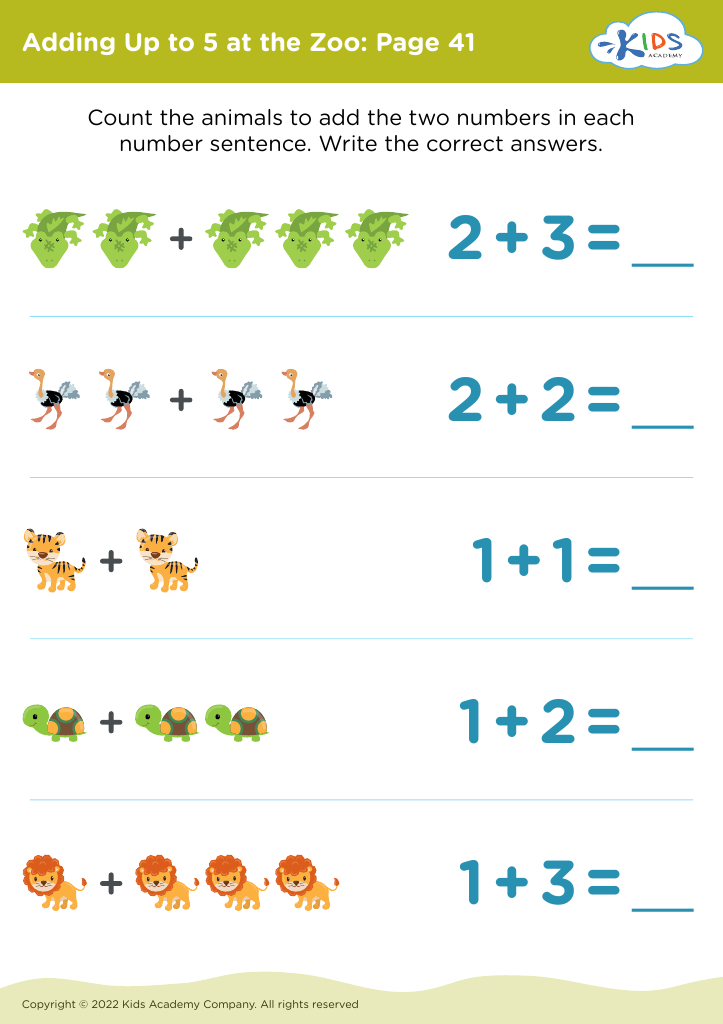
Adding Up to 5 at the Zoo: Page 41
Worksheet
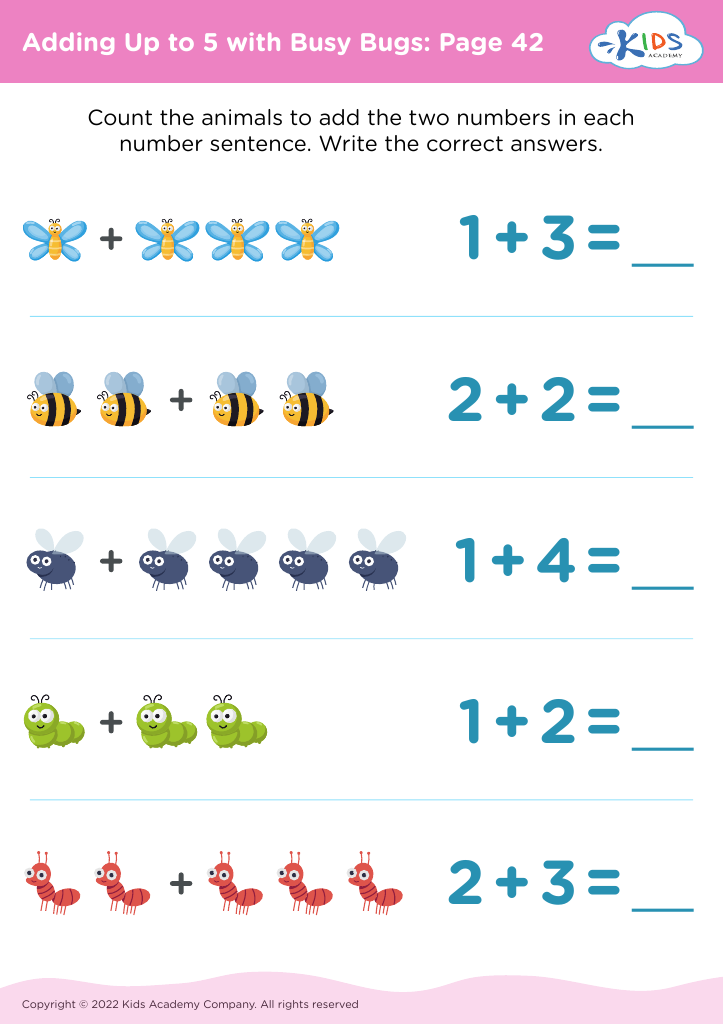
Adding Up to 5 with Busy Bugs: Page 42
Worksheet
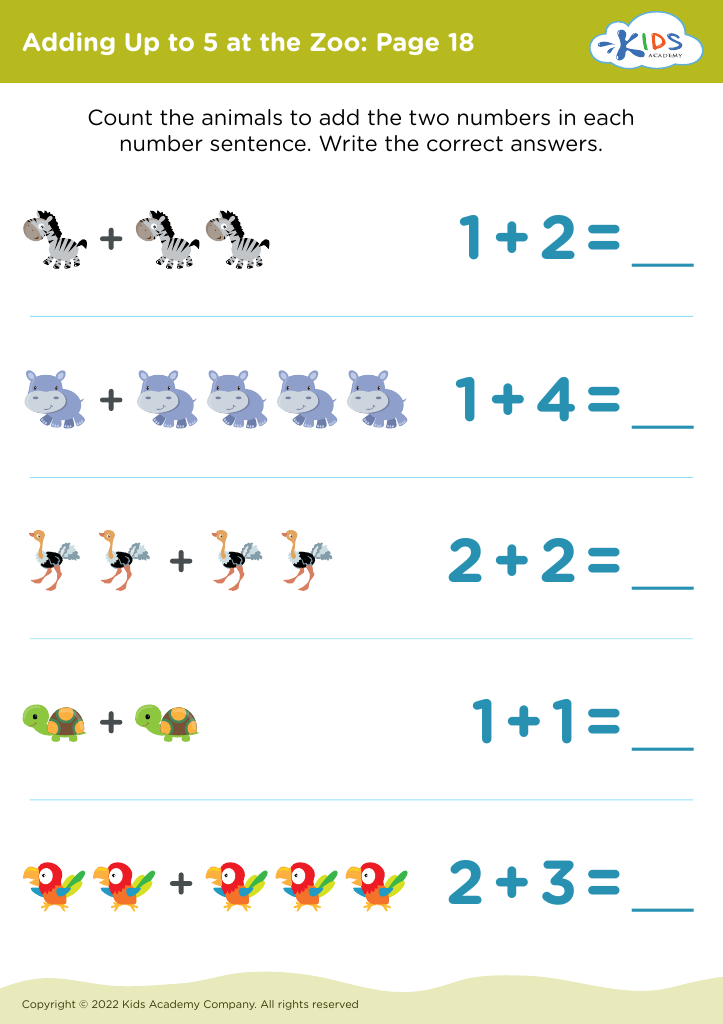
Adding Up to 5 at the Zoo: Page 18
Worksheet
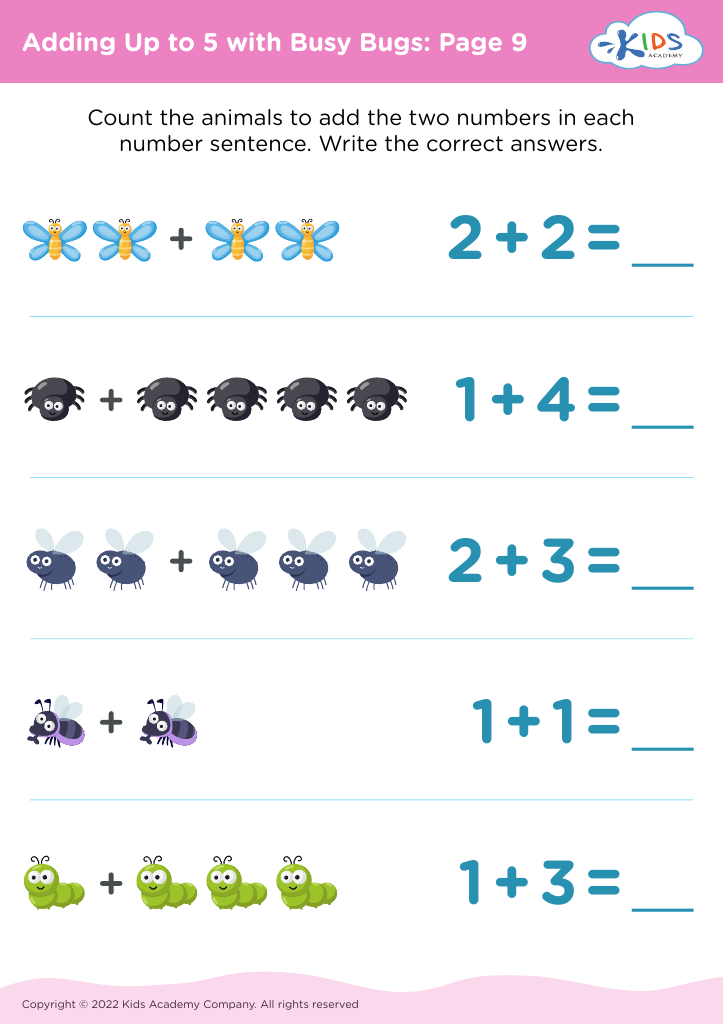
Adding Up to 5 with Busy Bugs: Page 9
Worksheet
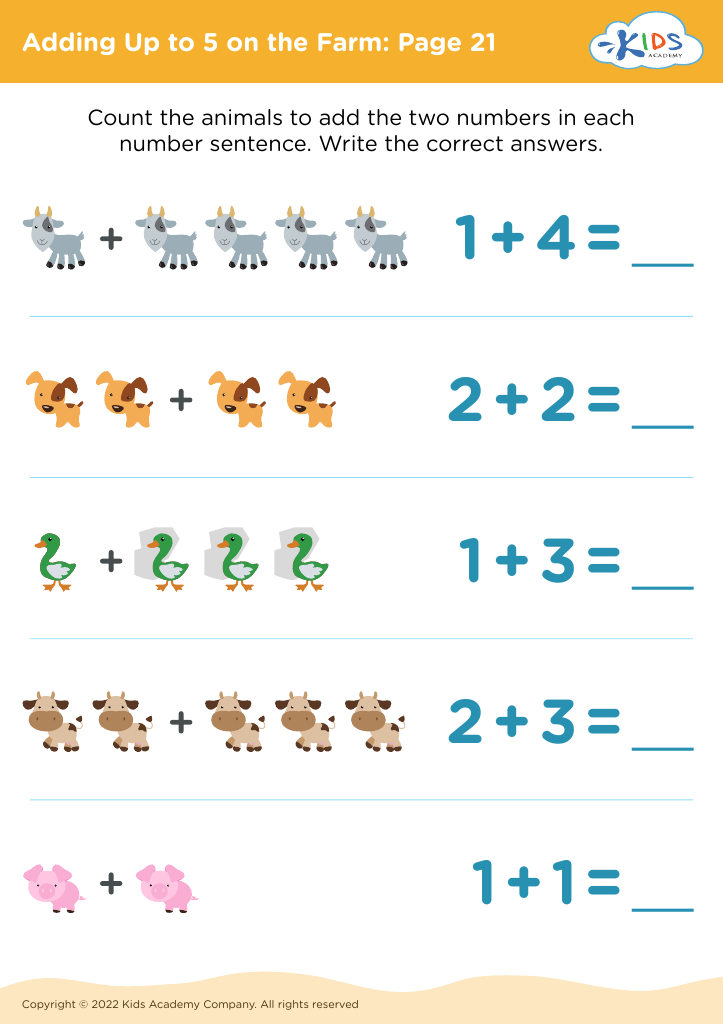
Adding Up to 5 on the Farm: Page 21
Worksheet
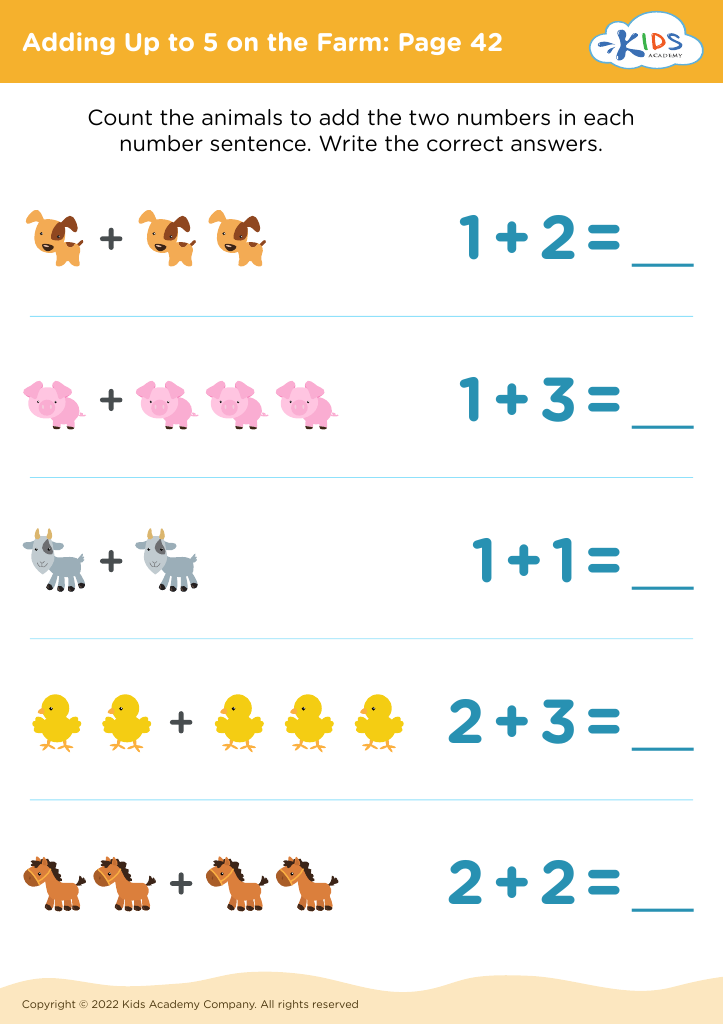
Adding Up to 5 on the Farm: Page 42
Worksheet
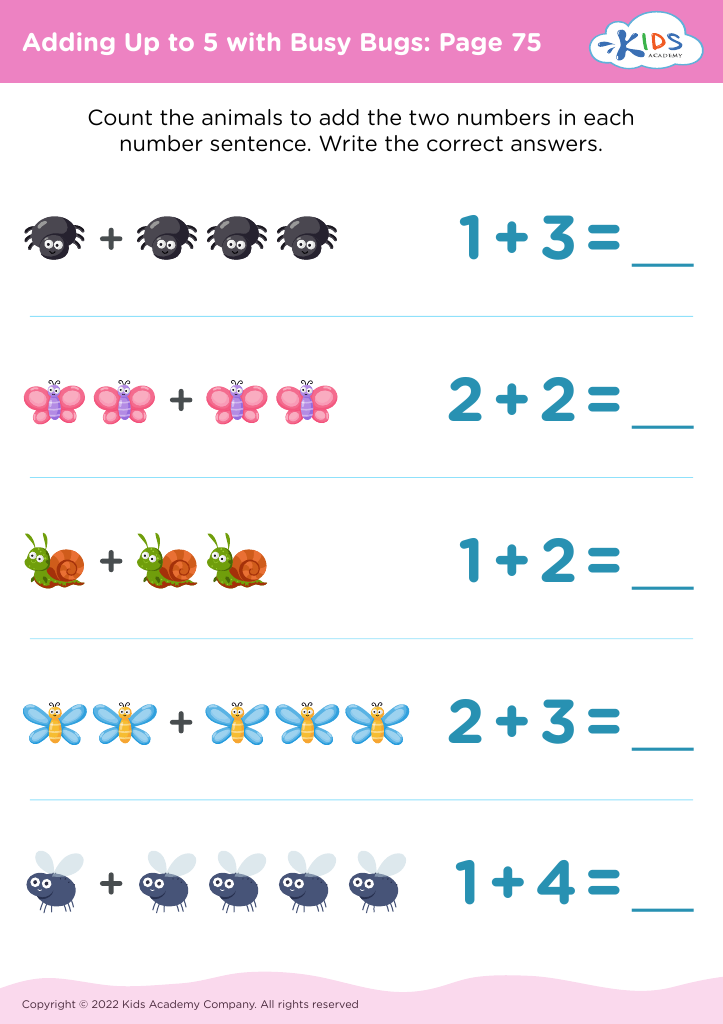
Adding Up to 5 with Busy Bugs: Page 75
Worksheet
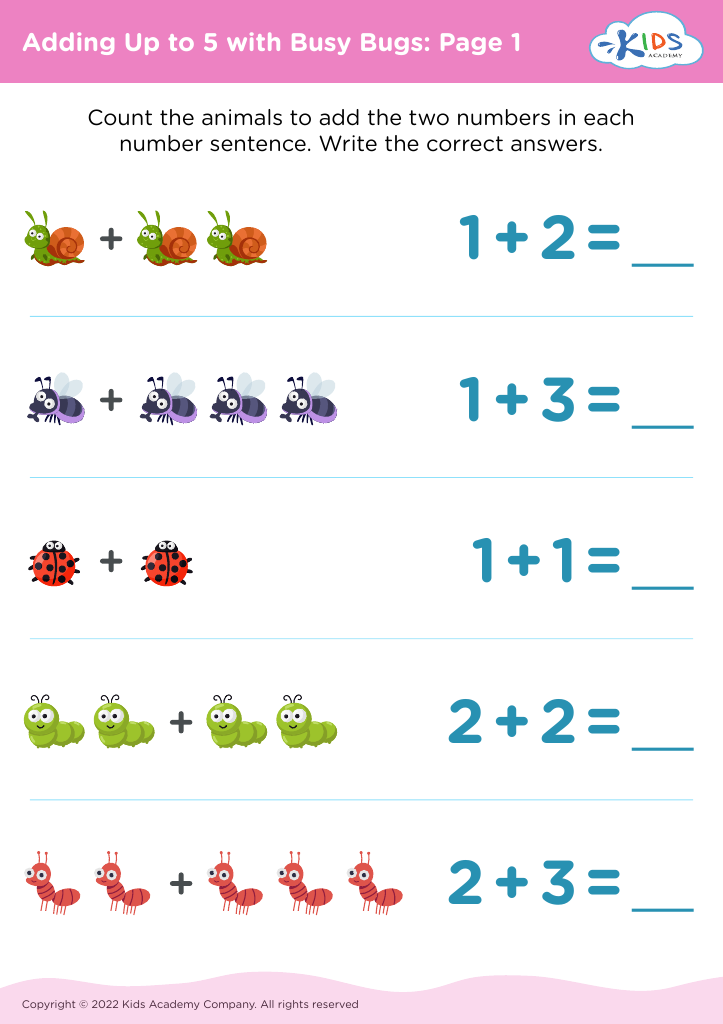
Adding Up to 5 with Busy Bugs: Page 1
Worksheet


Cognitive development in early childhood is a crucial aspect of a child's growth, particularly when it comes to foundational mathematical skills like adding up to 5. For children aged 5 to 6, mastering simple addition lays the groundwork for more complex mathematical concepts later on. Parents and teachers should care about this because developing numeracy skills at an early age enhances problem-solving abilities and critical thinking, which are essential in everyday life.

At this age, cognitive development follows a crucial progression where children learn to recognize numbers, understand quantity, and grasp the concept of addition, helping them make sense of the world around them. Engaging in activities that promote addition, such as using physical objects like blocks or hands-on games, can actively encourage their learning while keeping the process enjoyable.

Furthermore, fostering a supportive learning environment at home or in the classroom—where questions are encouraged and efforts are celebrated—builds confidence in children’s mathematical abilities. This early competence not only impacts academic performance but also nurtures a positive attitude towards learning, setting the stage for lifelong skills. When parents and educators take an active role in this development, they are paving the way for children’s future successes in various subjects and real-life situations.