Problem Solving Adding Up to 5 Worksheets for Ages 5-6
10 filtered results
-
From - To
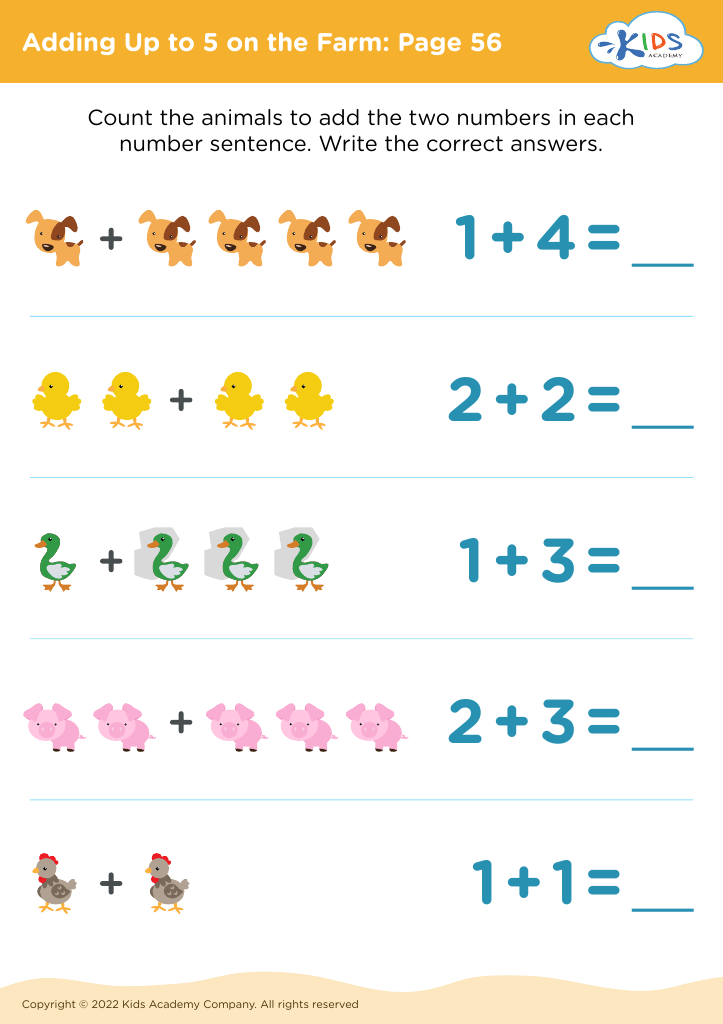
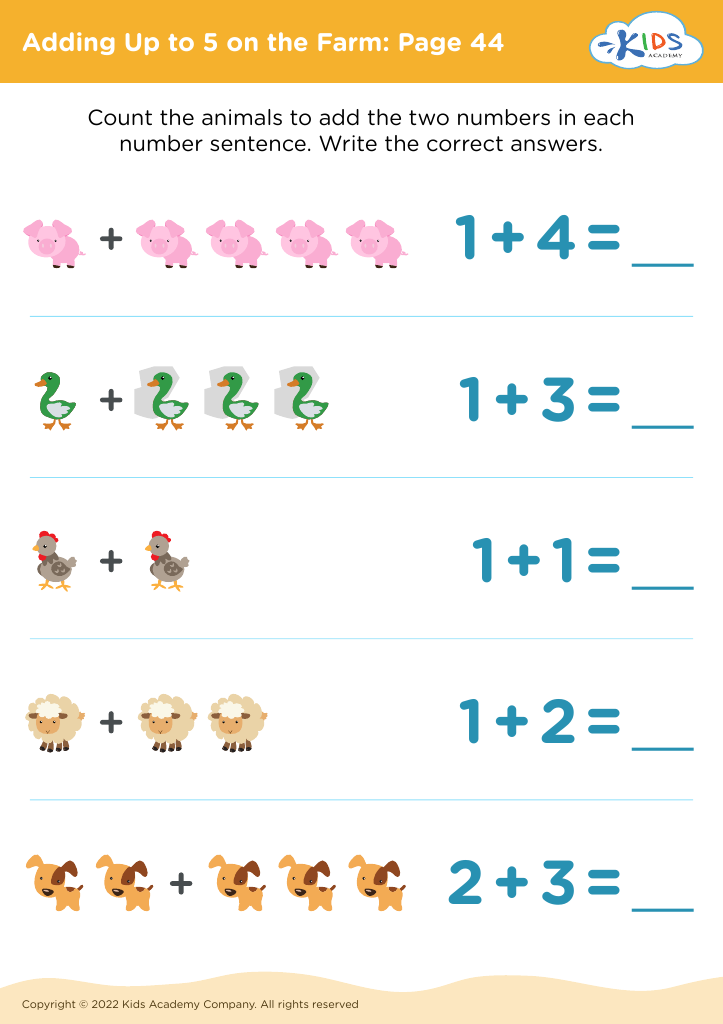
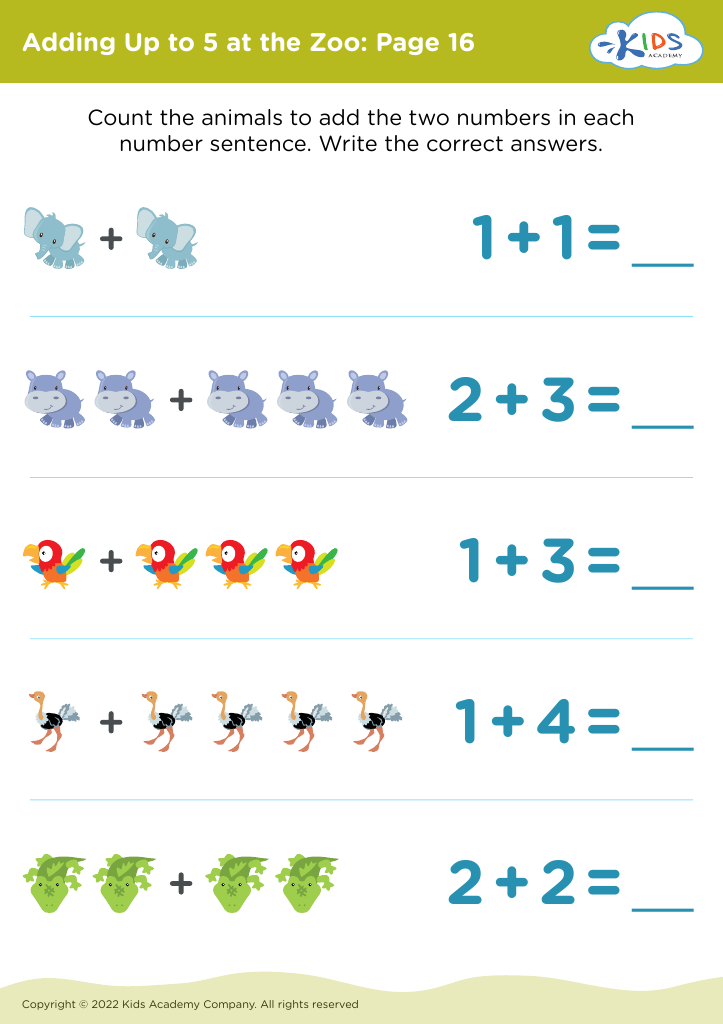
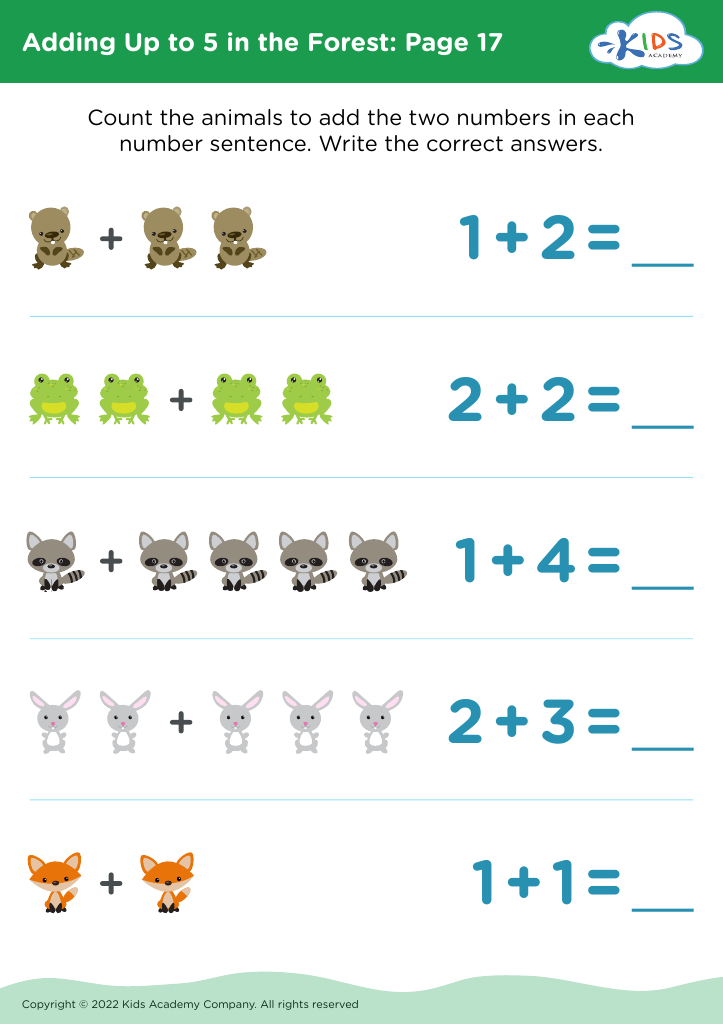
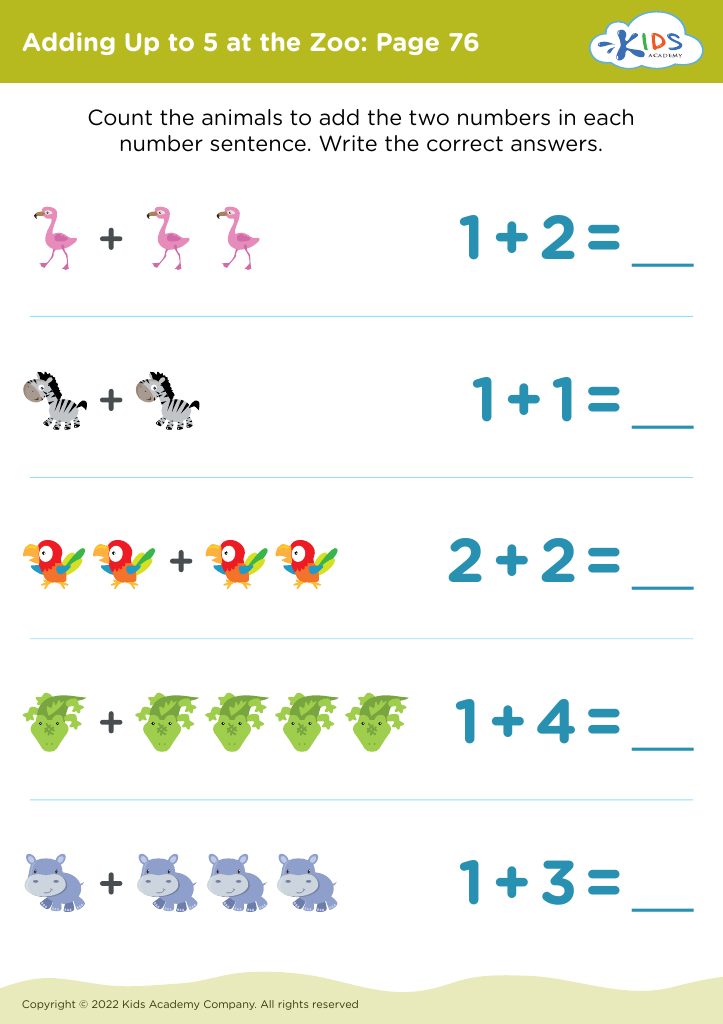
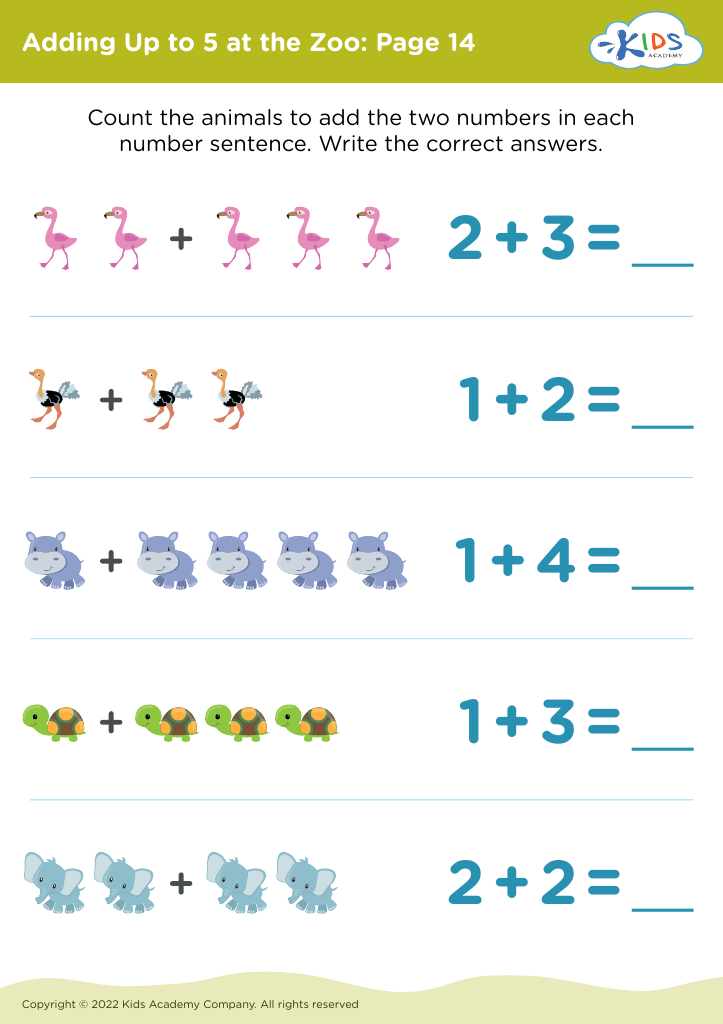
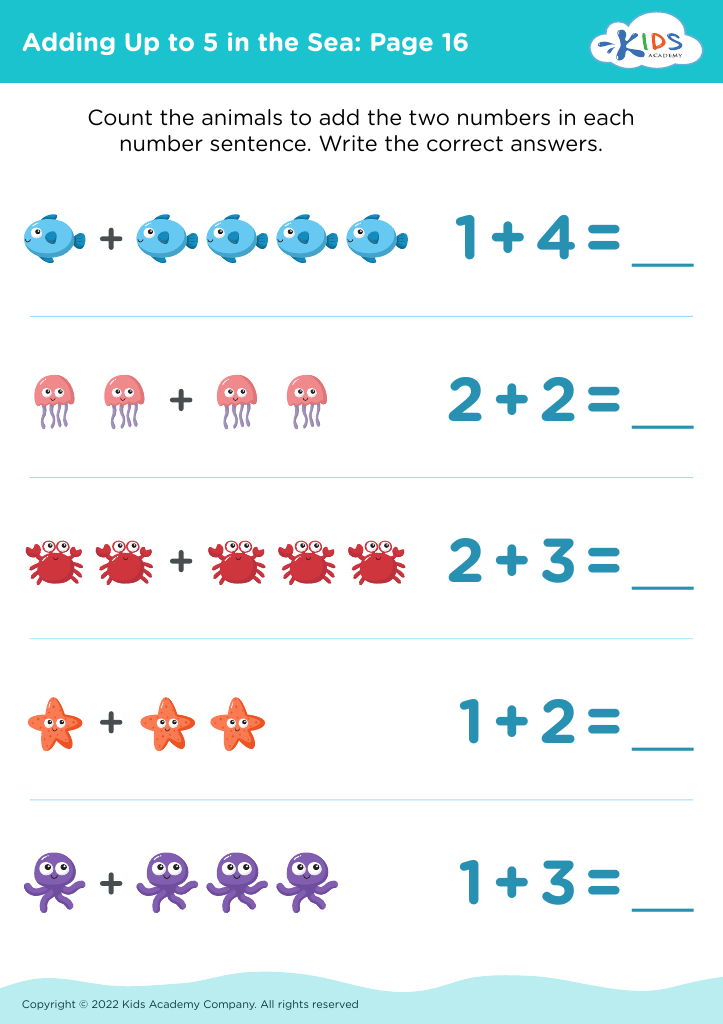
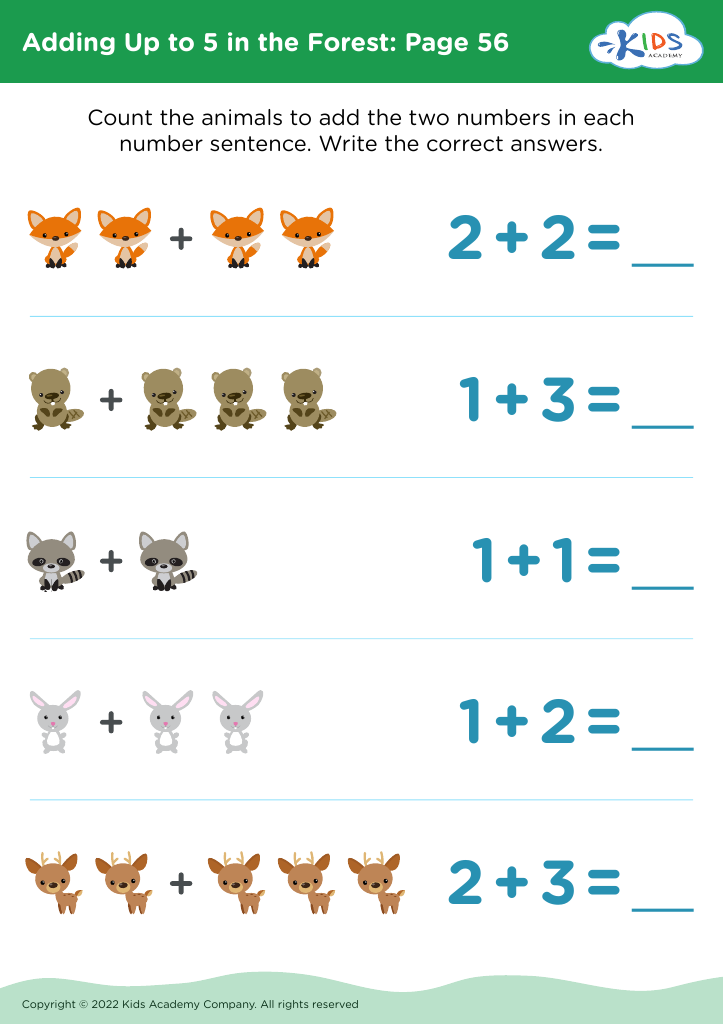
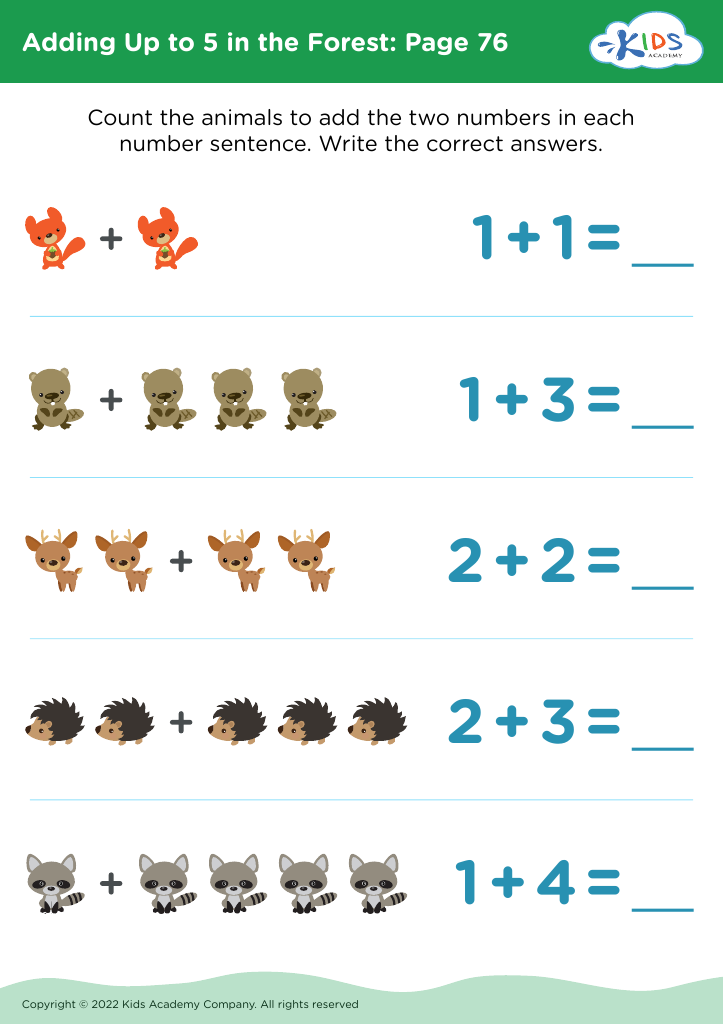
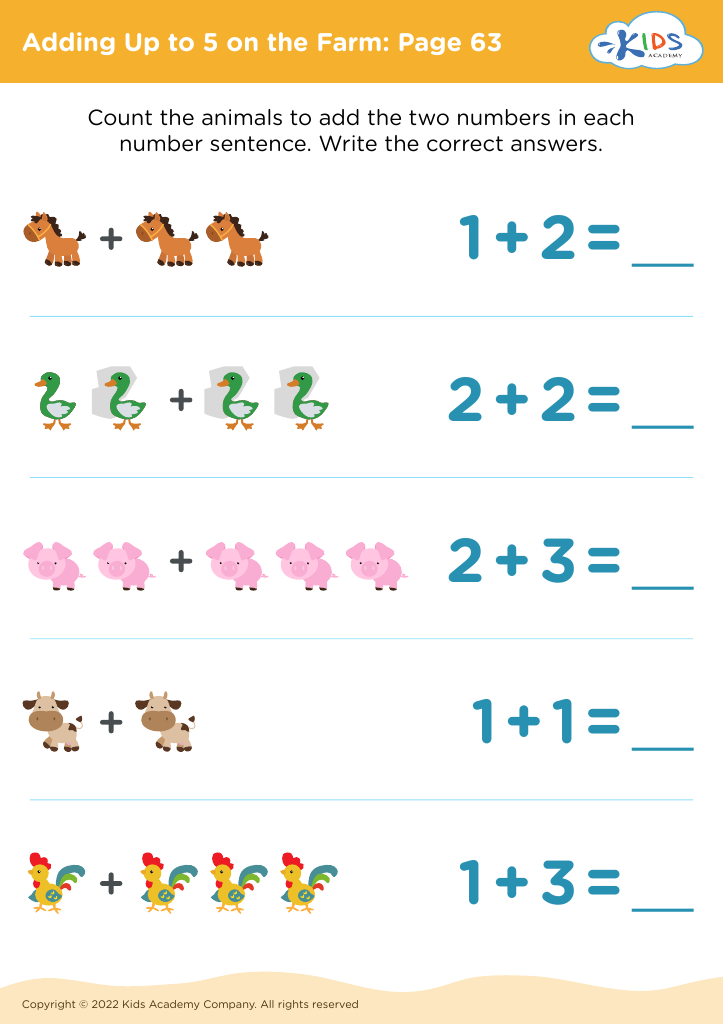
Discover our engaging "Problem Solving Adding Up to 5" worksheets, specially designed for children ages 5-6. These interactive resources foster essential math skills as young learners tackle addition problems that total five. Through fun scenarios and colorful illustrations, kids develop critical thinking and reasoning abilities while enhancing their understanding of numbers. Each worksheet encourages independent exploration and promotes problem-solving strategies, making learning enjoyable and effective. Perfect for classroom use or home study, these worksheets are tailored to captivate young minds and build a strong mathematical foundation. Download now and watch your child thrive in early math experiences!



.jpg)

%20(1).jpg)


Problem Solving in the context of adding up to 5 is a fundamental skill that lays the groundwork for early mathematical thinking in children aged 5-6. As parents and teachers, nurturing this skill fosters critical cognitive abilities such as reasoning, analytical thinking, and perseverance. Mastering simple addition helps children build confidence in their math abilities, paving the way for future learning experiences.
Moreover, engaging children in problem-solving activities enhances their understanding of number relationships and promotes mathematical language. When children learn to visualize and manipulate small quantities, they begin to form mental models that will aid them in more complex mathematical concepts later on.
Additionally, problem-solving encourages collaboration and communication with peers and adults. When children work together to find solutions, they develop social skills and emotional intelligence. These experiences contribute to holistic development, supporting not only academic growth but also personal and interpersonal skills.
Incorporating problem-solving activities related to adding up to 5 creates an enjoyable learning environment. By reinforcing these foundational skills, parents and teachers equip children with the tools necessary to navigate more challenging mathematical concepts confidently in the future, making it a pivotal aspect of early education.








