Visual comprehension Adding Up to 5 Worksheets for Ages 5-6
7 filtered results
-
From - To
Enhance your child's math skills with our "Visual Comprehension Adding Up to 5 Worksheets" designed for ages 5-6. These engaging and colorful worksheets are perfect for helping young learners grasp essential math concepts through visual aids. Students will use images and objects to practice adding numbers up to 5, making learning both fun and interactive. Our worksheets promote visual comprehension, enabling children to connect quantities with numbers effectively. Suitable for both at-home use and classroom activities, these resources foster early mathematical understanding while keeping kids motivated. Download now to help your little ones build a strong foundation in math!
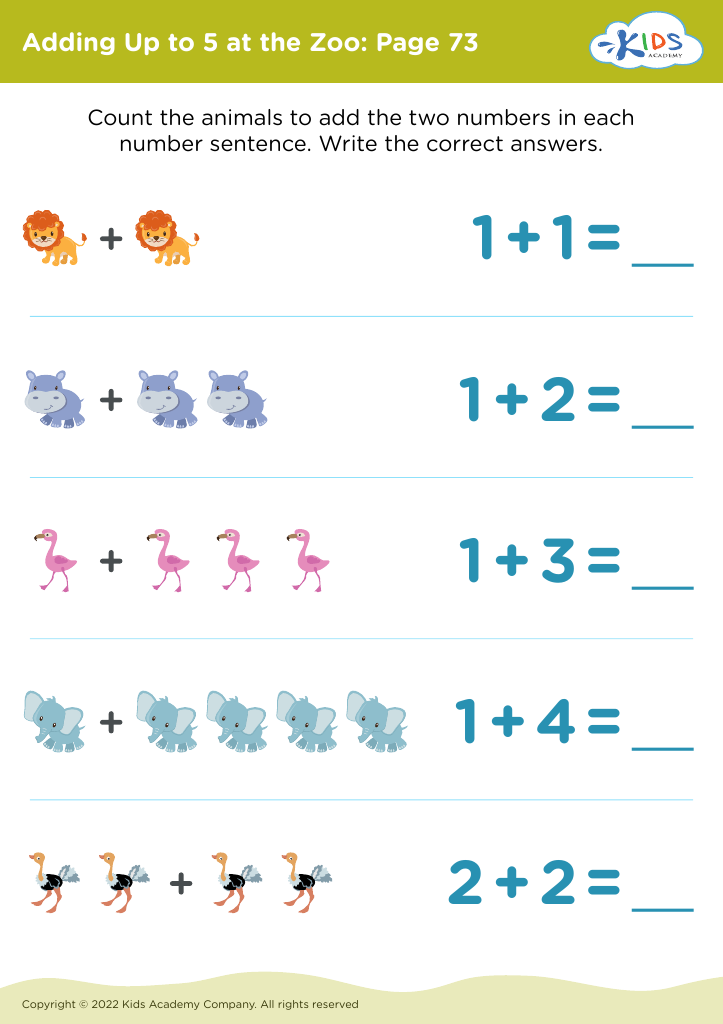
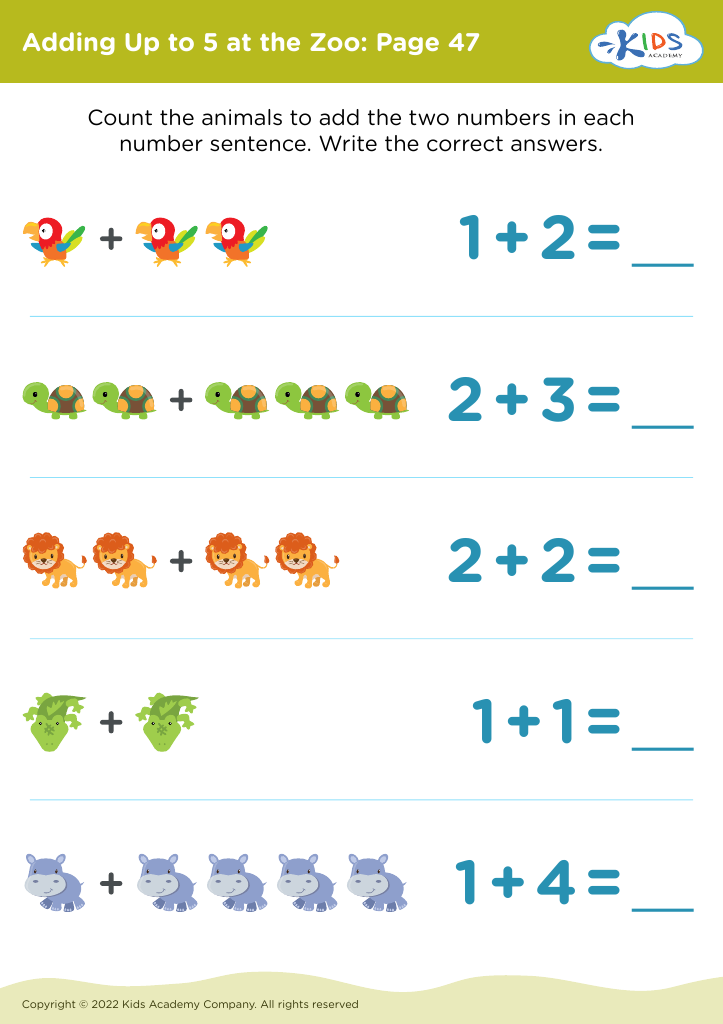
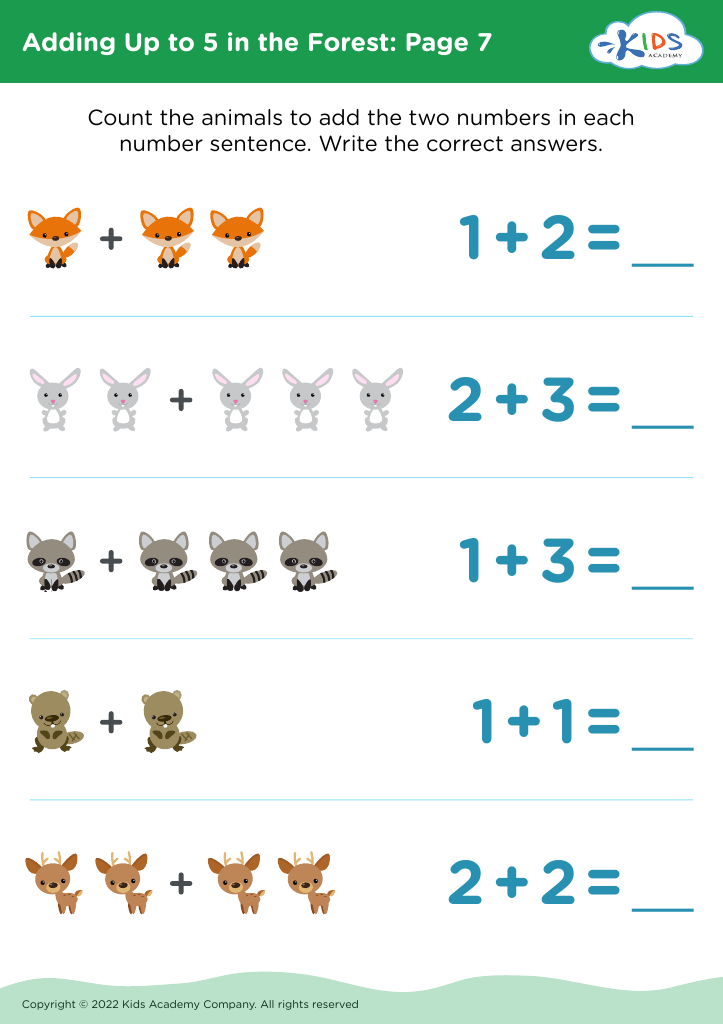
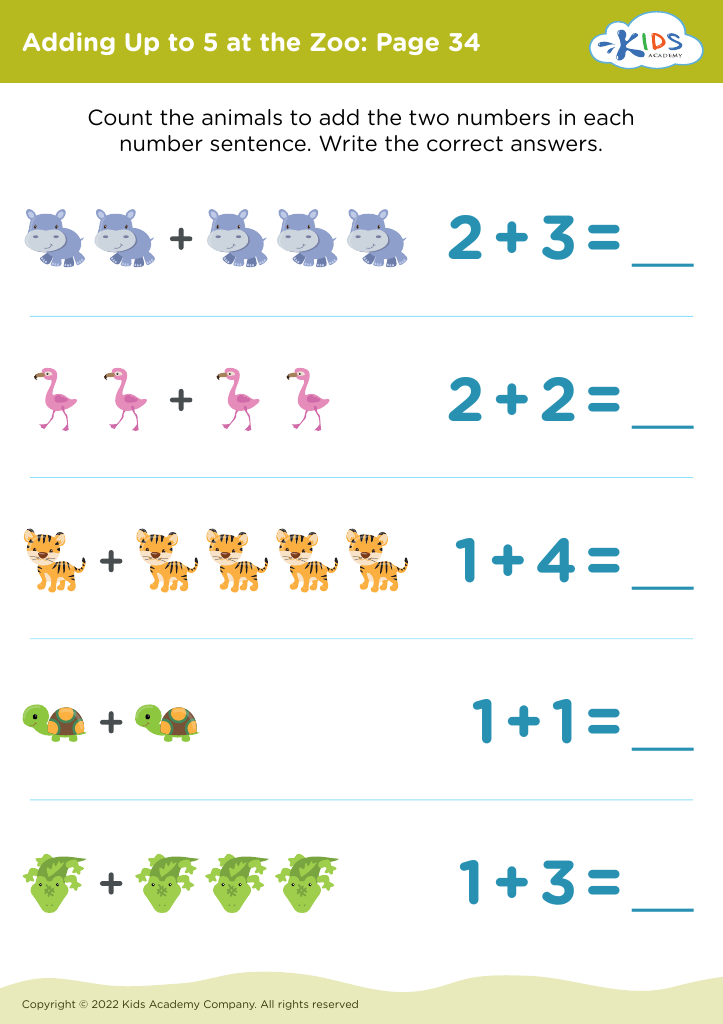
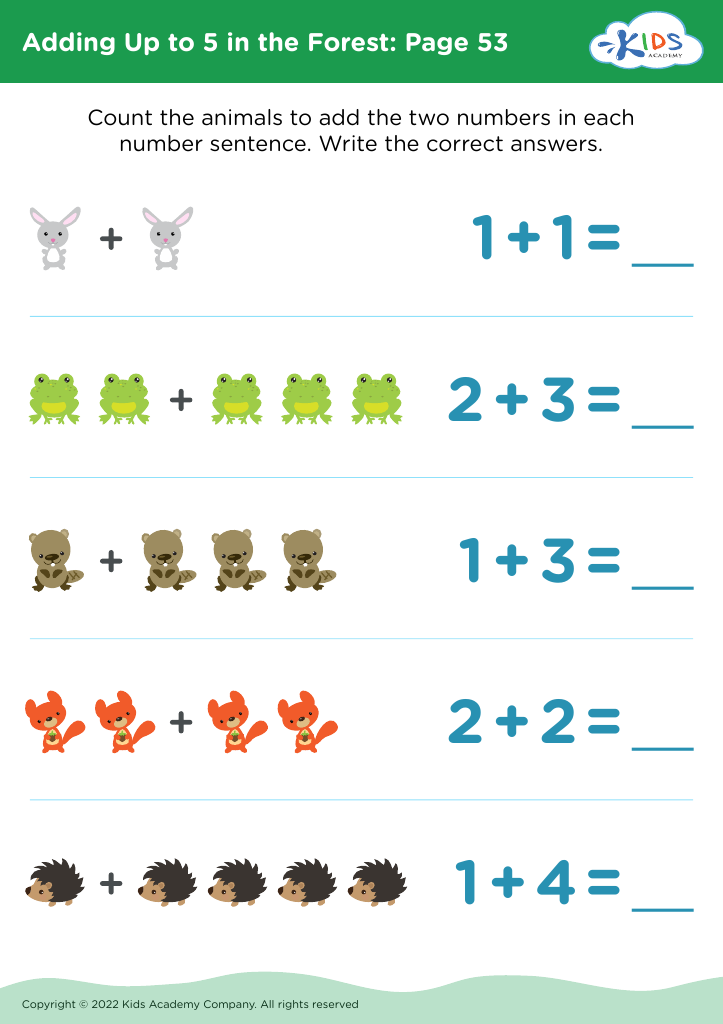
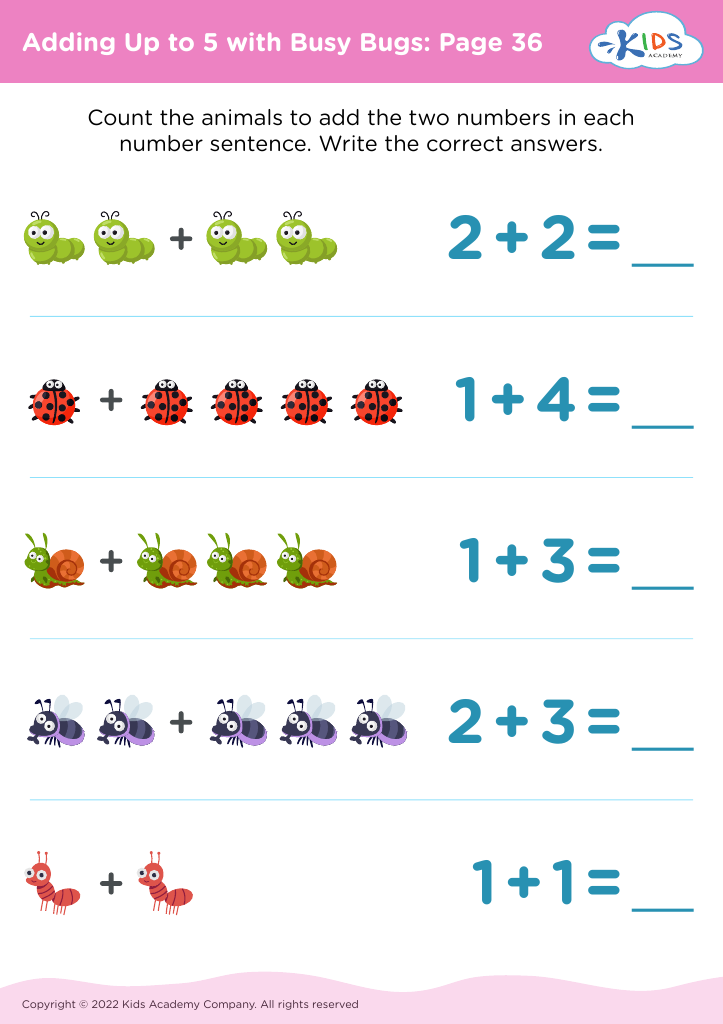
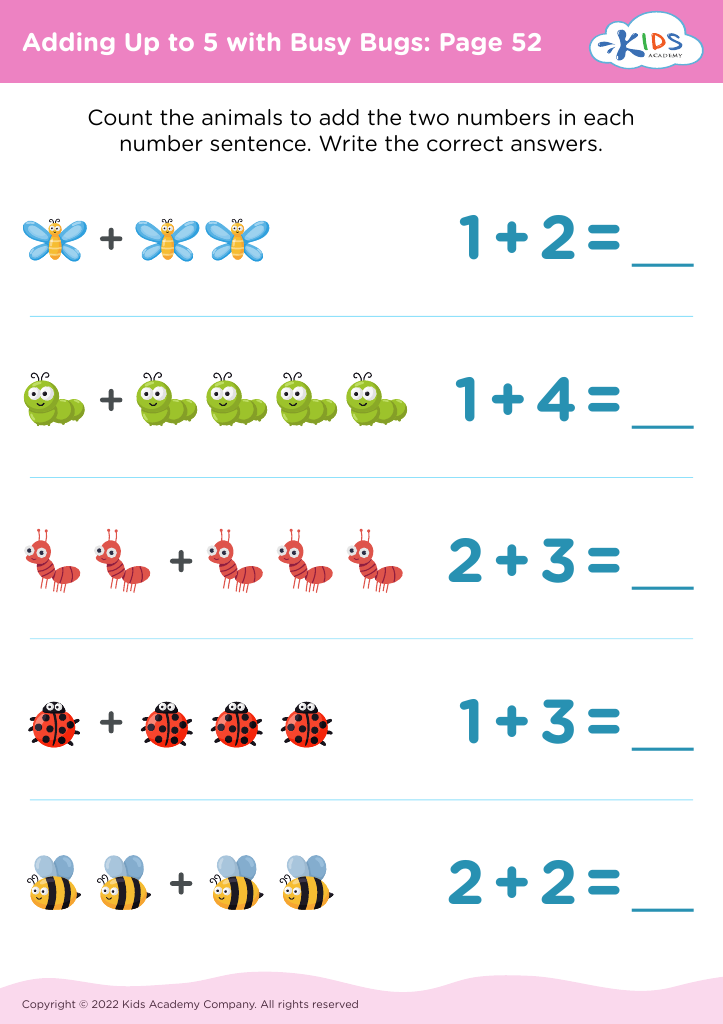








Visual comprehension is crucial for young learners, especially for those aged 5-6, as it forms the foundation for lifelong learning. When children engage with adding numbers up to 5, they are not just performing calculations; they are developing the ability to visually process and interpret numerical information. This skill enhances their mathematical reasoning and eventually aids in more complex concepts such as addition, subtraction, and problem-solving.
For parents and teachers, supporting visual comprehension is essential for fostering confidence and motivation in math. Children who understand how to visualize numbers and quantities are better equipped to grasp the connections between concepts, making learning more accessible and enjoyable. It helps them see numbers not just as symbols, but as representations of real-world objects and quantities.
Moreover, this skill supports their overall cognitive development, allowing them to make sense of broader educational content. Focusing on visual comprehension builds a strong mathematical foundation that boosts academic success. Parents and teachers play a significant role in facilitating activities and discussions that promote visual learning, paving the way for children to thrive in math and other subjects. By prioritizing visual comprehension, they contribute to their child’s holistic development and preparedness for future learning challenges.








