Visual learning reinforcement Adding Up to 5 Worksheets for Ages 5-6
5 filtered results
-
From - To
Unlock the power of visual learning with our "Adding Up to 5 Worksheets" designed for children ages 5-6. These engaging worksheets utilize colorful images and interactive activities to reinforce early math skills, making addition fun and accessible. Through visual aids, kids can grasp the concept of numbers and their relationships while enhancing their counting abilities. Each worksheet is crafted to support different learning styles, ensuring every child can thrive. Perfect for educators and parents alike, these resources foster confidence and proficiency in mathematics. Start building a strong foundation in math with our exciting and interactive worksheets today!
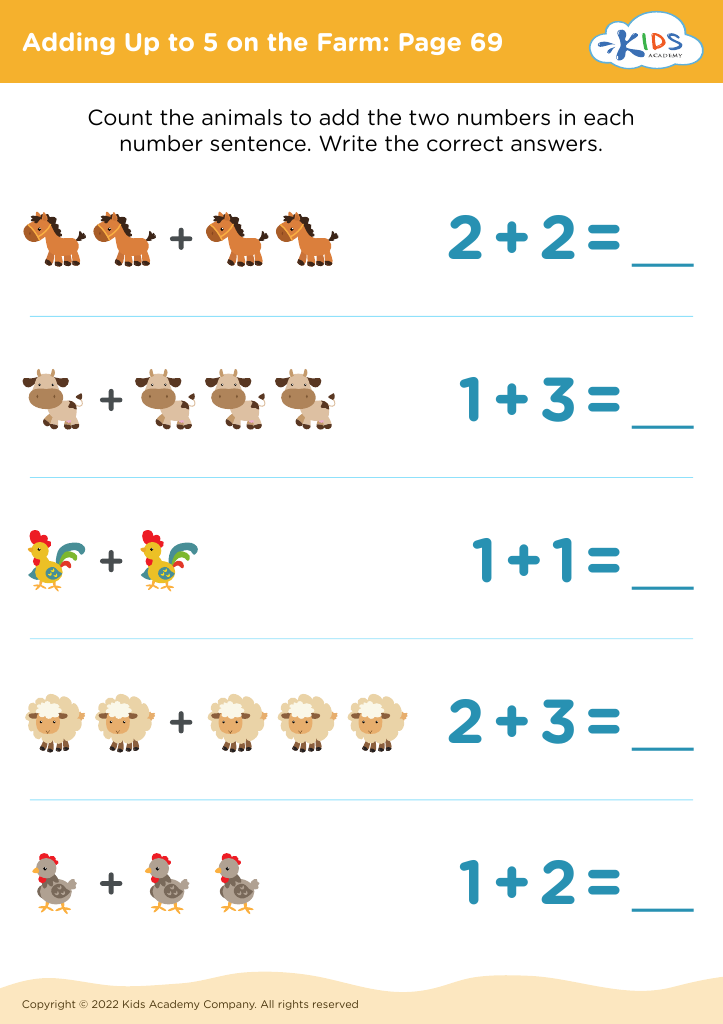
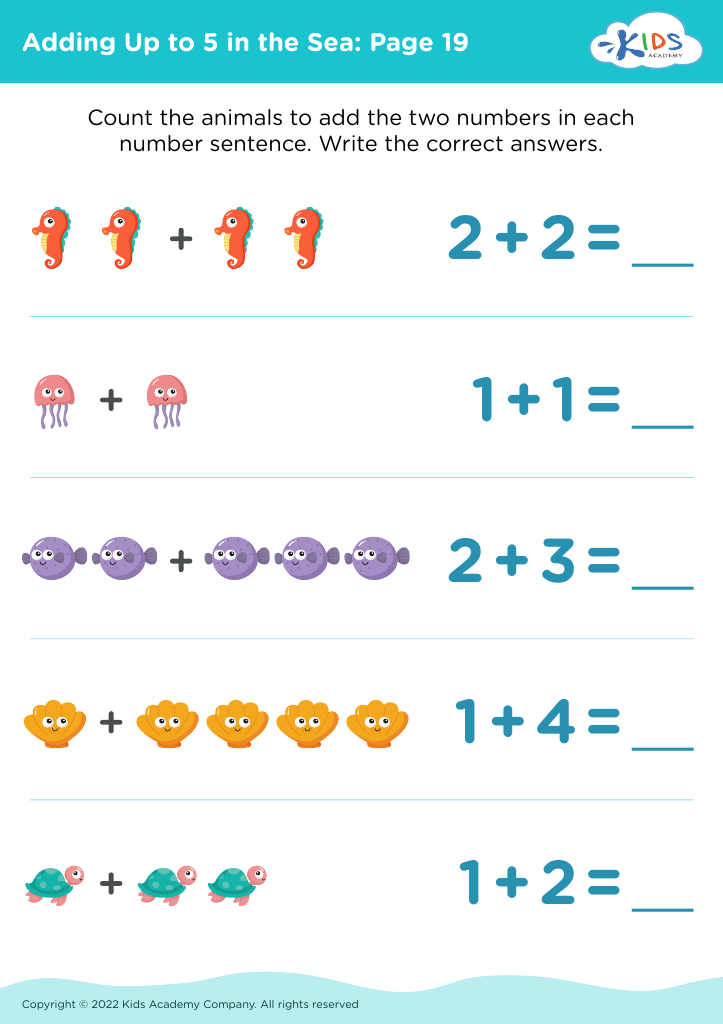
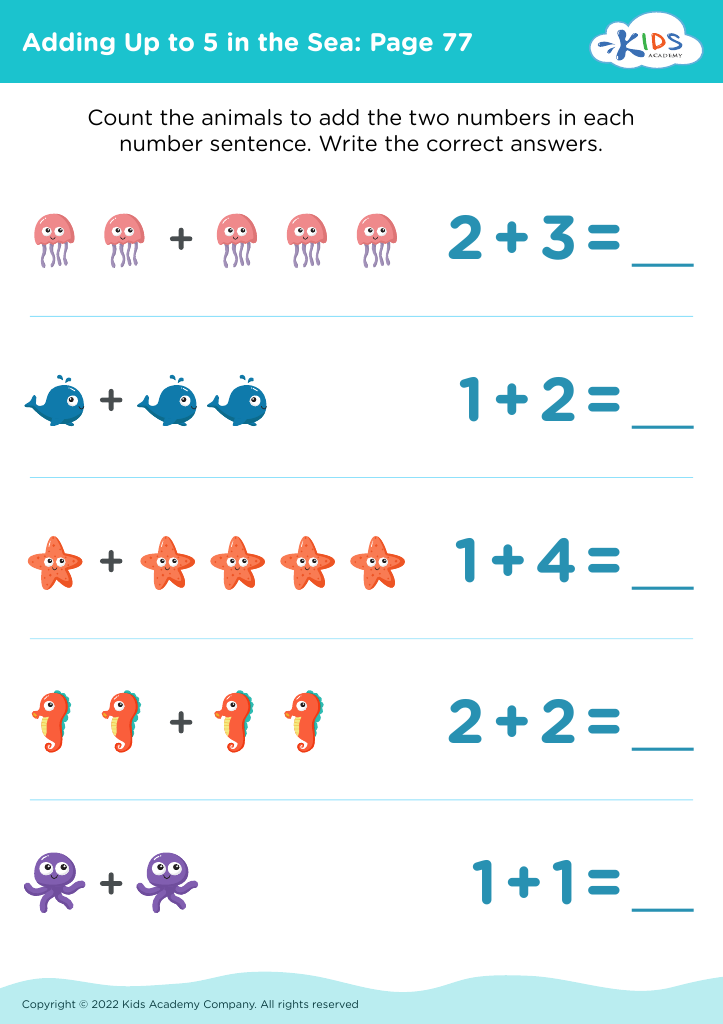
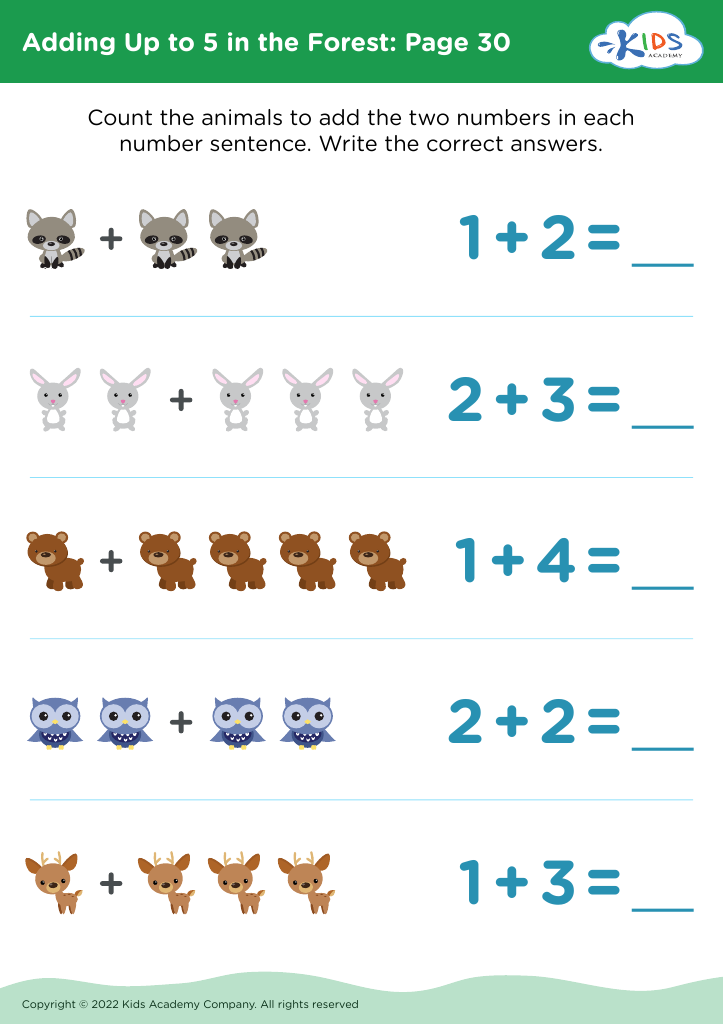
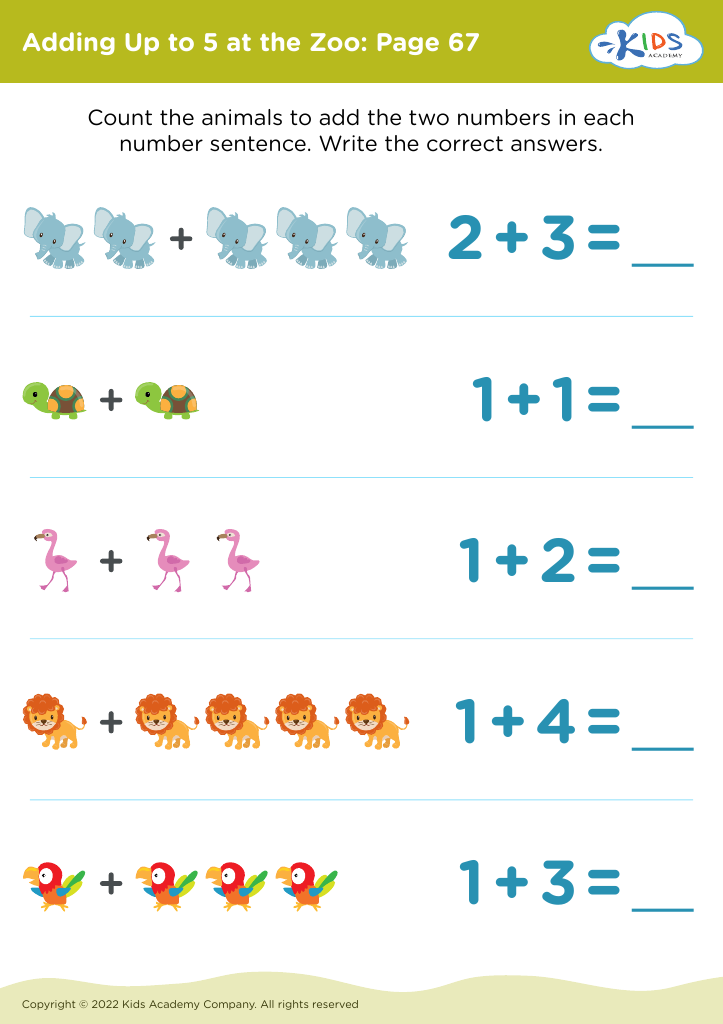








Parents and teachers should prioritize visual learning reinforcement, particularly for the concept of adding up to 5 for children aged 5-6, because it enhances comprehension and retention. Young children are typically visual learners, meaning they grasp concepts more effectively when they can see and interact with visual aids. Using objects like colorful counters, number lines, or drawings allows them to tangibly manipulate and understand the process of addition.
Visual aids can break down complex ideas into simpler, understandable components, making math less intimidating. For instance, when children physically group objects to represent addition problems, they experience a multi-sensory learning process that solidifies their understanding.
Furthermore, visual representations cater to diverse learning styles and help keep young learners engaged. By reinforcing visual learning, parents and teachers can promote a deep-rooted number sense, encouraging critical thinking and problem-solving skills.
Additionally, instilling a solid foundational understanding of basic math operations fosters confidence. As children master adding up to 5, they are better prepared for more complex math concepts in the future. In this way, visual learning not only supports immediate academic success but also cultivates a love for learning that can last a lifetime.








