Filters

84 filtered results

Clear all filters
Favorites
With answer key
Interactive

84 filtered results

Difficulty Level

Grade


Check out this FREE Trial Lesson on Adding Up to 5 for age 5-6!

T

Favorites
With answer key
Interactive
  • 5-6
  • Visual Learning
  • Adding Up to 5
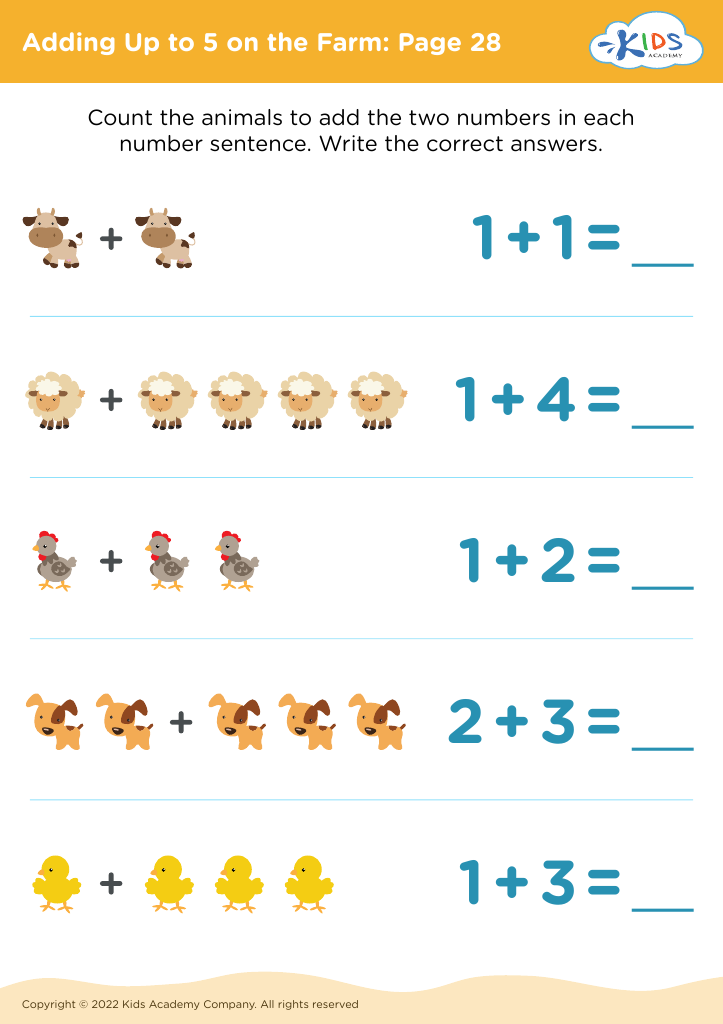
Adding Up to 5 on the Farm: Page 28
Worksheet
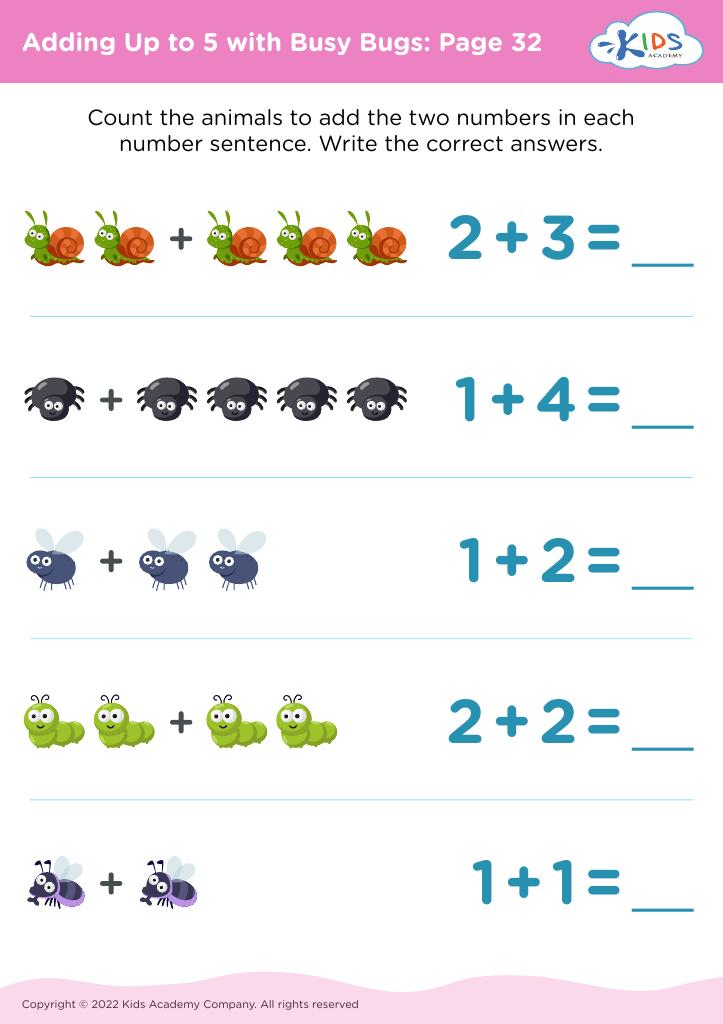
Adding Up to 5 with Busy Bugs: Page 32
Worksheet
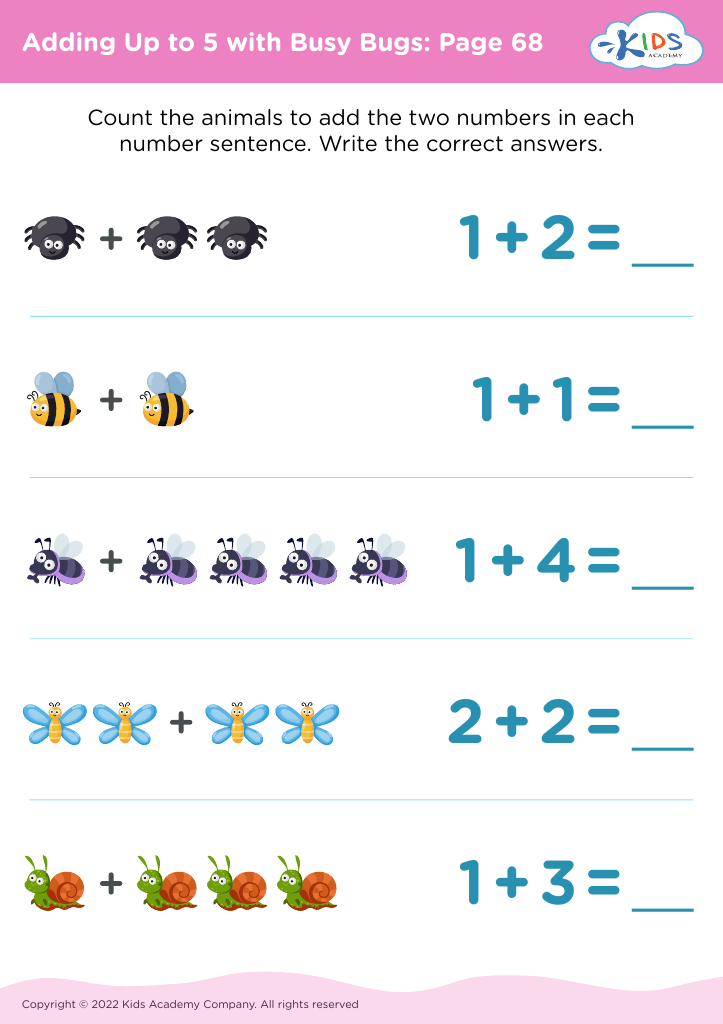
Adding Up to 5 with Busy Bugs: Page 68
Worksheet
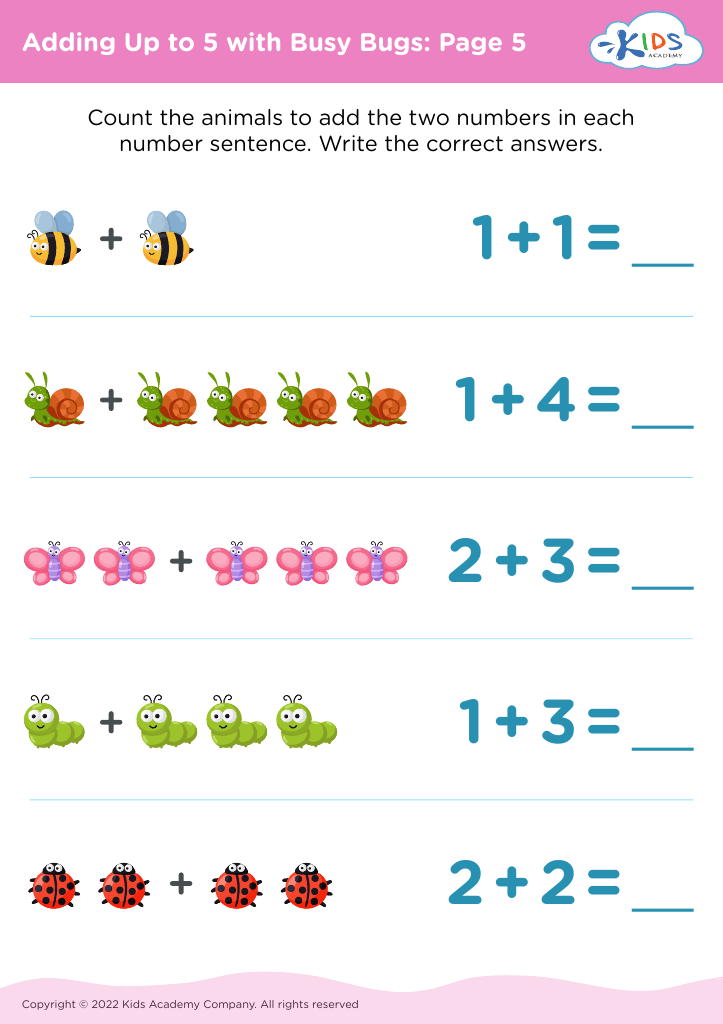
Adding Up to 5 with Busy Bugs: Page 5
Worksheet
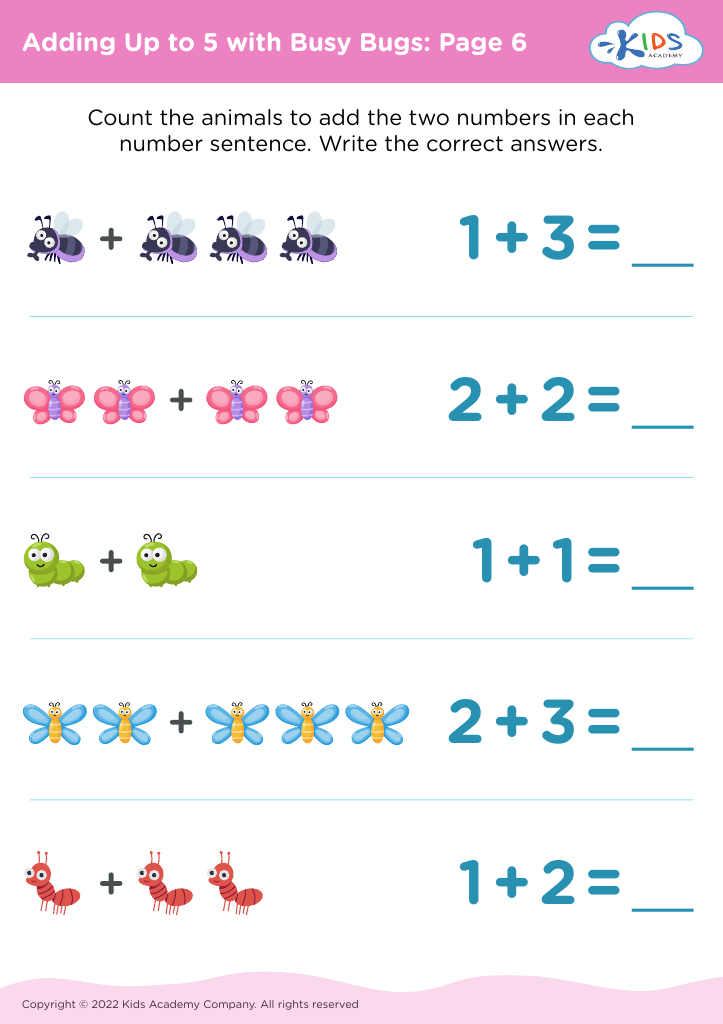
Adding Up to 5 with Busy Bugs: Page 6
Worksheet
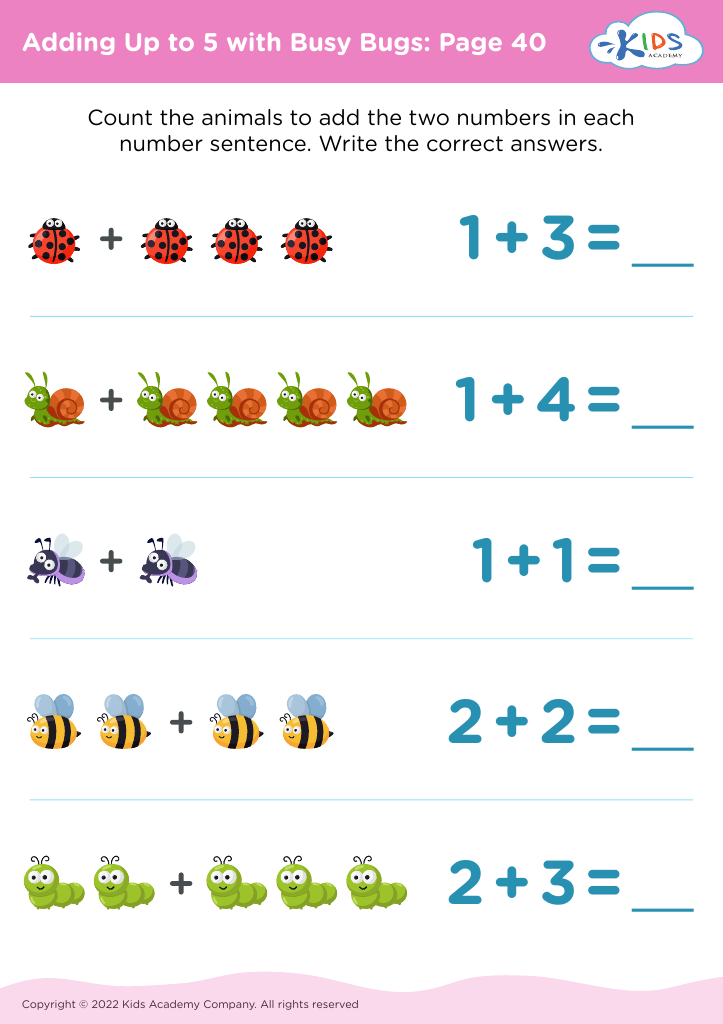
Adding Up to 5 with Busy Bugs: Page 40
Worksheet
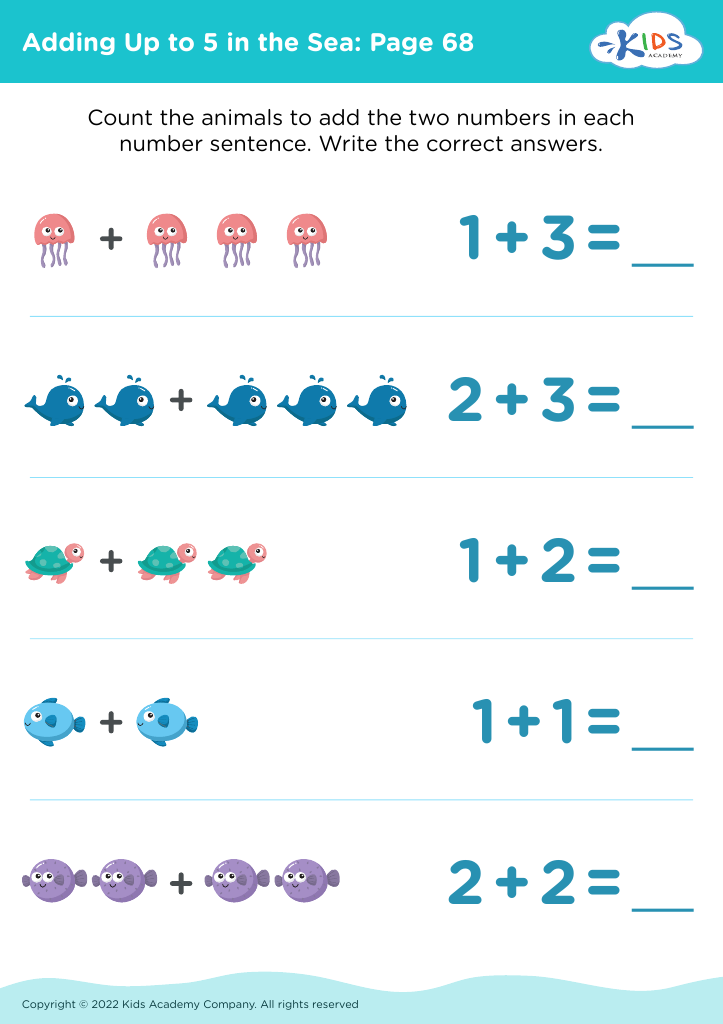
Adding Up to 5 in the Sea: Page 68
Worksheet
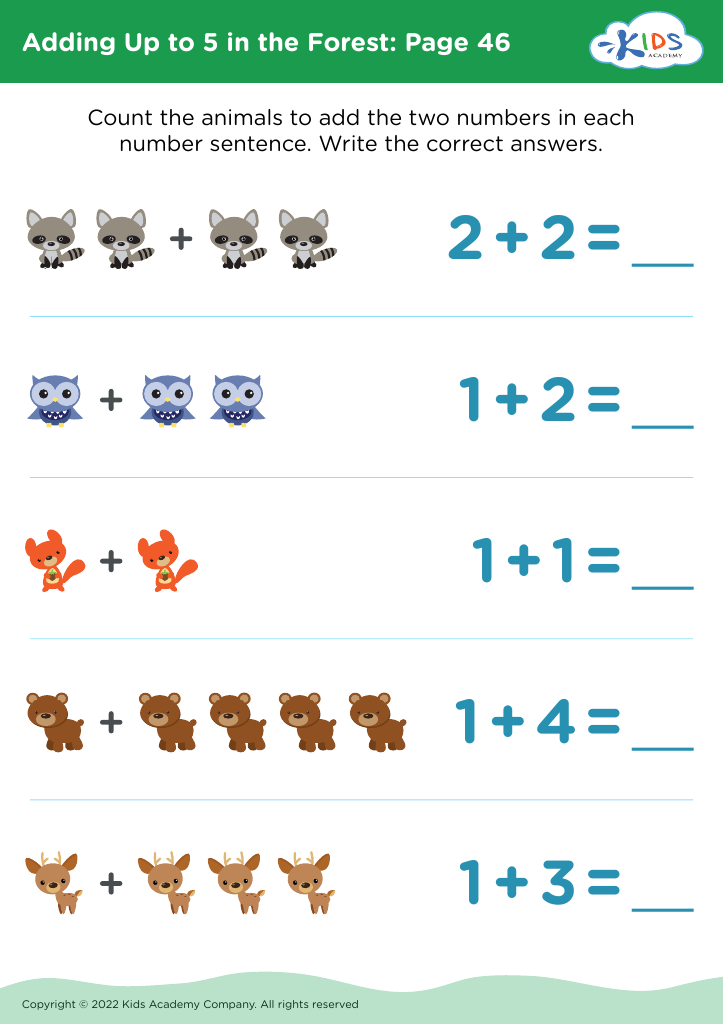
Adding Up to 5 in the Forest: Page 46
Worksheet
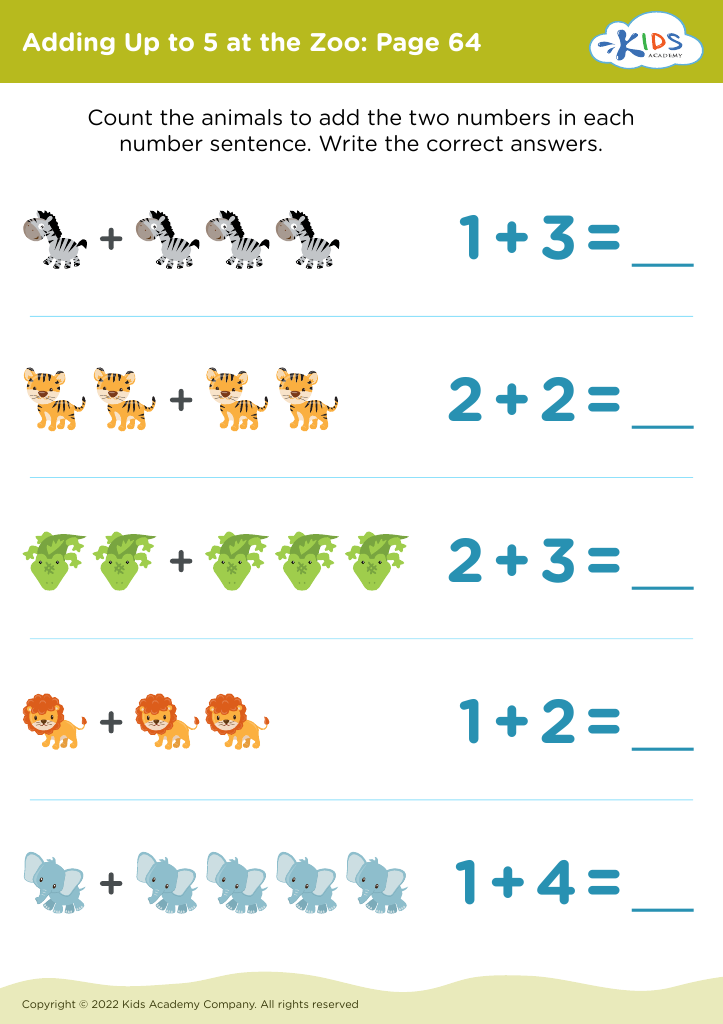
Adding Up to 5 at the Zoo: Page 64
Worksheet
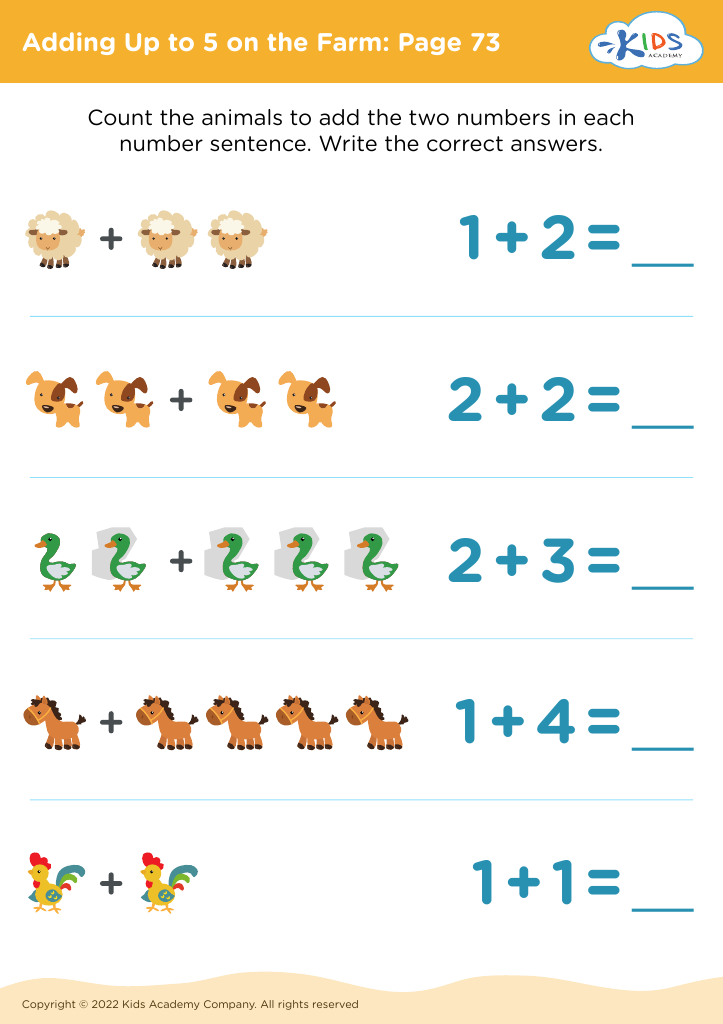
Adding Up to 5 on the Farm: Page 73
Worksheet
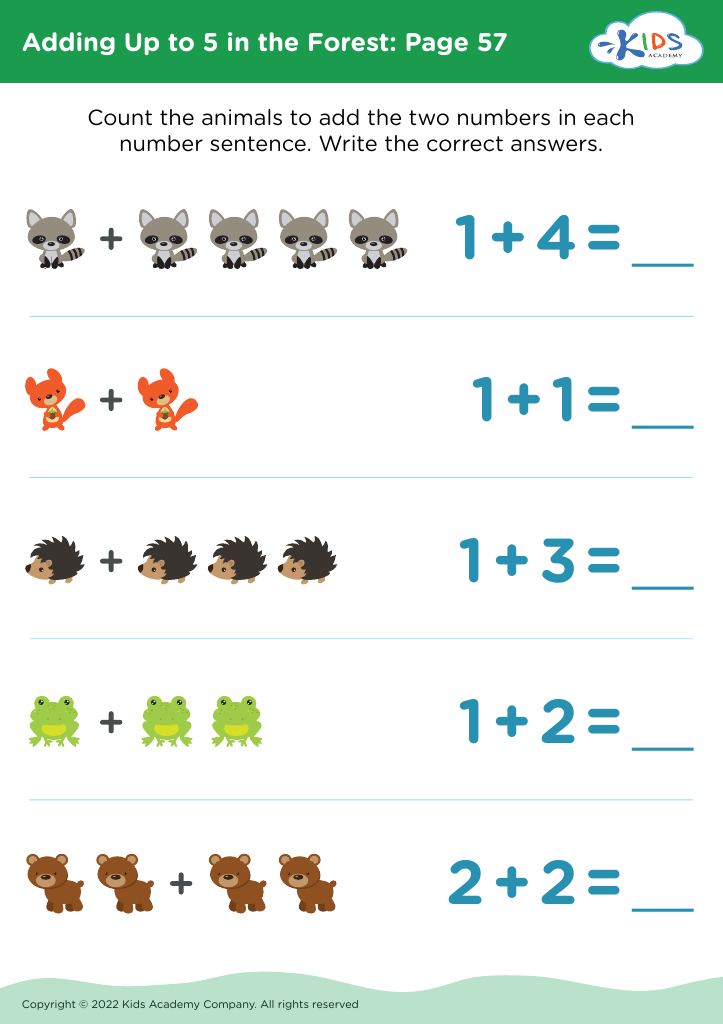
Adding Up to 5 in the Forest: Page 57
Worksheet
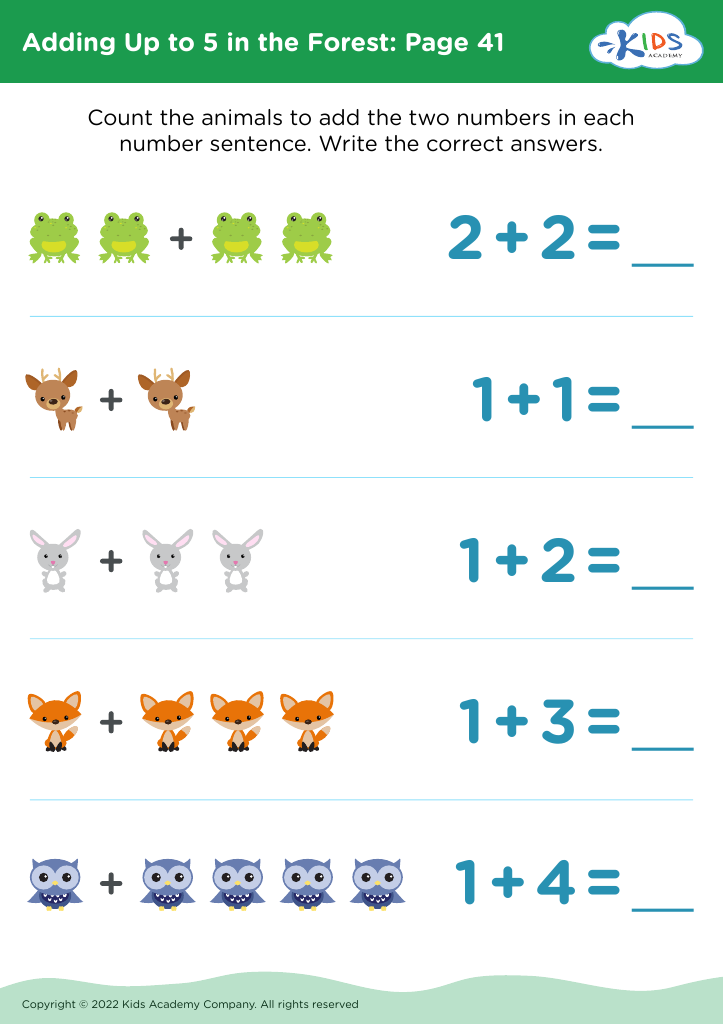
Adding Up to 5 in the Forest: Page 41
Worksheet


... 3 4

Visual learning is a crucial component of early education, especially for young learners aged 5-6, as it helps them grasp foundational math concepts like adding up to 5. Children in this age group are naturally drawn to visuals, and incorporating diagrams, illustrations, and hands-on materials can enhance their understanding of numbers and operations.

Parents and teachers should care about visual learning for several reasons. Firstly, visual aids, such as counting objects or number lines, foster engagement and retention, making abstract concepts more tangible. These tools can also cater to different learning styles, accommodating children who may struggle with traditional teaching methods.

Moreover, early mastery of addition is essential for later success in math. Visual learning provides a strong base, establishing confidence while developing problem-solving skills. It encourages exploration and curiosity, prompting children to connect numbers with real-world applications.

Additionally, involving parents in the process, such as using everyday objects for counting at home, strengthens the home-school connection, thus reinforcing learning. Ultimately, prioritizing visual learning strategies for adding up to 5 nurtures cognitive development, instills a love for math, and sets children on a path toward academic success.