Addition skills Adding with Busy Bugs Worksheets for Ages 5-6
22 filtered results
-
From - To
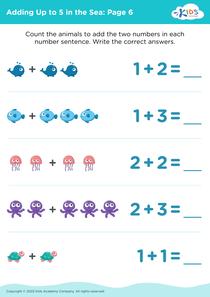
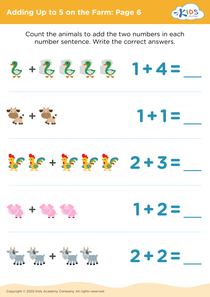
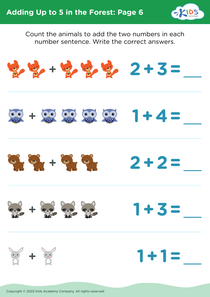
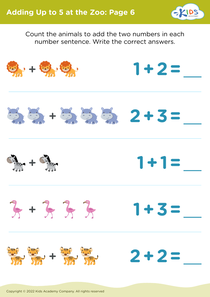
Boost your child’s math skills with our "Adding with Busy Bugs Worksheets" designed for ages 5-6! These engaging, colorful worksheets transform addition practice into a fun adventure, featuring playful bug characters that capture children's imaginations. Through a variety of activities, youngsters will develop essential addition skills, work on number recognition, and improve problem-solving abilities. Our interactive exercises promote hands-on learning, making math enjoyable while building a strong foundation for future success. Perfect for homeschooling or classroom use, these worksheets offer a comprehensive approach to early math education. Unlock the joy of learning with Busy Bugs today!
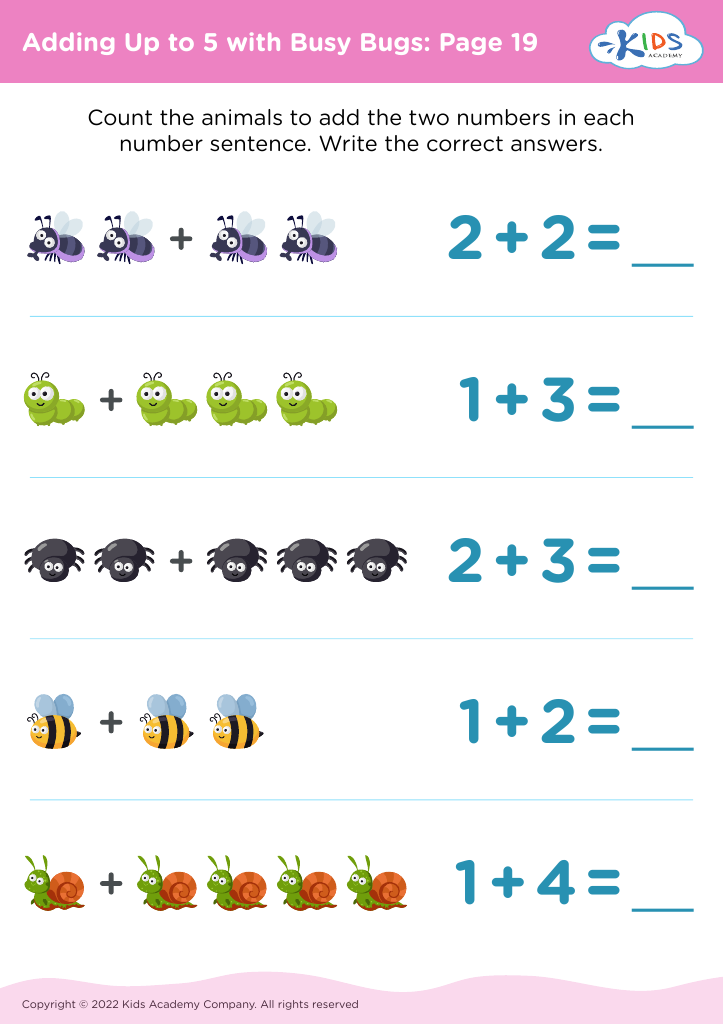
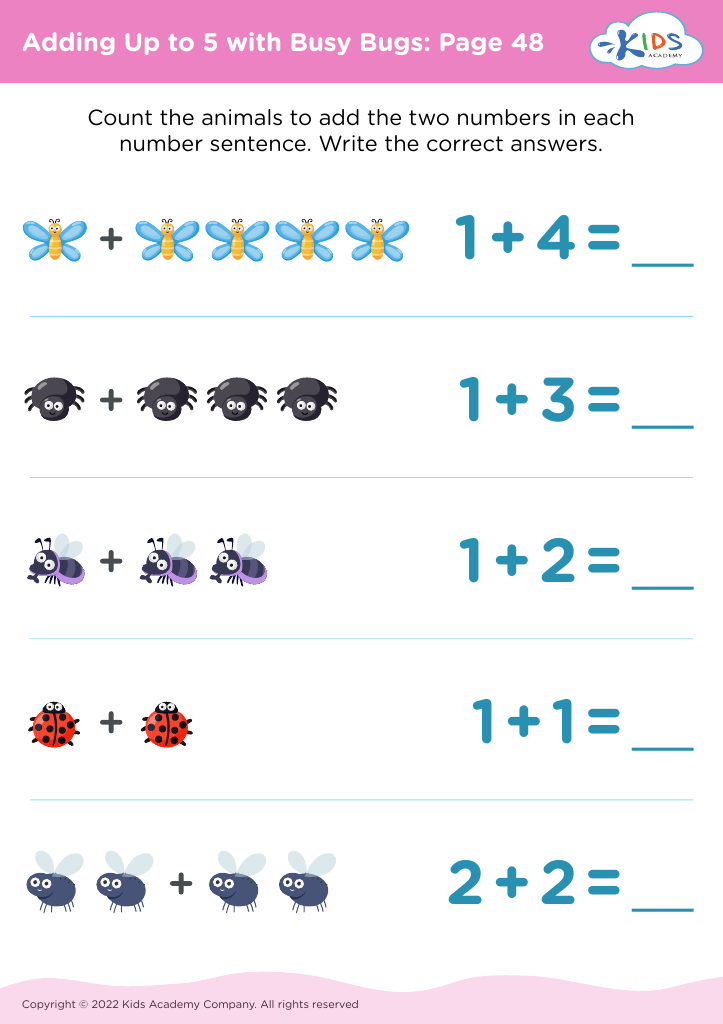
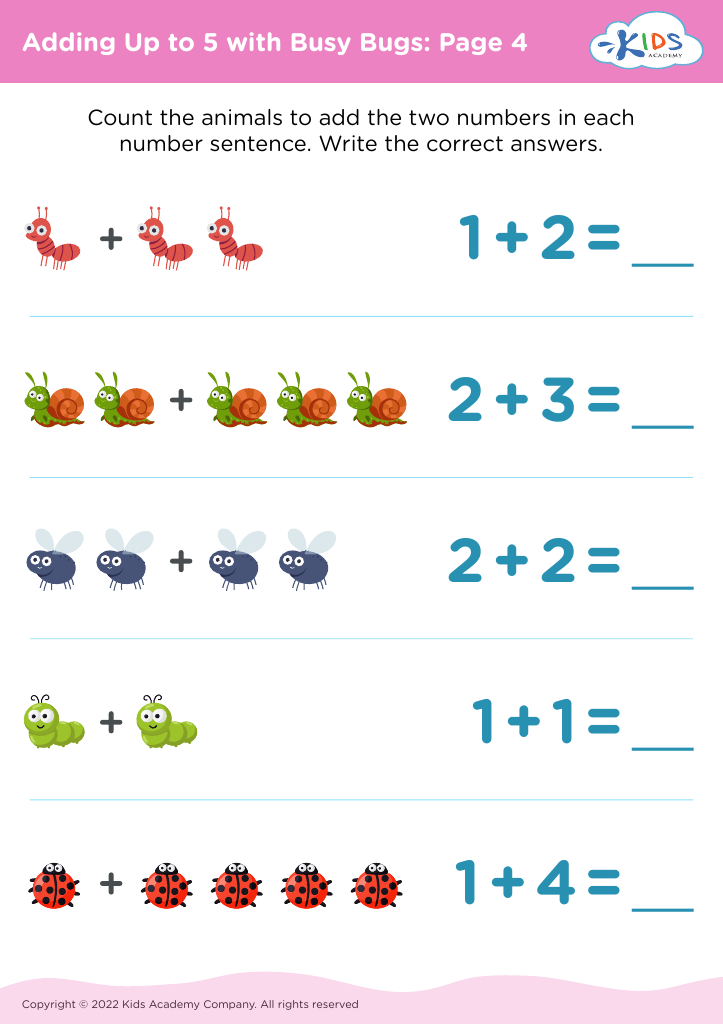
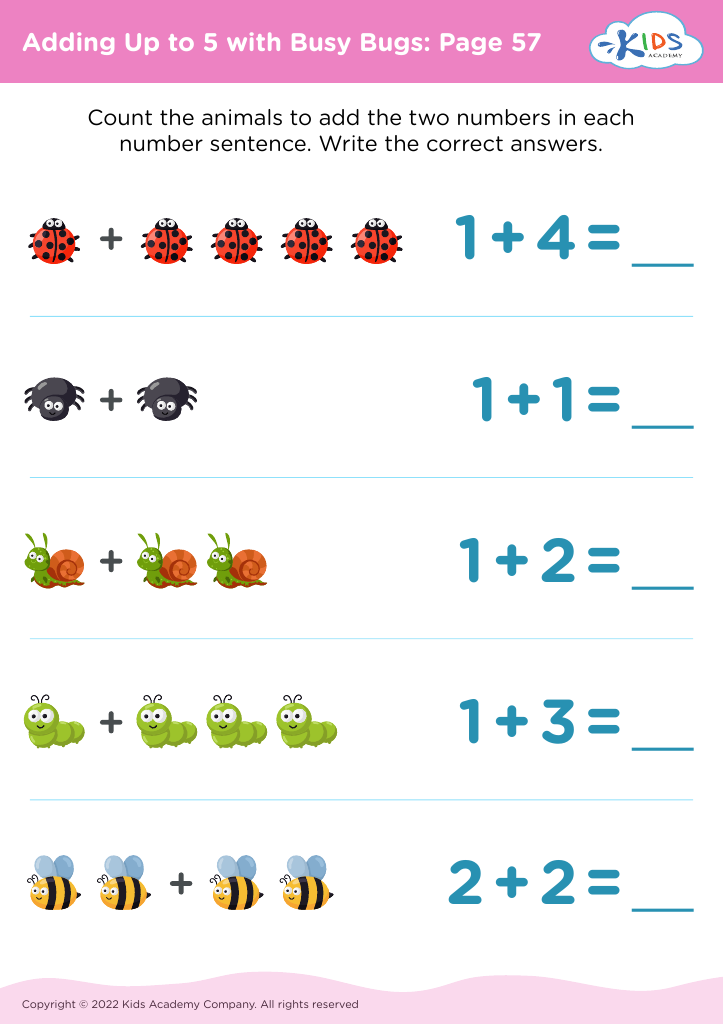
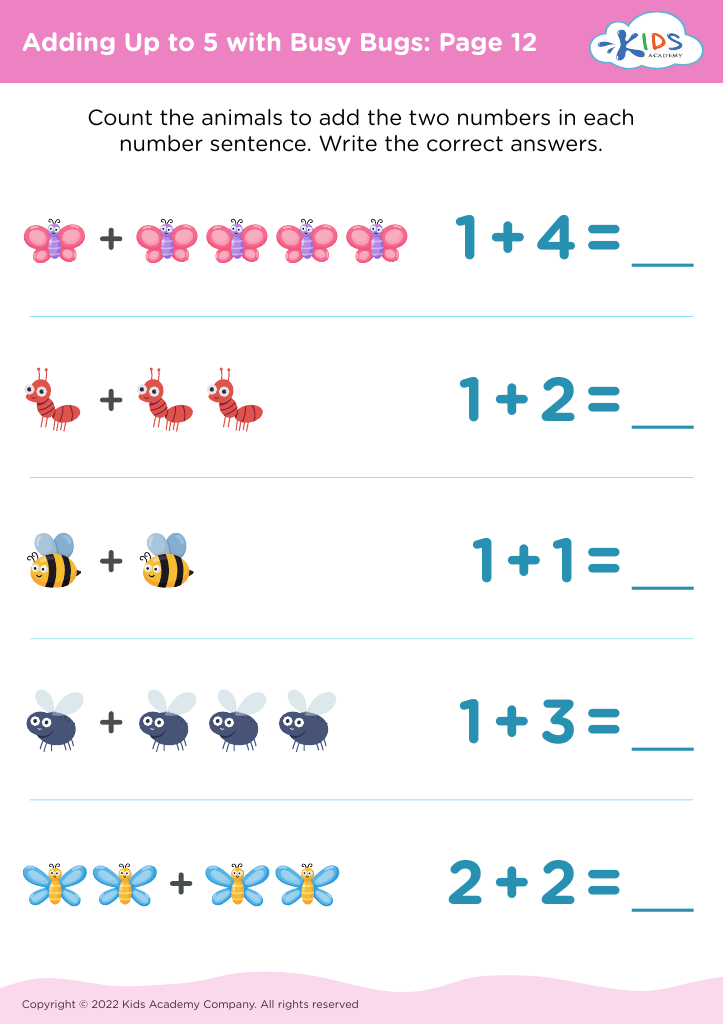
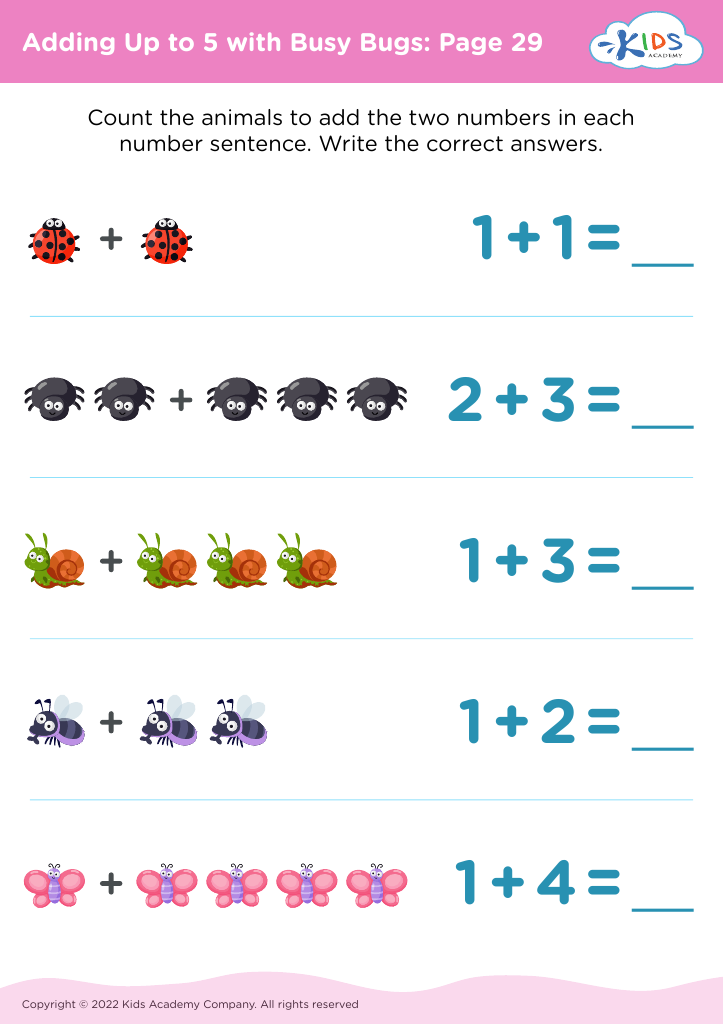
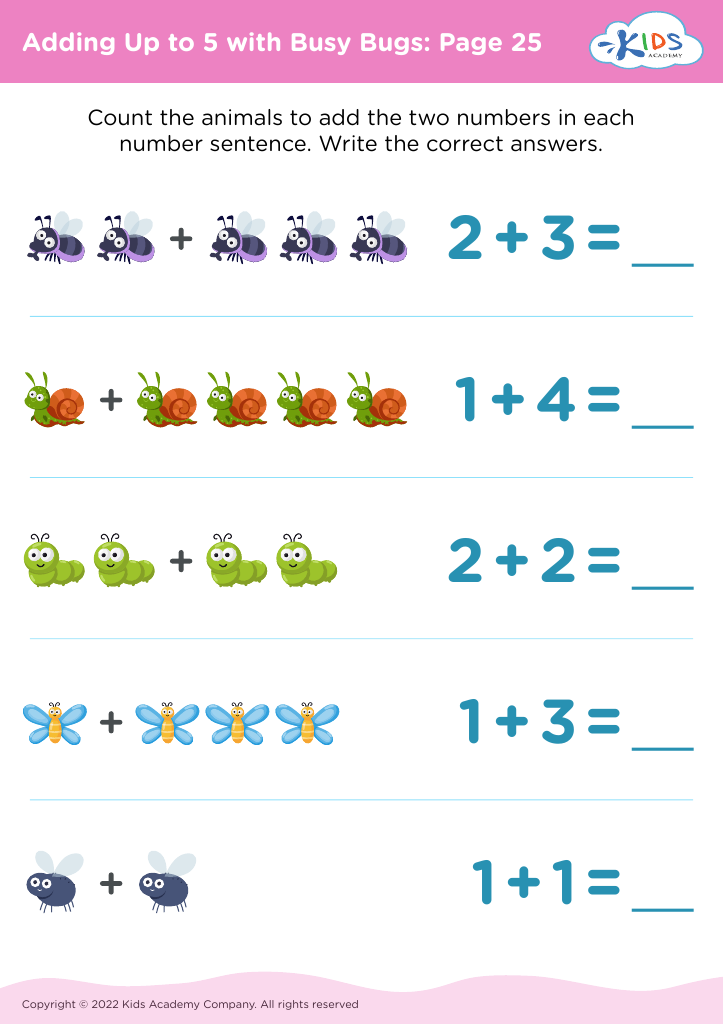
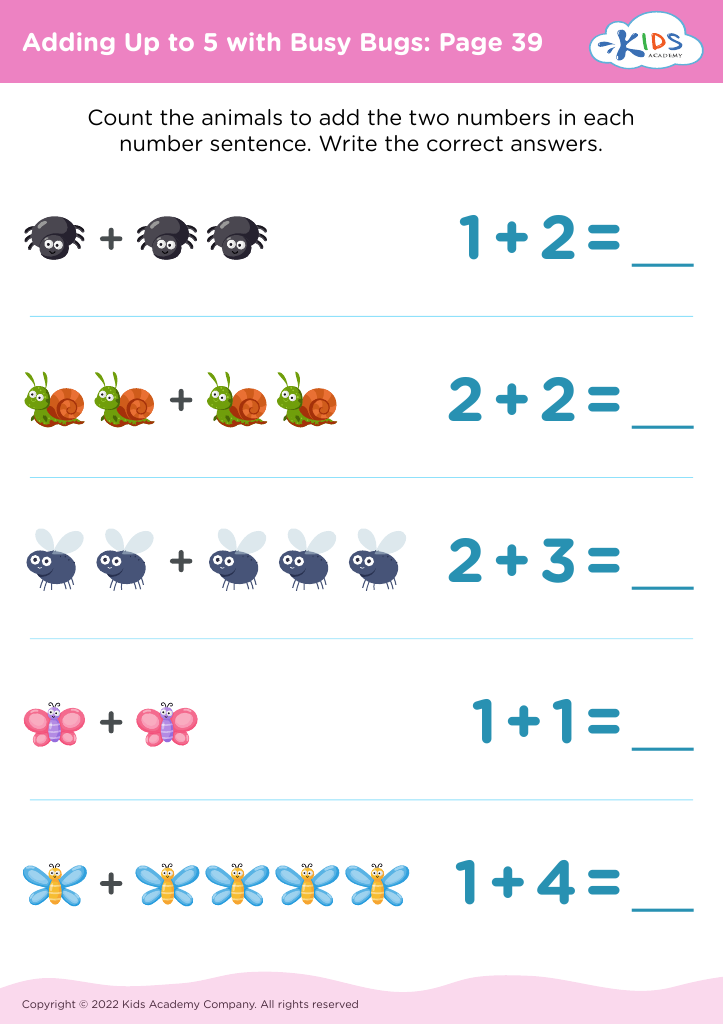
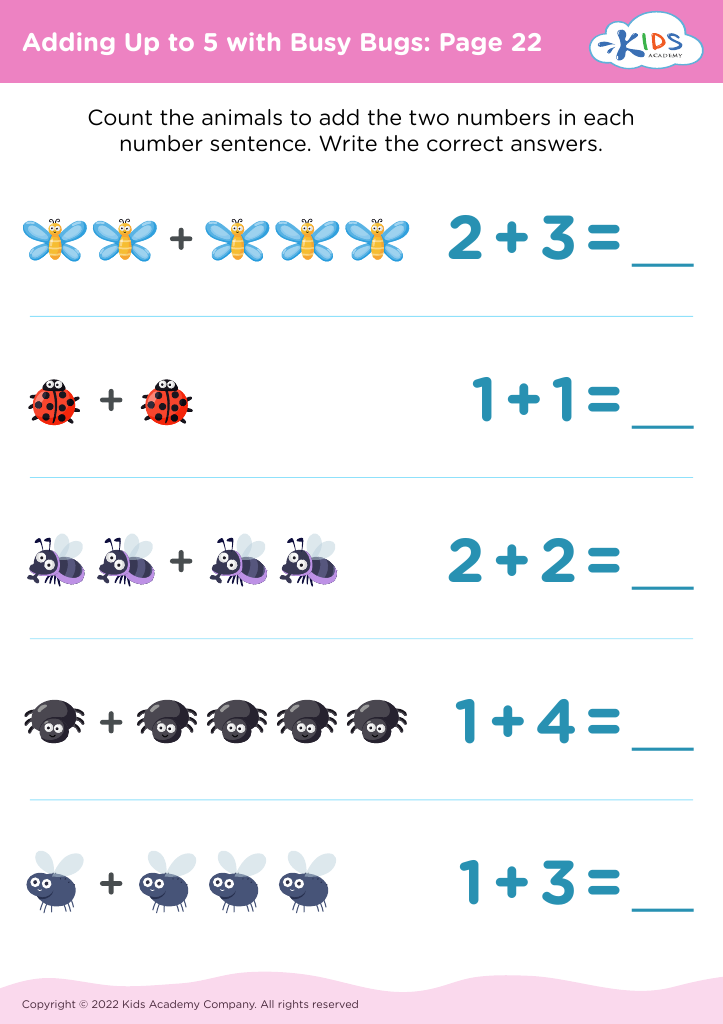
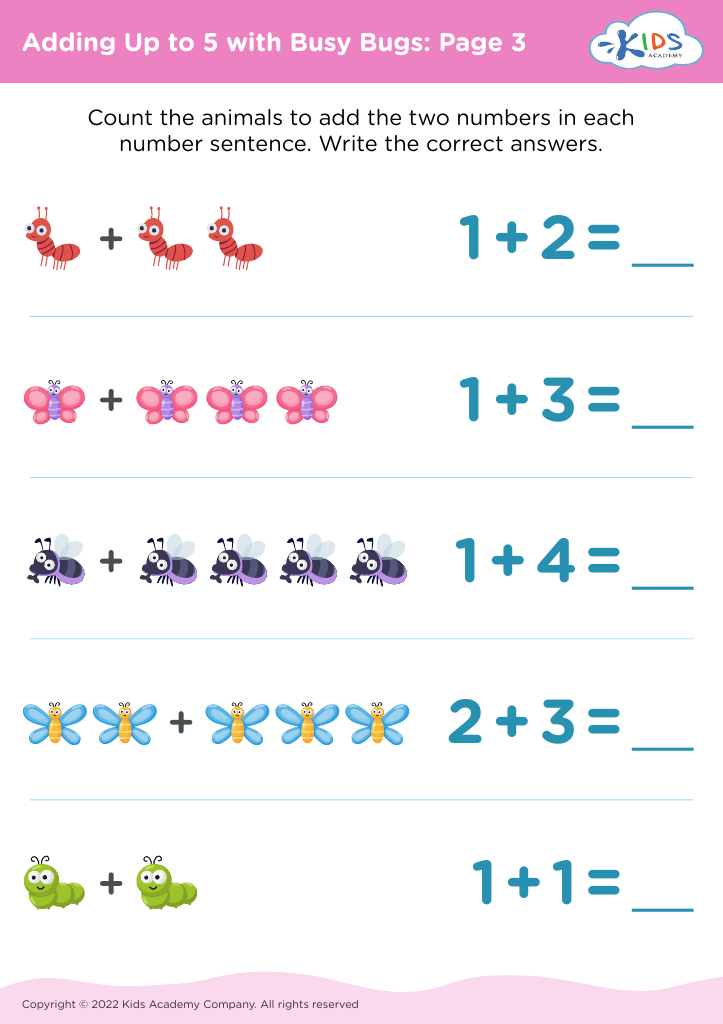
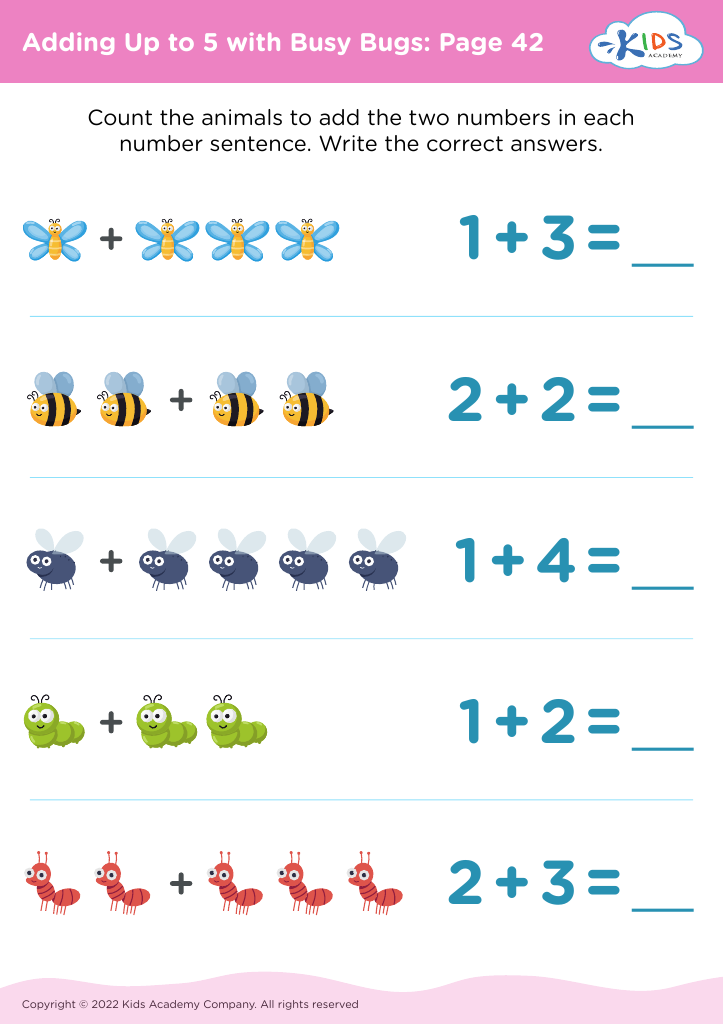
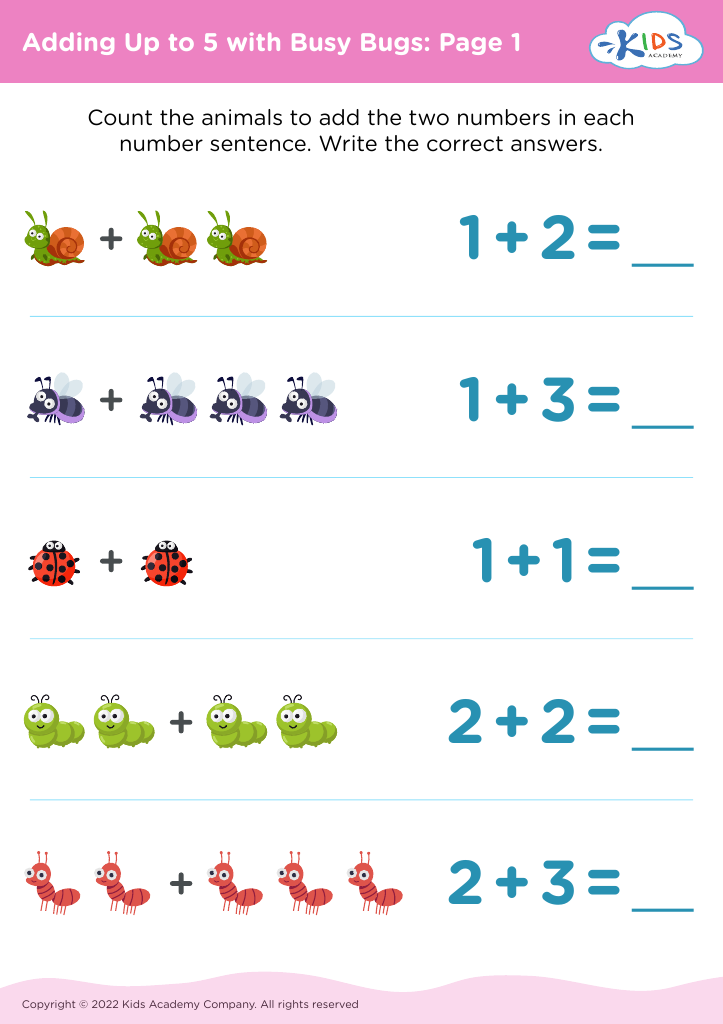
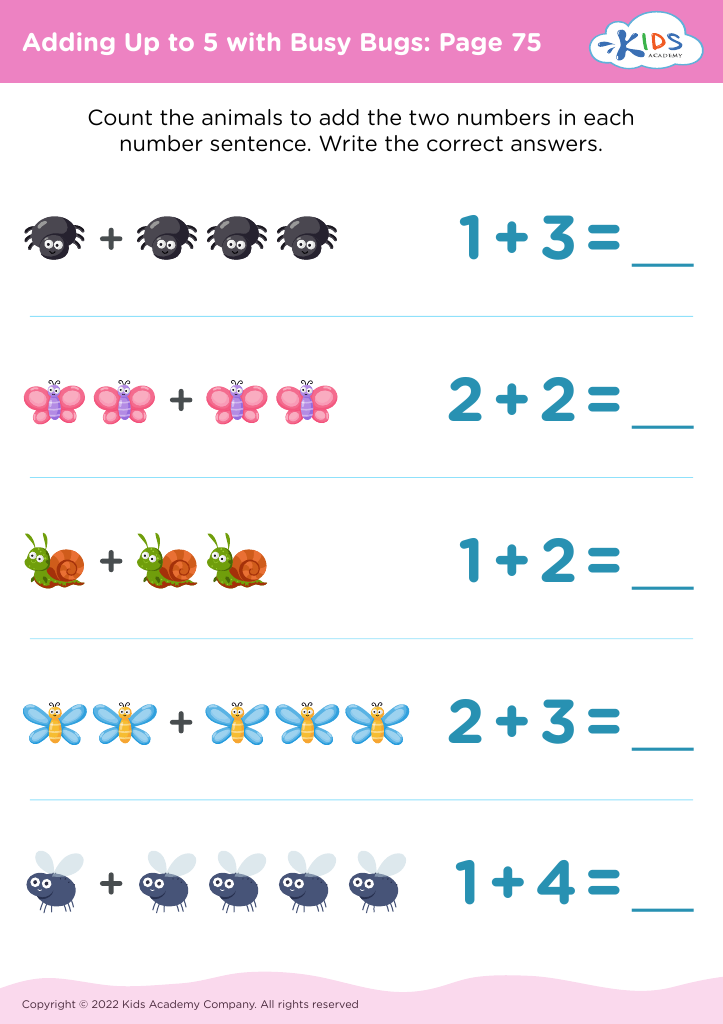
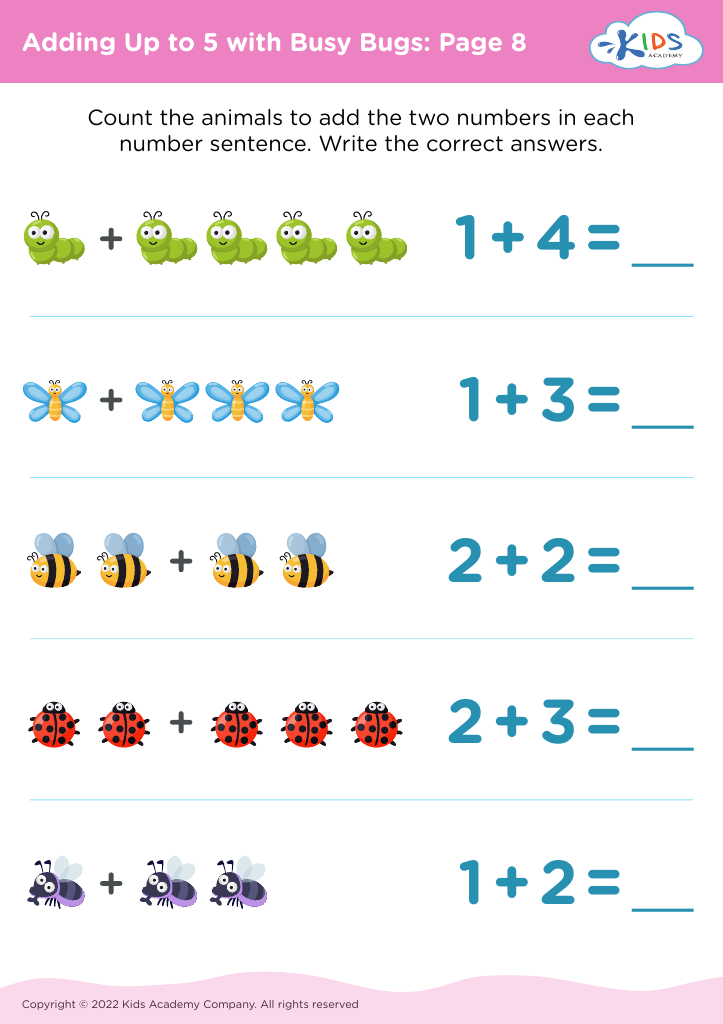
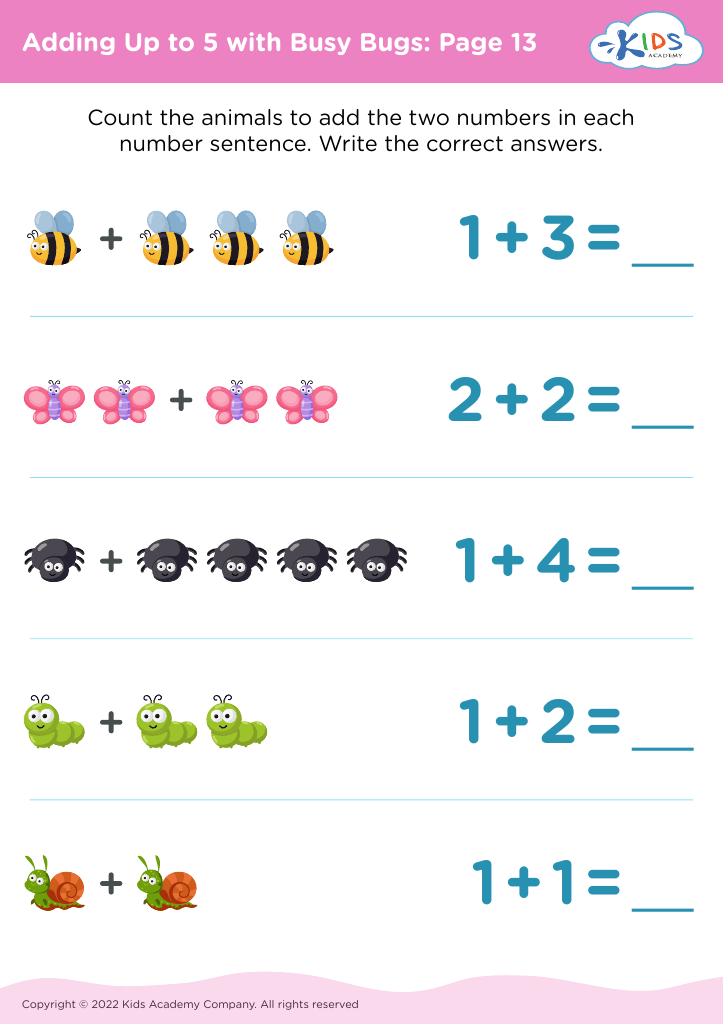
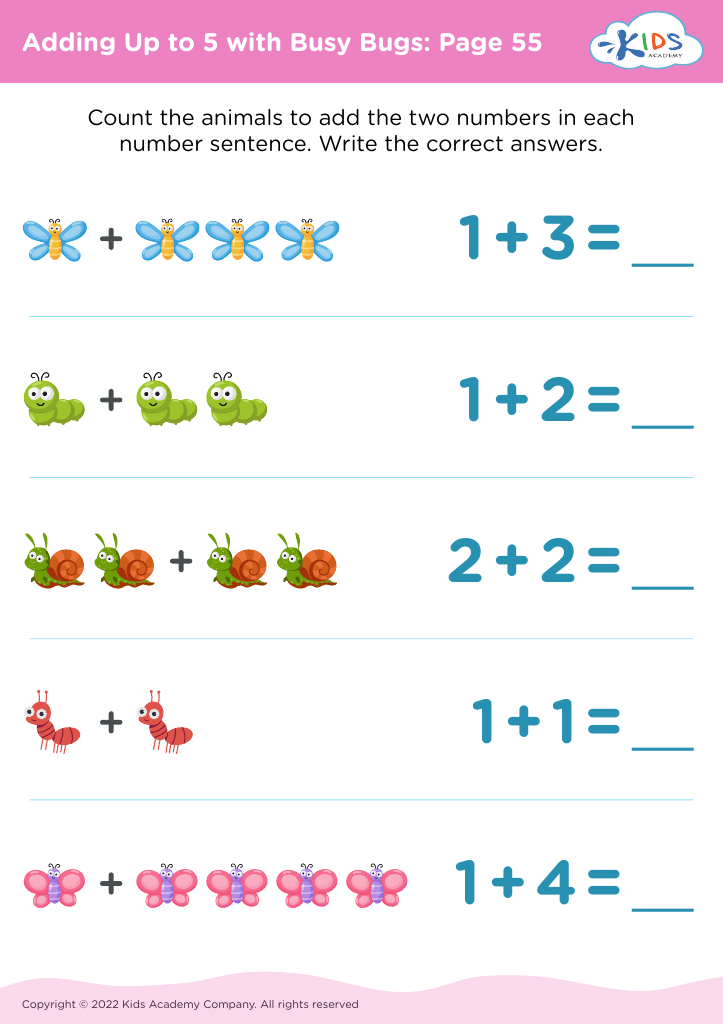
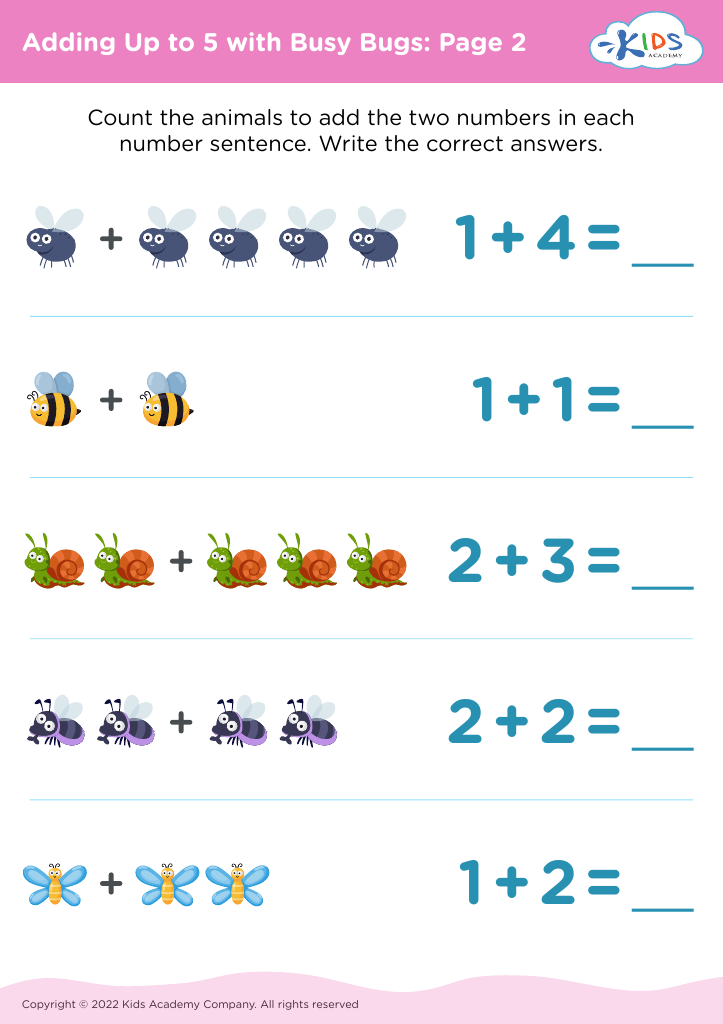
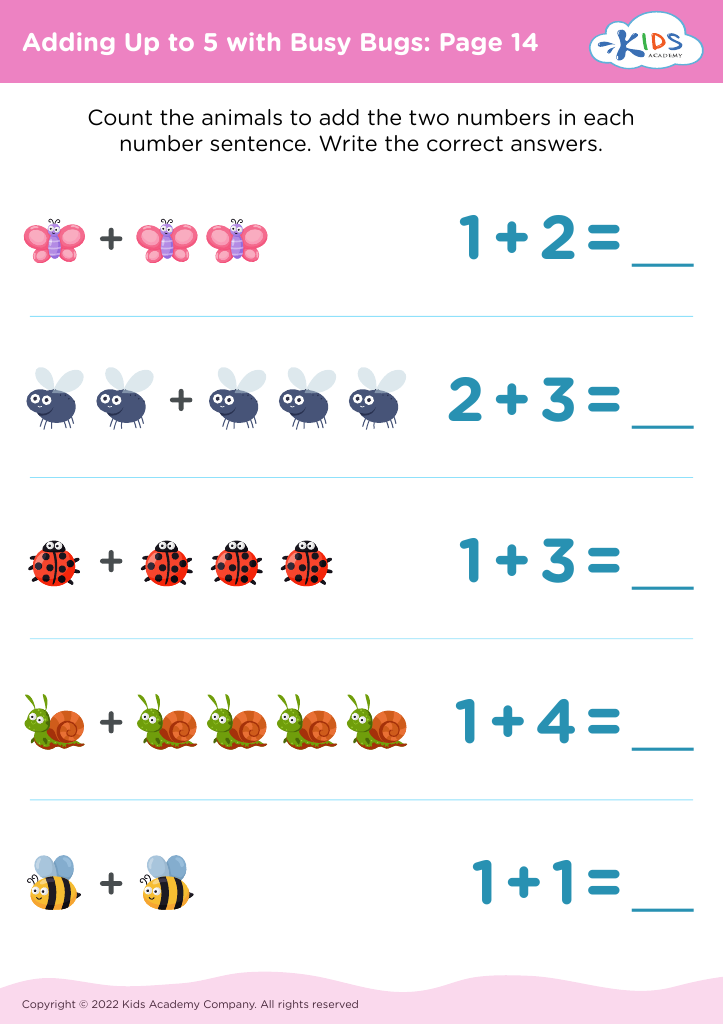
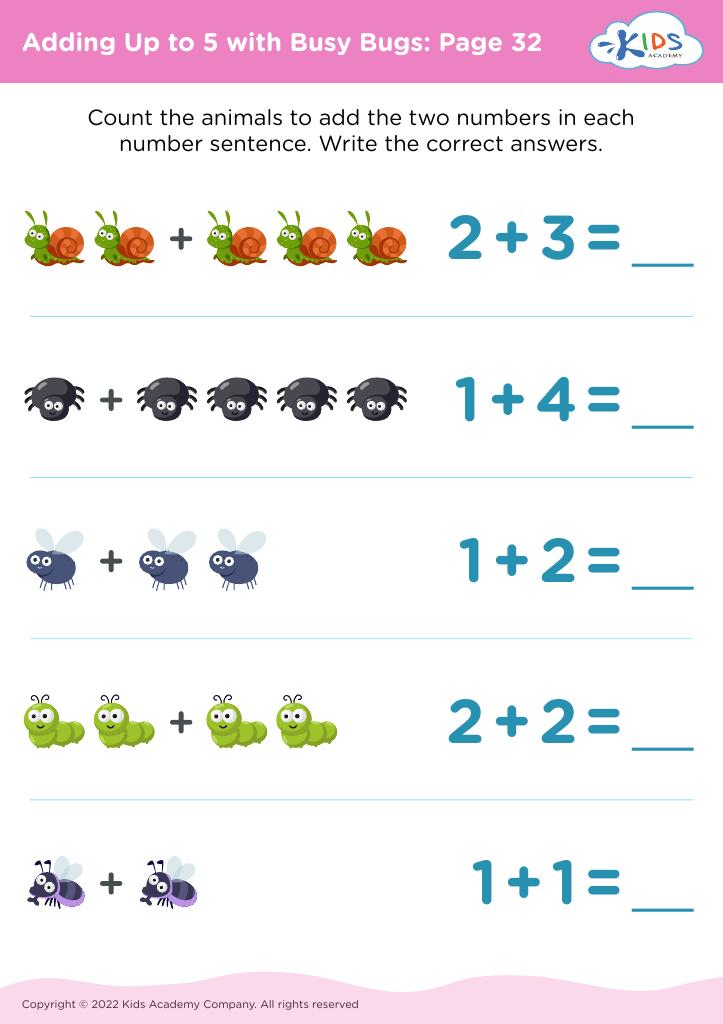
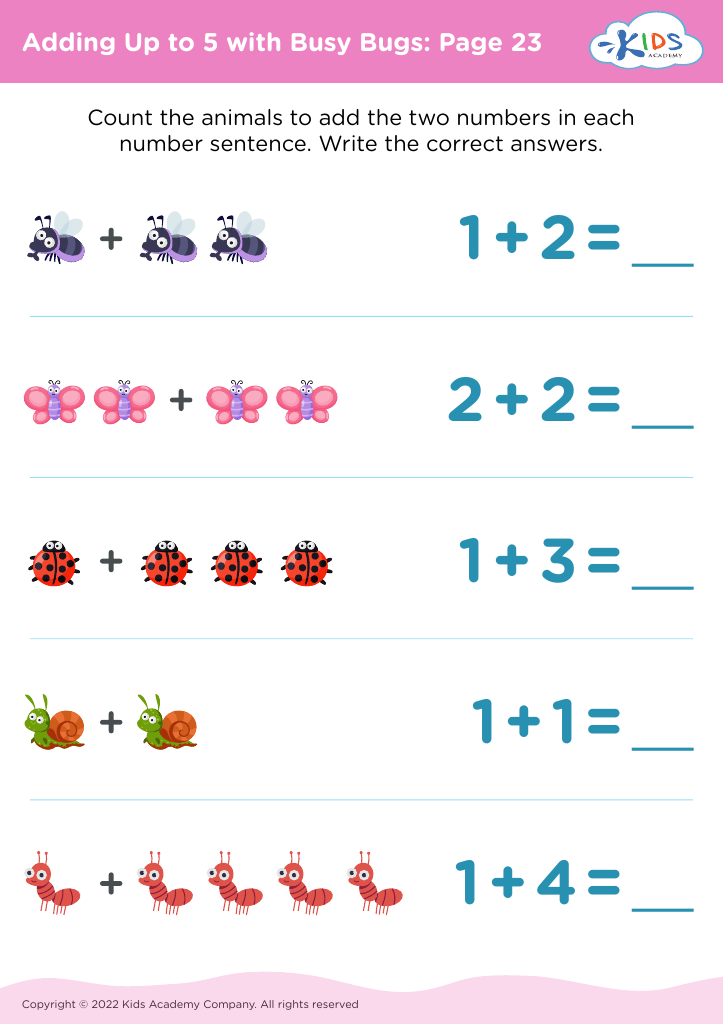
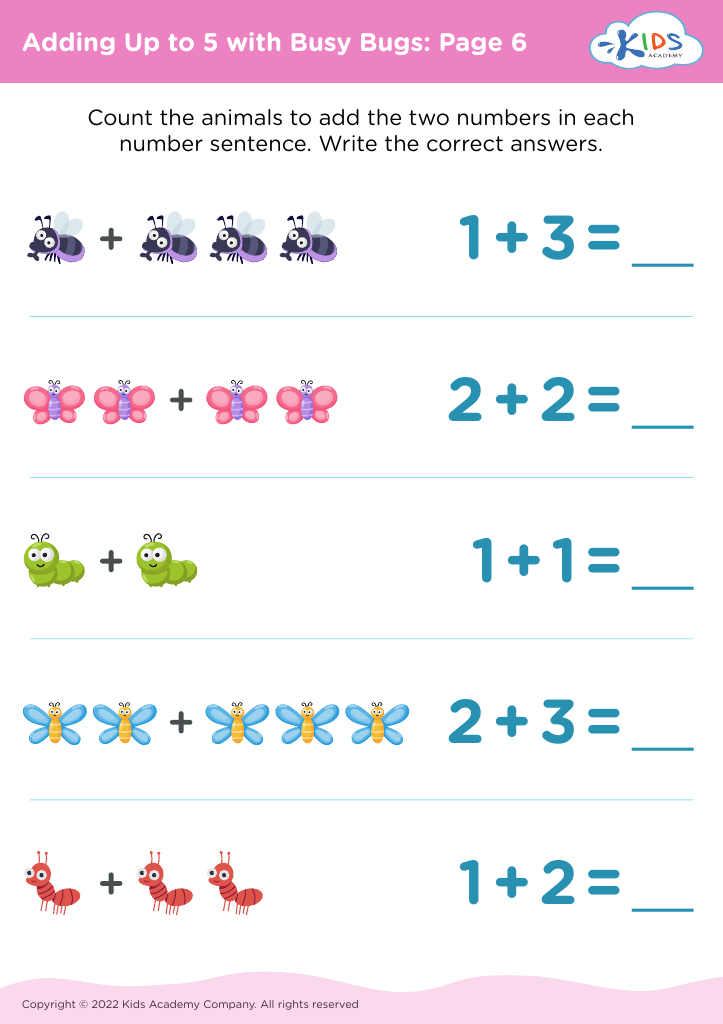
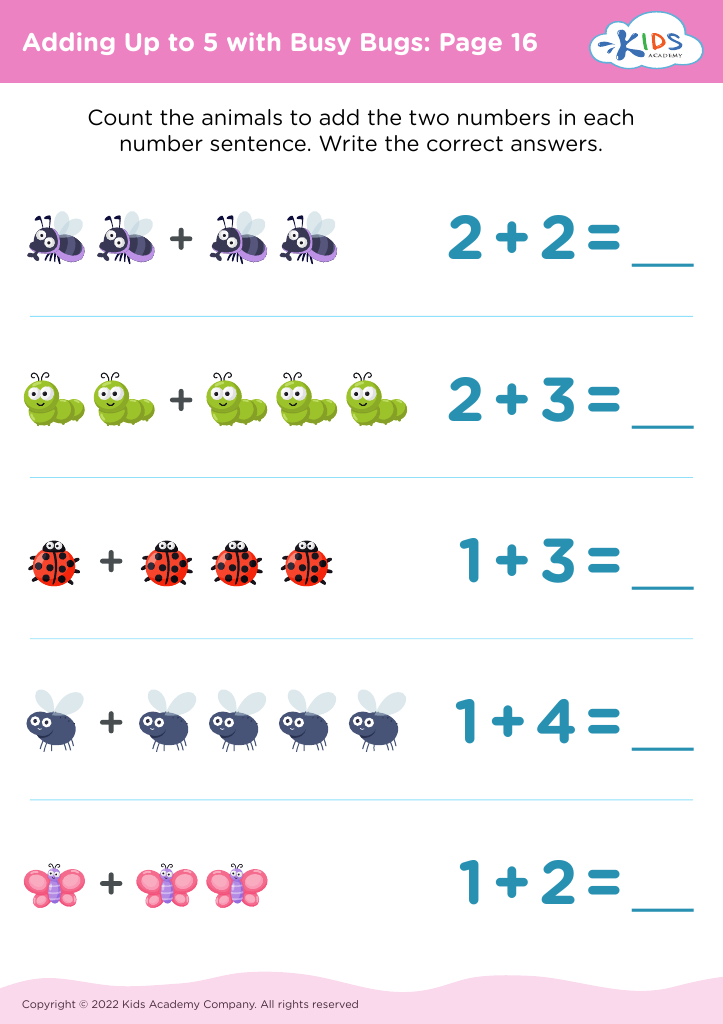



Addition skills are fundamental building blocks for early mathematics learning, making initiatives like "Adding with Busy Bugs" vital for children aged 5-6. Developmentally, this is a critical period when children sharpen their problem-solving and critical thinking skills. Engaging with fun, interactive resources like "Busy Bugs" makes math not only accessible but enjoyable, fostering a lifelong love for learning.
Parents and teachers should care because strong addition skills lay the groundwork for later mathematical concepts and success in school. Understanding basic arithmetic helps children navigate real-world situations, from sharing snacks to handling money. Additionally, using playful themes—a collection of colorful "Busy Bugs"—captures children’s imagination, keeping them engaged and motivated to learn.
Furthermore, this approach promotes social interaction. Children can practice addition with peers in a collaborative setting, enhancing communication skills and teamwork. This is reinforced at home, allowing parents to participate in learning and bonding over math-related games and exercises.
Ultimately, prioritizing addition skills through enjoyable methods like "Busy Bugs" ensures that children develop a solid foundation, improving their confidence and performance in future academic pursuits. Early investment in these competencies fosters a positive attitude toward math that may last a lifetime.