Understanding Quantities Adding with Busy Bugs Worksheets for Ages 5-6
4 filtered results
-
From - To
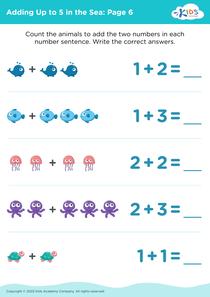
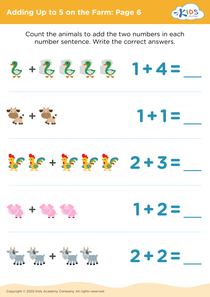
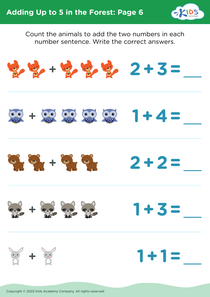
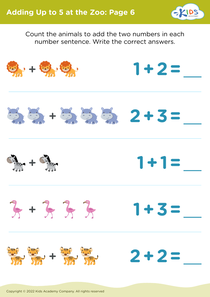
Unlock the world of math with our "Understanding Quantities Adding with Busy Bugs Worksheets," designed specifically for children ages 5-6! These engaging worksheets focus on introducing young learners to the concept of quantities through fun, interactive activities featuring adorable busy bugs. As kids count, compare, and add different quantities, they build essential math skills while boosting their confidence. Each worksheet promotes a hands-on learning experience that caters to various learning styles, making math enjoyable and accessible. Perfect for parents and teachers alike, these printable resources ensure that young mathematicians have a solid foundation for future mathematical concepts. Start the adventure today!
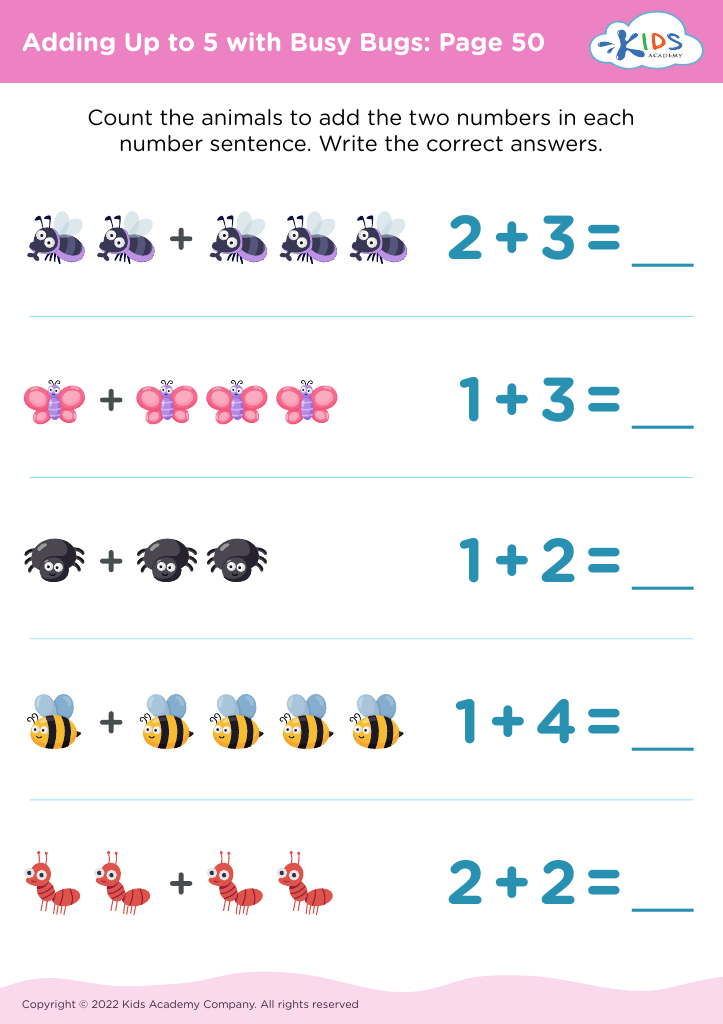
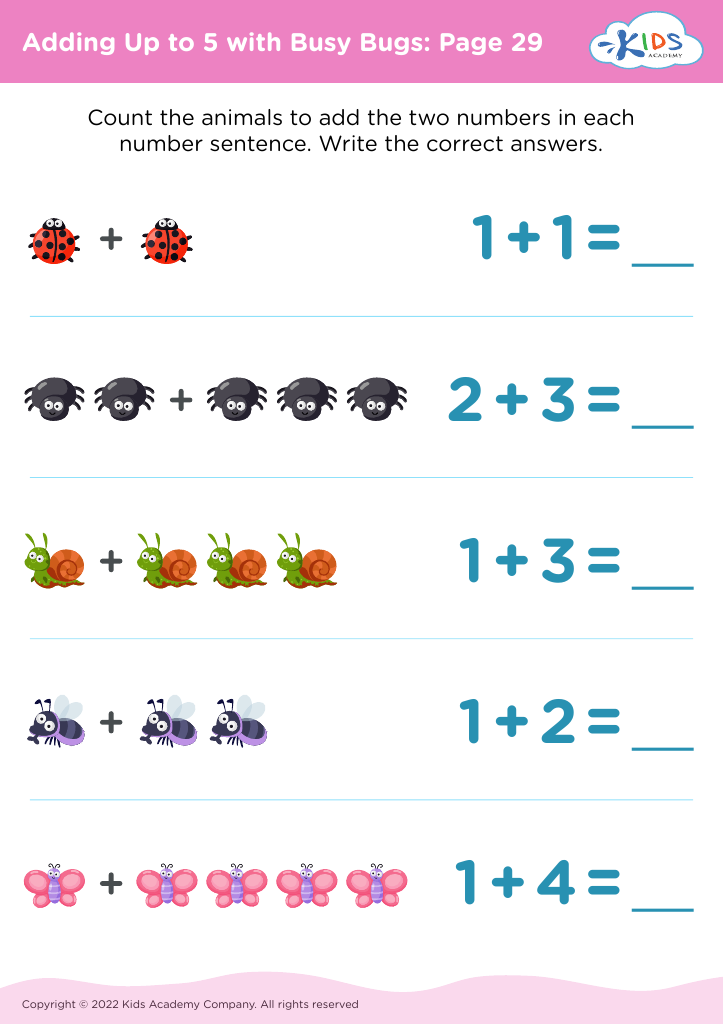
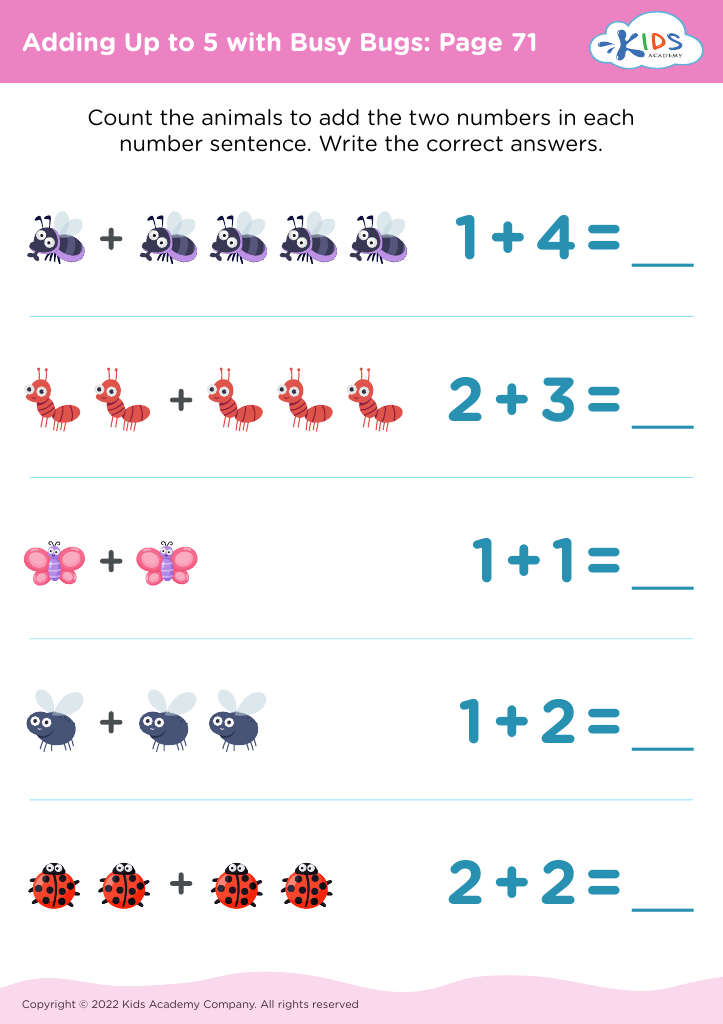
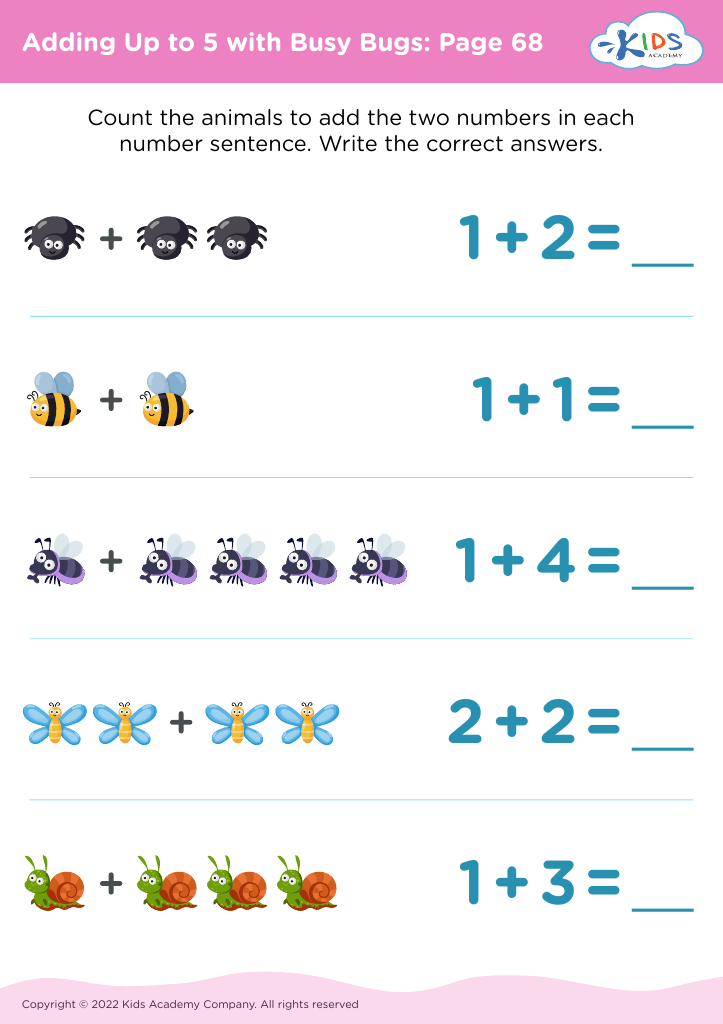



Understanding Quantities Adding with Busy Bugs is essential for parents and teachers of children aged 5-6 because it lays the foundational skills for mathematics. At this age, children are developing their number sense and grasping basic arithmetic concepts that will serve them for years to come. Engaging learning tools like Busy Bugs offer interactive and relatable experiences that enhance a child's eagerness to learn.
The use of playful characters, such as Busy Bugs, makes learning more appealing and less daunting for young learners, fostering a positive attitude toward math. By incorporating visual and hands-on activities, children can easily comprehend abstract concepts, bridging the gap between play and learning. This approach not only promotes cognitive development but also fine motor skills as children manipulate physical or digital components of the game.
Moreover, early understanding of quantities and addition helps in building problem-solving skills and critical thinking. It also contributes to developing social skills when children work cooperatively in groups or pairs. Thus, fostering these basic math skills through engaging methods like Busy Bugs equips children with the essential tools they need for future academic success and boosts their confidence in tackling more complex mathematical concepts later on.